Appliances & Heat
Smoking Gun
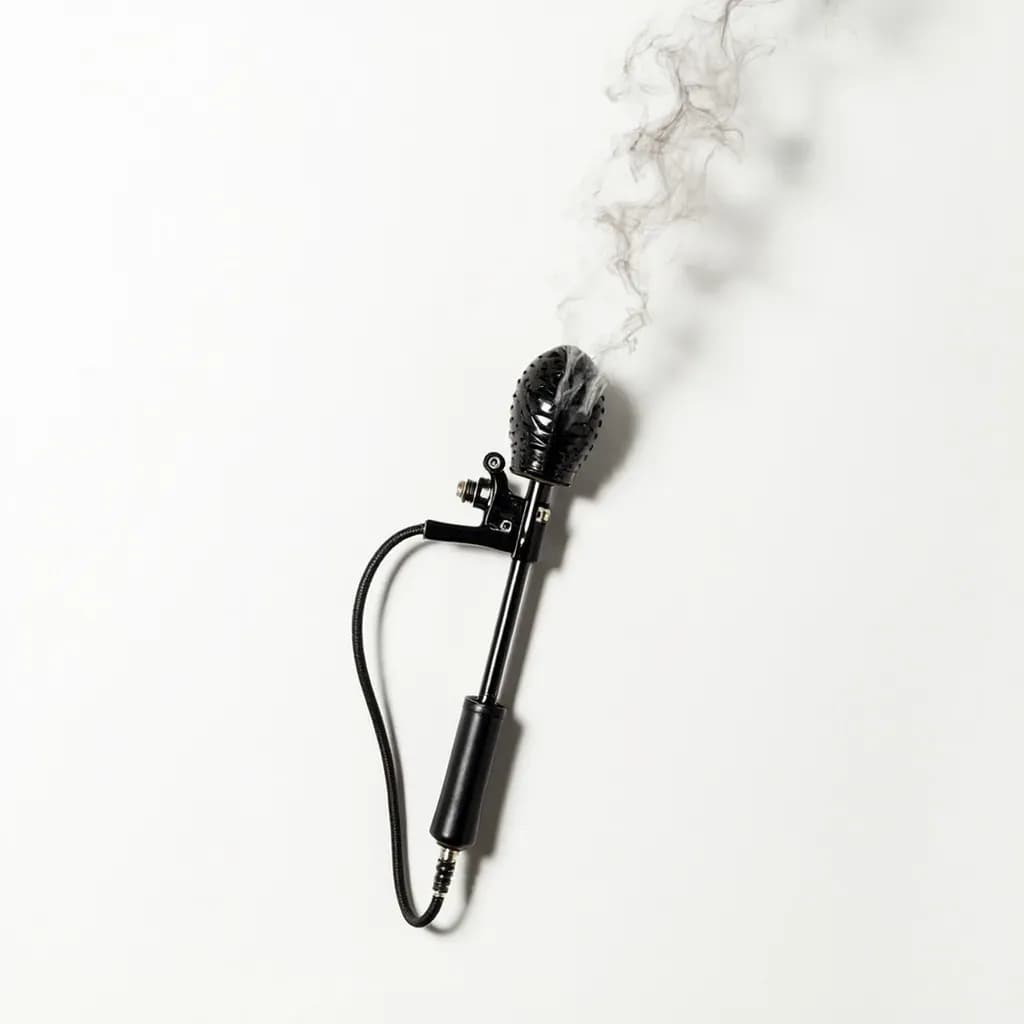
A handheld smoker that infuses cold smoke into food, drinks, or covered dishes for aroma.
A smoking gun is a small battery-powered device that burns wood chips, herbs, or tea and pumps the resulting cold smoke through a hose. It is used to infuse smoky aroma into cocktails, cheeses, butters, and plated dishes without applying heat, often by trapping the smoke under a cloche. A favorite of modernist kitchens, it adds a smoke note to delicate foods that can't go on a grill.
The smoking gun is a handheld, battery-powered device that smolders a small pinch of wood fuel and blows the resulting smoke through a flexible hose onto food or into an enclosed vessel. Unlike a traditional offset or box smoker, it produces no meaningful heat — the smoke is genuinely cold, which means it can be applied to delicate ingredients like butter, cream, raw fish, cocktails, or ice cream without cooking them or melting their structure. The unit's value lies entirely in finishing: it lays a surface layer of aroma on something already prepared, rather than transforming the ingredient through sustained heat.
What separates a forgettable gimmick from a genuine technique is the enclosure principle. Smoke blown across an open plate dissipates in seconds and leaves only a faint trace. Place a glass cloche, lidded container, or sealable bag over the food, fill that enclosed space with smoke, and let it rest briefly — the smoke has time to settle, condense, and cling to the surface. Wood selection functions as seasoning: fruit woods, hardwoods, and unconventional fuels like lapsang souchong tea each carry distinct aromatic signatures, and thoughtful pairing with the food is what separates a chef's use of the tool from a generic campfire note.
The tool has real limits, and understanding them is what elevates results. Cold smoke from a gun penetrates only the outer surface of dense foods, so for deeply smoky brisket or ribs it cannot replace a true smoker — it complements one, or finishes sous-vide and cured meats after the fact. A pinch of fine fuel goes a long way, and overdoing it produces acrid, ashy bitterness that can spoil a dish. Used judiciously with the right enclosure and the right wood, the smoking gun is one of the most accessible tools in the modern kitchen for adding the elusive dimension of smoke to ingredients that would never tolerate heat.
Alternatives
Types & varieties
The original and most widely recognized model; established the form factor for handheld smoking in restaurant and home kitchens.
Comparable handheld design marketed for home bartenders and cooks; similar function with a finished consumer-grade build.
Widely available under various house brands; functionally similar but fan power, chamber quality, and seal tightness vary considerably.
Mild, sweet, slightly fruity — a versatile default for poultry, pork, cheese, and cocktails.
Mildly sweet with a faint reddish hue; pairs well with duck, ham, and desserts.
Strong, classic bacon-like smoke; suited to red meat, hearty vegetables, and bold savory applications.
Intense, earthy, almost resinous; use sparingly or in very short bursts to avoid bitterness.
Medium-intensity, neutral and traditional; the go-to for whiskey- and Scotch-style drinks.
Light, delicate; the classic Pacific Northwest choice for fish.
Delicate and slightly nutty; common in European kitchens and for finishing soft cheeses.
Non-wood fuels that smolder in the chamber to produce distinctive aromatic smokes — tea for a smoky-tea note, rosemary or thyme for herbal smoke.
The enclosure principle
If there is one rule that defines successful use of a smoking gun, it is that smoke must be contained against the food. The device's fan moves air at modest volume; in an open room, that smoke rises, disperses, and contributes almost nothing to aroma. Trapping it under a glass cloche, an overturned bowl, a lidded container, or inside a sealable bag transforms the result: the smoke fills a small volume, contacts the surface, and settles as the chamber cools. Letting the covered food rest for 30 to 60 seconds after the gun is switched off gives the smoke time to condense and adhere. Lift the dome too soon and you will smell the smoke in the air but not on the bite.
- Glass cloches and dome lids are ideal because they let diners see the smoke billow when removed at the table.
- Sealable plastic bags work well for infusing salts, sugars, nuts, and small uniform items where full surface contact is desired.
- A wide mixing bowl or deep sheet pan with a cutting board on top is a serviceable improvised cover.
- For drinks, smoke inside a covered mixing glass, then shake with ice to dissolve the aroma into the cocktail.
Wood as seasoning, not fuel
The wood in a smoking gun functions more like a spice than a cooking medium — a small amount shapes the final character of a dish, and the wrong choice is impossible to undo. Treating apple, cherry, hickory, and mesquite as interchangeable is the most common beginner mistake. Fruit woods (apple, cherry) lend a gentle sweetness that flatters delicate proteins, dairy, and desserts; hickory and mesquite are bolder and demand robust partners; oak and beech sit in the middle as dependable neutrals. Tea leaves, dried herbs, and even whole spices can be used in the chamber for non-traditional smokes, but only in small pinches because they burn quickly.
- Match intensity to ingredient: mild woods for butter, cream, fish, and white spirits; stronger woods for red meat, game, and aged spirits.
- Always use untreated, food-grade hardwoods; softwoods like pine, fir, and cedar contain resins that produce harsh, inedible smoke.
- Fine sawdust and small chips smolder reliably; coarse chunks extinguish in the small chamber and produce inconsistent results.
- Burn only a pinch per session — roughly what fits under a thumbnail is often enough for a cloche-sized portion.
What the smoking gun cannot do
It is worth being clear about the limits of cold surface smoke. Smoke from a gun penetrates only the outermost layer of a dense food, so a steak, a thick chop, or a block of aged cheese will carry aroma on its face but not in its interior. For deep, structural smoke flavor, the gun must be combined with traditional hot smoking, curing, brining, or the use of smoke-infused liquids such as lapsang souchong tea in stocks and braises. Within those limits the tool is unrivaled: nothing else adds real wood smoke to a scoop of ice cream, a glass of mezcal, or a raw oyster without altering temperature or texture.
- For meats, smoke after cooking — finish sous-vide steaks, grilled fish, or roasted chicken just before plating.
- For deep smoke in dense foods, layer techniques: brine with smoked salt, braise with smoked stock, and finish with the gun.
- For desserts, smoke immediately before service so the aroma is at its peak when the dish reaches the table.
- Smoke penetrates fats more readily than lean proteins, which is why butter, cream, mayo, and avocado take smoke well.
Care and maintenance
The small combustion chamber accumulates ash, resin, and tars quickly, and residue from one session can flavor the next if not cleaned. After every use, allow the chamber to cool fully, then brush out ash and wipe the interior with a dry cloth. The hose and nozzle should be cleared of any condensate, and the chamber screen kept free of clogs. Stored dry with the battery removed, a smoking gun will give years of service; stored damp or with old fuel inside, it can develop off-flavors and corrosion.
- Empty and brush the chamber after every use; resin build-up is the main source of stale, burnt off-notes.
- Never wash the chamber with water unless the manufacturer specifies it is safe — moisture can rust the metal parts.
- Replace the screen if it becomes clogged with fine ash that brushing cannot remove.
- Store in a dry place with the lid off the chamber so residual moisture can evaporate.
Common uses
Tips & pitfalls
- Always trap the smoke under a cloche, bowl, or in a sealable bag — undirected smoke dissipates almost immediately and contributes little aroma to the food beneath it.
- Less is more: 20 to 30 seconds of active smoking under a dome is usually enough, and overdoing it produces acrid, ashy bitterness that can ruin an otherwise good dish.
- Let the smoke rest under the cover for 30 to 60 seconds after the gun is switched off so it can settle and adhere to the surface before you serve or uncover.
- Use only fine sawdust or small chips; coarse chunks smolder poorly in the small chamber and may extinguish mid-session.
- Match the wood to the food — fruit woods for delicate ingredients, hickory and mesquite for hearty proteins — rather than treating woods as interchangeable.
- Clean the chamber and nozzle between sessions so old ash and resin do not taint the next application with a stale or burnt note.
- Work in a ventilated area or under a hood; even though the smoke output is small, it is still combustion byproducts and should not be breathed directly.
- If the device sputters or refuses to stay lit, the chamber is likely overloaded or the fuel too coarse — empty it, clean, and reload with a smaller pinch of finer material.
Good to know
- Type
- Handheld cold-smoking appliance, battery-operated
- Fuel
- Fine hardwood chips, sawdust, or shavings — a pinch to a tablespoon per session
- Smoke delivery
- Flexible hose with directional nozzle; smoke is cold
- Heat output
- Negligible — does not cook food and is safe for raw, cold, or heat-sensitive ingredients
- Common pairing equipment
- Glass cloche, dome lid, lidded container, mixing bowl, or sealable bag to trap smoke
- Body
- Plastic housing with a small metal combustion chamber and electric fan
- Origin
- Popularized in the late 2000s by PolyScience as part of the modernist cuisine movement
- Skill level
- Beginner-friendly; results depend more on enclosure technique and wood choice than on the device itself
Also called
Handheld Smoker · Cold Smoke Gun · Smoke Infuser
Related

Stovetop
The everyday burners where most cooking actually happens

Oven
Enclosed dry heat for roasting, baking, and braising

Grill
Live-fire or gas grates for char, smoke, and high heat

Smoker
Low, slow heat and wood smoke for barbecue and brisket

Air Fryer
Countertop convection that crisps with little or no oil

Slow Cooker
Set-and-forget low heat for stews, beans, and braises

Pressure Cooker
Sealed steam pressure that cooks tough food in a fraction of the time

Rice Cooker
Foolproof, perfectly steamed rice every single time