Appliances & Heat
Steam Injection System
An oven add-on that injects steam during baking for crusty bread and moist crumb.
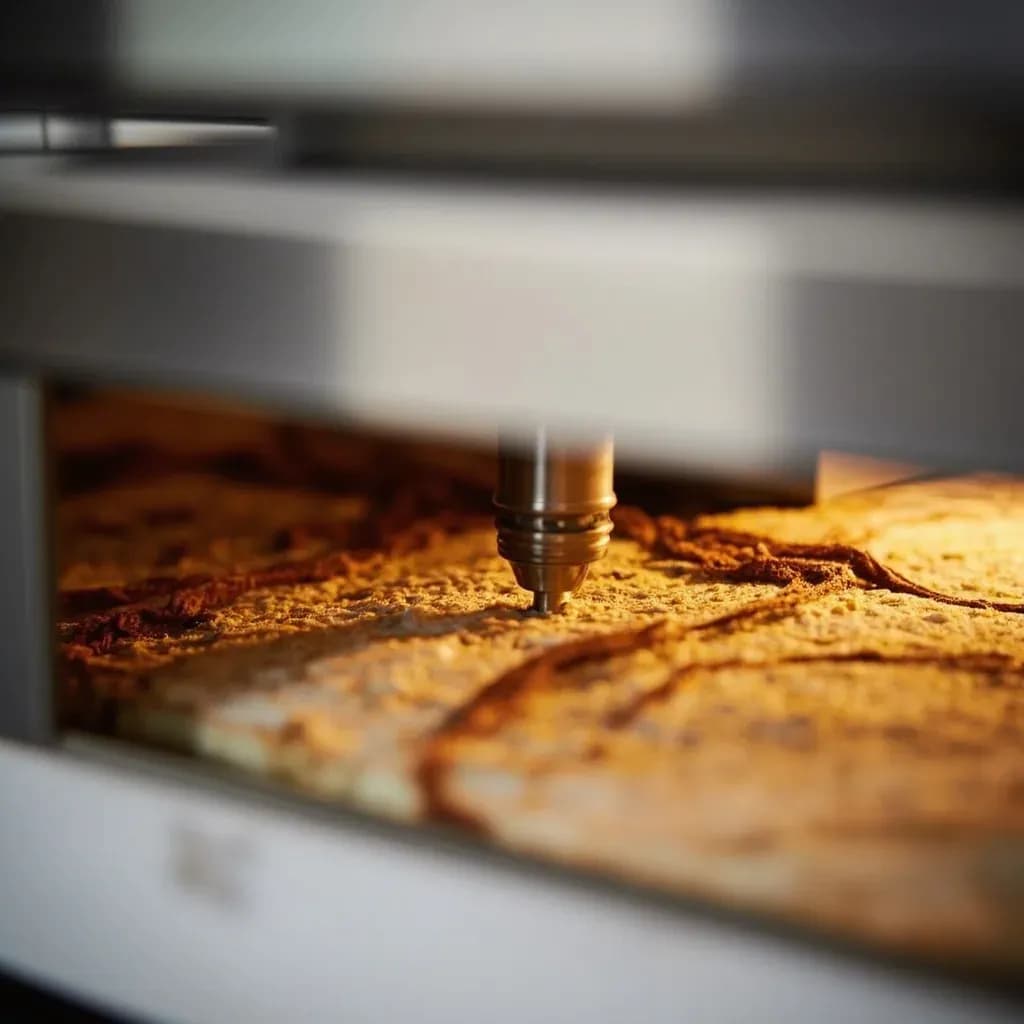
A steam injection system introduces controlled bursts of steam into an oven during the first minutes of baking, keeping the dough surface moist so it can expand fully before setting into a glossy, crackly crust. Bakers use it for hearth breads, baguettes and lean loaves. The delayed crust formation gives bigger oven spring and a thinner, crisper shell.
A steam injection system is the engineered descendant of a baker's oldest trick: throwing a cup of water into a hot oven, or sliding a loaf into a covered Dutch oven, to trap moisture at the start of baking. Mechanically, it is a water reservoir or plumbed line, a boiler or heating element, and a network of pipes or jets that fill the oven cavity with saturated steam — air at close to 100% relative humidity — during the first phase of baking. That thin film of water on the dough's surface keeps the surface pliable long enough for the gases inside to expand fully (the dramatic rise bakers call oven spring), dissolves and gelatinizes the exposed starches for the glossy, blistered sheen prized on a good baguette, and only evaporates as the damper opens or the steam shuts off, allowing Maillard browning and caramelization to finish the crust.
Outside the bakery, steam injection shows up in combi-steam ovens where humidity is dialed in by the percent, in home wall ovens with a single steam-assist program, and in countertop units small enough to sit beside a toaster. The same physics apply whether you're baking rye, roasting a pork loin, or steaming root vegetables: the oven is acting as a controlled humidity chamber, and the steam system is what gives the cook precise command of that humidity.
Alternatives
Types & varieties
Integrated boiler with perforated steam pipes or jets in the cavity (Blodgett, Baxter, Bakers Pride); standard in artisan bakeries.
Closed-cabinet convection plus steam with precise humidity control (Rational SelfCookingCenter, Electrolux SkyLine, Miele MasterSteam); the workhorse of restaurant and hotel kitchens.
Plumbed or reservoir-fed ovens from Bosch, Miele, Wolf, Gaggenau, Thermador, JennAir, and Electrolux; typically one or two preset steam programs for bread and roast.
Compact units, often with microwave or air-fry functions (Cuisinart, Anova, Tovala, Sharp, Panasonic NN-CS89L); limited humidity precision but capable of crusty results.
A 1/4-inch copper or aluminum tube plumbed through the oven wall and fed by an external kettle or espresso boiler — a long-standing prosumer hack documented in baking forums.
Humidity-controlled proofer with a steam tray, used for both proofing and low-temperature steam-injection baking of small loaves.
A cast-iron pan of boiling water, preheated lava rocks doused with water, or a hand sprayer — the original steam simulation, still common in home ovens.
Why steam matters: the physics of crust and crumb
Three things happen during the steam phase, and understanding them is what separates a good bake from a great one. First, the wet, pliable surface lets the dough continue expanding long after a dry-heat bake would have locked a thin crust in place — this is the oven spring that gives an open crumb and a domed top. Second, the moisture on the surface dissolves and gelatinizes the exposed starches; as the steam retreats and the crust dries, those starches harden into the glossy, slightly crackled sheen you see on a bakery baguette. Third, when steam is finally vented, the now-dry surface can climb well above 100°C, so Maillard browning and caramelization can finish the color and flavor. Pull the steam too early and you get a pale, dull loaf; leave it on too long and the bottom stays gummy.
- Steam phase (first 10–20 min): surface is held at or near 100°C by evaporative cooling, dough expands freely, surface starches gelatinize.
- Drying phase (next 5–15 min): cavity opens up, surface moisture evaporates, crust begins to set and the surface temperature starts to climb.
- Browning phase (final stretch): dry heat well above 100°C drives Maillard browning and caramelization for color and flavor.
Beyond bread: where steam injection earns its keep
The same humidity-controlled environment that makes a baguette crackle also makes choux pastry puff into hollow shells, keeps a roast from drying out under high convection, and cooks root vegetables evenly without a drop of fat. A combi-steam oven turns into a vegetable steamer at 100°C and 100% humidity, a braiser at low humidity and 150°C, and a roaster at dry heat with a finishing sear — all without moving the food. Home cooks with a steam-assist oven can reheat day-old bread and even leftover pizza with the crust refreshed and the crumb moist, something a microwave alone will never do.
- Choux pastry (éclairs, profiteroles, Paris-Brest): initial steam inflates the walls before they set, giving the characteristic hollow interior.
- Roasts of beef, pork, and poultry: steam-assisted convection keeps surface proteins relaxed, reducing moisture loss over a long cook.
- Root and brassica vegetables: pure-steam cooking yields even, fat-free doneness and bright color.
- Reheating: a few minutes of steam refreshes stale bread and revives leftover pizza crust.
Common uses
Tips & pitfalls
- Inject steam only at the start of the bake; vent or open the damper after 10–20 minutes so the crust can dry, brown, and develop Maillard flavor.
- Preheat the steam system along with the oven — cold water dropped into a hot cavity can drop cavity temperature by 10–20°C and stall oven spring.
- Use hot, not cold, water for any pan-style hack; a deep preheated cast-iron pan filled with boiling water gives the densest plume of steam.
- If the loaf emerges pale or leathery, the oven is not venting properly — crack the door or open the damper for the final third of the bake.
- In hard-water areas, fill reservoirs with filtered or distilled water and descale the boiler every 1–3 months; scale clogs injector jets and ruins the crust.
- Aim for high humidity in the first 10 minutes, then a dry environment — too much steam throughout bakes a gummy crumb and soggy bottom.
- Clean water lines and reservoirs regularly; stale water breeds biofilm that imparts stale or sour off-notes to bread.
- For very wet doughs (rye, ciabatta), ease back on steam or shorten the injection window — these loaves already carry enough moisture to gel the surface.
Good to know
- Function
- Saturates the oven cavity with steam (close to 100% relative humidity) at the start of baking to delay crust formation, maximize oven spring, and gelatinize surface starches.
- Typical injection window
- First 10–20 minutes of bake; steam is then vented or removed so the crust can dry, brown, and crackle.
- Steam temperature
- Saturated steam at roughly 100°C / 212°F at sea level.
- Water source
- Plumbed line (professional/combi ovens) or refillable reservoir (typically 0.5–2 L for home units).
- Water quality
- Filtered or distilled water in hard-water areas to prevent mineral scale in boilers and injector jets.
- Maintenance
- Descale every 1–3 months depending on use and water hardness; neglected boilers clog and produce off-flavors.
- Commercial adoption
- Standard on mid-20th-century deck and rack ovens (Blodgett, Baxter, Bakers Pride); combi-steam ovens from Rational, Electrolux, and Miele became restaurant workhorses from the 1990s onward.
- Humidity control range
- Combi-steam ovens typically offer 0% (dry convection) to 100% (pure steam) at temperatures from roughly 30°C to 250–300°C.
Also called
Oven Steam Injector · Steam-Injected Oven
Related

Stovetop
The everyday burners where most cooking actually happens

Oven
Enclosed dry heat for roasting, baking, and braising

Grill
Live-fire or gas grates for char, smoke, and high heat

Smoker
Low, slow heat and wood smoke for barbecue and brisket

Air Fryer
Countertop convection that crisps with little or no oil

Slow Cooker
Set-and-forget low heat for stews, beans, and braises

Pressure Cooker
Sealed steam pressure that cooks tough food in a fraction of the time

Rice Cooker
Foolproof, perfectly steamed rice every single time