Prep Tools
Teapot
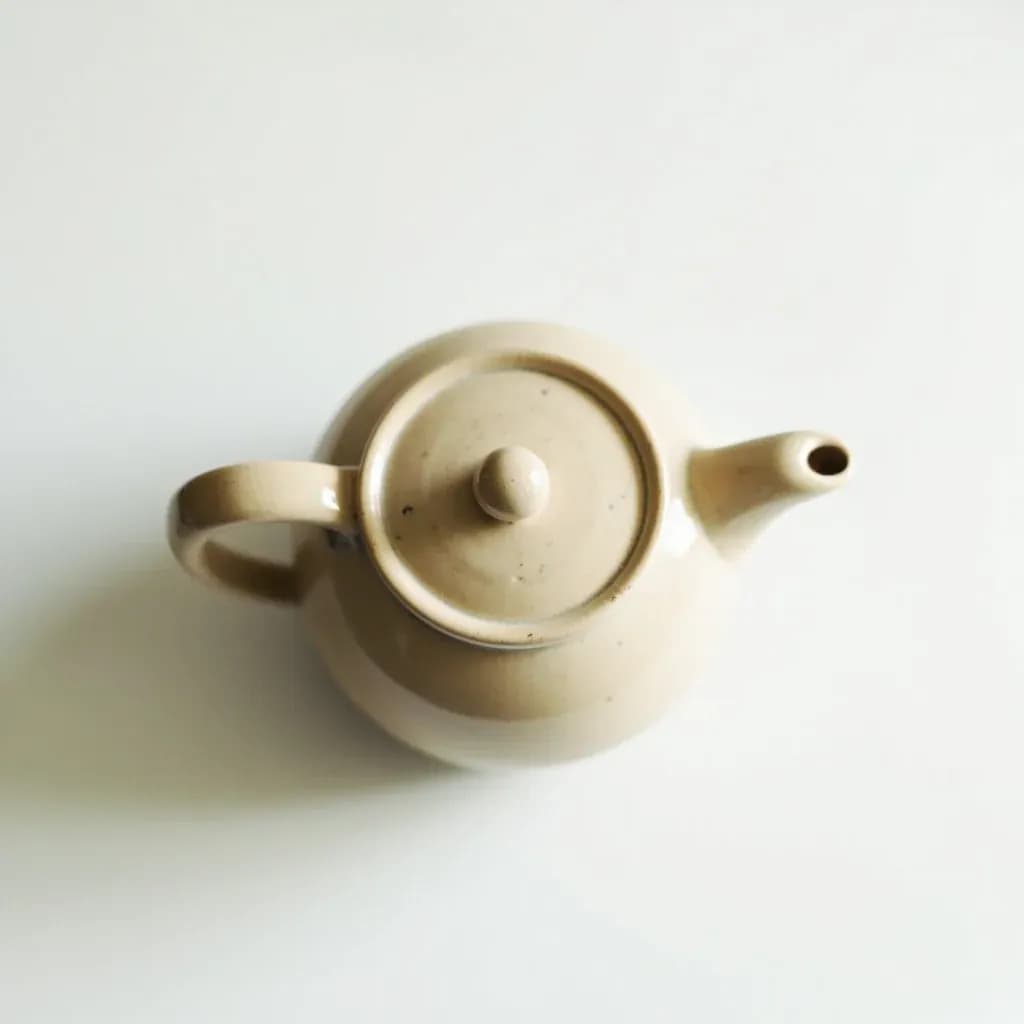
Vessel for steeping and serving tea, often with a spout and built-in strainer.
A teapot is a lidded vessel with a handle and spout used to steep tea leaves in hot water and pour the brewed tea. Made of ceramic, glass, cast iron, or stainless steel, many include an internal strainer or basket to hold loose leaves. In the kitchen it is also used to hold and pour hot water; a stovetop tea kettle, by contrast, is for boiling rather than steeping.
A teapot is a closed vessel with a spout, lid, and usually some form of strainer, designed to steep tea leaves in hot water and to deliver the brewed liquor cleanly to the cup. Unlike a kettle, which only heats water, the teapot is the brewing chamber: it holds the leaves in contact with water at a controlled temperature long enough to extract flavor, then pours the finished tea out through a spout that keeps the leaves behind. The interaction of its three working parts — body, lid, and spout — determines whether a pot pours in a steady arc or dribbles down the side, so a well-made teapot is judged less by decoration than by the geometry of that pour.
Material governs how a teapot behaves in the hand and over the years. Glazed porcelain and borosilicate glass are chemically inert, so they lend no flavor and can be used for any tea. Unglazed purple clay from Yixing is porous and gradually absorbs the oils and aromatics of whatever tea is brewed in it, which deepens the pot's character with use but requires the cook to dedicate it to one tea family. Cast iron and silver conduct heat away from the liquid faster than thick ceramic, so metal-bodied pots are often paired with a warmer stand or tea cosy to hold drinking temperature through a long service.
For everyday use the most practical distinction is between a pot that is also the brewing chamber and one that is only a server. In Western table service a single pot of 400–500 ml both brews and serves. In Chinese gongfu style, a small clay pot of 100–200 ml receives short, repeated infusions poured off into fairness cups. In both cases the rule is the same: leaves left steeping past the target time will turn the pot bitter, so the brewer either removes the infuser or decants the liquor into a warmed serving vessel when the strength is right.
Alternatives
Types & varieties
Unglazed purple clay from Jiangsu, China; small 100–200 ml capacity; seasons with use; traditionally reserved for oolong or pu-erh.
Japanese cast-iron vessel with thick walls that retain heat; interior often enamel-lined; traditionally used to hold boiled water rather than to steep leaves directly.
Red Staffordshire clay body with a white Rockingham-glaze interior; oval shape with a stubby spout; the classic British everyday pot.
Japanese side-handled teapot with a built-in ceramic mesh strainer; common in green tea preparation.
Lidded three-piece Chinese cup (bowl, lid, saucer) used as a small brewing vessel for gongfu tea; doubles as a drinking vessel.
Traditional English and Russian form; silver conducts heat so it is usually paired with a warmer stand or tea cosy.
Large metal urn for heating and dispensing water, typically paired with a small ceramic zavarka pot of concentrated tea.
Modern borosilicate body with a removable mesh basket; lets the brewer watch leaves unfurl and liquor darken.
Engraved silver or silver-plated metal pot with a curved spout; used to brew gunpowder green tea with mint and poured from a height to aerate.
Late 18th-century English and American style with a squat body and very short spout, designed to sit low on a mantel and so be tucked away during the period of the British tea tax.
How to judge a teapot before you buy
Three things separate a good pot from a leaky one, and none of them are visible on the shelf until you actually pour. The spout aperture should be no wider than the strainer holes, or fine leaves will pass into the cup. The lid should have a small vent hole so steam can escape; without it, pressure builds and the lid rattles or lifts as you pour. And the handle should be balanced so that a full pot can be tipped one-handed without the thumb slipping toward the spout. Hold the pot by the handle, simulate a pour, and check whether the lid stays seated.
- Spout aperture must be equal to or smaller than the strainer mesh, or fine particles escape into the cup.
- A vent hole in the lid is essential for steady pouring; a sealed lid burps steam and lifts.
- The handle's center of gravity should let a full pot pour one-handed without wrist strain.
- Pour from a height of about 10 cm first to test the arc; a clean stream breaks neatly, a dribbling one signals a low spout or warped rim.
Material and care at a glance
Material sets the rules. Match the cleaning method and dedication to what the pot is made of, and a teapot will outlast the cook; ignore the rules and the same pot will turn every cup into a chore.
- Unglazed clay (Yixing): rinse with hot water only, no soap, air-dry with the lid off, dedicate to one tea family.
- Glazed porcelain, stoneware, glass: mild soap is fine for routine washing.
- Cast iron (tetsubin): rinse and dry the interior thoroughly to prevent rust at seams; never leave standing water.
- Silver and silver plate: polish the exterior as needed and dry seams by hand to prevent tarnish creep.
Common uses
Tips & pitfalls
- Preheat the empty pot with hot water and discard it before adding leaves; cold ceramic drops brew temperature several degrees and yields flat tea.
- Fill the pot as full as practical; a half-empty pot loses heat fast and yields flat-tasting tea.
- Match pot size to the number of cups — a 1.2 L pot for one serving cools the water before the leaves finish steeping.
- For Yixing and other unglazed clay pots, never use soap; rinse with hot water only and air-dry with the lid off.
- Dedicate each Yixing pot to one tea family (e.g., rock oolong, Dancong, ripe pu-erh); the porous clay retains aromatics and will muddy any other tea brewed in it.
- Remove the infuser or strain the tea into another warmed vessel when the desired strength is reached; leaves left in the pot keep extracting and turn bitter.
- Avoid using a tetsubin on a flame unless the maker specifically rates it for stovetop use; traditional enamel-lined ones can crack and the iron exterior scorches.
- Pour from a slight height to gently aerate the tea and settle loose leaves against the strainer, which sharpens the flavor and clears the cup.
- Lift the lid a fraction during steeping so cooling is even; in a full pot, lifting it vents steam out the back instead of condensing back into the brew.
Good to know
- Origin
- China, with documented production from the Ming dynasty (16th century); the form spread to Europe via Dutch and Portuguese trade in the 17th century.
- Primary materials
- Yixing zisha clay, porcelain, stoneware, cast iron (tetsubin), silver, glass, glazed earthenware.
- Typical capacity
- Small gongfu pots 100–300 ml; single-serving Western pots 350–500 ml; family-size teapots 1–1.5 L.
- Heat source
- Most are for table use only; only metal-bodied or specifically marked tetsubin and enameled pots are stovetop-safe.
- Strainer
- Built-in perforated slot at spout base, removable mesh infuser basket, or none (used with a separate strainer).
- Standard parts
- Body, spout, lid, handle, sometimes a saucer; lid usually has a small vent hole.
- Cleaning
- Rinse with warm water only for unglazed clay (Yixing); soap is fine for glazed porcelain, stoneware, glass, and stainless steel.
- Dedicated use
- Yixing pots are traditionally dedicated to a single tea category (e.g., oolong, black, or pu-erh) so the porous clay absorbs only those flavors.
Also called
teapot · tea-pot · tea-kettle
Related

Peeler
Swift blade for stripping skin off fruit and vegetables

Grater
Sharp-toothed surface for shredding cheese and vegetables

Microplane
Ultra-fine rasp for citrus zest, garlic, and hard cheese

Mixing Bowl
All-purpose bowl for combining, whisking, and tossing

Whisk
Looped wires that beat air into eggs, cream, and sauces

Spatula
Flat blade for flipping, lifting, and scraping

Slotted Spoon
Pierced spoon that lifts solids and drains the liquid behind

Wooden Spoon
Gentle, heat-friendly spoon for stirring anything