Heat & Fire
Appam Swirling
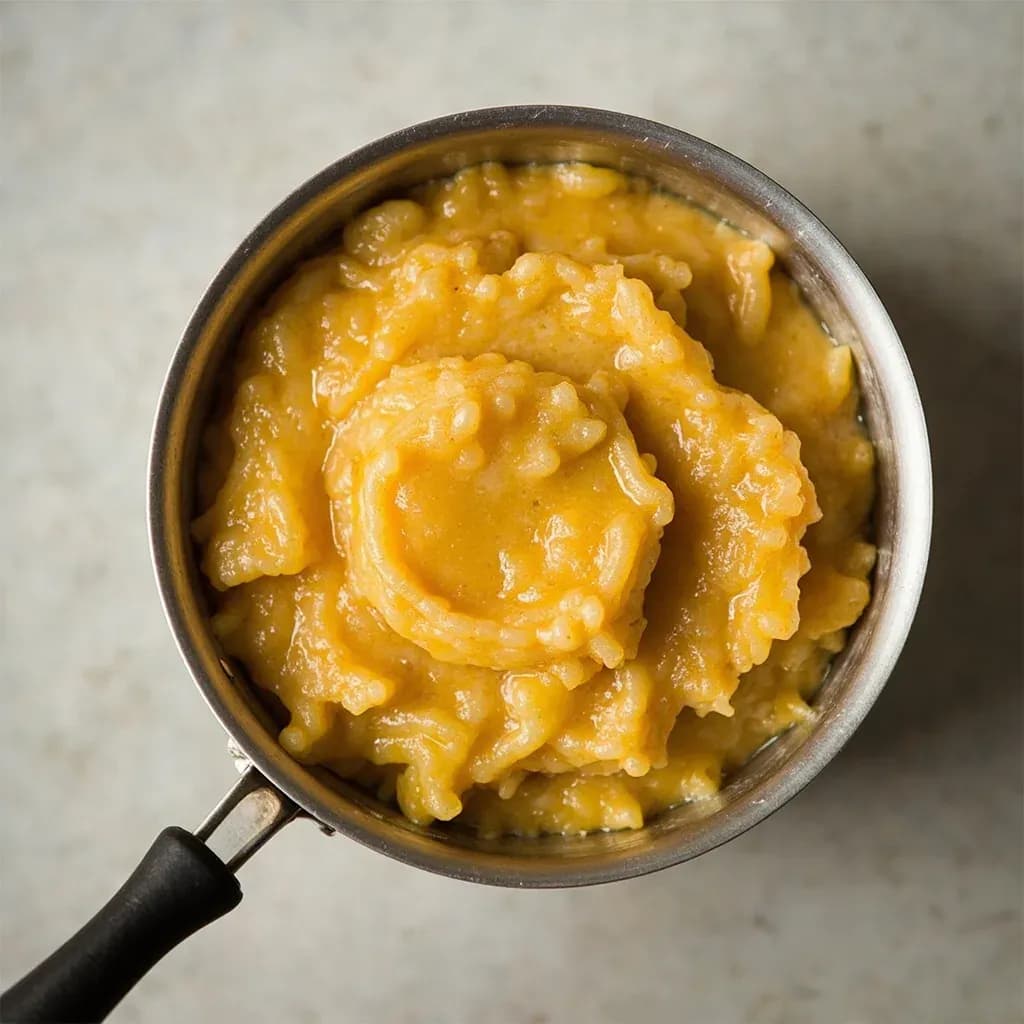
Swirling fermented rice batter in a bowl pan to form lacy-edged hoppers.
Appam swirling pours a thin fermented rice-and-coconut batter into a small rounded pan, then rotates the pan so the batter coats the sides in a thin crisp lace while pooling thick and spongy in the center. Covering it briefly steams the soft middle. This South Indian and Sri Lankan technique produces the signature bowl-shaped hopper with crisp edges and a fluffy base.
Appam swirling is the wrist-driven motion that turns a ladleful of fermented rice batter into a bowl-shaped pancake with a thick, pillowy center and a paper-thin, lacy rim. It only works in a deep, round-bottomed pan — the appam chatti — because it is the curve of the walls, not the skill of the cook alone, that pulls the batter upward into a thin film as the pan is rotated. The thicker pool left in the middle puffs with steam under a tight lid, so a single appam delivers two textures at once: a soft, bread-like dome and a brittle, golden lace crisp.
The swirl is governed by batter consistency and pan temperature. The batter should pour like thin cream — looser than dosa batter — so it climbs the walls under centrifugal force without glooping or breaking. A properly fermented batter (traditionally with palm toddy, now usually dry yeast or a pinch of baking soda) carries the gas that lifts the center into that signature dome. Get those two variables right and the technique is forgiving; get them wrong and no amount of wrist action will produce lace.
Beyond Kerala, the same swirl underlies Sri Lankan egg hoppers and honey hoppers, where an egg or a drizzle of sugar syrup is dropped into the center before the lid goes on. Appam is also the bread-and-curry partner of the Keralite table, designed specifically to soak up coconut-milk stews and thin fish curries with its soft middle, while the rim is left to be eaten as a crisp, almost papadum-like accent.
- Difficulty
- Medium
Types & varieties
The classic Kerala appam: thick fluffy middle with a paper-thin, lacy crisp rim
Paler, slightly thicker variant, sometimes made without coconut milk
Sweetened with jaggery; denser crumb, eaten as a snack with tea
Same swirling method; an egg is cracked into the center before covering
Swirled thin and cooked with a drizzle of sugar syrup that caramelizes on the rim
How to do it
- 1
Prepare the fermented batter
Soak 2 cups raw rice (or idli rice) for 4 hours. Drain and grind with 1 cup cooked rice, 1–1.5 cups fresh coconut milk, a pinch of fenugreek seeds, and salt to a smooth, pouring-cream consistency — looser than dosa batter. Ferment 6–8 hours with 1 teaspoon dry yeast, ¼ teaspoon baking soda, or traditional palm toddy until bubbly and sour-sweet.
- 2
Heat and season the chatti
Place the cast-iron appam pan on medium heat for 2–3 minutes. Test with a few drops of water — they should sizzle and dance across the surface, not sit still and not vanish in a burst of steam. Lightly grease by rubbing the pan with a halved onion dipped in coconut oil, or brush with about 1 teaspoon of oil.
- 3
Pour into the dead center
Ladle 60–80 ml of batter straight into the middle of the pan. Do not tilt or spread before swirling — the puddle is what feeds the climb up the walls.
- 4
Swirl to coat the sides
Lift the pan off the heat and rotate your wrist in one smooth, confident circular motion (or a figure-eight), so the batter climbs the curved walls in a thin film, leaving a thicker pool in the center. Hesitation creates streaks instead of lace.
- 5
Cover and cook
Return the pan to medium heat, cover with a tight lid, and cook 2–3 minutes. Steam sets the soft center while the exposed upper rim fries to a crisp lace.
- 6
Loosen and serve
Run a thin spatula or wooden stick around the rim to release the lace, then slide the appam out lacy-side up. Re-grease only if the next one sticks. Serve immediately — appams do not hold well.
The Appam Chatti Is Half the Technique
An appam chatti is not interchangeable with a tawa, crepe pan, or skillet. Its deep, sloping walls are what catch the batter as you rotate the pan and pull it into that signature thin film. A well-seasoned cast-iron chatti gives the best lace because the hot iron sets the batter the instant it touches the wall, before it can run back down; non-stick pans tend to let the film slide and pool, producing a pale, flabby rim. Traditional chattis are wiped (never washed with soap) between uses, then re-oiled lightly, so the seasoning builds over years. If you are starting new, season the pan like any cast iron: a thin coat of oil, oven at 200°C for an hour, repeat twice, and treat it gently thereafter.
Fermentation and Flavor
The leavening agent shapes both taste and texture. Palm toddy (kallu) fermentation is the gold standard: it produces a complex, faintly boozy tang and the most open, lace-prone crumb. Dry yeast (about 1 teaspoon per litre of batter) is the modern home compromise — reliable, fast, and clean-tasting. A pinch of baking soda gives the lightest rise and the mildest flavor, and is the safest choice for beginners. Whichever you use, the batter is ready when it smells pleasantly sour, holds fine bubbles on the surface, and has thickened just enough to leave a brief trail when you lift the ladle.
Not All 'Appams' Are Swirled
Several dishes share the name 'appam' but are entirely different preparations. Unni appam are small sweet rice-flour and banana fritters. Idiyappam (string hoppers) are steamed rice-noodle nests pressed through a sevai press. Achappam (rose cookies) are deep-fried crisp rosettes made with a special mould. None of these uses a chatti or the swirling motion — they are mentioned here only to keep the names straight.
Common uses
Tips & pitfalls
- Test the pan with a water drop: it should sizzle and roll around the surface; a still drop means too cold, an exploding drop means too hot.
- Grease with a halved onion dipped in coconut oil — it seasons the iron and leaves a thinner, more even film than a brush.
- Pour into the dead center, never off to the side; the swirl is what climbs the walls, not the pour.
- Swirl with one confident, continuous motion; pausing mid-rotation makes streaks instead of lace.
- Cover immediately after swirling so trapped steam puffs the center while the rim fries crisp.
- The first appam is a heat-test — if the lace browns fast, drop the flame; if it stays pale, nudge it up.
- If the center stays raw, lower the heat and cook covered a minute longer rather than flipping.
- Rest the batter in the ladle for 10 seconds before pouring so the rice solids settle evenly and the film climbs more cleanly.
- Wipe the cast-iron chatti with an oily cloth between uses — never wash with soap or the seasoning that gives you lace will disappear.
- Do not flip. The underside should stay pale and soft; crispness belongs only to the rim.
Good to know
- Technique type
- Pan-spreading motion for thin fermented rice pancakes
- Region
- Kerala, Tamil Nadu, and Sri Lankan Tamil kitchens
- Pan used
- Appam chatti — a small, deep, round-bottomed pan, 18–23 cm across, traditionally cast iron
- Batter base
- Raw rice plus cooked rice, ground with coconut milk and fermented
- Fermentation
- 6–8 hours at room temperature with toddy, dry yeast, or a pinch of baking soda
- Batter consistency
- Thinner than dosa batter — flowing, like thin pouring cream
- Heat level
- Medium; pan tested with a water drop that should sizzle and skate
- Cooking
- One side only, covered, 2–3 minutes — center stays soft while the rim crisps
Also called
hopper-swirling · appam
Related

Sear
Blast the surface hot for a deep-browned, savory crust

Sauté
Cook quickly in a little fat over lively heat, tossing as you go

Stir-Fry
Toss bite-sized pieces over roaring heat for fast, smoky cooking

Pan-Fry
Crisp food in a shallow layer of hot fat, turning once or twice

Deep-Fry
Submerge in hot oil for an all-over crackling crust

Roast
Cook uncovered in dry oven heat for browned edges and tender centers

Bake
Cook with steady, surrounding oven heat — the soul of bread and pastry

Broil
Hit food from directly above with fierce overhead heat