Prep & Assembly
Aspic Glazing (Chaud-Froid)
Coating cold dishes in a clear or creamy gelatin glaze for a glossy, sealed presentation.
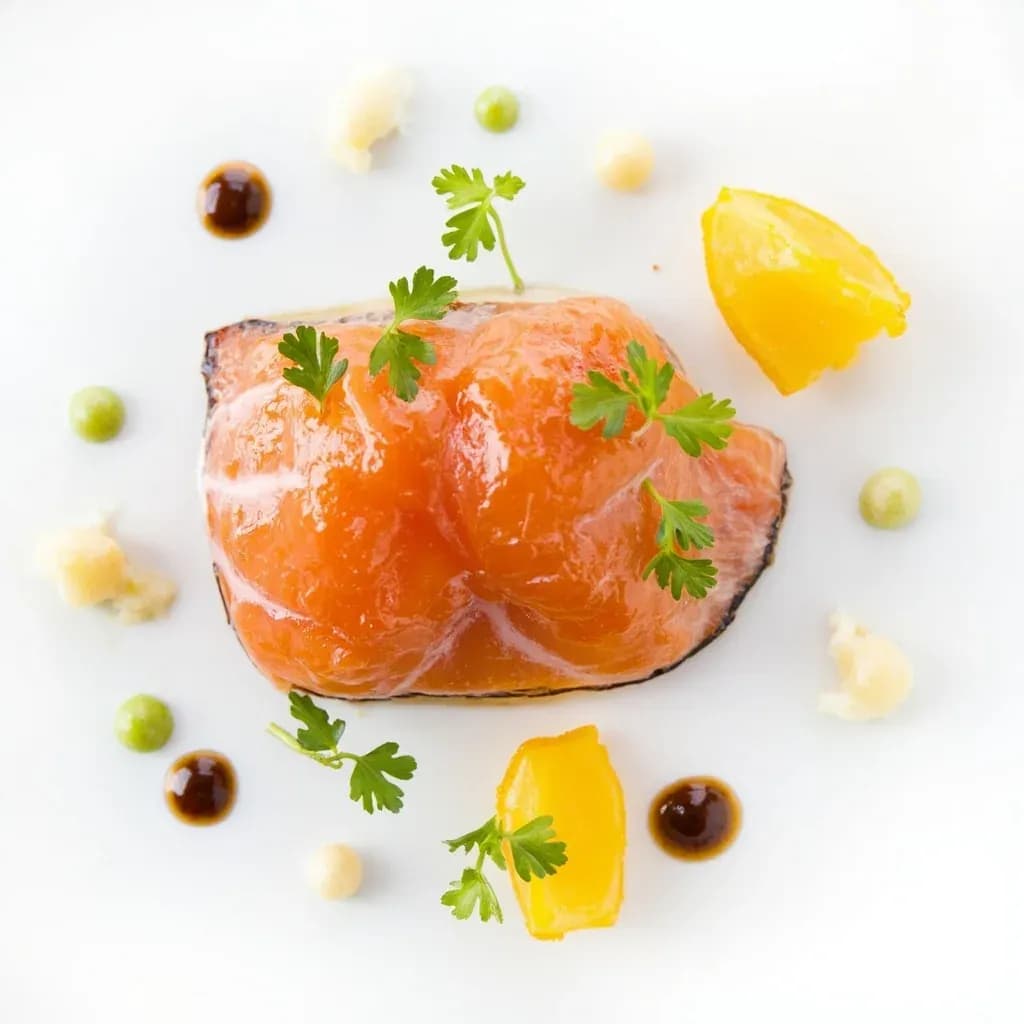
Aspic glazing coats chilled foods like poached fish, poultry, or pâté in a layer of clear savory gelatin, or in the creamy white chaud-froid sauce, applied while liquid and then set cold. The glaze adds shine, seals the surface against drying, and provides a smooth canvas for decoration. It is a classic garde manger technique seen on buffet and competition platters.
Aspic glazing is the classical French technique of coating a cold preparation in a thin, savory gelatin layer that sets to a glossy, mirror-bright finish. It does two jobs at once: it seals moisture into galantines, poached fish, terrines, and cold roasts held for buffet service, and it gives those dishes the architectural shine that defined 19th-century cuisine froide. The clear version is made from a fully clarified, well-seasoned stock set with a measured amount of gelatin; the chaud-froid variant is a cooked velouté or béchamel enriched with cream and gelatin, applied warm to a cold item.
The technique lives or dies on three conditions: the item must be cold and dry, the aspic must be held at working temperature (about 30–35°C / 86–95°F), and the coat must go on in thin, even passes. A proper glazing aspic is set softer than an eating aspic — just enough to hold a film — so it flows readily but begins to set the instant it touches a chilled surface. Two thin coats almost always beat one thick one, and clarity depends entirely on how well the stock was clarified and degreased before the gelatin is added.
Today aspic glazing survives wherever classical garde-manger and charcuterie display work is still taken seriously: buffet service, competition plating, fine-dining cold kitchens, and the showpieces of pâté en croûte and galantine presentation. Modern shortcuts like lecithin-based glazes have their place, but the traditional aspic still wins on flavor, and a well-glazed piece looks, in the old phrase, as if it has been lacquered.
- Difficulty
- Hard
Types & varieties
Crystal-clear jelly from clarified stock; the standard glaze for galantines, ballottines, terrines, cold poultry, and fish
White chaud-froid based on béchamel or veal velouté, finished with cream and gelatin; for pale meats, poultry, and poached fish
Reddish chaud-froid from espagnole or tomato velouté; traditional for game, duck, and red meats
Green chaud-froid, usually a herb- or spinach-tinted velouté; for poached fish and vegetable platters
Plain velouté-based chaud-froid with no added color, used under a clear aspic for richness without altering hue
Light aspic from clarified fish fumet; standard for trout, salmon, and sole
Dark, strongly flavored aspic from roasted game carcasses; for glazed game terrines and platters
How to do it
- 1
Prepare and clarify a strong stock
Build a well-flavored stock from veal, chicken, fish bones, or game, simmered long for natural collagen. Cool, degrease completely, and reserve. The flavor of the glaze is the flavor of the stock, so start clean.
- 2
Measure and set the gelatin
Adjust gelatin so the aspic sets to a soft tremble — about 8–12 g per liter for a glazing coat. Bloom sheet gelatin in cold water, or sprinkle powdered gelatin over ice water, before dissolving into the warm stock.
- 3
Clarify the aspic
Whip egg whites with aromatics (leek, herbs, peppercorns) and a little cold stock, then whisk into the warm stock. Bring to a gentle boil without stirring, hold for 15–20 minutes, and strain through a chinois lined with muslin. The resulting liquid should read like consommé.
- 4
Adjust seasoning and color
Taste the clear, hot aspic and correct salt and acidity. For a deeper tint, add a little caramelized meat juice or a splash of pale sherry; for a paler glaze, start from a paler stock (veal or chicken) rather than a darker game or beef stock.
- 5
Bring the item to glaze-ready condition
Pat the surface of the galantine, fish, or terrine dry. Chill it until very cold, ideally a few degrees above freezing, so the aspic sets instantly on contact. A damp or warm surface causes the coat to slide and streak.
- 6
Hold the aspic at glazing temperature
Keep the clarified aspic in a bain-marie at 30–35°C (86–95°F). It should coat the back of a spoon and run off in a thin sheet. Do not reboil once clarified, or it will lose its clarity.
- 7
Apply the first coat
Ladle slowly over the surface in a continuous stream, starting at one end and working to the other. Rotate the item so the aspic runs evenly down all sides. Set aside to chill until firm.
- 8
Apply the second coat for shine
Once the first layer is firm, repeat with a thinner pour. This second pass fills pinholes, hides brush marks, and produces the mirror gloss that defines a properly glazed piece.
- 9
Chill and store
Return the glazed item to the refrigerator, uncovered, until fully set. Cover loosely afterwards and keep chilled; use within 2–3 days for the best appearance.
- 10
For chaud-froid variants
Build a velouté or béchamel base (chicken, veal, fish, or game), cook out the flour fully, enrich with cream off the heat, and set with gelatin to a coating consistency. Apply warm to a cold item and chill to set, then optionally seal with a thin layer of clear aspic for shine.
Aspic versus chaud-froid
The two terms are often used interchangeably, but in classical garde-manger they describe different coatings. Clear aspic is a savory jelly that is liquid only when warm and contains no dairy. Chaud-froid is a fully cooked sauce — a béchamel, velouté, or espagnole base — enriched with cream and set with gelatin. It is applied warm to a cold item (hence 'hot-cold'), and as it chills it sets into a smooth, opaque coat. Chaud-froid is typically given a final seal of clear aspic to add shine and lock in moisture. The color in the name (blanc, rouge, vert, doré) tells the cook which stock base to start from so the finished dish sits in harmony with the food beneath.
Troubleshooting
Most glazing failures come from one of three causes: the item was not cold enough, the aspic was not at working temperature, or the stock was hazy or greasy. Work through them in that order before blaming your hand.
- Cloudy finish: stock was insufficiently clarified or fat was not fully removed; reboil and re-clarify before reglazing
- Coat slides off: item was not chilled close to 0°C, or its surface was wet; pat dry and rechill before recoating
- Lumpy or ridged surface: aspic was too cold and began to set mid-pour; rewarm the bain-marie and recoat with fresh aspic
- Bubbles trapped under the glaze: poured too high or too fast; pass a warm palette knife very close to the surface, or briefly flash with a torch, to pop them
- Dull, matte finish: a single thick coat was applied; add a thinner second pour to bring up the shine
Common uses
Tips & pitfalls
- Clarify the aspic properly — a hazy glaze will look dull no matter how neatly it is poured
- Chill the item until it is well below room temperature, ideally close to 0°C, so the aspic sets on contact
- Hold the ladle close to the surface and pour in a single even pass; splashing causes bubbles and ridges
- If the aspic begins to set on the surface before you finish, re-chill the item and re-coat with a fresh thin layer rather than trying to patch the first one
- Two thin coats almost always look better than one thick one — the first seals, the second adds shine
- Degrease the aspic stock thoroughly; any fat will pool on the surface of the glazed item and ruin the shine
- Taste the aspic and adjust seasoning before glazing — once it sets, you cannot correct the flavor
- Keep the glazing aspic in a bain-marie at working temperature; do not reboil or it will lose clarity
Good to know
- Origin
- Classical French haute cuisine; refined in the 19th century by Marie-Antoine Carême, who turned aspic work into an architectural art
- Also called
- Chaud-froid ('hot-cold') for the cooked, cream-enriched sauce applied hot to a cold surface and chilled to set; the clear meat-jelly version is aspic or aspic clair
- Base for clear aspic
- Strong, fully clarified stock (veal, chicken, game, or fish) set with measured gelatin or natural collagen
- Base for chaud-froid
- A béchamel, velouté, or espagnole base enriched with cream and set with gelatin, applied warm to a cold item and chilled to set
- Working temperature
- 30–35°C (86–95°F) for clear aspic — fluid enough to flow, cool enough to set on contact with a cold surface
- Setting strength
- Softer than an eating aspic: about 8–12 g gelatin per liter for a glazing coat, versus 15–20 g for a sliceable aspic
- Storage
- 2–3 days refrigerated; the aspic seals in moisture but is not a long-term preservative
- Difficulty
- Advanced; demands planning, careful clarification, and a steady hand
Also called
Chaud-Froid · Aspic Coating
Related

Whisk
Beat ingredients smooth and aerated with a looping wire motion

Sift
Pass dry ingredients through mesh to aerate and remove lumps

Strain
Pour through mesh to separate solids from liquid for a smooth result

Filter
Pass liquid through fine material to clarify out the smallest particles

Rice
Press cooked potatoes through small holes for fluffy, lump-free texture

Mash
Crush soft cooked food into a rustic, creamy purée

Grind
Crush food into a coarse to fine texture, from spices to meat

Grate
Shred food into fine bits against a sharp-toothed surface