Water & Steam
Bean-in-the-Pot Cooking (Fagioli al Fiasco)
Slow-cooking dried beans in a sealed flask or pot near low heat until tender and creamy.
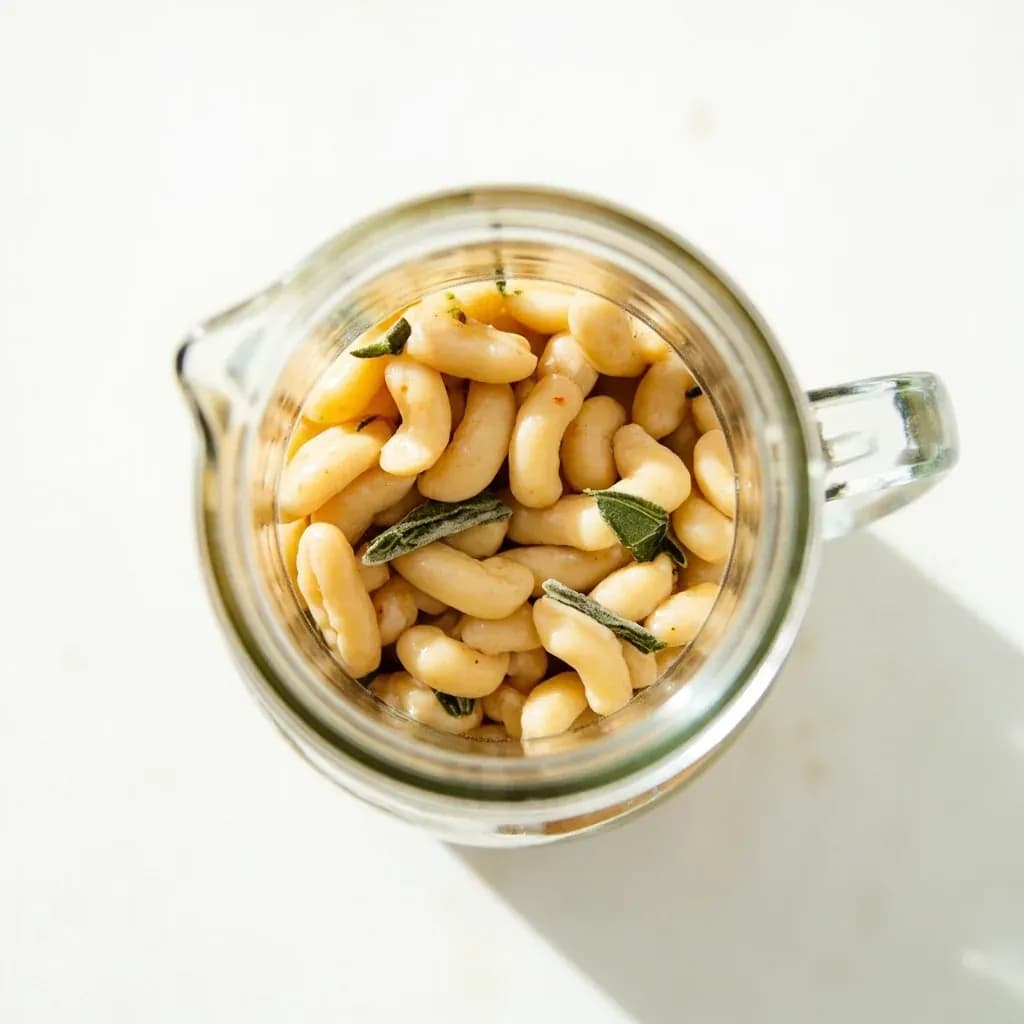
Bean-in-the-pot cooking, the Tuscan fagioli al fiasco, simmers dried beans with oil, garlic, sage, and water inside a glass wine flask or earthenware pot set beside dying embers. The gentle, enclosed heat over hours yields exceptionally creamy beans that absorb the aromatics with minimal stirring or evaporation. The narrow flask traps moisture so the beans cook almost in their own steam.
Bean-in-the-pot cooking, known across Tuscany as fagioli al fiasco or fagioli in testo, is one of the great slow techniques of Italian cucina povera. Dried beans — traditionally a small white Tuscan variety — go into an earthenware pot or straw-wrapped Chianti flask with cold water, a thread of olive oil, and a bay leaf; the lid is then sealed with a stiff flour-and-water dough and the whole vessel is left near a very low heat for six to ten hours. The cook's work is done long before the beans are tender. What emerges is a dish that tastes far more sophisticated than the effort that produced it: intact, velvety beans in a glossy, slightly thickened liquid that behaves almost like a sauce.
The method works because it is, in effect, steam cooking in the bean's own moisture. The dough seal traps every molecule of vapor, so the interior temperature never climbs high enough to split the skins or agitate the starches, and the beans soften gently in their own exudate. There is no aggressive boiling, no skimming of foam, no risk of a dry pot — only an unhurried, even transformation from hard pebble to creamy pulse. Hard water can defeat this gentleness, which is why traditional cooks used soft well or rain water, and why modern cooks in hard-water areas should filter or soften for both the soak and the cook.
Pellegrino Artusi gave the technique its first clear written treatment in La scienza in cucina e l'arte di mangiar bene (1891), and the dish retains a near-ritual place in Tuscan winter food culture, served on St. Anthony's Day (January 17) and through Carnival. Artusi himself recommended slipping the sealed pot into a bread oven after the loaves came out — the residual heat was ideal — and that practical advice remains the easiest entry point for a cook without a hearth.
- Difficulty
- Easy
Types & varieties
The classic Chianti method using a glass flask buried in embers; sometimes called al vetro
Cooked in a small terracotta pot with a tight-fitting lid — the more practical home version and the form Artusi describes
Modern oven adaptation in a heavy earthenware or cast-iron casserole; the most common contemporary form
A Florentine cousin — beans cooked slowly with tomato and sage, sometimes finished using the same gentle sealed-oven method
A thicker, soup-like variant with more water and aromatics (onion, garlic, sage) added before sealing
How to do it
- 1
Sort and soak the beans
Pick over 500 g of dried Cannellini, Zolfini, or mixed Tuscan beans to remove stones and shriveled beans. Rinse, then cover with 3–4 cm of cool water and a generous pinch of salt. Soak for 8–12 hours; drain and rinse.
- 2
Prepare the pot and aromatics
Place the drained beans in a small (1.5–2 L) earthenware pot or glass flask. Add 1 bay leaf, 1–2 peeled garlic cloves, and a small sprig of sage. Cover with 1–1.5 L of fresh cold water — the beans should sit under 3–4 cm of water.
- 3
Drizzle in olive oil
Add 3–4 tablespoons of good Tuscan extra-virgin olive oil on top. Do not stir. The oil forms a protective layer that keeps the surface even and slowly infuses the beans as they cook.
- 4
Seal the lid with dough
Make a stiff paste from about 200 g flour and 100 ml water, kneaded until smooth. Roll into a rope and press firmly around the rim of the pot, sealing the lid tightly so no steam can escape. Press the lid down and smooth the dough seal all the way around.
- 5
Cook in the embers or a low oven
Traditional: nestle the flask or pot into the warm ashes beside a low hearth fire, where the temperature is just enough to feel hot to the back of the hand. Modern: place in a 120–140°C oven (250–285°F) for 6–8 hours. The oven should never get hot enough to brown the dough seal deeply.
- 6
Rest, then test
Turn off the heat and leave the sealed pot in the cooling oven or embers for 30–60 minutes. Crack the dough seal, lift the lid, and test a bean. The interior should be creamy with no chalky core; the liquid should be thickened and glossy.
- 7
Finish and serve
Discard the bay and sage. Season generously with fine sea salt and a fresh grind of pepper. Stir gently — the beans will break down a little into their own sauce. Serve in shallow bowls with a final drizzle of raw olive oil and slices of toasted country bread.
The physics of the dough seal
The flour-and-water rope around the rim is not a garnish — it is the engine of the dish. Once the pot warms, water vapor inside expands and presses against the seal; the dough, which would crisp and crack in a hot oven, stays just flexible enough in a 120–140°C oven to hold that pressure. The result is a fully pressurized micro-environment in which the beans steam rather than boil. Without the seal, the liquid would reduce, the skins would toughen, and the texture would be that of an ordinary long-simmered pot of beans rather than the signature creamy-but-intact result. The dough itself is inedible after cooking and is meant to be discarded — its job is mechanical, not culinary.
Beans for the pot
Tuscan cooks favor small, thin-skinned white beans that soften to a buttery texture without losing their shape: Zolfini (sometimes called del Valdarno, with their pale gold cast), Sorana from the Sorana valley in the province of Lucca, and Cannellini as the everyday workhorse. Borlotti and larger fava beans work but need more liquid and a longer soak. Whatever bean you choose, sort it carefully — a single stone will not soften — and soak in cool water for 8–12 hours with a pinch of salt. Hard water genuinely slows softening; if your tap water leaves heavy limescale, switch to filtered or distilled water for both the soak and the cook.
From hearth to Dutch oven
The original pot was almost always a small, thick-walled earthenware testo, sometimes a straw-clad glass fiasco for presentation. Both conduct heat very slowly and evenly, which is why the technique tolerates such low temperatures. In a modern kitchen, a 1.5–2 L glazed earthenware pot is closest to the original; a heavy cast-iron Dutch oven is the next best choice. Avoid thin metal — it will scorch the beans where it touches and cool too quickly if opened. The size matters too: a pot that is too large lets the liquid evaporate before the seal can do its work; a pot where the beans fill more than two-thirds will boil over inside the seal.
Common uses
Tips & pitfalls
- Always soak the beans 8–12 hours in cool water with a pinch of salt. Hard water can prevent softening, so use softened or filtered water if your tap leaves heavy limescale.
- Salt only at the end of cooking, or in the last 30 minutes — early salting toughens the bean skins and noticeably slows softening.
- Seal the lid with a stiff dough of flour and water (about 2:1 by volume) pressed firmly around the rim; this trap is the signature of the method, not a decorative flourish.
- Keep the oven truly low — anything above 150°C risks splitting the skins and drying the pot. Aim for an oven that is barely warm to the touch on the outside.
- Never top up with cold water if the beans look dry mid-cook; add only hot water, and only if absolutely needed, or the cooking will stall and the skins may split.
- The dough seal is traditionally discarded — it becomes leathery and inedible — but the concentrated steam trapped beneath it is what gives the dish its silky, almost puréed sauce.
- Let the pot rest, still sealed, for 30–60 minutes after removing from heat. The carryover finishes the beans without further evaporation and lets the sauce settle to the right consistency.
- Test doneness by blowing on a few beans; if the skin wrinkles and the interior is creamy, they are ready. If the center is chalky, reseal and return to a slightly warmer oven for another hour.
Good to know
- Origin
- Tuscany, Italy — particularly the Chianti and Val di Chiana regions, where the technique belongs to rural farmhouse cooking
- Traditional container
- A straw-wrapped glass fiasco (Chianti flask) or, more commonly, a small earthenware testo or tegame sealed with a flour-and-water paste
- Heat source
- Historically the dying embers of a wood-fired hearth; today, a low oven set to 120–140°C (250–285°F)
- Cooking time
- 6–10 hours unattended, depending on bean size and variety
- Typical beans
- Cannellini, Zolfini (del Valdarno), Sorana, or other small Tuscan dried beans, often combined with a few chickpeas or a handful of farro
- Earliest written reference
- Pellegrino Artusi, La scienza in cucina e l'arte di mangiar bene (1891)
- Texture
- Intact but very creamy beans in a thickened, slightly syrupy liquid — achieved without aggressive boiling
- Season
- A winter dish; classic on Tuscan cold-weather menus and on St. Anthony's Day (January 17)
Also called
Fagioli al Fiasco · Beans in a Flask
Related

Boil
Cook in vigorously bubbling liquid at full rolling heat

Simmer
Hold liquid at a gentle shimmer for tender, unhurried cooking

Poach
Cook gently in barely-trembling liquid for silky, tender results

Steam
Cook in rising vapor to keep color, nutrients, and shape intact

Blanch
Plunge briefly in boiling water, then shock cold to lock color

Braise
Sear, then cook slow in a little liquid until fall-apart tender

Stew
Simmer bite-sized pieces fully submerged into a rich, unified pot

Sous-Vide
Seal and cook in precise warm water for edge-to-edge doneness