Water & Steam
Bhapa (Steaming in Mustard Paste)
Bengali method of steaming fish or vegetables sealed in a pungent ground-mustard paste.
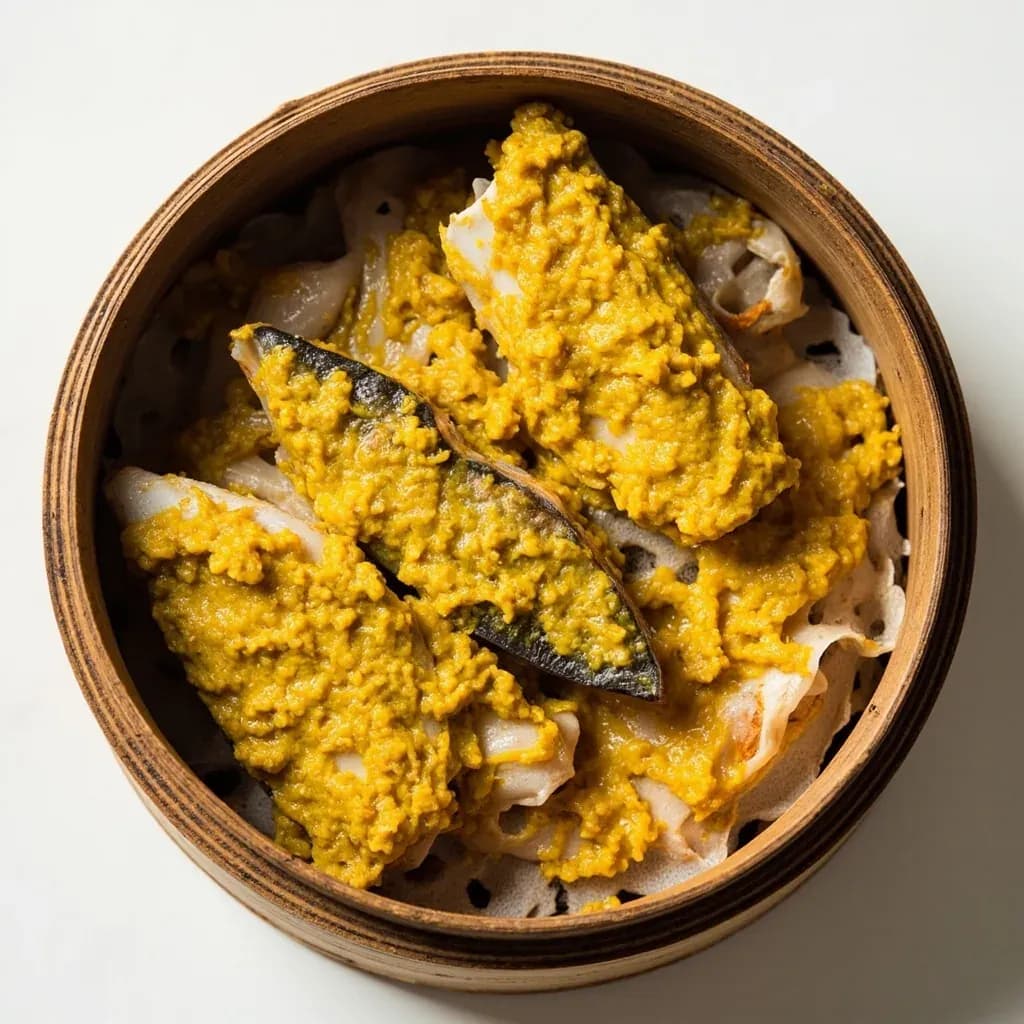
Bhapa is a Bengali steaming technique where fish, prawns, or vegetables are coated in a paste of ground mustard seeds, green chili, and mustard oil, then sealed in a covered container and gently steamed. The closed steam traps the volatile, sharp mustard aromatics so they infuse the protein rather than cook off. It is classically done in a tightly lidded tiffin set lowered into simmering water.
Bhapa cooks fish or vegetables in a sealed bowl suspended over simmering water, the food coated in a pungent paste of freshly ground black mustard seeds. The bowl is closed with a plate or banana leaf so that only trapped, indirect steam does the work — no oil bath, no tawa, no direct contact with the heat. What emerges is a tender, almost custardy dish where the sharp, sinus-clearing heat of kalo sorshe is mellowed by fat from the fish or coconut, and finished with the unmistakable grassy sting of raw mustard oil.
The technique matters because it is the cleanest, most flavor-forward way to showcase two ingredients that define Bengali cooking: hilsa and black mustard. Frying mutes both; bhapa amplifies them. It is also a forgiving, low-fat everyday method — weeknight fish, festive fish, and vegetarian sides all pass through the same pot. Success rests on three variables: the freshness and grind of the mustard, the ratio of paste to main ingredient (roughly 1:3 by volume), and the discipline of sealing the bowl so steam circulates around it, not into it.
- Difficulty
- Medium
Types & varieties
The iconic version: hilsa fillets in mustard paste, often with coconut or poppy seed
Prawns in mustard-coconut paste, traditionally wrapped in banana leaf
Rohu steaks in a mustard-yogurt marinade, more everyday than festive
Sea bass fillets in mustard paste — a milder canvas good for mustard newcomers
Hilsa with grated coconut folded into the paste for sweetness and body
Fish in a mustard-yogurt sauce; tangier, richer, closer to a custard
Baby potatoes steamed in mustard paste, the standard vegetarian side
Scored pointed gourd in mustard-chili paste
Sliced eggplant in mustard paste
Pumpkin wedges in mustard-coconut paste, slightly sweet-savory
How to do it
- 1
Toast and soak the mustard
Dry-toast 3–4 tablespoons of black mustard seeds (kalo sorshe) in a small pan over medium heat for 30–40 seconds until they pop and smell nutty. Transfer to a bowl, cover with warm water, and soak for 20–30 minutes. Drain before grinding.
- 2
Grind the mustard paste
Combine the soaked seeds in a stone mortar or small blender jar with 2–3 slit green chilies, ½ teaspoon turmeric, 1 teaspoon salt, and 1–2 tablespoons of mustard oil or water. Grind to a coarse, slightly grainy paste — not a smooth purée. Stir in a tablespoon of grated coconut or poppy seed paste now if using.
- 3
Temper the paste
Heat 1 tablespoon of mustard oil in a small pan until it just smokes. Pour the hot oil over the paste (or sauté the paste briefly for 30 seconds) to mellow the raw, acrid edge. Let it cool to room temperature before marinating.
- 4
Marinate the main ingredient
Pat 400–500 g of fish fillets or vegetable wedges dry. Rub with a pinch of salt and turmeric, then coat thoroughly with the mustard paste. For Bhapa Doi, fold in 2–3 tablespoons of whisked yogurt. Marinate 15–30 minutes; longer for thicker cuts.
- 5
Set up the steamer
Pour 3–4 cm of water into a deep kadai or pressure cooker and bring to a boil. Set a steel rack or an inverted shallow steel bowl on the base. The water must stay below the rack at a full boil.
- 6
Arrange and seal
Spread the marinated ingredient in a single layer in a shallow steel or earthen bowl (khola). Drizzle with 1 tablespoon of raw mustard oil and scatter a slit green chili on top. Cover the bowl tightly with a sheet of banana leaf or a steel plate.
- 7
Steam
Lower the bowl onto the rack, cover the pot with a tight lid, and steam over medium heat. Fish fillets: 8–12 minutes. Whole steaks: 12–15 minutes. Vegetables: 15–20 minutes. If the pot was not fully preheated, add 1–2 minutes.
- 8
Rest and serve
Switch off the heat and let the bowl sit, covered, inside the pot for 5 minutes. Lift out, remove the cover, and finish with a final drizzle of raw mustard oil. Serve hot with steamed gobindobhog or basmati rice and a plain dal.
The Mustard Question
Almost every failure in bhapa traces back to the mustard. Pre-ground mustard powder, yellow mustard powder, and English mustard are all wrong here — they are either too acidic, too mild, or too musty. The only correct base is kalo sorshe, black or brown mustard seed, freshly toasted and soaked before grinding. The seeds should be ground coarsely, not to a smooth purée; a slightly grainy paste clings to the fish and sets into a tender crust during steaming, where a smooth one turns gluey. A brief tempering in smoking mustard oil (just 30–60 seconds) tames the raw, acrid edge without killing the pungency — this single step is what separates sharp from sharp-but-balanced.
- Always toast the seeds first: 30–40 seconds in a dry pan until they pop
- Soak in warm water 20–30 min before grinding to soften and reduce bitterness
- Grind to a coarse paste, never a smooth purée
- Temper the finished paste in 1 tbsp hot mustard oil to mellow raw edges
Setting Up the Steamer
The steamer does not need to be a steamer. A deep kadai, a pressure cooker, or any pot with a tight lid and a steel rack works, as long as the water sits below the rack and the bowl is sealed before the lid goes on. The seal is the point: steam that escapes carries the mustard aroma with it, and steam that enters the bowl dilutes the paste. A steel plate pressed directly onto the bowl's rim, or a banana leaf tied with string, is the traditional solution. Resting the covered bowl inside the unlit pot for five minutes after cooking is not optional — it lets the paste firm up and the flavors settle into the protein.
Common uses
Tips & pitfalls
- Use freshly ground black mustard — pre-ground paste loses its volatile pungency within hours
- Do not skip the tempering step if you are new to mustard; raw, untempered paste can taste aggressively bitter
- Keep steamer water below the rack so simmering water does not splash into the bowl and dilute the paste
- Cover the bowl tightly with a plate or banana leaf — trapped steam is what cooks and sets the paste
- Do not over-steam fish: 10 minutes for thin hilsa fillets, 12–15 minutes for thicker steaks, or the flesh dries out and crumbles
- Salt the main ingredient lightly before adding the paste; mustard paste recipes traditionally carry less salt than they need
- Cut vegetables into even wedges so they finish at the same time the paste thickens
- Avoid yellow mustard powder or English mustard as substitutes — their flavor is mild and acidic, not the sharp heat of kalo sorshe
- Rest the steamed bowl 5 minutes off the heat so the paste firms up and the flavors settle
- Finish with a drizzle of raw mustard oil and a slit green chili just before serving for the characteristic aroma
Good to know
- Origin
- Bengal (West Bengal, India and Bangladesh)
- Word
- Bengali 'bhapa' (ভাপা) simply means 'steamed'
- Steaming time
- 8–12 min for thin fish fillets, 12–15 min for steaks, 15–20 min for vegetables
- Key fat
- Raw, cold-pressed kachi ghani mustard oil, used both in the paste and as a finishing drizzle
- Ratio
- Roughly 1 part mustard paste to 3 parts main ingredient by volume
- Yield
- One shallow bowl of 400–600 g steams most evenly
- Signature pairing
- Steamed gobindobhog or basmati rice with a plain dal
- Storage
- Best fresh; refrigerated up to 1 day and reheated gently over steam
Also called
Bhapa · Steamed Mustard Fish · Bhapa Maach
Related

Boil
Cook in vigorously bubbling liquid at full rolling heat

Simmer
Hold liquid at a gentle shimmer for tender, unhurried cooking

Poach
Cook gently in barely-trembling liquid for silky, tender results

Steam
Cook in rising vapor to keep color, nutrients, and shape intact

Blanch
Plunge briefly in boiling water, then shock cold to lock color

Braise
Sear, then cook slow in a little liquid until fall-apart tender

Stew
Simmer bite-sized pieces fully submerged into a rich, unified pot

Sous-Vide
Seal and cook in precise warm water for edge-to-edge doneness