Water & Steam
Biryani Layering and Dum
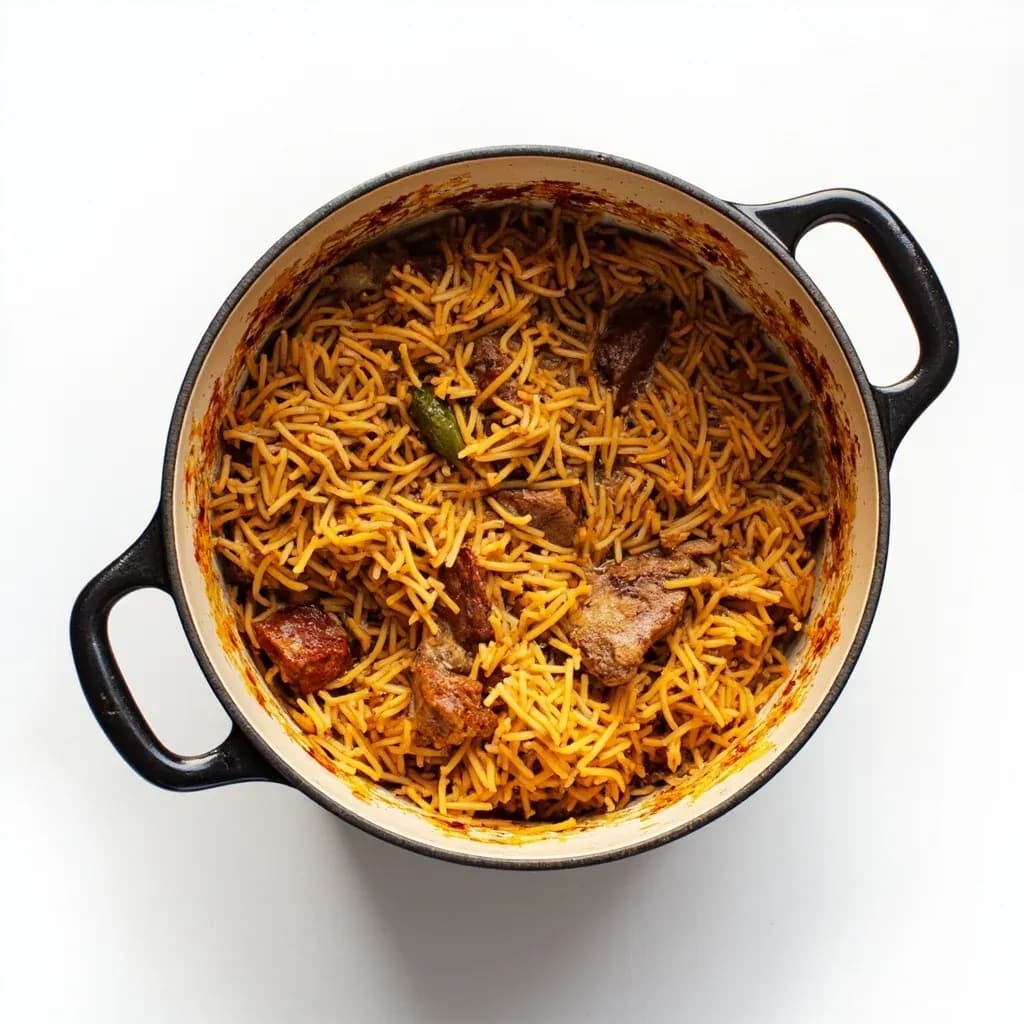
Layering parboiled rice with spiced meat and slow-steaming it sealed under dum for fragrant biryani.
This technique layers partly cooked aromatic rice over marinated, spiced meat in a heavy pot, then seals the lid, often with dough, and cooks on very low heat. The dum, or trapped-steam, finish lets the rice absorb the meat's juices and saffron-scented aromas while everything finishes gently together. The seal is broken only at serving so the built-up fragrance is released at the table.
Dum is the slow, sealed-pot steam cooking that turns a stack of rice and spiced meat into biryani. The technique hinges on a tight seal — traditionally a rope of wheat-flour dough pressed between pot rim and lid — that traps every gram of vapor rising from the meat, yogurt, and rice. That trapped vapor becomes the only cooking liquid for the final stretch, so what goes in is what flavors the dish; no extra water is added after layering. The result is rice that is fragrant but still whole, meat that stays tender in its own juices, and a marriage of spice, fat, and aroma that no open-pot method can match.
Layering is the geometry that makes dum work. The heaviest, wettest element — meat with its masala, or a thick gravy base — sits on the bottom of a heavy handi or Dutch oven, where direct heat and rising steam finish cooking it. Above it, parboiled rice is spread in one or two layers with fried onions, fresh herbs, saffron milk, and ghee scattered between. As heat enters from below, steam climbs through the rice while flavor descends from the aromatics, so each grain is perfumed from both sides in the last thirty minutes.
Two schools divide the Indian subcontinent's biryanis. In kachchi biryani (the Hyderabad school), raw marinated meat goes under parboiled rice and finishes cooking entirely under dum; in pakki biryani (the Lucknowi/Awadhi school), the meat is first braised until tender in a thick qorma, then layered with rice that only needs to absorb the aroma and steam through. Either way, the rule is the same: rice goes in at about 70–75% done, the seal is airtight, the flame is the lowest setting (often with a tawa between pot and burner), and the pot rests sealed for ten to fifteen minutes after the heat is cut.
- Difficulty
- Hard
Types & varieties
Raw marinated meat layered under parboiled rice; meat finishes cooking in steam and its own juices — the defining Hyderabad method
Meat cooked first in a thick qorma masala, then layered with rice and lightly dummed to meld flavors
Subtle and fragrant; rice is parboiled in yakhni stock and scented with rose or kewra water, with little chili heat
Mild and slightly sweet, scented with nutmeg and mace; traditionally served with a whole boiled egg and a potato (kachcha aloo)
Kerala Malabar style using short, aromatic kaima (seeraga samba) rice; meat and rice cooked separately before layering
Coastal Karnataka style built on a sour-sweet profile from tomato and tamarind with a heavy hand of fried onion
Tamil Nadu styles with seeraga samba rice, curry-leaf tempering, and a drier, punchier masala than the Mughal-derived versions
Tangy and tomato-forward, layered with potatoes and prunes for sweetness
Street-food style with fried potato wedges and a bright, slightly sweet masala
Vegetarian dum-pot dish using potatoes, peas, and paneer in place of meat, from the same sealed-steam tradition
How to do it
- 1
Marinate the meat
Combine meat with yogurt, ginger-garlic paste, ground turmeric, red chili, coriander, garam masala, salt, and a squeeze of lemon. Cover and rest 1–2 hours, or overnight in the refrigerator for mutton. A longer marination tightens texture and lets the salt penetrate.
- 2
Parboil the basmati
Bring a large pot of generously salted water to a rolling boil with whole spices — green cardamom, cinnamon, cloves, bay leaf, and shahi jeera. Drain 30-minute-soaked aged basmati and cook 6–8 minutes, until grains are about 70% done with a visible white core. Drain immediately and rinse briefly with cool water to halt the cooking; shake off excess moisture.
- 3
Prepare the aromatics
Slice onions thinly and fry in oil or ghee until deep golden brown (birista); drain on paper. Soak a generous pinch of saffron in 3–4 tablespoons warm milk for 10 minutes. Pluck mint and coriander leaves whole. Warm 2–3 tablespoons ghee until liquid.
- 4
Build the base layer
In a heavy-bottomed handi or Dutch oven, spread a thin film of ghee on the base, then add all the marinated meat (for kachchi) or the cooked meat masala (for pakki) in an even layer. This is the wettest, heaviest layer; place it directly over the heat.
- 5
Layer the rice and aromatics
Spoon half the parboiled rice gently over the meat and spread level — do not press. Scatter a third of the fried onions, mint, coriander, a drizzle of saffron milk, and a spoon of ghee. Add the remaining rice, level it, and repeat the toppings. Finish the surface with the last of the saffron milk and ghee; the saffron should streak the top in golden ribbons.
- 6
Seal the pot for dum
Roll wheat-flour dough into a thick rope and press it continuously around the rim of the pot. Clamp the lid on firmly and press down to compress the dough into a hermetic seal. (For foil, wrap the rim tightly and weigh the lid.) If smoking the biryani, set a foil cup with hot ghee-drenched charcoal on the rice surface just before sealing.
- 7
Slow-cook on dum
Place a heavy iron tawa on the burner and set the sealed handi on top; turn the flame to its lowest setting. Cook 25–35 minutes for chicken, 40–50 minutes for mutton. The pot must not hiss or release visible steam; if it does, reseal the lid and reduce the heat further.
- 8
Rest off heat
Switch off the flame and leave the pot fully sealed for another 10–15 minutes. Steam condenses on the lid and drips back through the rice, redistributing moisture and letting the grains firm up without going sticky.
- 9
Open and serve
Break the dough seal with a knife, lift the lid away from your face so the trapped aroma billows past you, and gently fold the layers from bottom to top with a wide spatula just before serving. Serve with raita, mirchi ka salan, or a simple kachumber.
Kachchi vs Pakki: The Two Schools
The choice between kachchi and pakki is the first decision in any biryani, and it dictates how you parboil the rice, how wet the meat layer should be, and how long the dum runs. Both are legitimate; they simply produce different textures and flavor intensities.
- Kachchi: raw marinated meat goes to the bottom of the pot under parboiled rice. The meat releases juices as it cooks, so the bottom of the biryani is wetter and more intensely spiced. Use mutton or bone-in chicken; long dum (40–50 minutes) ensures the meat is cooked through.
- Pakki: meat is braised until nearly done in a thick masala before layering. The rice absorbs aroma rather than juice, so grains stay drier and longer. Dum is shorter (20–30 minutes) because the rice only needs to finish steaming, not cook the meat.
- Regional shorthand: Hyderabad leans kachchi; Lucknow leans pakki; Kolkata and most Tamil Nadu styles are pakki. Thalassery is a distinct Malabar path — kaima rice is cooked to near-doneness in a spiced stock and layered with a separately prepared meat masala for a brief dum.
The Seal and the Smoke
The dough rope is the single most important detail of the technique. A pot that hisses is a pot that is losing its dum, and a pot that loses its dum is producing pulao, not biryani. The smoke trick at the end is a finishing flourish, not a cooking step.
- Knead whole-wheat flour with a little water into a stiff, pliable dough (not sticky). Roll it into a thick rope and press it continuously around the rim of the handi before clamping the lid on.
- If using foil, wrap the rim tightly, then weigh the lid with a heavy kettle or brick. Any gap is a leak.
- For dhua (smoked) finish, place a small foil cup on the rice surface, drop a teaspoon of ghee on a piece of red-hot charcoal, set the charcoal in the cup, and seal the lid for 2–3 minutes. The trapped smoke perfumes the top layer; it is not a substitute for proper dum.
Common uses
Tips & pitfalls
- Soak aged basmati 30 minutes and parboil only to 70–75%; fully cooked grains will disintegrate into porridge during dum — this is the single most common biryani failure.
- Always place the meat or thickest masala at the bottom of the pot so its steam rises through the rice; rice on the bottom scorches before the top steams through.
- Seal with a continuous rope of wheat dough around the rim — this is non-negotiable. A hissing pot is a pot that is making pulao, not biryani.
- Cook on a tawa over the lowest possible flame. Direct high heat burns the bottom layer long before the top layer has absorbed any aroma.
- For a smoky finish, set a piece of red-hot charcoal with a teaspoon of ghee in a small foil cup on the rice surface and seal the lid for 2–3 minutes; this is a flavor flourish, not a substitute for proper dum time.
- Rest the sealed pot 10–15 minutes after the heat is off so steam redistributes; opening immediately leaves the top layer undercooked and the bottom layer wet.
- Fold the layers gently from bottom to top just before serving; vigorous stirring breaks the long grains and ruins the texture.
- Fry the onions (birista) until deep golden, almost coppery; pale onions taste of raw sharpness rather than the sweet backbone a good biryani needs.
Good to know
- Origin
- Indian subcontinent; developed in Mughal-era kitchens under Persian dum influence, refined in Hyderabad and Lucknow
- Cooking method
- Sealed-pot steam cooking using the moisture from meat, yogurt, and rice as the only cooking liquid
- Rice used
- Long-grain aged basmati in North Indian styles; seeraga samba or kaima rice in Thalassery and Tamil styles
- Seal
- Wheat-flour dough rope pressed between pot rim and lid; heavy foil and a weighted lid as a modern substitute
- Heat level
- Very low flame, typically with a tawa (griddle) between pot and burner to diffuse heat and prevent scorching
- Dum duration
- 20–35 minutes for chicken, 40–50 minutes for mutton on stovetop; 35–60 minutes in a 180 °C / 350 °F oven
- Rice doneness before layering
- Parboiled to 70–75%, with a visible white core; fully cooked rice collapses into porridge under dum
- Resting time
- 10–15 minutes sealed after heat is off, so steam condenses and grains firm up without going soggy
Also called
Dum Pukht · Dum Cooking
Dishes that rely on it
Related

Boil
Cook in vigorously bubbling liquid at full rolling heat

Simmer
Hold liquid at a gentle shimmer for tender, unhurried cooking

Poach
Cook gently in barely-trembling liquid for silky, tender results

Steam
Cook in rising vapor to keep color, nutrients, and shape intact

Blanch
Plunge briefly in boiling water, then shock cold to lock color

Braise
Sear, then cook slow in a little liquid until fall-apart tender

Stew
Simmer bite-sized pieces fully submerged into a rich, unified pot

Sous-Vide
Seal and cook in precise warm water for edge-to-edge doneness