Transform & Preserve
Candying Fruit (Candire)
Preserving fruit by saturating it with sugar syrup over repeated cycles.
Candying slowly replaces a fruit's water with concentrated sugar syrup, often over days of progressively stronger soaks, until the flesh is glassy and shelf-stable. It's used for citrus peel, cherries, and chestnuts, yielding sweet, jewel-like confections. The gradual syrup increase keeps the fruit from shriveling and ensures the sugar penetrates fully.
Candying is sugar preservation pushed to its logical extreme: replacing nearly all the free water in a piece of fruit with dissolved sugar, so that microbes can no longer grow and the fruit keeps for months or years. The mechanism is osmotic — the syrup's sugar draws water out of the fruit's cells while sugar gradually diffuses inward, until the two phases reach equilibrium at roughly 70–80% sugar by weight. Because that swing cannot happen in a single step without rupturing the fruit, the process is staged: the fruit is soaked in a light syrup, rested, then moved into a stronger one, and the cycle repeated until saturation.
Done well, candied fruit is translucent, plump, and intensely flavored — the fruit's aromatic oils are concentrated along with the sugar, so a candied apricot tastes emphatically of apricot. Done badly, it is shrunken, leathery, or chalky at the center. The difference comes down to patience: each soak-and-raise cycle gives the cells time to re-equilibrate at the new concentration rather than collapsing under osmotic shock. Most of the work is waiting; only the syrup changes are active.
There are three commercial end products. Fruit confit (the Apt tradition) is fruit kept submerged in heavy syrup, glossy and moist, sold in jars. Glacé fruit is drained and slowly dried to a sticky, jewel-like finish. Crystallized fruit is glacé fruit rolled in coarse sugar so it no longer clings. The same starting fruit can become any of the three, depending on how far you take the drying step.
- Difficulty
- Hard
Types & varieties
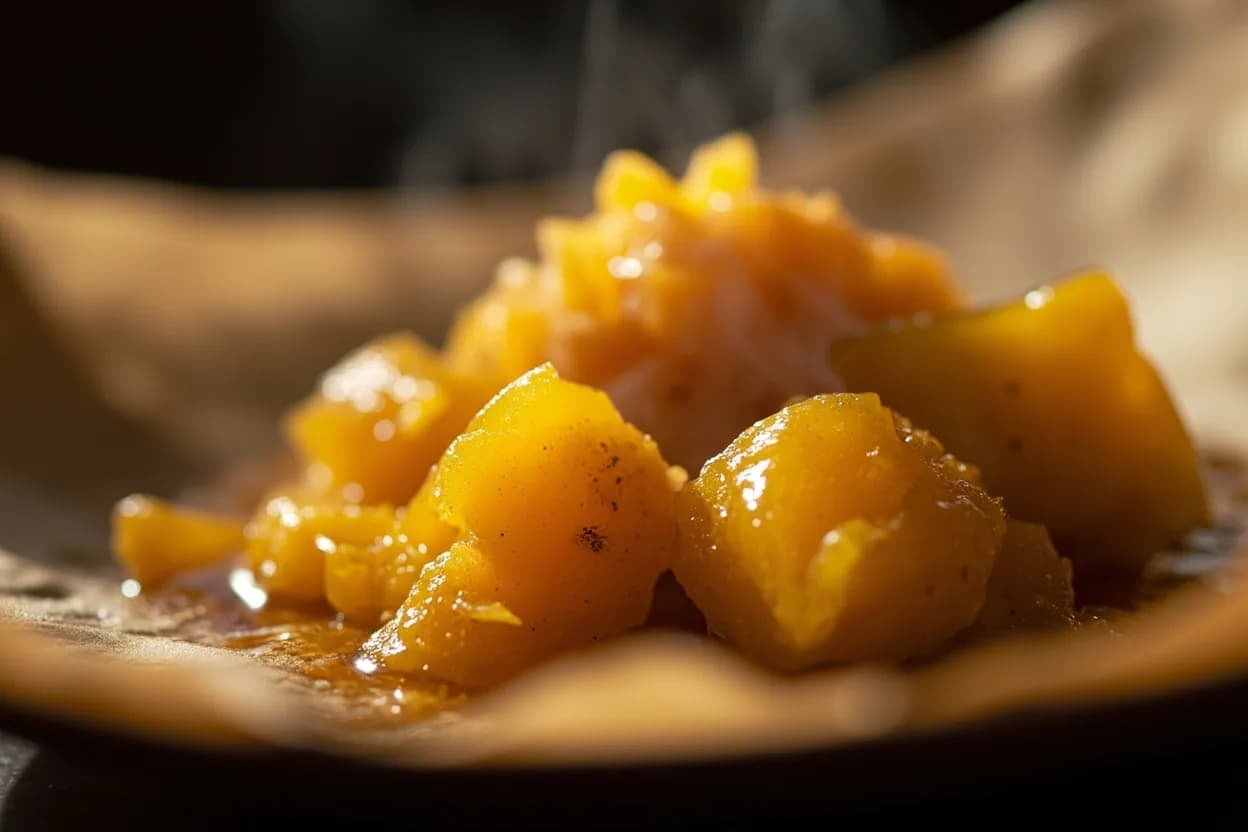
French tradition (Apt); fruit kept submerged in heavy syrup, plump and glossy, never fully dried.
Candied fruit that is drained and slowly dried to a translucent, jewel-like finish with a sticky gloss.
Glacé fruit rolled in coarse or sanding sugar so the surface sparkles and no longer sticks.
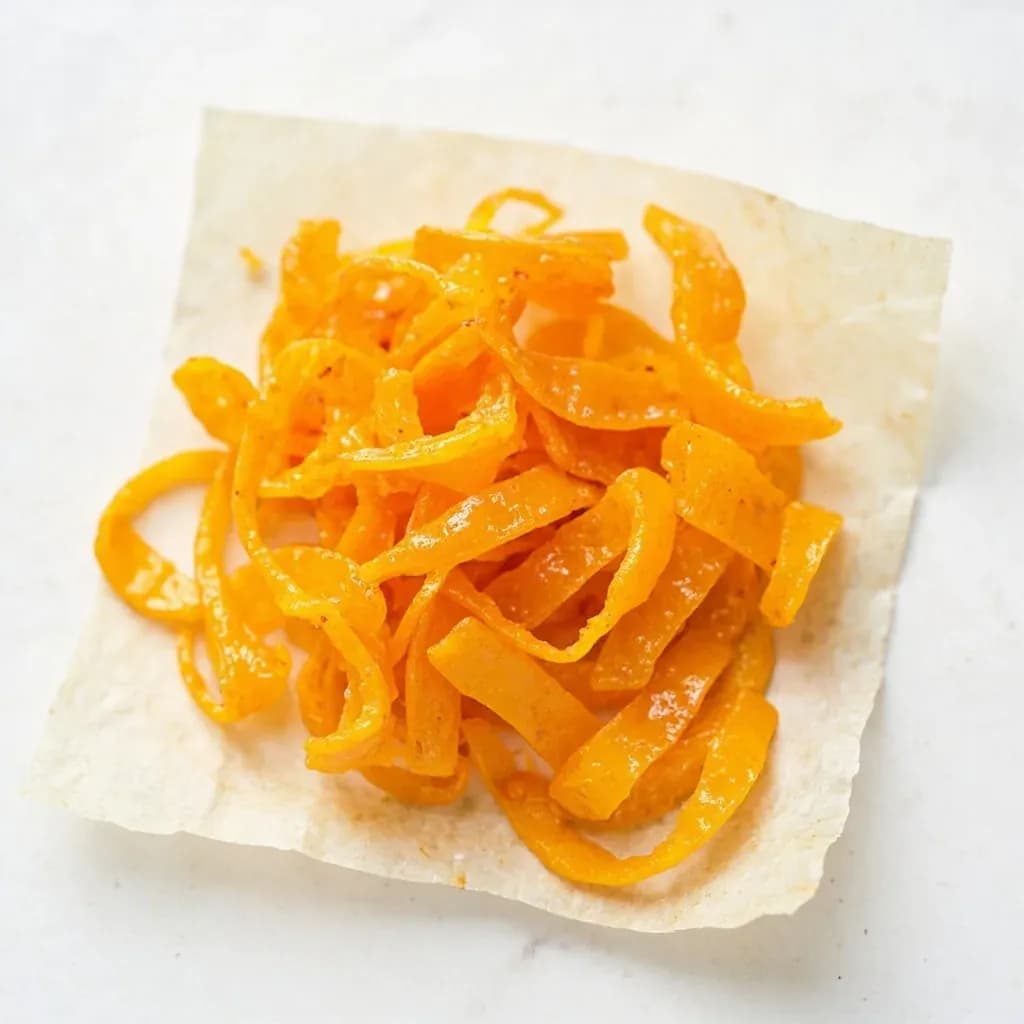
Citrus peel (orange, lemon, citron, cedro) candied in strips or cubes; used as 'mixed peel' in baking.
Small fruits (figs, apricots, cherries, baby pears, plums) candied intact after gentle blanching.
Stalks candied then dried; a classic European confection and cake decoration.
Fresh young ginger rhizome peeled, sliced, and candied; often rolled in sugar.
Whole or chunked citron fruit, central to the Italian Easter bread tradition.
How to do it
- 1
Select and prepare the fruit
Choose firm, unblemished fruit at the just-ripe stage — slightly under-ripe is better than over-ripe. Wash, peel if required, and cut into uniform pieces: quarters for figs and apricots, slices for pineapple, rings for citron, whole for small cherries. For citrus peel, trim away excess pith and pre-soak in salted water for 24–48 hours, changing the water once.
- 2
Optional pre-blanch
Plunge fruit into simmering water for 2–10 minutes (longer for dense roots or thick peels) to soften cell walls and drive out air, which helps syrup penetrate. Drain and refresh in cold water. Skip this for delicate berries and cherries.
- 3
Make the first (light) syrup
In a heavy non-reactive pot, combine water and sugar at roughly 500 g sugar per liter of water (about 30–35% w/w). Bring to a simmer, stirring until dissolved, then cool to lukewarm (around 40°C / 104°F).
- 4
First soak
Add the prepared fruit to the lukewarm syrup. Cover and let stand 24 hours at cool room temperature. The fruit should absorb liquid and the syrup level should drop slightly.
- 5
Drain and raise the syrup
Strain the fruit, reserving the syrup. Return the syrup to the pot, add about 100 g sugar per liter, bring gently to a simmer to dissolve, and cool again. A strip of lemon peel or a pinch of cream of tartar helps inhibit graining.
- 6
Repeat soak-and-raise cycles
Return the fruit to the cooler, slightly stronger syrup, hold 24 hours, then drain and re-strengthen. Repeat 5–8 cycles, raising sugar by roughly 10% each time, until the final syrup reaches 70–75% sugar (about 1.35–1.38 specific gravity / 70–75°Brix).
- 7
Final saturation
Once at target strength, keep the fruit in the warm syrup for 48–72 hours, holding the syrup just below a simmer — do not boil the fruit. The fruit is ready when evenly translucent with no white core and a refractometer reading of the fruit juice sits at or near the syrup's Brix.
- 8
Decide the finish
For fruit confit, transfer fruit and hot syrup to sterilized jars and seal. For glacé fruit, drain well. For crystallized, drain, dry until tacky, then tumble in coarse sugar.
- 9
Dry (glacé and crystallized)
Lay pieces on parchment-lined racks, not touching, in a dry, airy place at 20–25°C. Air-dry 24–48 hours, then finish in a dehydrator or 50–60°C oven for several hours until the surface is dry but the interior remains plump and chewy.
- 10
Sugar-coat (optional)
Roll dried glacé fruit in superfine or coarse sugar. Spread again on racks for 12 hours to set, then pack.
- 11
Condition and store
Pack in single layers separated by parchment in airtight tins or jars. Store at 10–15°C, dry and dark. For long keeping, pour a thin layer of the final syrup over the fruit in the jar, or vacuum-seal portions.
The science: why staged saturation matters
Candying is governed by osmosis across a semipermeable membrane — the cell walls of the fruit. When the fruit sits in syrup, water moves out of the cells toward the lower-water (higher-sugar) side, and sugar moves in. The driving force is the concentration gradient. If you drop fresh fruit into a heavy 70% syrup, the gradient is enormous, water leaves the cells faster than sugar can enter, the cell walls lose turgor, and the fruit shrivels irreversibly — leaving a hard, sugary shell with a wet, under-sweetened core.
Staging fixes this. By starting in a light syrup (around 30–35% sugar) and raising the concentration gradually in steps of about 10%, you keep the gradient small enough that the cells re-equilibrate at each level rather than collapsing. The result is a fruit that is fully saturated with sugar but still holds its shape and a little chew. Practical implication: never skip a cycle, and do not raise the sugar by more than 10–15% at a time, or you will undo the work of the previous soak.
Regional traditions worth knowing
Candying is not one technique but a family, and the local finish tells you what the fruit will be used for.
- Apt (Provence): the reference for fruit confit — whole apricots, pears, melons, and cherries kept soft under syrup, sold in jars, and used in tarts, pâtés, and cheese service.
- Italy (panettone and colomba industries): hard, dry candied citron and orange peel, often sold in small dice, that holds its shape after months of proving.
- Britain: crystallized glacé cherries and mixed peel, rolled in sugar, for Christmas baking — Dundee cake, fruitcake, stollen.
- Digne-les-Bains: the historic Provençal center for candied apricot, where whole fruit is gently blanched to soften the skin before staged syrup uptake.
Common uses
Tips & pitfalls
- Start fruit in a cool or lukewarm syrup, never in heavy syrup — direct contact with concentrated sugar hardens the outside and traps water inside, causing shriveling. This is the single most common mistake.
- Raise the sugar by 10–15% per cycle (about 100 g sugar per liter of existing syrup) and do not skip rest days; the cells need time to re-equilibrate at each concentration.
- Add a tablespoon of glucose, honey, or inverted sugar to the final syrup to discourage graining and surface crystallization during drying.
- Test doneness by cutting a piece: properly candied fruit is translucent throughout with no opaque white core, and the syrup no longer beads on the cut surface.
- Use only firm, slightly under-ripe fruit; overripe fruit collapses before the sugar reaches the center and you will end up with mush.
- For citrus peel, soak in several changes of salted water (24–48 h) and optionally a brief alkaline (lye or baking-soda) blanch to soften pith and aid syrup uptake.
- Stir gently and always add fruit to syrup off the heat before returning it to a simmer — thermal shock cracks delicate fruit and clouds the syrup.
- Keep everything scrupulously clean; a single fermentation will ruin a batch. Sterilize jars and refresh syrup if it sits more than a few days at room temperature.
Good to know
- Technique family
- Sugar preservation — water-activity reduction by osmotic impregnation
- Final syrup strength
- 70–80% sugar by weight (Brix) for full saturation
- Total time
- 3 days to 6 weeks depending on fruit size and density
- Yield
- Fruit gains roughly 30–50% in weight; finished moisture ~20–25%
- Shelf life
- 6–12 months dry; 1+ years submerged in syrup
- Storage
- Airtight, 10–15°C / 50–59°F, dry, dark
- Process temperature
- Syrup held at gentle simmer (95–105°C / 203–221°F); fruit is never boiled
- Difficulty
- Moderate — mostly patience and consistency
Also called
candire · glacé
Dishes that rely on it
Related

Confit
Cook slowly submerged in fat for silky tenderness and keeping

Cure
Draw out moisture with salt and time to preserve and concentrate

Pickle
Steep in acidic brine for bright, tangy, crunchy preservation

Ferment
Let friendly microbes transform food into tangy, complex flavor

Marinate
Soak in a seasoned mix to flavor and tenderize before cooking

Brine
Soak in salt water so meat stays juicy and seasoned throughout

Dehydrate
Slowly dry out moisture to concentrate flavor and extend shelf life

Cold-Smoke
Perfume cured food with smoke without cooking it through