Water & Steam
Coconut Milk Braising
Slow-braising meat or vegetables in coconut milk until tender and rich.
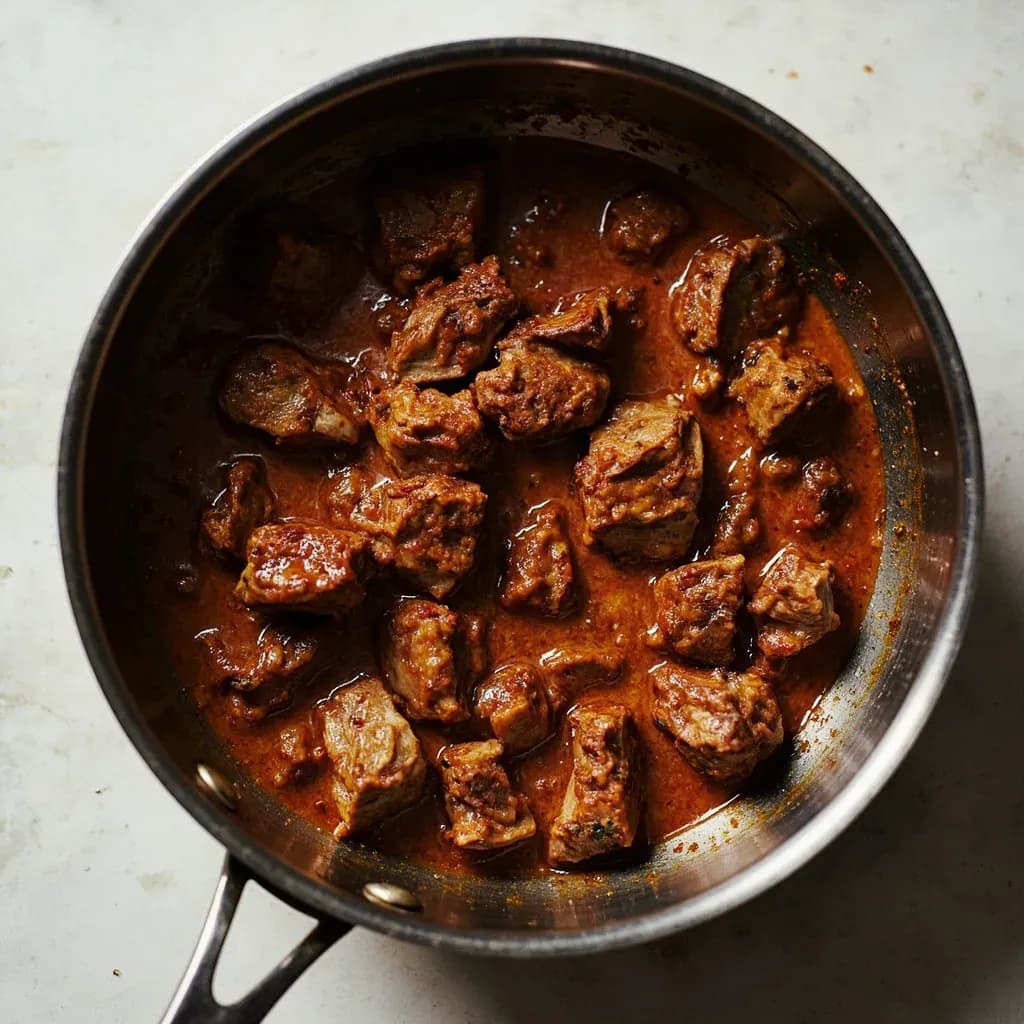
Coconut milk braising cooks tougher cuts or hearty vegetables low and slow in coconut milk, which tenderizes the food while reducing into a luscious sauce. It appears in dishes like Filipino ginataan and Indonesian rendang, where the liquid eventually concentrates and the coconut oil renders out. Long, gentle cooking is needed for the meat to soften and the sauce to thicken.
Coconut milk braising is a moist-heat cooking method in which meat, fish, or vegetables are simmered gently in coconut milk — often thinned with stock or water and seasoned with a base of aromatics and toasted spices — until the protein is tender and the liquid has reduced into a rich, fragrant sauce. It is the defining braise of cuisines from Kerala to the Caribbean, from Sumatra to Bahia, and it produces dishes that sit somewhere between a French-style braise and a saucy curry.
What sets the technique apart is the cooking medium itself. Coconut milk is roughly half water and a fifth fat, an unstable emulsion that both tenderizes through gentle heat and carries fat-soluble spice compounds — curcumin, capsicum oils, the warm notes of cinnamon and cardamom — into the finished sauce far more efficiently than a water-based stock. That emulsion is also fragile: it breaks into greasy curds above a bare simmer, which is why temperature control matters more here than in nearly any other braise.
Mastery comes down to three things: managing that fragile emulsion, layering flavor from toasted dry spices through sautéed aromatics to a finishing hit of acid and fresh herbs, and choosing the right end-point. A Thai tom kha stays soupy, a gulai is a pourable curry, a rendang is cooked until the milk vanishes and the meat fries in its own coconut oil. The cook's job is to know which destination you are heading for, then keep the heat low enough to get there without splitting the milk along the way.
- Difficulty
- Medium
Types & varieties
West Sumatran/Minang style: meat braised in spiced coconut milk cooked down until nearly all liquid evaporates and the meat caramelizes in its own oil.
Indonesian/Malaysian curry-style braise with a ground spice paste; more liquid than rendang, often including vegetables, and typically served with rice.
Thai Muslim-influenced braise of beef or chicken with potato, onion, and roasted peanuts in coconut milk.
Filipino generic term for anything braised or stewed in coconut milk, from jackfruit (langka) to shrimp (hipon).
Sri Lankan chicken curry braised in coconut milk with roasted curry powder, pandan, and lime.
Kerala-style fish braise with thin coconut milk, ginger, green chilies, curry leaves, and tomato.
Brazilian (Bahian) clay-pot braise of fish or seafood in coconut milk with dendê (palm oil), peppers, onion, and cilantro.
Filipino oxtail and offal stew traditionally thickened with ground peanuts and toasted rice; modern versions add coconut milk.
Thai coconut-milk braise with galangal, lemongrass, kaffir lime leaves, and a sweet-sour finish.
Chicken, fish, or goat stewed in coconut milk with scotch bonnet, thyme, allspice, and root vegetables.
How to do it
- 1
Prepare and measure
Mise everything out before heating: aromatics minced or pounded, dry spices measured, protein cut to uniform pieces, coconut milk opened, and any finishing acid and herbs ready. Long braises leave no time to chop once cooking starts.
- 2
Bloom dry spices
Heat 2–3 tablespoons of neutral oil or coconut oil in a heavy pot over medium heat. Add whole dry spices (cinnamon stick, star anise, cardamom, cloves) and toast 30–60 seconds until fragrant, then add ground spices (coriander, cumin, turmeric, chili) and stir for another 15–20 seconds so they toast in fat.
- 3
Sauté the wet aromatics
Add shallots or onion, garlic, ginger, galangal, lemongrass, and chilies. Cook gently for 5–8 minutes until softened and translucent but not browned; browning can turn the milk bitter and muddy its color.
- 4
Sear the protein (if using)
Pat the protein dry and season with salt. Add to the pot and brown on 2–3 sides for 2–4 minutes total. For delicate fish, shrimp, or tofu, skip this step and add them later with the milk.
- 5
Pour in the coconut milk
Add full-fat coconut milk all at once along with any stock or water (typically 1 part stock or water to 2–3 parts coconut milk). Stir to combine, scraping up any fond from the bottom.
- 6
Bring to a controlled simmer
Increase heat just until the surface shimmers and a few bubbles break through, then immediately drop to the lowest setting that maintains a gentle simmer. Skim any foam; do not let it come to a rolling boil.
- 7
Add hearty vegetables and cook covered
Add dense vegetables (potato, carrot, cassava, pumpkin) and partially cover the pot. Simmer for the bulk of the cooking time — 30 minutes for fish, 45–60 minutes for chicken, 1½–3 hours for beef, goat, or oxtail — turning or stirring occasionally.
- 8
Add quick-cooking ingredients
Add quick vegetables (bell pepper, green beans, leafy greens) and any seafood during the last 5–10 minutes so they keep their texture and color.
- 9
Reduce or finish (optional)
For a thinner sauce, stop here. For a thicker, coating consistency (gulai or pre-rendang), uncover and simmer 15–30 minutes longer. For rendang, continue uncovered, stirring frequently, until the milk is almost fully absorbed and the meat fries in its own coconut oil.
- 10
Adjust and finish
Off the heat, taste and adjust salt. Stir in acid (lime, tamarind, green mango) a little at a time, and finish with fresh herbs, fried curry leaves, or a drizzle of coconut cream. Rest 5–10 minutes before serving so the sauce settles.
The science of the split
Coconut milk is an emulsion of fat droplets suspended in water with proteins acting as the stabilizer. Heat agitates those proteins; once they denature and coagulate, the fat separates as a clear layer and the water goes thin and translucent. A hard boil does this in minutes; a lazy simmer can hold the emulsion together for hours. The practical takeaway: the moment you see vigorous bubbling across the whole surface, drop the heat. If splitting happens anyway, an immersion blender can often re-emulsify the sauce, or you can whisk in a few tablespoons of warm water or a spoonful of coconut cream.
Regional end-points
The same pot of coconut milk can finish as a soup, a curry, or a dry-fried meat — and regional cuisines have made each of those endpoints a tradition of its own.
- Soupy / saucy — Thai tom kha, Sri Lankan kukul mas curry, Kerala fish moilee. The milk is barely reduced; it pools around rice or bread.
- Pourable curry — gulai, massaman, Caribbean coconut stew. Reduced enough to coat a spoon but still liquid enough to ladle.
- Pre-rendang / dry — gulai cooked down a little further, or Filipino kare-kare thickened with toasted rice and peanuts. The sauce hugs the protein.
- Fully dry — rendang. Coconut milk cooked away until the meat fries in clarified coconut oil, dark and intensely flavored.
Building the flavor base
A good coconut-milk braise is built in three passes, and skipping any of them shows in the finished dish.
- Toast whole dry spices (cinnamon, star anise, cardamom, cloves) in oil first, then ground spices (coriander, cumin, turmeric, chili) for 15–20 seconds — blooming fat-soluble aromatics that water-based braising cannot reach.
- Sauté wet aromatics (shallot, garlic, ginger, galangal, lemongrass, chilies) gently until soft and translucent; browning here turns the milk bitter and muddies the color.
- Sear the protein separately for a Maillard crust and fond on the pot bottom; delicate fish, shrimp, or tofu skip the sear and slide in raw near the end of the cook.
Common uses
Tips & pitfalls
- Keep the heat at a bare, lazy simmer. A hard boil breaks the milk's emulsion: the proteins coagulate and the fat separates into translucent, greasy curds.
- Toast dry spices in a little oil before adding any liquid; blooming them in fat releases fat-soluble aromatics that water-based stock alone cannot carry.
- If the milk splits, whisk in a few tablespoons of warm water or a spoon of coconut cream; an immersion blender can usually rescue it.
- Use canned full-fat coconut milk for reliable fat content; 'lite' versions split more easily and yield thinner, less satisfying sauces.
- Season in layers — salt the aromatics early, salt the protein as it browns, and adjust again at the end, since reduction concentrates salt quickly.
- Add dense vegetables (potato, carrot, cassava) early so they cook through; add quick-cooking greens and fresh herbs at the very end.
- Finish with acid (lime, tamarind, green mango) and fresh herbs (cilantro, Thai basil, curry leaves fried in oil) to lift what would otherwise feel heavy.
- For rendang-style dishes, leave the coconut oil that rises during the long cook — that oil is the flavor; skim it only for saucier dishes that feel greasy.
Good to know
- Primary liquid
- Full-fat coconut milk, often thinned 2:1 or 3:1 with water or stock
- Ideal cooking temperature
- Gentle simmer at roughly 85–95 °C / 185–205 °F; vigorous boiling splits the emulsion
- Typical cooking times
- 30 min for fish/seafood; 45–90 min for poultry; 1½–3 hr for tough meats such as beef, goat, or oxtail
- Pan type
- Heavy-bottomed pot or Dutch oven to distribute heat and prevent scorching
- Fat content matters
- Full-fat (not 'lite') coconut milk gives a richer mouthfeel, better emulsification, and more resistance to splitting
- Key flavor drivers
- Aromatics (shallot, garlic, ginger, lemongrass, galangal, chilies) and toasted dry spices (coriander, cumin, turmeric, cardamom, cinnamon, star anise)
- Acid finish
- Lime juice, tamarind, or green mango added at the end to balance richness
- Difficulty
- Low to moderate; the central skill is temperature control
Also called
ginataan · coconut braise
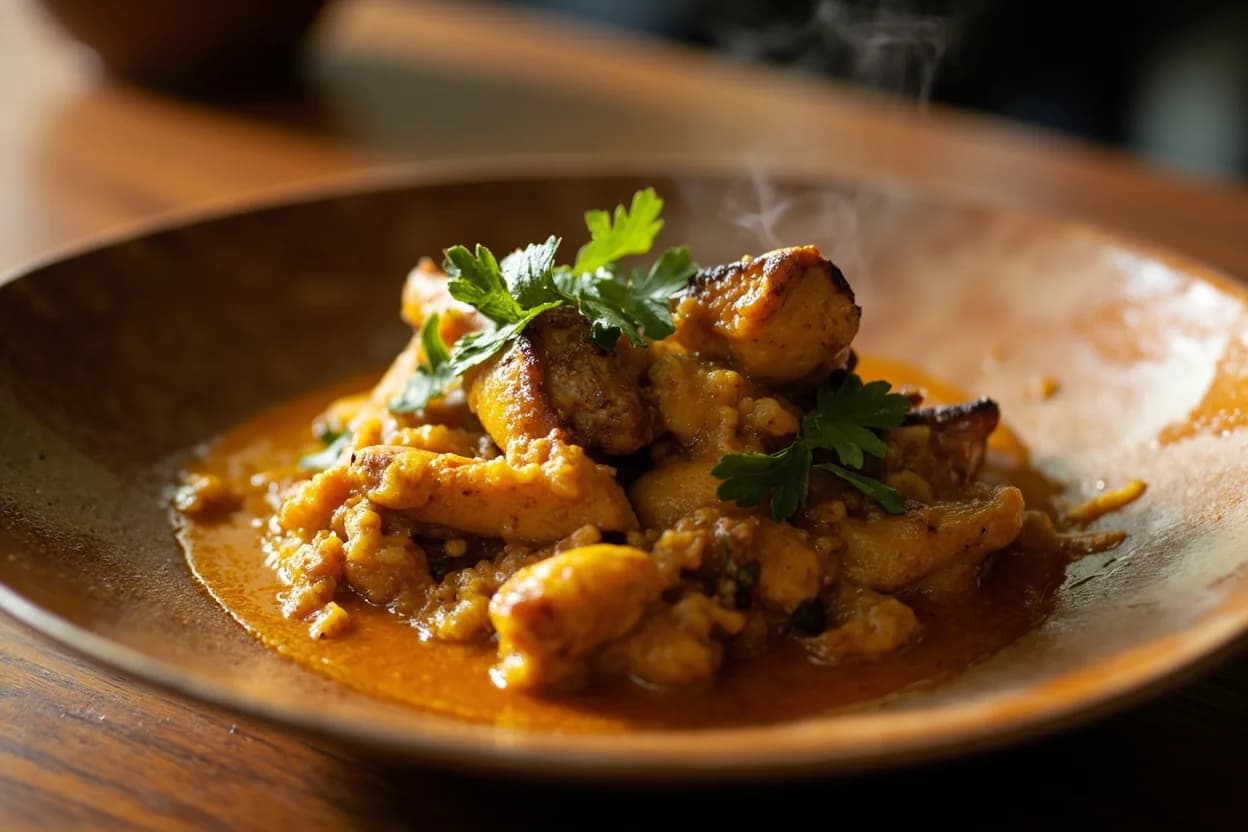
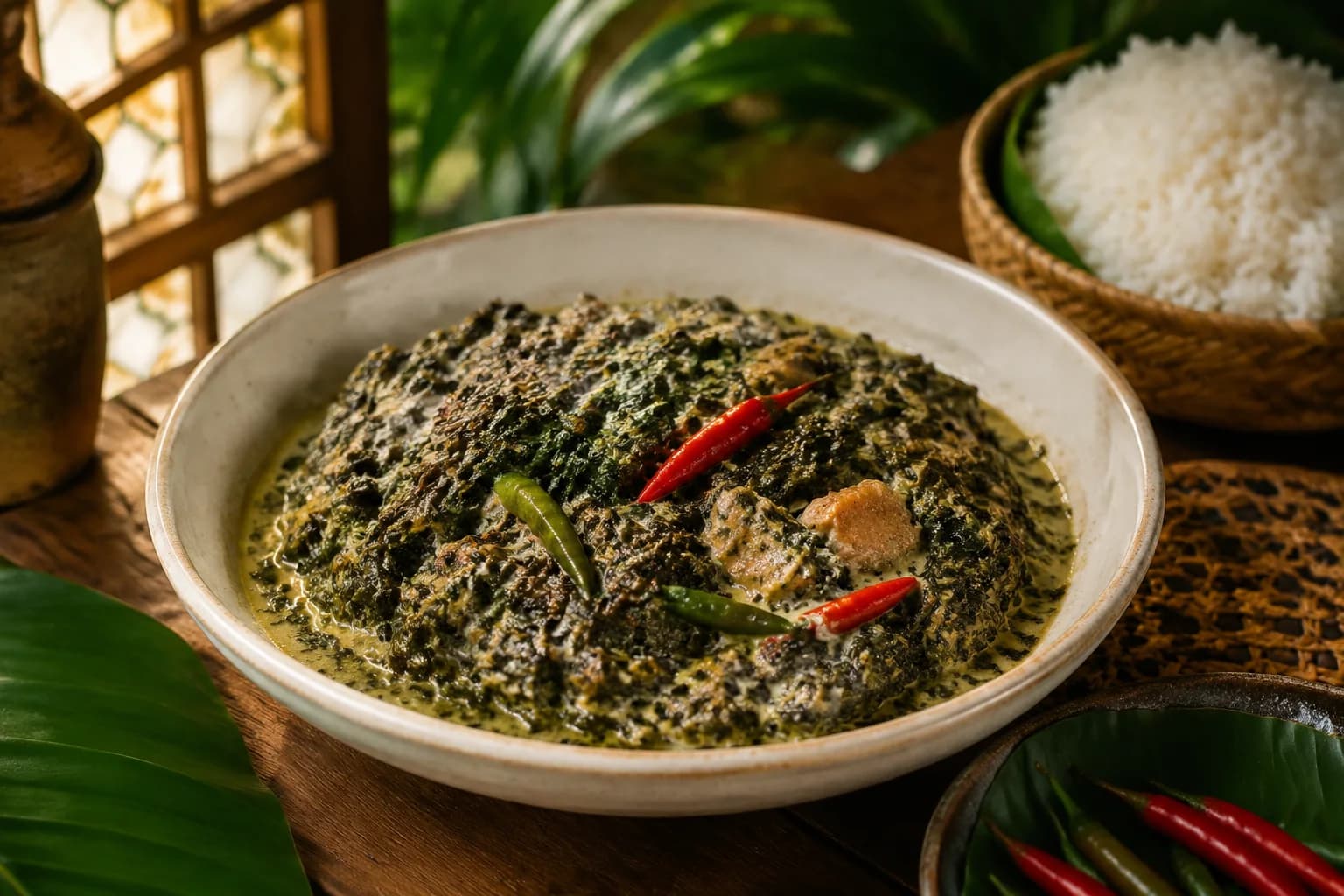
Dishes that rely on it
Related

Boil
Cook in vigorously bubbling liquid at full rolling heat

Simmer
Hold liquid at a gentle shimmer for tender, unhurried cooking

Poach
Cook gently in barely-trembling liquid for silky, tender results

Steam
Cook in rising vapor to keep color, nutrients, and shape intact

Blanch
Plunge briefly in boiling water, then shock cold to lock color

Braise
Sear, then cook slow in a little liquid until fall-apart tender

Stew
Simmer bite-sized pieces fully submerged into a rich, unified pot

Sous-Vide
Seal and cook in precise warm water for edge-to-edge doneness