Transform & Preserve
Cold-Brew Dashi (Mizudashi)
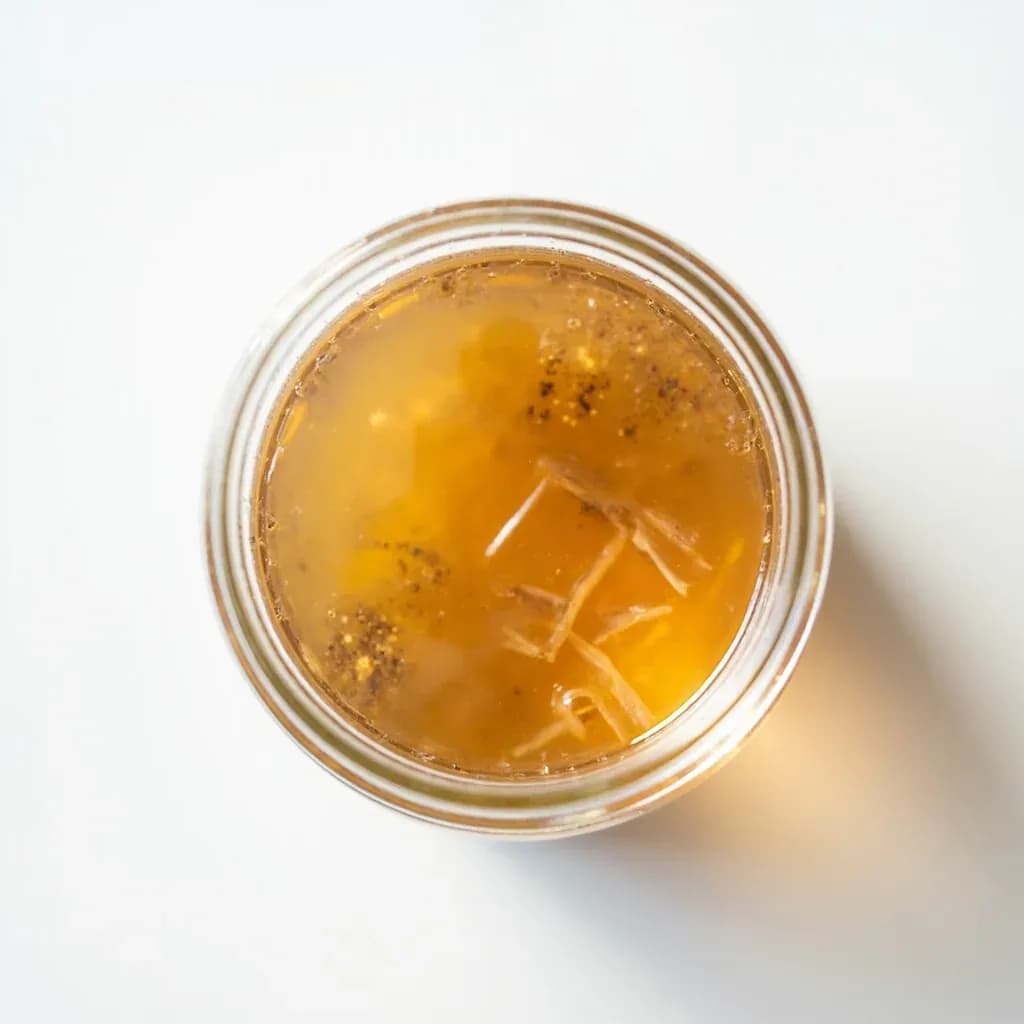
Steeping kombu and katsuobushi in cold water overnight for a clean, low-bitterness dashi.
Cold-brew dashi, or mizudashi, extracts umami from kombu and bonito flakes by steeping them in cold water in the fridge for several hours to overnight instead of heating. The low temperature pulls glutamates and inosinates gently while leaving behind the bitterness and cloudiness that hot extraction can cause. The result is a clear, delicate stock prized for refined Japanese soups and simmered dishes.
Mizudashi (水出し) is the Japanese technique of extracting dashi in cold water over many hours, almost always overnight in the refrigerator. Where hot-brewed ichiban dashi relies on heat to pull glutamates from kombu and inosinates from katsuobushi, mizudashi relies on time: the same ingredients sit in 1–5°C water for 8–12 hours and surrender their flavor compounds slowly, gently, and selectively.
The payoff is a broth that is cleaner, sweeter, and more transparent than its hot-brewed counterpart. Heat is indiscriminate — it coaxes out umami alongside bitter polyphenols from kombu and astringent, cloudy compounds from katsuobushi. Cold water is a more polite solvent, favoring glutamic acid and the softer sweet-savory notes while leaving the harsher flavors behind. The resulting dashi is pale amber, almost clear, with a rounded umami and none of the vegetal bitterness that can plague an over-extracted hot brew. It is the broth Kyoto cooks reach for, and the broth you want whenever the dashi itself is the point of the dish.
Practically, mizudashi is a plan-ahead technique. The work itself takes two minutes; the refrigerator does the rest. Most professional kitchens start a batch at close of service so it is ready by the next morning's prep, and home cooks can do the same the night before a delicate meal. The liquid can be used straight, reduced gently for a sauce base, or frozen in cubes for whenever a clean dashi is needed.
- Difficulty
- Easy
Types & varieties
Pure kelp infusion, vegan, and the Kansai standard. Sweet, mineral, almost tea-like; the dashi of choice when you want the broth itself to taste clean and quiet.
Kombu and katsuobushi steeped together (or in sequence) for a layered umami that combines glutamate from kelp with inosinate from bonito — a synergistic effect, since the two compounds amplify each other.
Small dried sardines (niboshi/iriko) used in place of bonito, sometimes alongside kombu. Deeper, more savory, and slightly briny — the Kanto-style answer to Kyoto's kombu-dominant dashi.
Kombu that has been shaved or cut into strips to increase surface area. Extracts a little faster and a little more fully than whole sheets, useful when time is short.
Kombu steeped alone for 8–10 hours, removed, then katsuobushi added for a final 1–2 hours. Produces the cleanest, most refined result and gives precise control over each ingredient's extraction window.
How to do it
- 1
Prepare the kombu
Choose good-quality Rishiri or Hidaka kombu with a thick body and visible white powder on the surface. Wipe gently with a dry or barely damp cloth to remove dust and any surface salt — do not rinse. The white bloom is glutamic acid; you want to keep it.
- 2
Combine kombu and cold water
Place 10 g of kombu per liter of cold filtered water in a non-reactive container (glass, food-grade plastic, or a non-reactive stainless insert). Make sure the kombu is fully submerged. Cover and set in the refrigerator at 1–5°C.
- 3
Cold steep the kombu
Steep for 8–12 hours. Overnight is the standard — start it in the evening, use it the next morning. The water will gradually turn a pale gold as glutamates and gentle sweetness leach out.
- 4
Remove the kombu at the right moment
Once the kombu feels slightly slippery and the water is pale golden, lift it out with tongs or chopsticks. Do not let it sit past this stage; over-steeped kombu releases mucilage and a vegetal bitterness that muddy the broth. (The reserved kombu can be used for a second cold extraction — niji-dashi — or for a hot niban dashi; see tips.)
- 5
Add katsuobushi (for awase dashi)
Add 10–20 g of katsuobushi per liter of the cold kombu liquid. Return to the refrigerator for 1–2 hours only — any longer and the bonito will start contributing astringent, fishy notes. Skim any foam that rises to the surface during the first hour.
- 6
Strain gently
Set a fine-mesh sieve over a clean container, line it with cheesecloth if you have it, and pour the dashi through. Do not press or squeeze the katsuobushi; let gravity do the work. Squeezing forces out the very compounds you worked to avoid. The finished dashi should be clear, pale amber, and lightly aromatic.
- 7
Store or use
Use immediately, or refrigerate in a sealed container for up to 2–3 days. For longer keeping, freeze in ice-cube trays or small jars; thaw as needed and use within a day of thawing for best flavor.
Why Cold Water Changes the Flavor
The difference between hot- and cold-brewed dashi is essentially chemistry, and understanding it explains every rule of the technique. Kombu's signature compound is glutamic acid, the free amino acid responsible for its savory sweetness. It is highly soluble in cold water given enough contact time. Less welcome are the polyphenols — including phloroglucinol and its derivatives — that taste bitter and vegetal. These dissolve readily in hot water but very slowly in cold.
Katsuobushi presents a parallel picture. Its prized inosinic acid (inosinate) leaches out efficiently in cold water over hours, and so do its savory peptides. But it also contains fats, suspended proteins, and astringent compounds that bloom quickly at high temperatures and turn the broth cloudy and sharp. Cold extraction leaves most of them behind.
The practical lesson: in a hot dashi you must watch the clock and pull ingredients at precise moments to avoid bitterness; in a mizudashi the refrigerator does the moderating for you, and the margin for error is much wider.
- Glutamate from kombu: extracts well in both hot and cold, but tastes rounder when extracted cold.
- Polyphenols from kombu: extract mainly in hot water — the main source of bitterness.
- Inosinate from katsuobushi: extracts efficiently in cold over several hours.
- Astringents and suspended proteins from katsuobushi: extract mainly in hot water — the main source of cloudiness and sharpness.
- Combined glutamate + inosinate produces synergistic umami noticeably stronger than either compound alone.
Hot-Brewed vs. Cold-Brewed: When to Use Each
Mizudashi is not a universal substitute for ichiban dashi; each is better suited to a different job. Use the list below as a quick guide.
- Mizudashi is preferred for: suimono, chawanmushi, clear soups, cold tofu, somen/hiyamugi dipping sauces, delicate fish, light vinaigrettes, ochazuke.
- Ichiban/hot dashi is preferred for: miso soup, nimono (simmered dishes), noodle-broth bases where stronger flavor stands up to other ingredients, anything that will be reduced heavily.
- For a sauce base, mizudashi can be reduced gently over low heat (never boiled) to concentrate flavor without re-extracting bitterness.
Common uses
Tips & pitfalls
- Wipe kombu with a dry cloth — never rinse — so you keep the surface glutamates and avoid washing off flavor.
- Use soft, filtered water. Hard water's calcium and magnesium bind glutamates and mute the umami noticeably.
- Keep the container in the refrigerator the entire time; room-temperature steeping encourages bacterial growth and turns the kombu slimy.
- Pull the kombu the moment it feels slippery. Past that point, mucilage and a green bitterness creep in.
- If adding katsuobushi separately, steep it in the cold kombu liquid for no more than 1–2 hours — longer steeping introduces bitterness and cloudiness.
- Do not squeeze the katsuobushi when straining. Let it drain under its own weight to keep the dashi clear and clean.
- Skim any foam that forms in the first hour or two of steeping for the brightest, clearest result.
- Save the used kombu for a second cold brew (niji-dashi) — it yields a lighter, slightly sweet dashi perfect for miso soup. Do not re-use katsuobushi; it gives up most of its flavor on the first steep and turns muddy on the second.
Good to know
- Japanese Name
- Mizudashi (水出し); sometimes called reisui-dashi (冷水出し)
- Steeping Time
- 8–12 hours, refrigerated
- Water Temperature
- 1–5°C (34–41°F)
- Standard Ratio
- 10 g kombu + 10–20 g katsuobushi per 1 L water
- Yield
- ~900–950 ml per 1 L of water
- Storage
- Refrigerated 2–3 days; frozen 1–2 months
- Best Water
- Soft, filtered water; hard water mutes umami extraction
- Yield Note
- Small loss to kombu absorption and straining; sediment-free when handled gently
Also called
Mizudashi · Cold Dashi
Related

Confit
Cook slowly submerged in fat for silky tenderness and keeping

Cure
Draw out moisture with salt and time to preserve and concentrate

Pickle
Steep in acidic brine for bright, tangy, crunchy preservation

Ferment
Let friendly microbes transform food into tangy, complex flavor

Marinate
Soak in a seasoned mix to flavor and tenderize before cooking

Brine
Soak in salt water so meat stays juicy and seasoned throughout

Dehydrate
Slowly dry out moisture to concentrate flavor and extend shelf life

Cold-Smoke
Perfume cured food with smoke without cooking it through