Transform & Preserve
Cold Retarding (Overnight Proof)
Slowing dough fermentation in the fridge overnight to deepen flavor and ease handling.
Cold retarding rests shaped or bulk dough in the refrigerator, slowing yeast activity so fermentation proceeds gently over many hours. The long, cool ferment develops more complex, slightly sour flavor and a better crust while making sticky doughs firmer and easier to shape. It is a cornerstone of sourdough and artisan baking, letting bakers split the work across two days.
Cold retarding is the practice of holding shaped or bulk dough at refrigerator temperature (2–4°C / 35–40°F) for an extended period, most often 8 to 24 hours, so that fermentation proceeds in slow motion rather than at room-temperature pace. Yeast metabolism drops roughly 20- to 50-fold in the cold, but the enzymes already present in flour (amylases, proteases) and any lactic-acid bacteria from a preferment keep working, breaking down starches and proteins while producing organic acids and esters. The result is bread that tastes rounder, more aromatic, and more deeply wheaten than the same formula baked on a same-day schedule.
The technique was codified in modern artisan baking by Raymond Calvel, whose work at the École Française de Boulangerie in the 1970s and 80s made an overnight cold final proof a cornerstone of baguette production. Cold retarding is not the same as using a preferment (poolish, biga, pâte fermentée, or levain): a preferment builds acidity through a warm, active fermentation, while a retard slows everything down. The two are routinely combined — a mature preferment plus a long cold final proof produces the most complex flavor a home kitchen can coax from a lean dough.
Practically, a cold retard also gives the baker a time machine. Dough mixed in the evening and pulled from the fridge in the morning is at peak proof, ready to score and bake, and behaves better in the oven than a freshly shaped loaf: the cold surface holds its shape under the blade, the score opens cleanly, and the thermal shock of a hot oven produces a more dramatic spring.
- Difficulty
- Medium
Types & varieties
Dough shaped, then held cold 8–24 hours before baking — the most common usage and the strictest meaning of 'cold retard.'
The entire bulk ferment happens in the fridge (12–48 hours); dough is then divided, shaped, and given a brief room-temperature final proof.
Bulk in the fridge, then final proof also cold — a long, very slow schedule that maximizes flavor extraction from the flour.
Used with a mature preferment and very little fresh yeast; develops pronounced tang and a blistered, deeply caramelized crust.
Naturally leavened dough given a 10–16-hour cold final proof — standard practice for open-crumb boules and batards.
Croissants, brioche, and panettone are frequently retarded cold to develop flavor while keeping butter firm and dough workable.
How to do it
- 1
Mix with reduced yeast
Combine flour, water, salt, and roughly a quarter to half the yeast of a same-day recipe. Develop the dough through kneading or stretch-and-folds until smooth, elastic, and able to hold a windowpane for lean breads.
- 2
Bulk ferment (optional)
Ferment 1–3 hours at room temperature with one or two folds in the first 90 minutes if the dough is high-hydration or you want a more open crumb. Skip this and place the mixed dough straight in the fridge for a pure cold bulk.
- 3
Divide and pre-shape
Turn the dough onto a lightly floured counter, divide to weight, and gently round each piece. Cover and rest 20–30 minutes so the gluten relaxes before final shaping.
- 4
Final shape
Shape into the final form — boule, batard, baguette, or roll — and place seam-up in a well-floured banneton, on a couche, or seam-down on a parchment-lined tray.
- 5
Cover and chill
Wrap tightly with plastic wrap, slide into a large bag, or cover with a couche and damp towel so the surface does not dry out. Place in the refrigerator at 2–4°C / 35–40°F.
- 6
Retard 8–24 hours
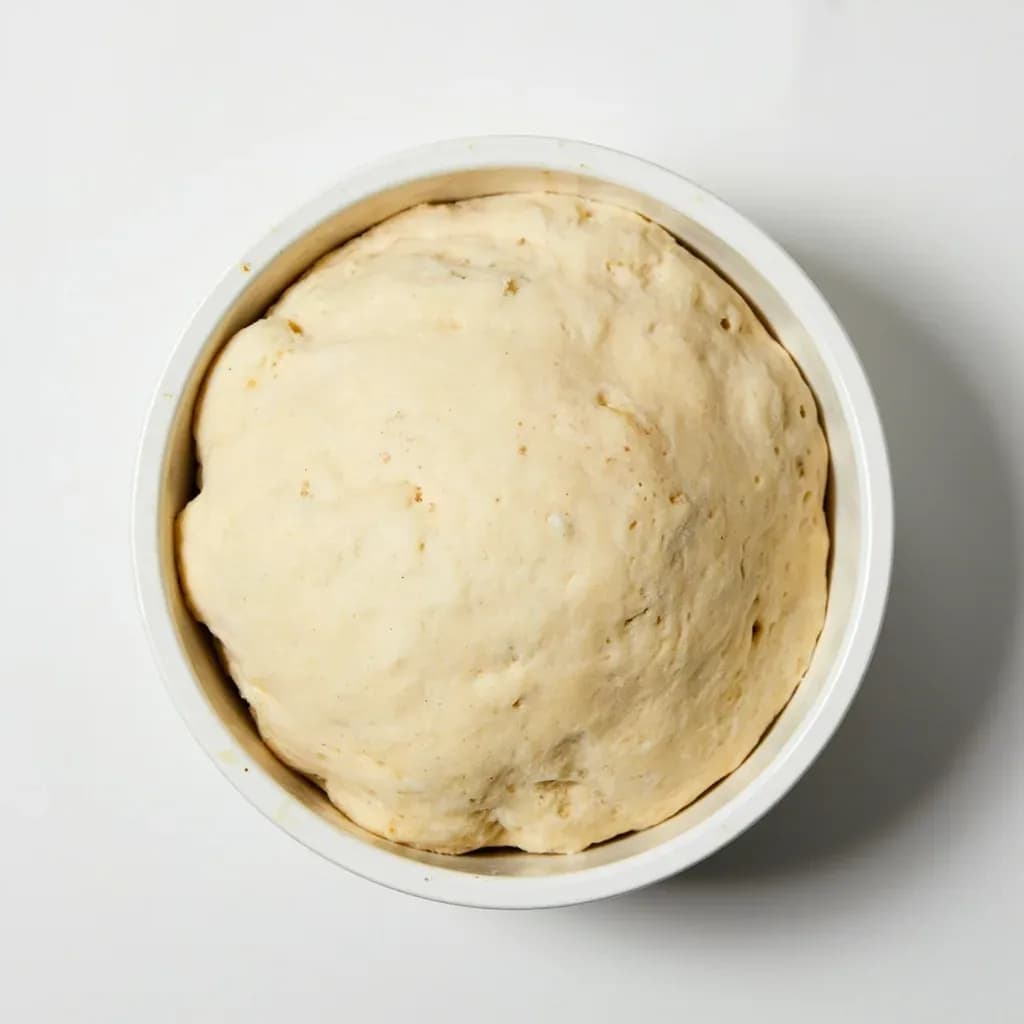
Let the dough proof slowly in the cold. The dough is ready when it has grown roughly 50–75% in volume, feels pillowy, and a lightly floured poke springs back slowly with a slight indentation remaining.
- 7
Preheat and prepare to bake
Place a Dutch oven, baking stone, or steam tray in the oven and preheat to 230–260°C / 450–500°F for at least 45 minutes. Remove dough from the fridge; score immediately while cold for the cleanest cuts, or temper 15–30 minutes at room temperature if the dough is rock-hard.
- 8
Bake with steam
Load the dough, bake with steam for the first 15–20 minutes, then vent and continue baking until the crust is deep mahogany and the loaf sounds hollow when tapped on the bottom (internal temperature around 95–100°C / 205–210°F for lean breads).
Retard versus preferment: how flavor actually gets built
These two techniques are often conflated because they pair well, but they do different work. A preferment (poolish, biga, pâte fermentée, levain) is fermented actively at room or warm temperature for several hours; the yeast and bacteria consume sugars and excrete acids, alcohols, and esters, and the dough becomes noticeably tangy. A cold retard, by contrast, is mostly a yeast pause: at fridge temperature the yeast barely multiplies, but native flour enzymes and any bacteria carried in continue to operate, slowly breaking down starches and proteins into smaller, more flavorful molecules. The bake that smells the most like a real bakery uses both — a ripe preferment for acidity and aroma, then an overnight retard for the slow, enzymatic deepening of wheat flavor and a cold, scorable surface.
Reading a retarded dough
A properly retarded loaf looks and feels different from one proofed warm. Expect 50–75% volume gain (not double), a pillowy, aerated texture when you cup it, and a poke test that springs back slowly with a slight residual indentation. The surface should look smooth and slightly taut, not tight or drum-like. Smell matters too: a yeasty, slightly boozy, faintly tangy aroma is on track; a sharp acetone or nail-polish note, or a collapsed and bubbly surface, signals over-proofing. Under-retarded dough will be dense, cool, and sluggish in the oven, and will often open up at weak points in the score rather than along it.
Common uses
Tips & pitfalls
- Cut yeast to roughly a quarter to half of a same-day recipe; otherwise the dough will over-proof in the time it takes you to sleep.
- Cover shaped dough tightly — a dry skin in the fridge seals the surface and makes clean scoring almost impossible.
- Score straight from the fridge: cold dough holds its shape, the blade glides cleanly, and the resulting ears on baguettes are crisp and well-defined.
- If the dough is rock-hard, temper 15–30 minutes at room temperature so it isn't shocked going into a hot oven.
- Dough is ready when it has grown about 50–75% in volume and a gentle poke springs back slowly — the same cues as a room-temperature proof, just slower.
- Watch dough that was already well-fermented before the fridge; it has less headroom and can collapse, especially in enriched formulas.
- Pair a long cold retard with a ripe preferment rather than relying on the cold alone — yeast produces little acidity, so most of the tang comes from the preferment.
- Dough that smells yeasty and faintly boozy is on track; a sharp acetone or beer-belly odor signals over-proofing and the dough should be baked immediately.
- For commercial retarder-proofers, target around 3°C / ~38°F with 70–80% relative humidity to prevent skin formation.
- Don't refrigerate dough that is clearly under-developed in gluten — the cold will not finish the work for you, and a weak structure will collapse under oven spring.
Good to know
- Also known as
- Overnight proof, cold proof, cold fermentation, retardation, apprêt en froid (final proof), pointage en froid (bulk)
- Temperature range
- 2–4°C / 35–40°F (standard home refrigerator)
- Typical duration
- 8–24 hours; up to 48–72 hours with a mature preferment and reduced yeast
- Yeast adjustment
- Roughly 25–50% of a same-day recipe's yeast (0.1–0.3% instant yeast by flour weight for an overnight retard)
- Dough stage
- Most commonly the final proof after shaping; can also be applied to the bulk ferment
- Key effect
- Yeast activity slows ~20–50× vs. room temperature; enzymatic and bacterial activity continue, building flavor and acidity
- Origin
- French professional baking tradition, codified by Raymond Calvel; central to late-20th-century artisan bread
- Equipment
- Home refrigerator or commercial retarder-proofer; banneton, couche, or parchment-lined tray; plastic wrap or damp towel
- Difficulty
- Beginner-friendly once yeast and timing are dialed in
Also called
Cold Retardation · Overnight Proof · Cold Proofing
Related

Confit
Cook slowly submerged in fat for silky tenderness and keeping

Cure
Draw out moisture with salt and time to preserve and concentrate

Pickle
Steep in acidic brine for bright, tangy, crunchy preservation

Ferment
Let friendly microbes transform food into tangy, complex flavor

Marinate
Soak in a seasoned mix to flavor and tenderize before cooking

Brine
Soak in salt water so meat stays juicy and seasoned throughout

Dehydrate
Slowly dry out moisture to concentrate flavor and extend shelf life

Cold-Smoke
Perfume cured food with smoke without cooking it through