Heat & Fire
Crispy Fried Onion Garnish (Birista)
Frying thin onion slices to golden, crunchy ribbons for garnish and base.
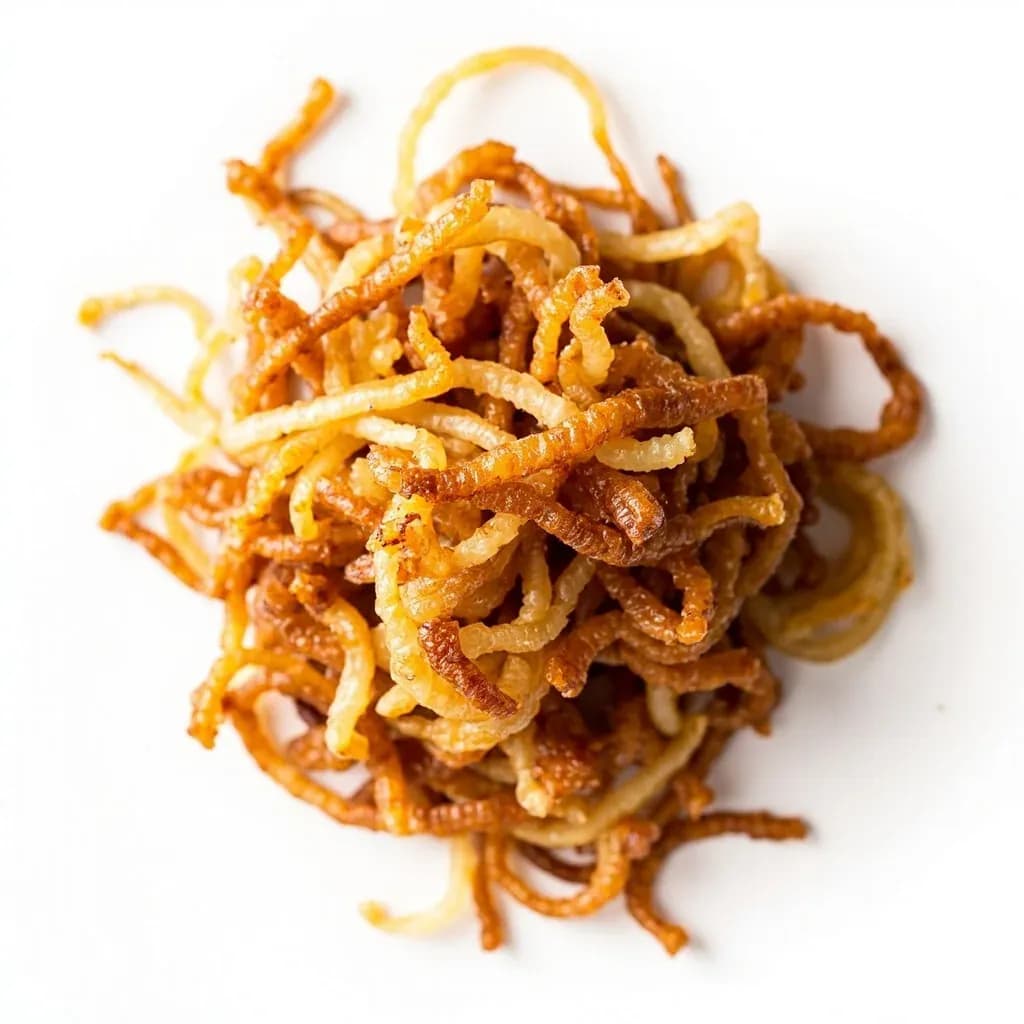
Making birista fries thinly sliced onions slowly in oil until they turn deep golden and crisp, used as a garnish and flavor base for biryanis, dals, and curries. The onions are drained and cooled so they crisp as they sit. Patience and steady moderate heat are key, as the onions sweeten and brown evenly without burning at the edges before the centers crisp.
Crispy fried onion — known across the subcontinent as birista, and as talawa or tilawwa in some regional kitchens — is the patient frying of thin onion strands until they turn brittle and a deep, even honey-gold. It is a foundational finishing technique in South Asian cooking and the defining flourish of Hyderabadi and Mughlai food, where a generous handful scattered over a biryani or stirred into a korma is treated as essential as salt. The same method, applied to small shallots sliced across the grain, gives the Southeast Asian 'crispy fried shallot' that crowns Burmese mohinga, Thai congee, and Malaysian nasi lemak.
What makes the technique worth mastering is the way it transforms the onion from a pungent, watery raw ingredient into something that is essentially a sweet-savory seasoning in a brittle shell. The slice releases water and sugar into hot oil, the sugars caramelize, and the strands dry out into a crisp that smells of toasted onion and tastes of caramel. Because the window between that perfect amber and bitter brown is narrow — often under ninety seconds — the cook's job is mostly temperature control, small batches, and the discipline to lift the onions a shade earlier than instinct suggests.
Birista works as both garnish and foundation. Strewn over rice or chaat, it adds crackle and aroma; bloomed first in oil, it becomes the aromatic base of countless restaurant gravies, lending its sweetness to the fat that cooks the spices. Treat it less as a topping and more as a building block and the rest of your kitchen adjusts around it.
- Difficulty
- Medium
Types & varieties
Thinly sliced red/pink onions fried dry in neutral oil; the standard South Asian version for biryani and kebabs.
Lightly dusted with rice flour or maida before frying for a paler, extra-crackly shell; common in restaurant prep.
Onions soaked 15–30 minutes in buttermilk, then dried; yields slightly mellower flavor and a tender crisp.
Often a touch thicker, cooked to a deeper amber, and used as a snack or mixed into beaten rice (chiura).
Same technique with small shallots; sliced across the grain; used as a finishing garnish in Burmese, Thai, and Malaysian cooking.
Pre-fried and dehydrated; convenient but typically less fragrant and more uniformly brittle than fresh.
How to do it
- 1
Slice the onions thinly and evenly
Peel large red onions, halve pole-to-pole, and slice across the grain into 1–2 mm half-moons. A sharp knife or mandoline gives the most uniform strands; uneven slices fry at different rates and burn at the edges.
- 2
Soak and dry
Place the sliced onions in a bowl of cold water for 10–15 minutes. Some cooks add a pinch of salt or a splash of buttermilk. Drain very thoroughly in a colander, then pat dry with a clean kitchen towel — surface moisture is the main cause of greasy, soft birista.
- 3
Heat the oil
Pour 2–3 cm of neutral oil (groundnut, sunflower, or canola) into a wide, heavy pan or kadhai and heat to roughly 170 °C / 340 °F. The oil should shimmer but not smoke.
- 4
Fry in small batches
Add a small handful of onions — just enough to form a loose, single layer. They should sizzle on contact, not hiss. Stir gently to separate the strands and keep them moving through the oil.
- 5
Watch the color closely
The onions will pale, then stiffen, then begin to turn gold. From the first hint of gold, they can reach burnt in well under two minutes, so stay with the pan and keep the strands moving.
- 6
Lift at honey-gold and drain
When the batch is a uniform light amber (think dried apricot, not caramel), lift it out with a slotted spoon and spread on a paper-towel lined tray. The residual oil will darken them another half-shade — pull them slightly lighter than you want them.
- 7
Repeat and store
Bring the oil back to temperature between batches. Once all the birista is cool, transfer to a dry, airtight container. It keeps several weeks at room temperature and 2–3 months refrigerated, away from moisture.
Why birista works as a foundation, not just a topping
In many restaurant kitchens, a few tablespoons of birista are bloomed in oil at the very start of a gravy — before ginger-garlic paste, before the whole spices. The residual oil carries real onion sweetness into every step that follows, which is why a Mughlai korma tastes deeper than the same recipe cooked with raw onion alone. At home, the easiest way to use birista this way is to set aside a small portion of your batch while it's still hot, fry your spices in the same oil, and reserve the rest for garnish.
- Fry spices in onion-scented oil for a deeper base
- Stir birista into the gravy at the end of cooking so the crisp survives
- Reserve a portion before frying spices for a textural contrast at the table
Troubleshooting the color window
Almost every failure with birista comes down to either too much moisture in the pan or too much time on the spoon. Use this quick read when a batch isn't behaving.
- Greasy or soft → oil too cool or batch too crowded; raise heat and fry less per round
- Dark edges, pale centers → slices uneven; re-cut with a sharper blade or mandoline
- Burning before color sets → oil too hot; pull off heat for 30 seconds, then resume at 160 °C
- Tastes bitter → fried past honey-gold; pull the next batch a shade lighter
- Soggy after storage → stored warm or covered too soon; cool fully on an open tray first
Common uses
Tips & pitfalls
- Slice pole-to-pole (root to tip), not across the equator — long strands fry more evenly and feel less watery in the mouth.
- Soak sliced onions in cold water for 10–15 minutes, then drain and pat very dry; this washes off raw pungency and helps the slices hold their shape in the oil.
- Test the oil with a single strand: it should sizzle steadily and turn pale gold in about 6–8 seconds — slower means the oil is too cool and the onions will absorb and turn greasy.
- Fry in small, shallow batches (a single loose layer) so moisture can escape; crowding drops the oil temperature and produces soft, oily birista.
- Stir gently and continuously once color starts to change — the window between gold and bitter brown is under two minutes, often under a minute.
- Lift the onions the moment they reach a uniform honey-gold; carryover heat in the oil will darken them another shade on the slotted spoon.
- Drain on paper towels and spread out — piling hot birista traps steam and softens the crisp.
- Cool completely before storing in an airtight jar; any residual warmth will create condensation and sogginess.
- Reuse the lightly onion-scented oil for tempering dals or cooking rice — it carries real flavor.
- Don't salt before frying; salt draws out water and steams the onions. Salt only at the end if using the birista as a standalone snack.
Good to know
- Origin
- South Asian (Indian subcontinent), strongly associated with Hyderabadi and Mughlai cuisines where it underpins biryani and rich curries
- Also called
- Birista (Nepali/Urdu), talawa or tilawwa (some Indian regions); Southeast Asian cousin is crispy fried shallot
- Traditional onion
- Red/pink onions, preferred for their higher sugar content which encourages even browning and a balanced sweet-savory flavor
- Slice thickness
- About 1–2 mm, sliced pole-to-pole (root to tip) for long, even strands rather than rings
- Oil temperature
- Around 160–180 °C (320–350 °F); lower for slow, deep color, slightly higher for a quicker set
- Typical yield
- 2 large onions yield roughly 1 cup of finished birista; raw volume reduces by more than half after frying
- Texture when done
- Light, dry, brittle, and uniformly deep golden — any dark brown streaks read as bitter
- Storage
- Up to 3–4 weeks in a clean, airtight container at room temperature; 2–3 months refrigerated, away from moisture
Also called
frying-onion-garnish · onion-browning · slow-onion-browning · birista
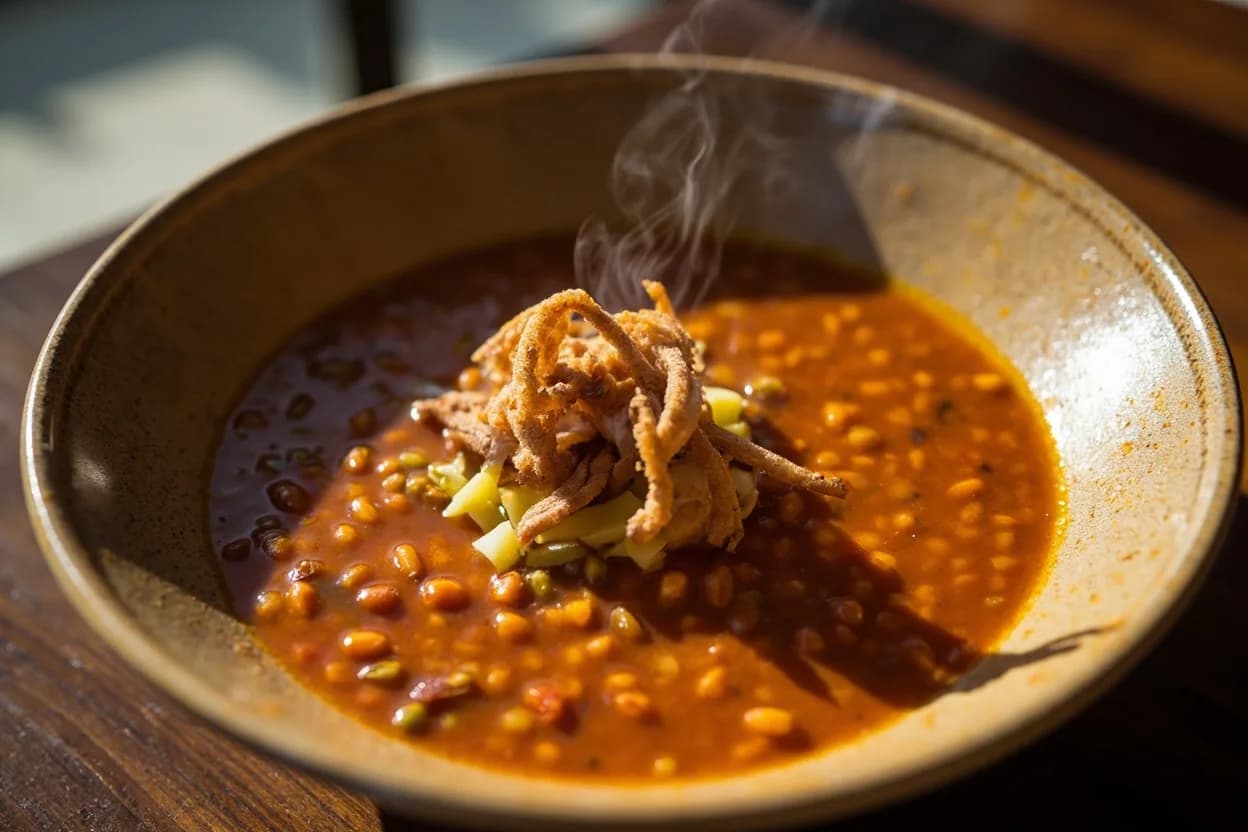
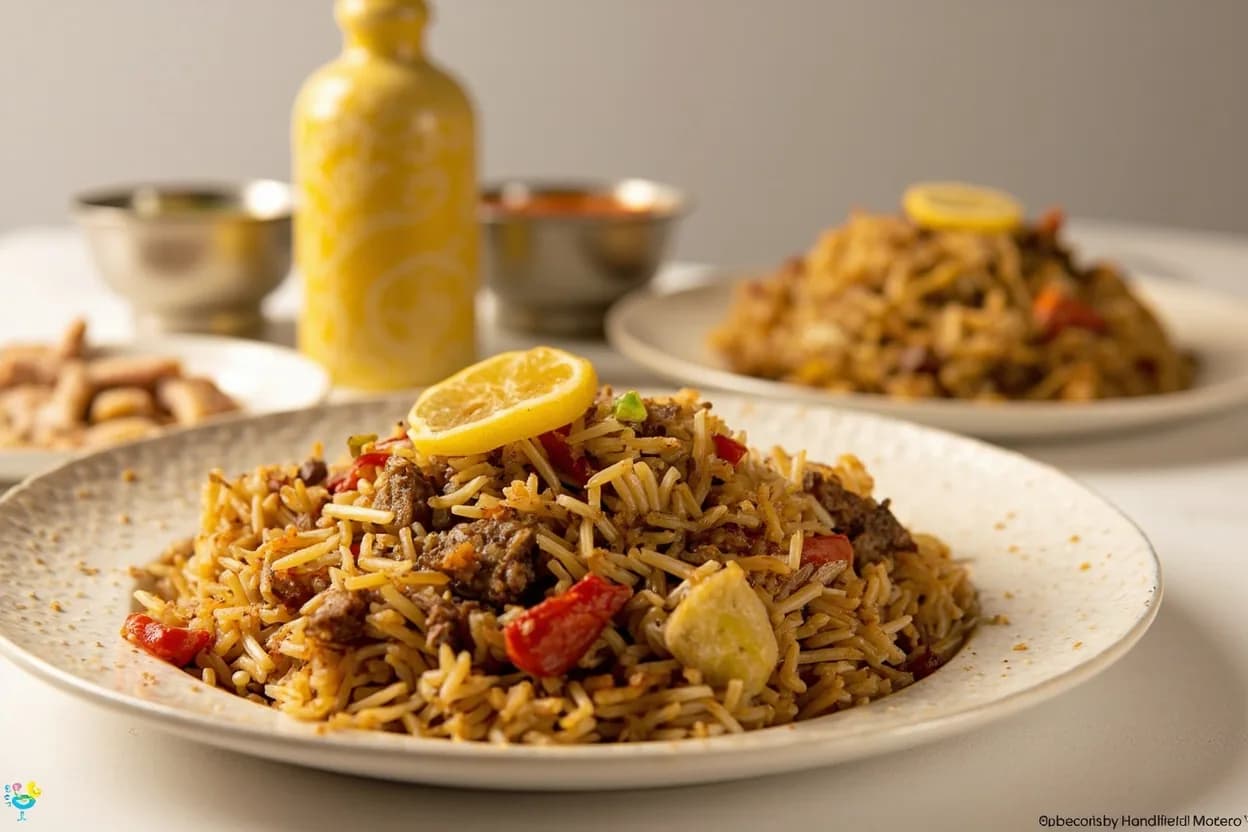
Dishes that rely on it
Related

Sear
Blast the surface hot for a deep-browned, savory crust

Sauté
Cook quickly in a little fat over lively heat, tossing as you go

Stir-Fry
Toss bite-sized pieces over roaring heat for fast, smoky cooking

Pan-Fry
Crisp food in a shallow layer of hot fat, turning once or twice

Deep-Fry
Submerge in hot oil for an all-over crackling crust

Roast
Cook uncovered in dry oven heat for browned edges and tender centers

Bake
Cook with steady, surrounding oven heat — the soul of bread and pastry

Broil
Hit food from directly above with fierce overhead heat