Prep & Assembly
Ginger-Garlic Paste Making
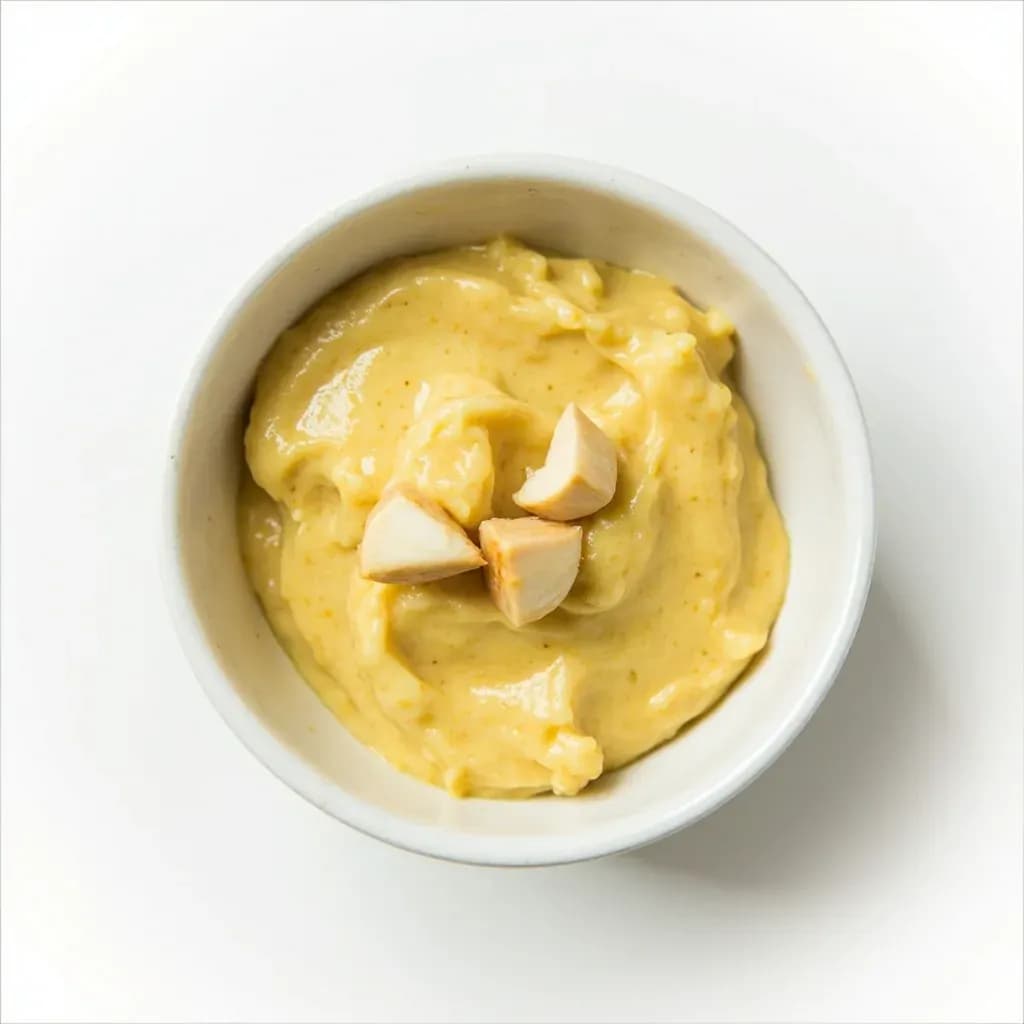
Grinding fresh ginger and garlic into a smooth paste used as a base across South Asian cooking.
Ginger-garlic paste is made by grinding or blending equal parts ginger and garlic, sometimes with a little oil or salt, into a smooth mixture. It is a foundational flavoring in Indian, Pakistani, and Bangladeshi curries, marinades, and gravies. Cooks make it in batches and refrigerate or freeze it for daily use. A pinch of salt or oil helps it grind smoothly and keeps it longer.
Ginger-garlic paste is the quiet workhorse of South Asian cooking — a wet aromatic blend of fresh ginger and garlic pounded or blended into a smooth, spoonable paste that forms the flavor foundation of countless curries, dals, biryanis, and marinades. Think of it as the regional counterpart to a French mirepoix or a Spanish sofrito: the base layer on which nearly every gravy and braise is built. In a home kitchen, a jar of homemade paste in the refrigerator collapses a 10-minute prep step into 30 seconds, letting you move from a cold start to a sizzling tadka in moments.
What separates a good paste from a great one is texture and balance. The ginger should be fibrous enough to lend a bright, almost citrusy heat, the garlic soft and sweet once cooked, and the two bound into something that holds its shape on a spoon rather than sliding off like a sauce. When the paste hits hot oil or ghee — and it should always hit hot fat, never a cold pan — its raw alcohol sharpness mellows in about 90 seconds, the color deepens from pale cream to a soft gold, and the kitchen fills with the unmistakable fragrance that signals a dish is on its way.
Homemade paste tastes noticeably brighter and more pungent than the commercial jars sold by Everest, MDH, Shan, and Mother's Recipe, because the volatile oils in ginger and garlic begin to fade the moment cells are ruptured. That freshness matters most in ginger-forward dishes like sambar and rasam, where the bottled version reads as flat. The trade-off is shelf life: homemade paste keeps for about two weeks under refrigeration if sealed with an oil cap, or three to six months in the freezer — long enough to make a double batch on a Sunday and never think about it again.
- Difficulty
- Easy
Types & varieties
All-purpose base for North Indian curries, dals, sabzis, and most marinades — the version most home cooks keep on hand.
Used in South Indian sambar and rasam, and in spice pastes where a sharper ginger bite is wanted.
Common in Bengali, Bangladeshi, and Hyderabadi cooking; the garlic mellows dramatically during long braises and gives a deeper, almost nutty base.
Ginger, garlic, and green chilies blended together — a standard base across Maharashtrian, Gujarati, and Andhra kitchens.
Blended and topped with a layer of neutral or mustard oil; extends refrigerator life to 3–4 weeks and matches the texture of commercial Indian brands.
Salt added before grinding tightens flavor and pushes refrigerator life to about three weeks without an oil cap — a good option for cooks who dislike the oily mouthfeel.
How to do it
- 1
Prepare the aromatics
Peel 100 g fresh ginger (about a 4-inch piece) and 100 g garlic cloves (about 2 to 3 heads). The edge of a spoon scrapes ginger skin off with less waste than a vegetable peeler. Roughly chop both into roughly ½-inch pieces so the blender blades have something to grip; whole cloves and large knobs tend to spin loose and never break down.
- 2
Load the grinder
Add the chopped ginger and garlic to a mixer-grinder jar or food processor bowl. Add ½ teaspoon salt — it seasons evenly and acts as a mild preservative — followed by just 1 tablespoon of neutral oil or water to get the blades moving. Resist the urge to add more.
- 3
Blend to a paste
Pulse five or six times to break the aromatics down, then run the machine continuously for 2 to 3 minutes, stopping once to scrape down the sides with a spatula. Add another tablespoon of liquid only if the blades stall. The finished paste should be smooth, not runny — thick enough to hold a soft peak when scooped with a spoon.
- 4
Refine the texture (optional)
For a sil-batta-smooth finish, blend another 1 to 2 minutes, or pass the paste through a fine-mesh sieve and re-process the retained fibrous bits with a teaspoon of water. This second pass is what gives restaurant-style paste its glossy, almost satiny look.
- 5
Store properly
Spoon the paste into a clean glass jar, press down firmly to eliminate air pockets, and pour a thin (about ½ cm) layer of neutral or mustard oil across the surface to seal out oxygen and prevent mold. Seal and refrigerate for up to two weeks. For longer keeping, portion the fresh paste into ice cube trays, freeze solid, then transfer the cubes to a labeled freezer bag — one cube equals roughly one tablespoon, the right amount for a four-serving curry.
How paste behaves in the pan
Ginger-garlic paste is not a finishing ingredient. It must always be bloomed in hot oil or ghee after the whole spices have tempered, and it needs at least 60 to 90 seconds of sautéing for the raw, almost alcoholic sharpness to cook off. The visual cue is a shift from pale cream to a soft, buttery gold and a change in aroma from sharp to mellow and nutty. Adding it to a cold pan, or stirring it in only at the end of cooking, leaves a raw, slightly bitter taste that no amount of finishing salt or cilantro will fix.
- Temper whole spices (cumin, mustard seed, cinnamon, clove) first; add the paste once the spices have crackled.
- Sauté on medium heat — too hot and the garlic scorches before the ginger softens.
- If the paste sticks to the pan before it browns, add a splash of water or tomato rather than more oil.
Storage, scaling, and when to skip it
A standard 1:1 batch made from 100 g each of ginger and garlic yields roughly a cup of paste, which is enough for about eight curries. Doubling the recipe costs you only a minute more in active time but means you always have paste ready during a busy week. There are times, however, when fresh paste is overkill: quick weeknight sautés where you can mince a single clove and a thumbnail of ginger in 30 seconds, or delicate dishes like korma or mild pulao where the volatile brightness of fresh paste can overpower the dairy.
- Glass jars only — the acids and oils leach plastic flavor into stored paste.
- Label jars with the date; the paste is still safe past two weeks but the ginger fades quickly.
- Skip turmeric in any paste you plan to freeze; it stains everything else in the freezer drawer.
- For commercial paste as a substitute, start with 1 tablespoon commercial per 1 tablespoon homemade and adjust — bottled versions are typically saltier and more preserved than fresh.
Adjusting the ratio to the dish
The 1:1 ratio is a starting point, not a rule. Garlic-heavy pastes suit long-cooked, deeply spiced dishes like nihari, korma, and Bengali fish curries where garlic sweetness is the goal. Ginger-heavy pastes suit lighter, quicker dishes — South Indian breakfast curries, clear broths, and seafood — where you want a clean, bright heat. For dum biryani and other rice dishes that simmer for a long time, lean toward the standard ratio or even slightly ginger-heavy, since garlic intensifies more than ginger as it cooks.
- Bengali and Hyderabadi: 1 part ginger to 2 or 3 parts garlic.
- South Indian and seafood: 2 parts ginger to 1 part garlic.
- Biryani and slow rice dishes: standard 1:1 or slightly ginger-heavy.
- Everyday North Indian curry and dal: standard 1:1.
Common uses
Tips & pitfalls
- Peel ginger with the edge of a spoon rather than a vegetable peeler — you lose almost no flesh and the curved edge follows knobs more cleanly.
- Chop both ginger and garlic into roughly ½-inch chunks before blending; whole cloves spin under the blades and stay intact.
- Add liquid one tablespoon at a time — too much produces a thin, watery paste that splatters violently in hot oil and shortens shelf life.
- Salt before grinding, not after: it seasons evenly through the paste and acts as a mild preservative.
- Strain the blended paste through a fine-mesh sieve and re-grind the residue for a restaurant-smooth texture without bitterness from fibrous ginger.
- Never store long-term in plastic — the acids and oils leach plastic flavor into the paste; glass jars only.
- Cap the jar with a ½-cm layer of neutral or mustard oil to seal out air and prevent mold on the surface.
- Avoid adding turmeric to the paste itself if you plan to freeze it — it stains and bleeds into other items in the same drawer.
- Toast the garlic in a dry pan for 2 to 3 minutes before blending if you want a sweeter, less pungent paste suited to creamy kormas and mild gravies.
- For very fibrous ginger, blanch the peeled chunks in boiling water for 2 minutes, then drain and chill before grinding.
Good to know
- Also known as
- Adrak-lehsun paste (Hindi); adrak-rasun paste; lahsun-adrak paste; lasan-adrak paste (Gujarati)
- Standard ratio
- 1:1 ginger to garlic by weight; 2:1 for ginger-forward dishes, 1:2 for garlic-forward (Bengali style)
- Yield
- Approximately 90–95 g paste per 100 g raw aromatics
- Equipment
- Mixer-grinder (Indian-style), food processor, or mortar and pestle; traditionally a sil-batta stone grinder
- Active time
- 10–15 minutes for 200 g of raw ingredients
- Refrigerator shelf life
- 10–14 days sealed with an oil cap; 3–4 weeks with salt or vinegar added
- Freezer shelf life
- 3–6 months, ideally portioned in ice cube trays at roughly 1 tablespoon per cube
- Cooking behavior
- Must be sautéed 1–2 minutes in hot fat until raw aroma disappears; added late it leaves a harsh taste
Also called
Making Ginger-Garlic Paste
Related

Whisk
Beat ingredients smooth and aerated with a looping wire motion

Sift
Pass dry ingredients through mesh to aerate and remove lumps

Strain
Pour through mesh to separate solids from liquid for a smooth result

Filter
Pass liquid through fine material to clarify out the smallest particles

Rice
Press cooked potatoes through small holes for fluffy, lump-free texture

Mash
Crush soft cooked food into a rustic, creamy purée

Grind
Crush food into a coarse to fine texture, from spices to meat

Grate
Shred food into fine bits against a sharp-toothed surface