Transform & Preserve
Dry Aging
Resting meat uncovered in controlled cold air for weeks to concentrate flavor and tenderize it.
Dry aging holds whole cuts of beef, uncovered, in a temperature- and humidity-controlled environment for weeks. Surface moisture evaporates to concentrate flavor while the meat's own enzymes break down connective tissue, deepening tenderness and developing nutty, savory notes. The dried outer crust is trimmed away before cooking, and the process requires careful sanitation to age rather than spoil.
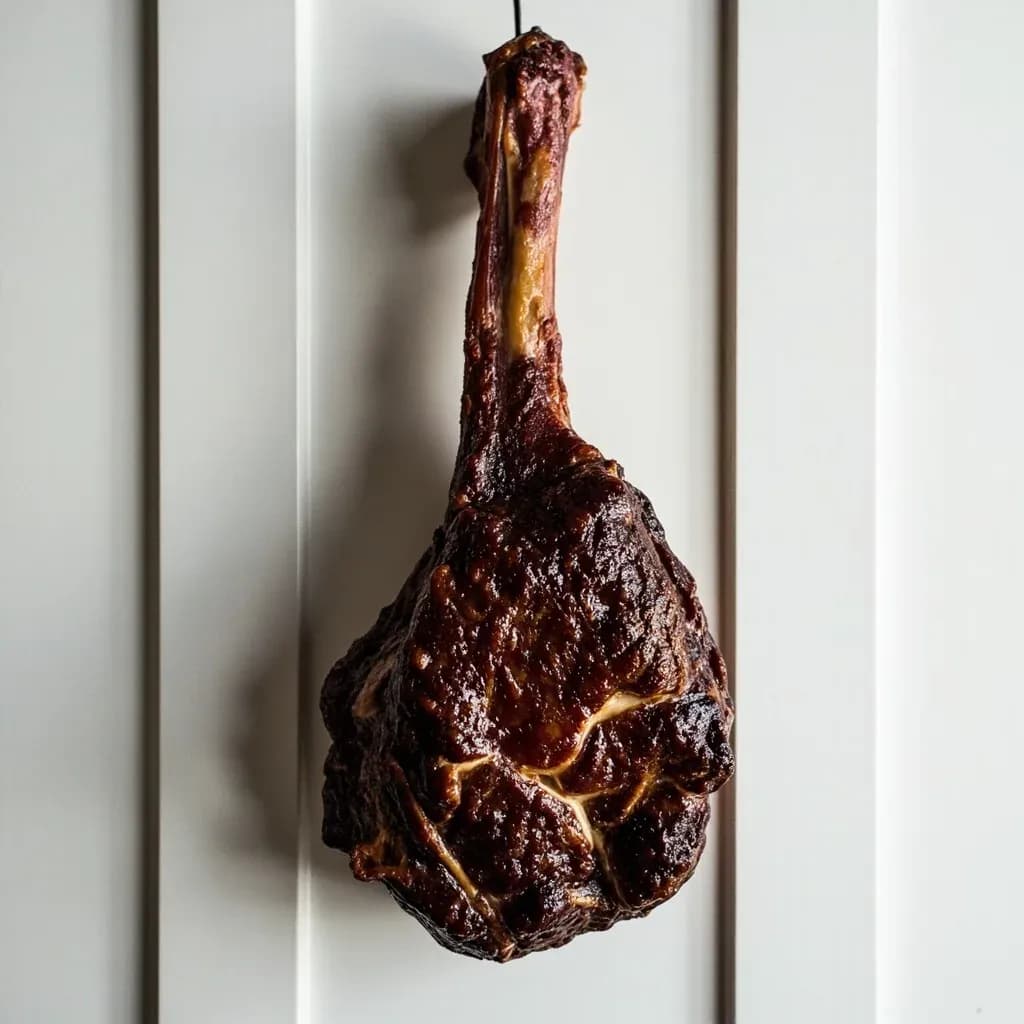
Dry aging is the deliberate, unhurried dehydration of a whole beef subprimal in cold, moving air — a method that predates mechanical refrigeration and persists today because nothing else produces the same concentrated, almost cheese-like beefiness. Over the weeks a primal spends in the chamber, two things happen at once: natural enzymes (chiefly calpains and cathepsins in the muscle) gently dismantle myofibrils and connective tissue, which is why even modestly marbled cuts come out markedly more tender; and moisture evaporates from the surface, concentrating what remains — umami nucleotides, Maillard precursors, and lipid-derived aroma compounds — into a richer, fattier-tasting, faintly nutty flavor that wet-aged beef cannot match.
The work is done by the meat itself, but only under the right conditions. The chamber must hover around 1–3°C with 75–85% relative humidity and a gentle, continuous airflow. Warmer temperatures invite spoilage bacteria; drier air overcrusts the surface and locks moisture inside; still air lets slime take hold. Anything outside that narrow window, and you are either aging too fast for flavor to develop or aging in a way that ruins the cut. The trade-off is unavoidable trim loss: anywhere from 10% at two weeks to 30% or more past 45 days, as the dark, leathery pellicle that forms around the meat must be cut away before service.
This is why dry aging is a technique for whole primals, not individual steaks, and for cooks willing to commit refrigerator space, money, and patience to a process that rewards restraint on the plate. The resulting meat asks for little more than salt, butter, and high heat — the flavor is already there, and gilding it is a disservice.
- Difficulty
- Hard
Types & varieties
Entry point; mild concentration, tender texture, restrained funk, modest trim loss.
Steakhouse standard; pronounced nutty, beefy depth and clear tenderizing.
Bold, almost blue-cheese-like aroma; significant trim loss and very firm texture.
Breathable vacuum bags that simulate dry aging inside a regular fridge; lower trim loss, milder flavor, safer for home use.
Bone left on the subprimal; traditional choice that many butchers believe deepens flavor, at the cost of more trim.
Faster moisture loss and easier trimming; more common in commercial dry agers.
Some butcher shops line aging rooms with Himalayan or rock-salt blocks to buffer humidity and subtly season the surface.
How to do it
- 1
Choose the cut and source
Buy a fresh (never frozen) whole or sectioned subprimal with the fat cap intact: bone-in rib, strip loin, or short loin. Budget roughly 1.5–2 kg of starting weight per person if you are aging specifically for steaks.
- 2
Set up the chamber
Use a dedicated dry ager or a thoroughly sanitized fridge. Stabilize it at 1–3°C and 75–85% RH with a small fan moving air across — not directly at — the meat. Place a wire rack over a tray to catch drips and keep the primal out of any liquid.
- 3
Load the meat
Unwrap the subprimal, pat the surface dry with paper towels, and set it fat-cap up on the rack with at least a few centimeters of clearance on every side. Do not cover or wrap it in anything.
- 4
Age, monitoring
Leave the primal undisturbed for 14–60 days. Check every 2–3 days: confirm the surface is forming a dry, leathery pellicle, blot any puddled moisture, verify thermometer and hygrometer readings, and smell for clean nutty or blue-cheese notes rather than sour or rotten ones.
- 5
Trim the pellicle
Move the aged subprimal to a clean board. Slice off the dark dried crust and any surface mold, plus the thin oxidized layer just beneath, exposing clean red meat. On bone-in cuts, run the knife along the bones to clean them and remove the desiccated meat clinging to them.
- 6
Rest before portioning
Transfer the trimmed meat to a tray, cover loosely with butcher paper or perforated film, and refrigerate for 12–24 hours so the surface moisture equalizes and the flavor settles into a more even profile.
- 7
Portion and cook
Cut steaks to your preferred thickness, slicing against the grain on strip and loin cuts. Cook hot and fast — cast iron or a hard grill sear — and finish with butter, salt, and freshly cracked pepper; the flavor is already concentrated, so keep accompaniments simple.
- 8
Save the trim
Collect the trimmed fat and any usable meat separately from the dried pellicle. Render the fat for beef tallow, or grind the meat trim fine and fold it into burger blends for an aged-beef boost — the inedible pellicle itself is best discarded.
Reading the surface: bloom, mold, and spoilage
A properly aging primal develops a dry, leathery, brick-red to nearly black pellicle on every exposed face. That crust is inedible and gets trimmed, but its presence is a good sign — it means moisture is leaving the meat at a controlled rate and the surface has become inhospitable to spoilage bacteria. A faint dusting of white or grey bloomy mold, the kind you see on the rind of a Camembert, is normal at 21+ days and is simply trimmed away with the crust.
- Green, black, or pink surface growth, or any patch that looks wet or slimy or smells sour, rotten, or dairy-sour in a bad way — discard the whole primal.
- Puddled moisture on the surface or under the meat means humidity is too high or airflow is too low; blot it dry and recheck the hygrometer.
- A clean, nutty, slightly blue-cheese-like aroma is the target; a fecal, ammonia, or putrid smell means the batch has gone bad.
Why whole primals, never steaks
Dry aging works because evaporation and enzymatic activity move inward from the cut surfaces over many days. A thick steak has too much surface area relative to its volume: the faces desiccate and oxidize long before the center benefits, and you end up trimming away most of what you paid for. A whole rib or strip loin loses moisture proportionally, the enzymes have time to act through the muscle, and the trim is a manageable fraction of a much larger piece of meat.
Common uses
Tips & pitfalls
- Start with a fresh, never-frozen subprimal — freezing before aging disrupts the pellicle and ruins the texture.
- Keep the fat cap on; it slows moisture loss from the top and protects the lean meat underneath.
- Do the bare-touch test: if the surface feels wet or sticky, humidity is too high and you risk slime or spoilage.
- Don't rely on a regular kitchen fridge for 30+ days — humidity swings, door openings, and shared odors are real problems.
- Age whole primals, not thick steaks; individual steaks oxidize and desiccate unevenly and waste too much of the cut.
- Plan on at least 15% trim loss at 28 days, and closer to 25–30% past 45 days — build that into your budget.
- Don't confuse surface bloom with spoilage: thin white or grey mold is trimmed away with the crust, while green, black, or slimy growth, or any rotten-dairy smell, means discard the whole piece.
- After trimming, rest the meat loosely wrapped in butcher paper in the fridge for 12–24 hours before cutting — it cooks more evenly and the flavor settles.
- Season dry-aged steaks simply with finishing salt, butter, and pepper; heavy sauces or strong marinades bury the flavor you spent weeks developing.
Good to know
- Typical duration
- 14 to 60 days; 21–30 days is the common sweet spot for steakhouse character without excess trim loss.
- Temperature
- 1–3°C (≈34–38°F), held as steady as possible.
- Relative humidity
- 75–85%; too dry overcrusts the meat, too wet invites spoilage.
- Airflow
- Gentle, continuous circulation across all sides of the meat — never a direct blast.
- Trim / weight loss
- 10–30% of starting weight, removed as the dried outer pellicle before service.
- Best cuts
- Bone-in rib, strip loin, short loin (porterhouse/T-bone), and bone-in sirloin; tenderloin is rarely dry-aged.
- Required form
- Whole primal or subprimal — never individual steaks or thin cuts.
- Starting meat
- Fresh (never previously frozen), well-marbled beef with the fat cap intact.
- Difficulty
- Moderate to high at home; humidity and temperature control are the hard parts.
Also called
Aging Beef · Dry-Aging
Related

Confit
Cook slowly submerged in fat for silky tenderness and keeping

Cure
Draw out moisture with salt and time to preserve and concentrate

Pickle
Steep in acidic brine for bright, tangy, crunchy preservation

Ferment
Let friendly microbes transform food into tangy, complex flavor

Marinate
Soak in a seasoned mix to flavor and tenderize before cooking

Brine
Soak in salt water so meat stays juicy and seasoned throughout

Dehydrate
Slowly dry out moisture to concentrate flavor and extend shelf life

Cold-Smoke
Perfume cured food with smoke without cooking it through