Heat & Fire
Dry-Wok Stir-Fry (Gan Guo)
Sichuan dry-pot cooking that fries ingredients with chiles and spices until nearly dry and intensely aromatic.
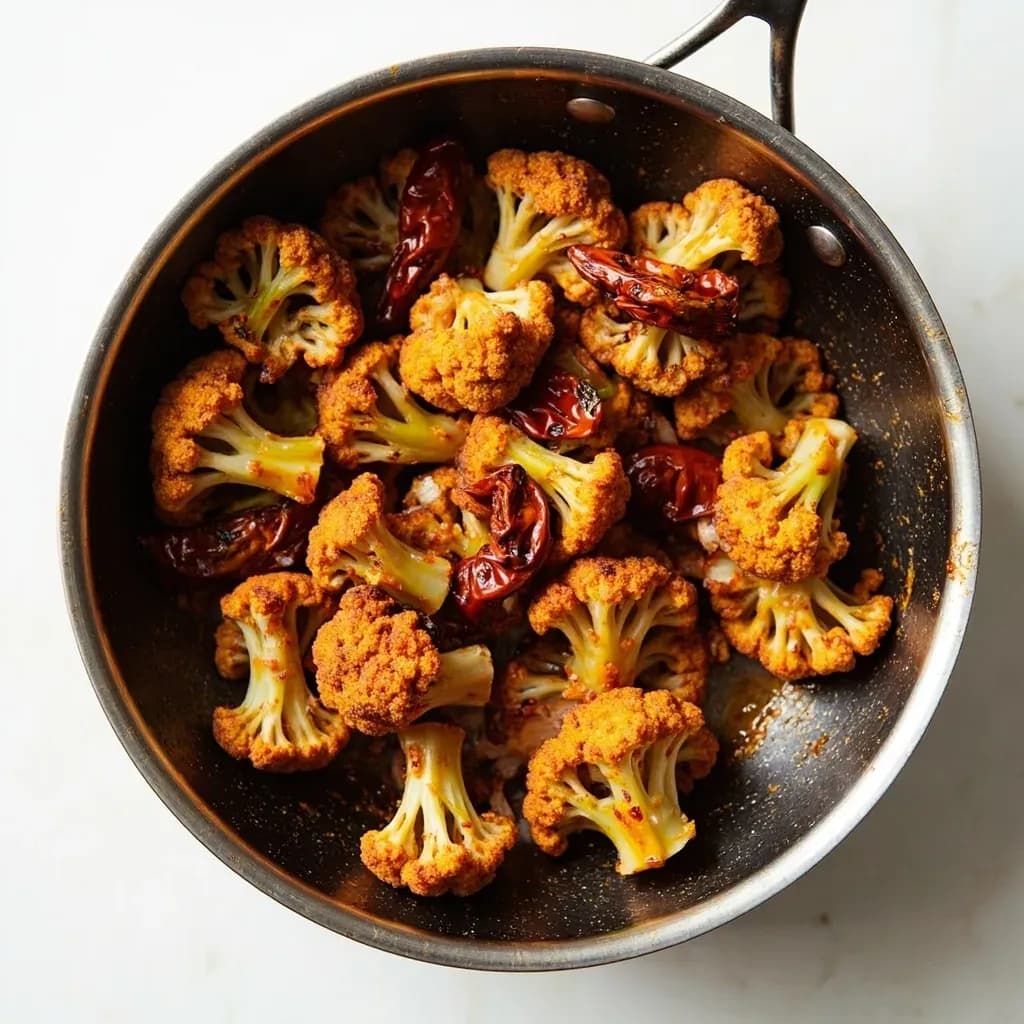
Dry-wok stir-fry, or gan guo, fries proteins and vegetables with dried chiles, peppercorns and aromatics over high heat until most moisture is gone and flavors concentrate, often finished at the table over a small flame. It sits between a stir-fry and a hot pot, producing intensely spicy, fragrant, almost crisp results. Common versions feature cauliflower, frog, or pork belly.
Gān guō — literally "dry pot" — is a Sichuan finishing technique in which the final stir-fry deliberately drives off almost all surface moisture, leaving the food glossy with chili-infused oil but free of any standing sauce. The name refers to the texture on the plate, not to a lack of fat: a properly made dry-pot dish should look slick and almost lacquered, with toasted chilies and Sichuan peppercorns clinging to every piece. It is fast in the wok but long in the prep, and that ratio is the whole point of the method.
The technique works because it layers on top of pre-cooked ingredients. Dense items — chicken thighs, potatoes, cauliflower, lotus root, abalone — are deep-fried or blanched first, so the brief, high-heat wok pass at the end only has to dry and crust the surface, not cook the interior through. If you tried to raw-stir-fry those ingredients dry, the outside would scorch long before the inside was done. Once the pre-cooked pieces hit a wok of bloomed chilies, peppercorns, garlic, ginger, and shallots, the málà flavor concentrates on the food itself rather than diluting into a sauce.
In the Sichuan canon, gān guō sits beside twice-cooked pork (huí guō ròu) and kung pao (gōng bǎo jī), but it is the driest of the family and the most theatrical: the finished dish is traditionally tipped into a small metal pot over a tea-light or a bed of sizzling rock salt and brought to the table still sputtering. At home, a small clay pot or cast-iron skillet on a trivet will do the same job.
- Difficulty
- Medium
Types & varieties
Dry-pot chicken; usually bone-in, skin-on thighs finished with a heavy hand of chilies
Dry-pot sliced beef; flash-cooked over high heat with celery or napa cabbage
Dry-pot duck; often pre-braised until tender, then finished dry in the wok
Dry-pot shrimp; whole shell-on prawns stir-fried dry with chilies and garlic
Dry-pot potato; thin wedges crisped in oil then tossed with aromatics
Dry-pot cauliflower; florets pre-fried until browned then tossed with chilies, garlic, and small dice of cured pork
Dry-pot abalone; a banquet version with fresh or live abalone, prized for the contrast of tender flesh and dry spice
Dry-pot with Sichuan-style cured sausage (là cháng) and bamboo shoots
Dry-pot fish head, often bighead carp, split and dry-fried until the edges crisp
How to do it
- 1
Mise en place
Cut all proteins and vegetables to a uniform bite size so they finish at the same rate. Slice garlic, ginger, scallions, and shallots. Measure dried chilies, Sichuan peppercorns, and any broad-bean paste. Marinate thin-sliced meats briefly in soy sauce, Shaoxing wine, and a teaspoon of cornstarch. Pre-warm the serving pot on a low flame or fill it with hot salt.
- 2
Pre-cook the main ingredient
Deep- or shallow-fry dense items — chicken thighs, potato wedges, cauliflower florets, lotus root — in 160–170°C oil until just cooked and lightly colored; drain thoroughly. Blanch thin-sliced beef or pork briefly in boiling water. This step is what lets the final stir-fry stay "dry" without overcooking the inside.
- 3
Toast the spices (optional)
In a dry wok over low heat, briefly dry-toast the dried chilies and Sichuan peppercorns for 30–60 seconds until fragrant; remove and reserve. This wakes the aromatics without the risk of burning them in oil later.
- 4
Heat the wok and bloom aromatics
Heat the wok over high heat until just smoking. Add a generous pour of neutral oil, swirl, then add the toasted chilies, peppercorns, dried bay leaves, and any star anise. Stir for 10–20 seconds — they should darken a shade and smell toasted, never black. Add garlic, ginger, shallots, and the white parts of scallions; toss until the raw edge is gone.
- 5
Add bean paste (optional)
If using, push the aromatics to one side and add a tablespoon of dòu bàn jiàng or another broad-bean paste. Fry it directly in the oil for a few seconds until the red color blooms and the oil turns glossy, then mix it through.
- 6
Stir-fry the main ingredient
Add the pre-cooked protein and vegetables. Toss continuously and press the food against the hot wok wall with the ladle so the chili-oil coats every piece. Add quick-cooking vegetables last — celery, garlic sprouts, onion — and toss just until wilted.
- 7
Dry it out
Keep the heat high and keep tossing. The dish is ready when you can see the bottom of the wok through a thin film of oil, with no standing liquid pooling. Season with salt, a small pinch of sugar to soften the málà, and a finishing drizzle of sesame oil off the heat.
- 8
Transfer to the dry pot
Pile the food into the pre-warmed dry pot set over a small flame or bed of hot salt. Garnish with scallion greens and a few fresh chilies, and bring to the table immediately while it is still sizzling.
The Dry Pot at the Table
The traditional serving vessel is a small dry metal pot — the gān guō itself — set over a tea-light, an alcohol burner, or a bed of toasted rock salt. The food arrives still sputtering and stays scorchingly hot for twenty minutes or more, which is the point: diners pick at it slowly, and the chilies keep toasting against the residual heat, deepening the aroma as the meal goes on. At home you can replicate this with a small clay donabe, a cast-iron skillet on a wooden trivet, or any heavy small pot warmed on the lowest burner. The rock-salt bed works especially well: preheat coarse salt in a dry pan until it just starts to crackle, then pour it into the serving pot as a base. It holds heat far longer than a tea-light alone and keeps the bottom layer from overcooking.
- Pre-warm the pot on the lowest flame for at least five minutes before transferring food.
- A 1–2 cm bed of rock salt or coarse sea salt buys you ten extra minutes of carryover heat.
- Avoid thin stainless or aluminum pans — they cool too quickly to maintain the sizzle.
- Cover the table with a trivet; the pot arrives genuinely boiling.
Common uses
Tips & pitfalls
- Prep absolutely everything before lighting the wok — slicing, marinating, and pre-frying. There is no time to chop once the chilies hit the oil.
- Pre-fry or blanch dense items first (potatoes, cauliflower, lotus root, chicken thighs). The final stir-fry should only dry the surface, not cook the interior through.
- Use thin-skinned dried chilies such as facing-heaven (cháo tiān jiāo) or erjingtiao. Thick-meat chilies stay leathery, never crisp, and can turn the whole dish bitter.
- Bloom chilies and peppercorns in oil for only 10–20 seconds. Anything darker than brick-red and the dish goes acrid.
- Don't crowd the wok. If the food steams instead of sears, work in batches — steam is the enemy of the dry finish.
- The dish is ready when you can see the wok bottom through a thin film of oil; any pooling liquid means more heat and more tossing.
- A small pinch of sugar at the end does not sweeten the dish — it softens the numbing edge of the peppercorn and rounds the spice.
- If you can't source the traditional dry pot, a small clay donabe, a cast-iron skillet, or any heavy small pot pre-warmed on the lowest burner will keep the food sizzling at the table.
Good to know
- Chinese Name
- 干锅 (gān guō), literally "dry pot"
- Cuisine
- Sichuan (chuān cài)
- Heat Level
- Very high; wok must be fully heated before ingredients enter
- Key Equipment
- Carbon-steel wok; served in a dry pot over a tea-light or a bed of hot salt
- Core Character
- Surface moisture is driven off in the final stir-fry, so spice and oil cling directly to the food
- Signature Spices
- Facing-heaven chilies (cháo tiān jiāo), erjingtiao chilies, and hóng huā jiāo Sichuan peppercorns
- Active Cook Time
- 5–10 minutes in the wok after a longer prep
- Difficulty
- Intermediate to advanced — depends on confident wok handling and complete mise en place
Also called
dry-wok-stir-fry · gan guo · dry pot
Related

Sear
Blast the surface hot for a deep-browned, savory crust

Sauté
Cook quickly in a little fat over lively heat, tossing as you go

Stir-Fry
Toss bite-sized pieces over roaring heat for fast, smoky cooking

Pan-Fry
Crisp food in a shallow layer of hot fat, turning once or twice

Deep-Fry
Submerge in hot oil for an all-over crackling crust

Roast
Cook uncovered in dry oven heat for browned edges and tender centers

Bake
Cook with steady, surrounding oven heat — the soul of bread and pastry

Broil
Hit food from directly above with fierce overhead heat