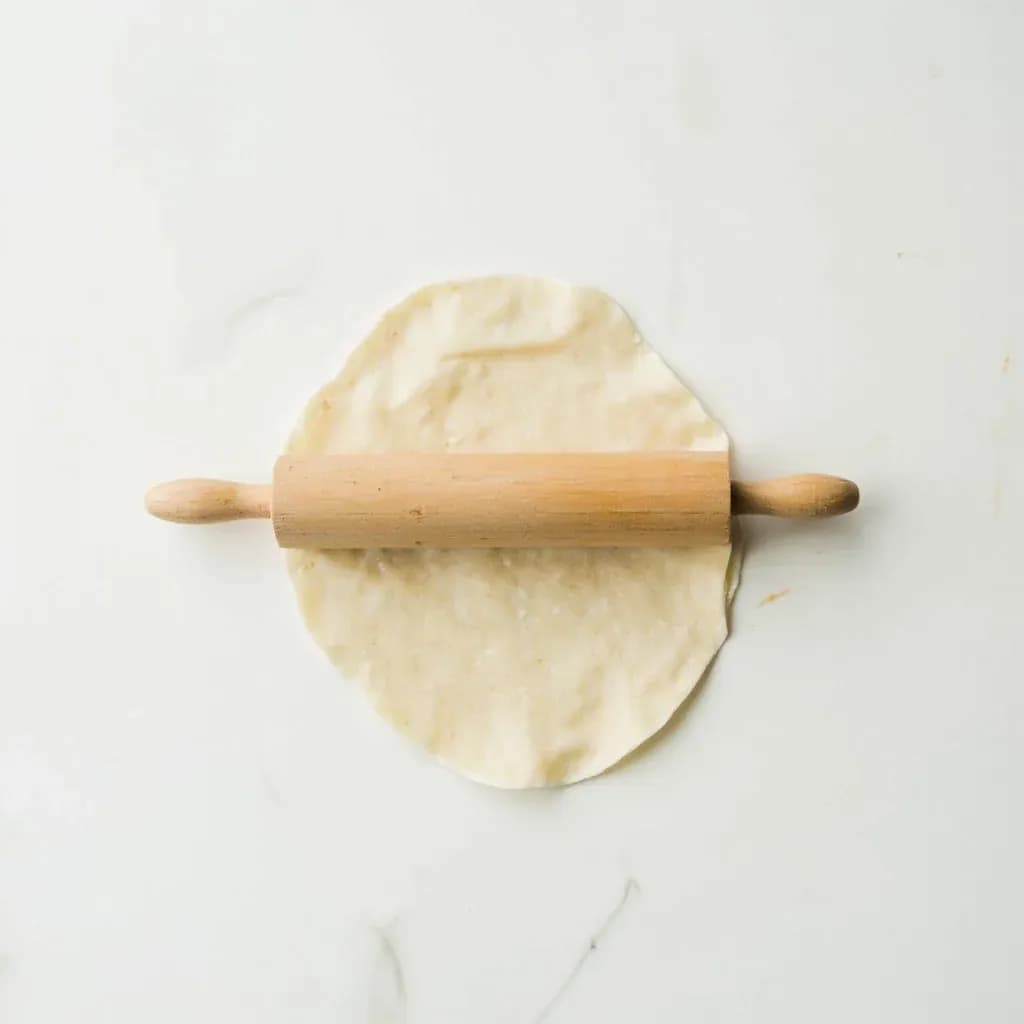
Prep & Assembly
Rolling Dumpling Wrappers
Rolling small dough portions into thin round wrappers for dumplings and noodles.
Rolling dumpling wrappers flattens small balls of dough into thin, round discs, traditionally with a short rolling pin spun against the dough's edge to leave the center slightly thicker. That thicker middle supports the filling while the thin rim seals cleanly, as in jiaozi and other hand-folded dumplings. The same skill underlies hand-rolled noodles like lagman where dough is shaped without a machine.
Rolling dumpling wrappers is the skill that turns a plain flour-and-water dough into the thin, even rounds and squares that wrap jiaozi, gyoza, wontons, har gow, pierogi, and their many regional cousins. A well-rolled wrapper is uniform in thickness, slightly elastic, and supple enough to pleat and seal without tearing at the fold. Get it right and the dumpling holds its shape while cooking, with a tender bite that doesn't fight the filling; get it wrong and the wrapper cracks at the rim, balloons in the pot, or turns gummy from over-floured bench work.
The technique rests on two judgments: how hydrated and how rested the dough is. A medium-gluten dough at roughly 48–52% hydration, kneaded just until smooth and rested long enough for the gluten to relax, will roll out paper-thin on contact. A dough that hasn't rested fights the pin and springs back; a dough that has rested too long in a warm kitchen dries on the surface and rolls out patchy. Once those two variables are dialed in, the rest is repetition — the same center-out stroke, the same quarter turn, the same light finishing pressure — repeated until the pile of wrappers on the tray looks uniform to the eye.
- Difficulty
- Medium
Types & varieties
Plain flour-and-water dough, rolled ≈8–10 cm round, used for boiled or pan-fried dumplings.
Made with boiling water; softer, slightly translucent, used for crystal dumplings and some potsticker styles.
Egg-enriched wheat dough, rolled thinner and often machine-cut into squares, used for Cantonese and Hong Kong wontons.
Japanese iteration of jiaozi wrappers; slightly thinner and more delicate, often dusted with potato or corn starch.
Wheat starch and tapioca starch dough (no flour), rolled very thin for translucent steamed dumplings.
Sometimes enriched with egg plus a little oil or sour cream for a more tender, slightly richer bite.
Tibetan and Korean variants of the basic flour-water dough, similar technique but occasionally finished with a touch of oil.
How to do it
- 1
Mix the dough
Combine roughly 2 parts wheat flour to 1 part water by weight — half boiling and half cold for a more pliable result — and stir with chopsticks or a fork until a shaggy mass forms. Add a pinch of salt if the recipe calls for it; no oil or leavening is needed for a classic dumpling wrapper.
- 2
Knead until smooth
Turn out and knead for 5–8 minutes until the dough is smooth, soft, and slightly tacky but not sticky. Press with the heel of the hand, fold, quarter-turn, repeat. Proper kneading develops just enough gluten for elasticity without toughness.
- 3
Rest the dough
Shape into a disc, wrap tightly in plastic or place under a damp cloth, and rest 30–60 minutes at room temperature. This relaxes the gluten so the dough rolls out thin without springing back.
- 4
Divide and shape portions
Unwrap and briefly knead for 30 seconds. Roll into a uniform log and cut into equal pieces — about 8–12 g each for jiaozi. Roll each piece between your palm and the board into a smooth ball; cover the rest as you work.
- 5
Flatten the portion
Press each ball flat with the palm of your hand to a thick disc about 1 cm thick. This gives the rolling pin a head start and ensures even contact from the first stroke.
- 6
First roll — open the disc
Dust a small rolling pin lightly with flour. Roll the disc outward from the center, turning the dough a quarter turn after every two to three strokes. Keep pressure even and stop when the disc is roughly 8–10 cm across and 2–3 mm thick.
- 7
Finish to target thinness
Continue rotating and rolling with lighter pressure until the wrapper reaches about 1.5–2 mm (or thinner for wontons and har gow). For filled dumplings, the edges should be slightly thinner than the center so the base supports a generous mound of filling; for wontons, aim for an even sheet.
- 8
Hold and store
Transfer finished wrappers to a plate dusted with cornstarch, or layer them between parchment. Cover immediately with a damp cloth or plastic sheet. Use within an hour, refrigerate up to a day, or freeze between cornstarch-dusted parchment sheets for up to a month.
Reading the dough
The two defining judgments in this technique are hydration and resting time, and they control how thin, elastic, and sealable the wrapper ends up. A rest that is too short produces a wrapper that fights the pin and cracks at the rim; a rest that is too long in a warm kitchen dries the surface and makes rolling patchy. Most home cooks benefit from weighing the flour and water, weighing the portions, and repeating the same motion each time (center-out, quarter-turn, light pressure) rather than chasing irregular hand movements.
- Weighing is more reliable than measuring by volume; a 10% swing in hydration is the difference between a tender wrapper and a tough one.
- A properly rested dough should yield to the pin with steady, even pressure; if it springs back between strokes, rest it another 10–15 minutes.
- The 250 g batch in the steps below yields roughly 25–30 jiaozi wrappers, enough for 4 generous portions.
Choosing a rolling pin
A small, thin dowel-style pin (about 20–25 cm long, 2–3 cm in diameter) gives far more control than a heavy French-style pin. The shorter contact surface lets you feel the dough's resistance and apply even pressure, and the lighter weight means you can finish with a delicate stroke that thins the rim without thinning the center.
- A wooden dowel from the hardware store, sanded smooth, is a perfectly good substitute.
- For very thin sheets (har gow, wonton), Cantonese dim sum cooks roll over the back of a wooden spoon or a thin dowel for maximum control.
Common uses
Tips & pitfalls
- Rest the dough — skipping the rest is the single biggest cause of wrappers that snap back and crack at the edges.
- Flour the pin, not the dough: dust the rolling pin lightly and minimize bench flour to keep wrappers tender and sealable.
- Rotate the wrapper a quarter turn after every two to three passes; this produces an even circle without a thick middle.
- Aim for the center slightly thicker than the rim for filled dumplings; a thick center will puff when boiled and make a dense bite.
- Keep finished wrappers under a barely damp cloth or plastic sheet — they stiffen in 5–10 minutes exposed to air.
- If a wrapper shrinks as you roll, set it aside for a few minutes and re-roll; the gluten has relaxed and it will cooperate the second time.
- Trim uneven edges with a round cutter (or the rim of a glass) for a perfectly circular wrapper when presentation matters.
- Freeze rolled wrappers flat, separated by parchment or cornstarch, so they don't fuse into a single block.
Good to know
- Category
- Prep & Assembly — dough forming
- Flour-to-water ratio
- About 2:1 by weight (≈200 g flour to 100 g water); some recipes use a half boiling, half cold water blend for extra pliability
- Hydration
- ≈48–52% — lower than bread, higher than noodles, yielding a medium-gluten, pliable dough
- Resting time
- 30–60 minutes at room temperature, covered, to relax gluten
- Portion size
- ≈8–12 g per wrapper for jiaozi; 6–8 g for wontons; 10–14 g for potstickers
- Target thickness
- ≈1.5–2 mm for jiaozi/gyoza; 0.8–1 mm for thin wonton wrappers
- Finished diameter
- ≈8–10 cm round for jiaozi; 7–9 cm for gyoza; 7–8 cm square for wontons
- Yield
- ≈25–30 wrappers per 250 g flour
- Storage (uncooked)
- Stacked with cornstarch, refrigerated up to 1 day, or frozen up to 1 month; thaw in the fridge
Also called
Dumpling Rolling · Rolling Dumpling Wrappers · Hand-Rolling Noodles (Lagman) · Wrapper Rolling
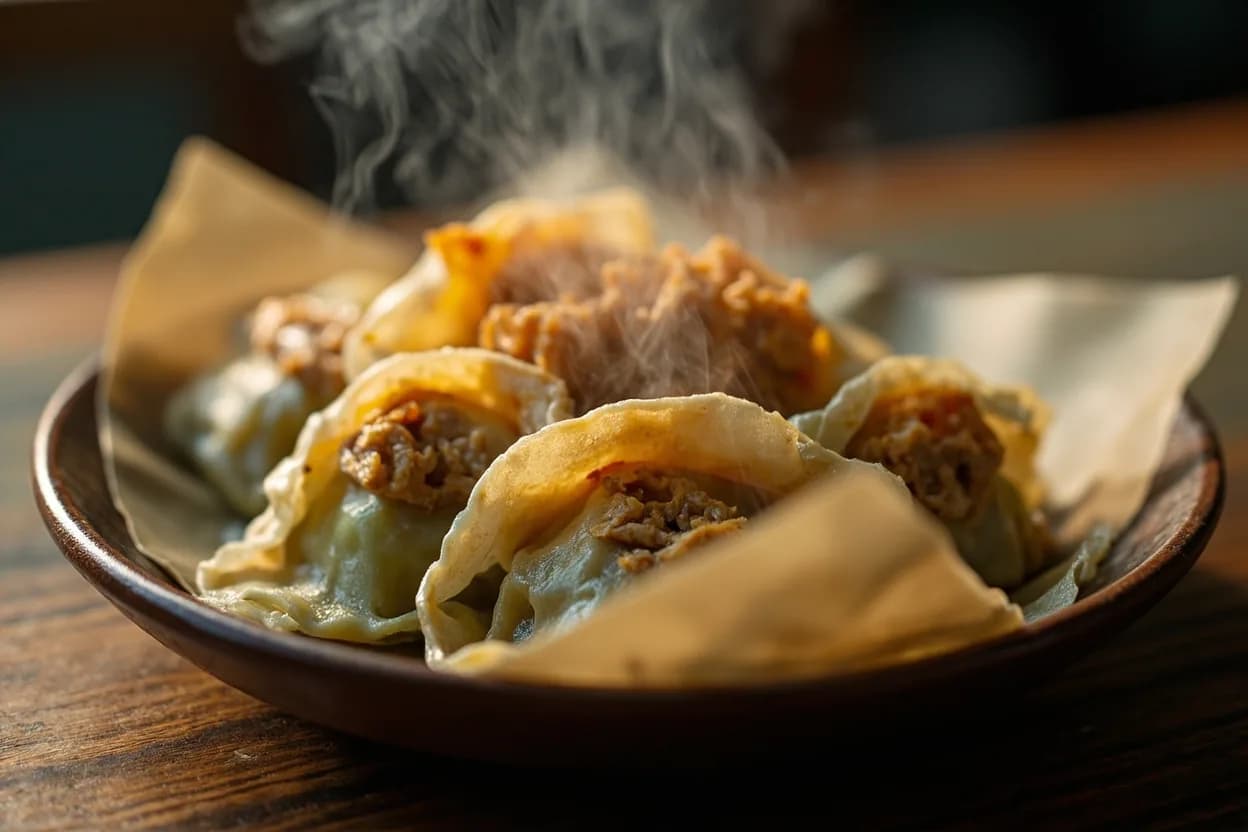
Dishes that rely on it
Related

Whisk
Beat ingredients smooth and aerated with a looping wire motion

Sift
Pass dry ingredients through mesh to aerate and remove lumps

Strain
Pour through mesh to separate solids from liquid for a smooth result

Filter
Pass liquid through fine material to clarify out the smallest particles

Rice
Press cooked potatoes through small holes for fluffy, lump-free texture

Mash
Crush soft cooked food into a rustic, creamy purée

Grind
Crush food into a coarse to fine texture, from spices to meat

Grate
Shred food into fine bits against a sharp-toothed surface