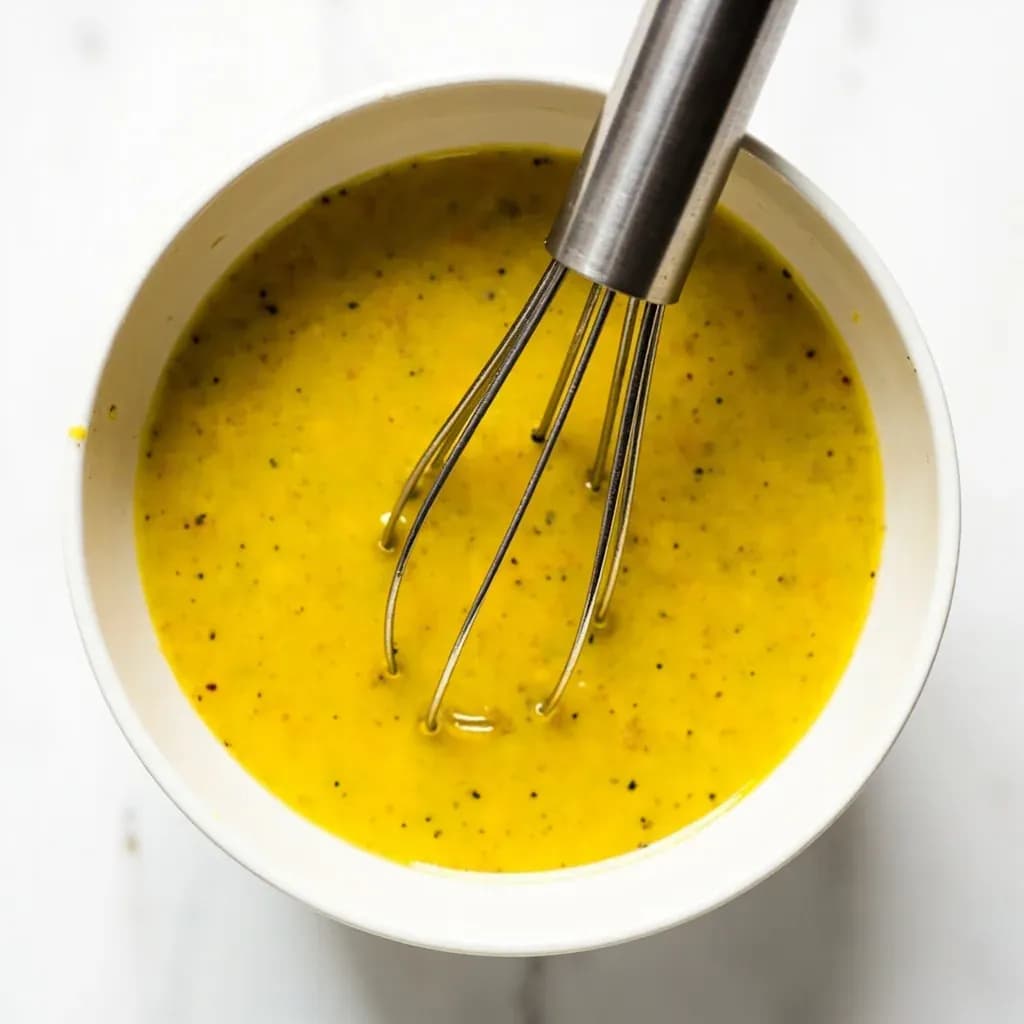
Transform & Preserve
Emulsification
Forcing oil and water-based liquids into a stable, uniform blend that won't separate.
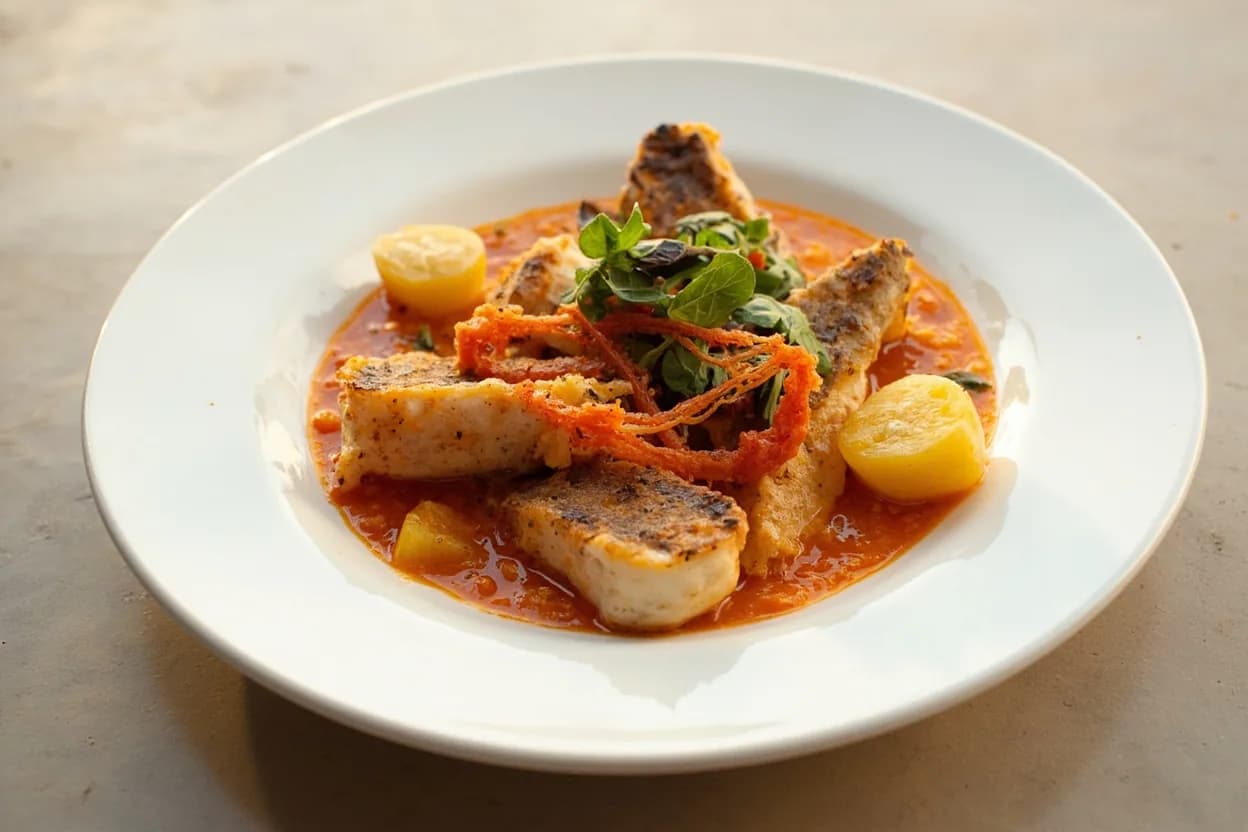
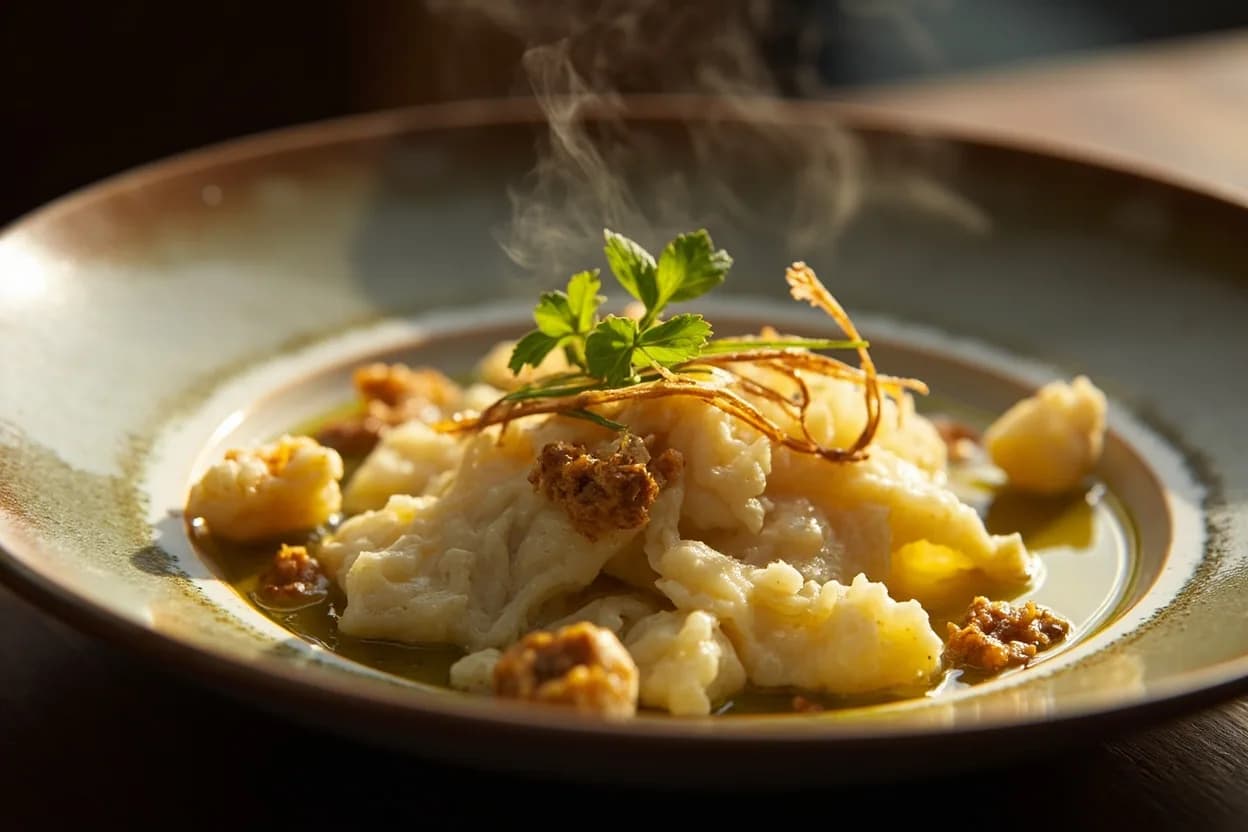
Emulsification disperses tiny droplets of one liquid (usually fat) evenly through another (usually water) and holds them suspended with an emulsifier or vigorous agitation. It creates mayonnaise, vinaigrettes, hollandaise, ganache, and the gelatin-rich pil-pil sauce, where olive oil binds with fish juices. An emulsifier like egg yolk, mustard, or lecithin coats the droplets and stops them from coalescing back into separate layers.
Emulsification is the cooking technique of forcing two liquids that naturally repel each other — almost always a fat and a water-based liquid such as vinegar, citrus juice, or stock — into a single, uniform, stable sauce. The cook supplies enough mechanical energy (whisking, blending, processing) to shatter one liquid into microscopic droplets suspended in the other, while an emulsifier — an amphiphilic ingredient such as egg-yolk lecithin, mustard mucilage, or soy lecithin — lowers the surface tension at the droplet interface and keeps those droplets from merging back together. The result is the glossy, opaque body of mayonnaise, the silken drape of hollandaise, and the cling of a well-built vinaigrette.
What separates a sauce that holds for a week in the refrigerator from one that pools into greasy and watery layers on the counter comes down to two things: how finely the fat has been dispersed, and how much emulsifier is doing its job. Mayonnaise droplets measure a fraction of a micrometer to a few micrometers across; a hastily shaken vinaigrette carries droplets ten or twenty times larger, which is why it separates within minutes. Cooks who understand that emulsification is a paced process — adding oil slowly at first so the emulsifier can coat each new droplet, then streaming once the base "takes" — almost never break a sauce.
Temperature and equipment matter as much as technique. Cold egg yolks are stiff and accept less fat before breaking; warm yolks flow easily and build a thicker, more stable emulsion with less effort. The same principle governs warm emulsions like hollandaise and béarnaise, where the bowl sits over barely simmering water and the yolks must stay below roughly 70 °C (160 °F) — any hotter and the proteins coagulate, expel the water they've trapped, and the sauce splits. With practice, the cook learns to read the texture: a working emulsion thickens visibly with each addition of oil, holds a ribbon when the whisk is lifted, and never looks slick or greasy.
- Difficulty
- Medium
Types & varieties
Oil droplets suspended in a water-based continuous phase. Examples: mayonnaise, hollandaise, milk, vinaigrette, cream soups, pan sauces mounted with butter.
Water droplets suspended in a fat continuous phase. Examples: butter, margarine, lard, and some cultured creams.
Held together only by mechanical agitation with no true emulsifier; separates on standing, as in a plain oil-and-vinegar shake.
Stabilized by a genuine emulsifier such as lecithin or mustard; resists separation for days to weeks under refrigeration (mayonnaise, hollandaise).
W/O/W or O/W/O systems (water-in-oil-in-water, or the reverse). Rare in home kitchens but used in modernist cooking to reduce perceived richness in a sauce.
How to do it
- 1
Choose your emulsifier and base
Decide which emulsion you're building. For mayonnaise, hollandaise, or aioli, plan on 1 large room-temperature egg yolk per 150–200 ml of oil. For a vinaigrette, 1 teaspoon of Dijon mustard or one minced shallot per 60 ml of dressing is a reliable starting point. For a modern or vegan sauce, soy lecithin or a spoonful of tomato paste can act as the emulsifier instead.
- 2
Combine the emulsifier with the water phase
Whisk the yolk (or mustard, or other emulsifier) with any acid, salt, and a small splash of water or vinegar until smooth and slightly loosened. This is the base that will capture the oil.
- 3
Add the oil drop by drop
While whisking continuously, add the oil literally a few drops at a time, whisking until each addition is fully incorporated and the mixture visibly thickens before adding more. This is the critical phase — patience here is what prevents breaking.
- 4
Stream the oil once the emulsion 'takes'
When the base reaches the texture of heavy cream and holds its shape, switch to a slow, thin, steady stream of oil, still whisking constantly. The sauce will build volume and thicken to a glossy, ribbon-like consistency.
- 5
Adjust seasoning, acid, and consistency
Whisk in the remaining vinegar or lemon juice to taste, season with salt and pepper, and adjust texture: a few drops of warm water loosens a sauce that is too thick; an extra trickle of oil tightens one that has thinned.
- 6
Store and use
Transfer to a jar, press plastic wrap or a lid directly onto the surface to prevent a skin, and refrigerate. Mayonnaise keeps 3–4 days; hollandaise is best used within 1–2 hours. If the sauce separates on standing, re-whisk briefly, or rebuild it using a fresh yolk and the broken sauce as described in the tips below.
How an emulsifier actually works
An emulsifier is a molecule with two ends: one attracted to water (hydrophilic) and one attracted to fat (hydrophobic). When oil is beaten into a yolk-and-vinegar base, the emulsifier molecules race to the surface of every newly formed oil droplet, plant their fatty tails into the oil, and leave their water-loving heads pointing outward into the surrounding liquid. This thin, organized skin does two things: it lowers the interfacial tension that would otherwise pull the droplets back together, and it physically blocks the droplets from touching and merging. The result is a suspension that looks and pours like a single, thickened liquid.
- Egg yolk is one of the most powerful kitchen emulsifiers because it is roughly 9% phospholipids (lecithin) by weight, plus it contributes the water phase and proteins that thicken the sauce further.
- Mustard works both chemically (it contains mucilage, a natural emulsifier) and mechanically — its fine, sharp particles give the whisk something to grab and help break the oil into smaller droplets.
- A broken sauce is not a ruined sauce: the droplets have simply merged back into a continuous oil layer. Adding a fresh yolk or mustard provides a new supply of emulsifier to coat those droplets and rebuild the structure.
Choosing your equipment
The tool you use changes the texture, the speed, and the margin for error. Pick by the size of the batch and how much control you want.
- Immersion (stick) blender: the most forgiving. All ingredients go in the beaker at once, the blades build the emulsion from the bottom up in under a minute, and the ratio is nearly impossible to over-shoot.
- Whisk in a wide, shallow bowl: gives the most control and the silkiest texture, which is why professionals still whisk hollandaise by hand. Requires a steady stream and patience at the start.
- Food processor or blender: fast and consistent, but the vortex can incorporate air, giving a lighter, puffier sauce. Good for large batches of mayonnaise.
- Stand mixer with whisk attachment: excellent for big volumes of mayonnaise or for whipping a sabayon base, though the bowl is deep and harder to work into by hand if something goes wrong.
- Mortar and pestle: traditional for aioli, where the slow grinding produces a denser, more rustic sauce with very small oil droplets.
Common uses
Tips & pitfalls
- Bring eggs and other ingredients to room temperature before starting — cold yolks resist emulsifying and break more easily.
- Add the oil extremely slowly at first, drop by drop, until the base 'takes' and visibly thickens. Pouring too fast is the single most common reason an emulsion breaks.
- If the sauce does break, do not throw it out: drop a fresh yolk (or 1 teaspoon of Dijon mustard) into a clean bowl and very slowly whisk the broken sauce into it, drop by drop, to rebuild.
- For mayonnaise made in a food processor or with an immersion blender, all ingredients can go in at once and the machine will build the emulsion as it runs — useful when you want a quick, nearly foolproof result.
- Whisk in a wide, shallow bowl rather than a deep one; more surface area means more contact with the oil and a faster set.
- Acid sharpens flavor and helps stability, but use it in measured amounts — too much vinegar or lemon juice can thin or break an egg-yolk emulsion.
- For a vinaigrette that holds longer than a few minutes, blend in a small spoon of Dijon mustard or a minced shallot as the emulsifier; a plain oil-and-vinegar shake separates almost immediately.
- Use a non-reactive bowl (glass, stainless, or ceramic) — copper or aluminum can react with raw egg yolks and give the sauce a metallic taste and a gray-green tinge.
Good to know
- Definition
- Mechanical dispersion of two immiscible liquids (typically oil and a water-based liquid) into a single phase, held together by an emulsifier.
- Two main types
- Oil-in-water (O/W, e.g., mayonnaise, vinaigrette, milk) and water-in-oil (W/O, e.g., butter, margarine).
- Common kitchen emulsifiers
- Egg yolk, whole egg, Dijon mustard, honey, garlic, soy lecithin, mustard mucilage, casein (in dairy), and tomato paste.
- Mayonnaise ratio
- 1 large egg yolk will reliably emulsify 150–200 ml (about ⅔ to ⅘ cup) of oil before becoming overworked.
- Classic vinaigrette ratio
- 3 parts oil to 1 part acid (vinegar or citrus) by volume; can stretch to 4:1 for a milder, more emulsified dressing.
- Droplet size
- Stable kitchen emulsions typically have droplets 0.1 to roughly 10 µm across; coarser dispersions separate within minutes.
- Temperature
- Eggs and other ingredients should be at room temperature; cold yolks resist emulsification and break more easily.
- Equipment
- Whisk, immersion (stick) blender, food processor, stand mixer, blender, or mortar and pestle — the immersion blender is generally the most foolproof for sauces.
Also called
Pil-Pil Emulsion · Ganache Emulsion · Vinaigrette Mounting · Mounting
Dishes that rely on it
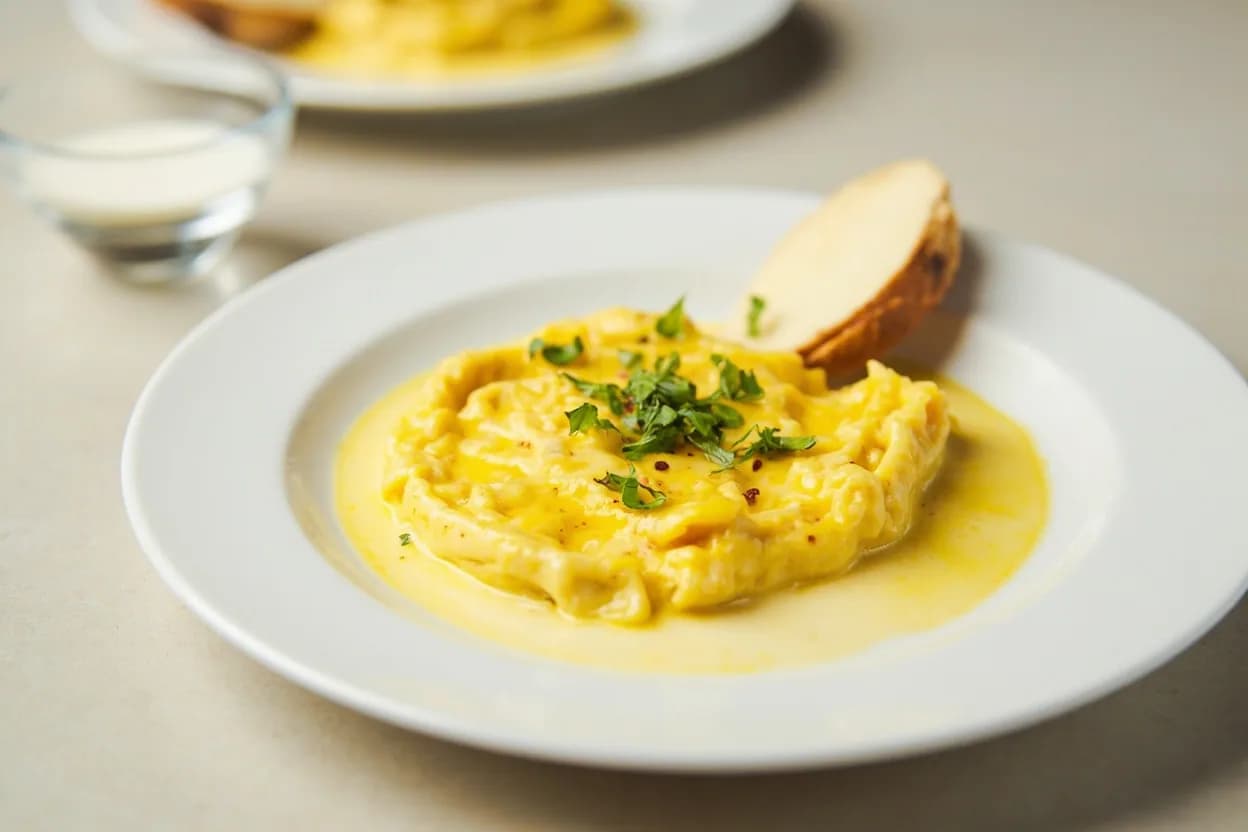
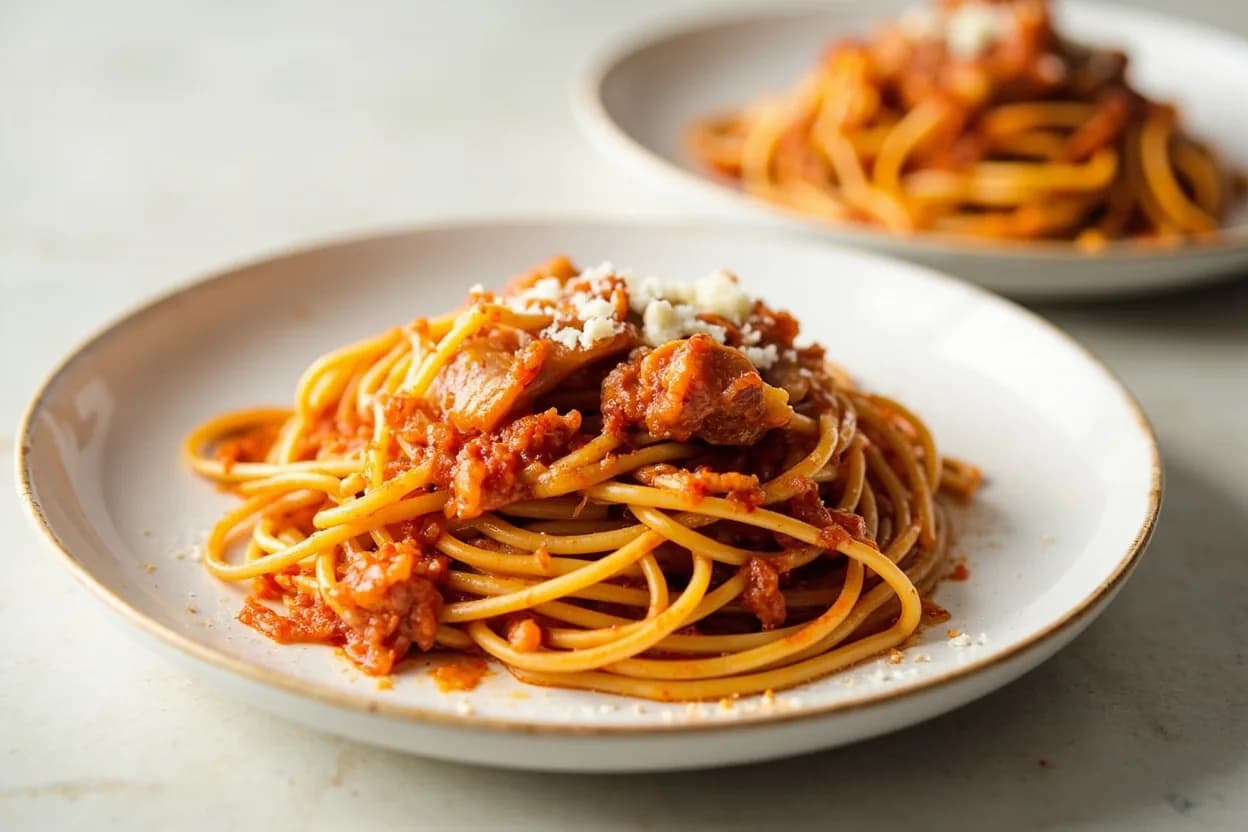
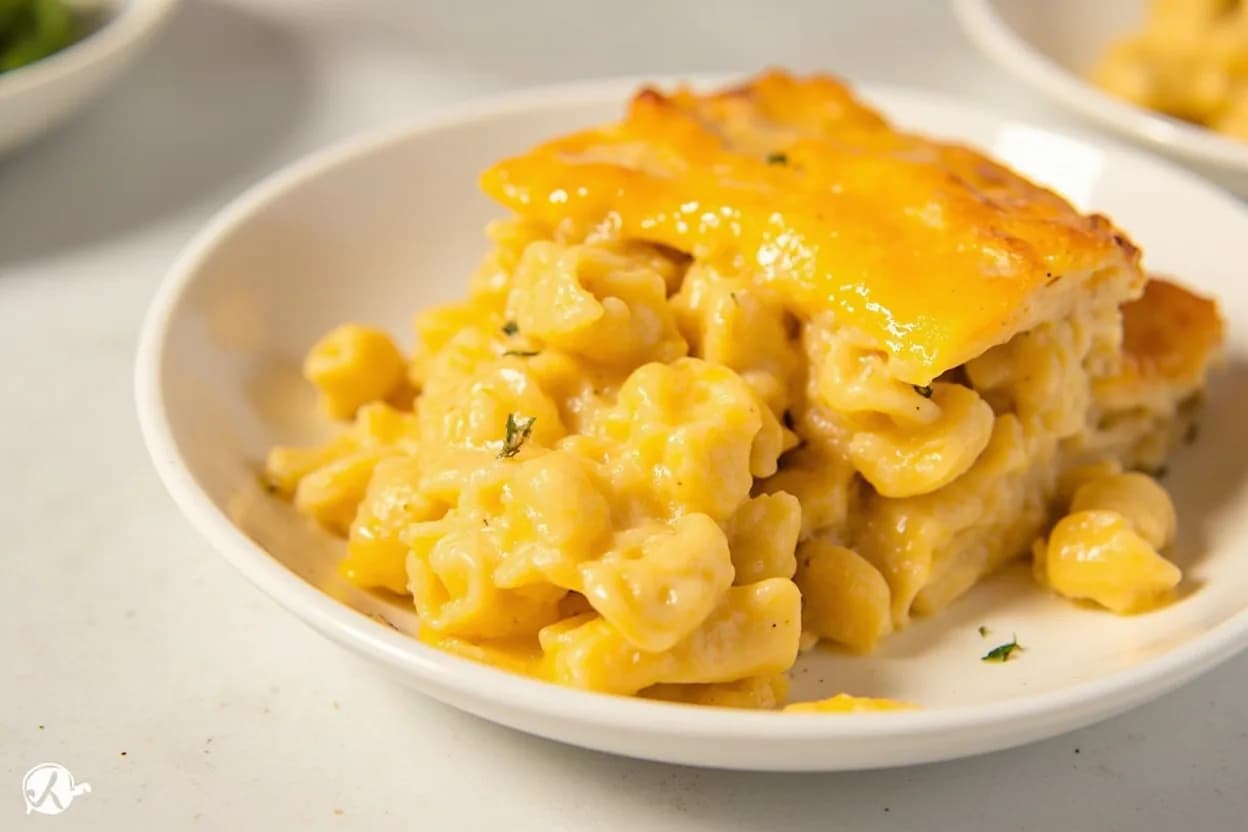
Related

Confit
Cook slowly submerged in fat for silky tenderness and keeping

Cure
Draw out moisture with salt and time to preserve and concentrate

Pickle
Steep in acidic brine for bright, tangy, crunchy preservation

Ferment
Let friendly microbes transform food into tangy, complex flavor

Marinate
Soak in a seasoned mix to flavor and tenderize before cooking

Brine
Soak in salt water so meat stays juicy and seasoned throughout

Dehydrate
Slowly dry out moisture to concentrate flavor and extend shelf life

Cold-Smoke
Perfume cured food with smoke without cooking it through