Transform & Preserve
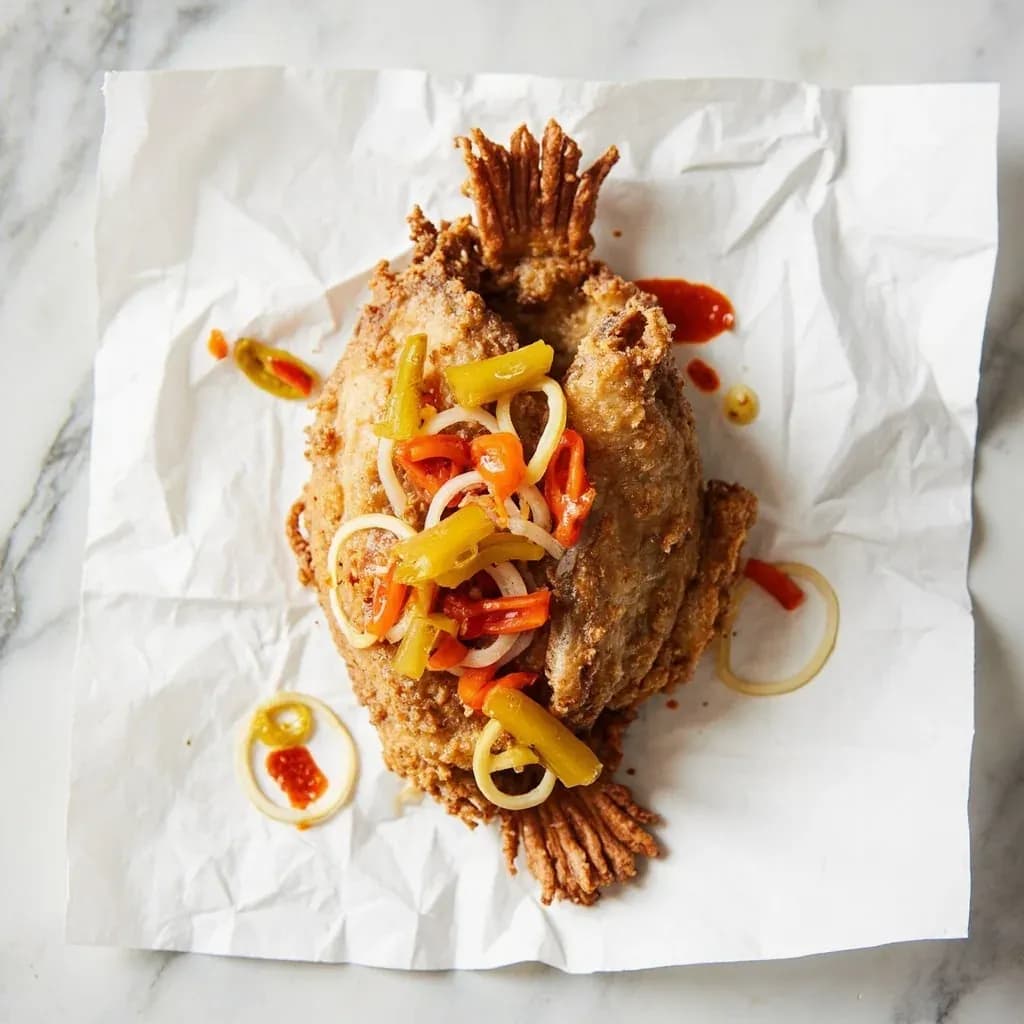
Escovitch
Caribbean method of frying fish then dressing it with a tangy spiced vinegar-and-pepper escabeche.
Escovitch is the Jamaican version of escabeche: fish (often whole snapper) is fried crisp, then topped with a hot pickle of vinegar, onions, carrots, scotch bonnet peppers and pimento. The acidic dressing seasons the fish and lightly preserves it, traditionally letting flavors meld overnight. It delivers a bright, spicy, sweet-and-sour contrast to the fried fish.
Escovitch is a distinctly Jamaican technique in which a whole fish — or chicken, shellfish, or vegetables — is fried until the skin is shatter-crisp, then immediately drowned in a hot, tangy, spiced vinegar pickle loaded with onions, carrots, peppers, and a whole Scotch bonnet. The method is a two-act performance: first you build texture and colour in hot oil, then you collapse that contrast by pouring an aromatic acid over the fish, which partly cures the flesh through deep slashes while the vegetables stay bright and barely wilted. The result is a dish that reads as both freshly fried and pickled at once, with heat from the bonnet that builds slowly across the plate.
What makes escovitch worth knowing is its generosity with leftovers. The pickle penetrates the slashes and softens the flesh just enough to make cold, straight-from-the-fridge fish a pleasure rather than a punishment, which is exactly why the dish is a Jamaican weekend breakfast staple — fried in the morning, dressed, rested, and eaten whenever people wander into the kitchen. It is also a forgiving make-ahead format: the fish can be fried hours ahead, the pickle made days ahead, and the final assembly done in minutes, which is unusual for a dish that still feels celebratory on the table.
The lineage is worth a footnote. The word and method descend from Spanish escabeche (which itself traces back through Andalusian Arabic to Persian *sikbaj*, a vinegar-and-spice sauce), but the Caribbean branch is recognisably its own: cane or coconut vinegar instead of wine vinegar, allspice (pimento) as the signature warm spice, and Scotch bonnet standing in for milder chillies. That combination — bonnet, allspice, cane vinegar, a touch of sugar or sour-orange marmalade — is what defines a proper escovitch pickle and what separates it from its Iberian cousins.
- Difficulty
- Medium
Types & varieties
The archetype: whole fried fish drowned in spiced vinegar pickle, served whole on a platter
The most prestigious version, using whole red snapper as a centrepiece for a crowd
Home-cook classic; the oily flesh absorbs the pickle especially well
Firmer-fleshed cousin, often filleted rather than left whole
Fried or browned chicken pieces finished with the same hot pickle
Coastal and Christmas-table variation; shellfish are briefly cooked, then dressed in pickle
Vegetarian offshoot — fried okra or eggplant topped with the pickle
How to do it
- 1
Clean and score the fish
Scale, gut, and rinse whole fish of about 1–1.5 lb (450–700 g) each. Pat thoroughly dry, then make 3–4 deep diagonal slashes on each side, cutting all the way down to the bone. These cuts are where the pickle will later seep in, so do not be shy with them.
- 2
Vinegar wash and season
Rub the fish inside and out with salt, freshly ground black pepper, and 1–2 lightly crushed pimento (allspice) berries. Splash with a little white vinegar and let sit 20–30 minutes. Pat dry again before frying — surface moisture is the enemy of a crisp crust.
- 3
Prepare the pickle base
Slice 1 large onion into thin rings, 1 carrot into thin bias coins, 1 sweet pepper into strips, and 2–3 escallions into 2-inch lengths. Have 1 whole Scotch bonnet (stem on) and 1 tsp pimento berries ready, plus an optional smashed garlic clove.
- 4
Bloom the spices
Heat 3 tbsp neutral oil in a small saucepan. Add the pimento berries and the garlic (if using) and let sizzle 20–30 seconds, just until the oil smells aromatic. Do not let the garlic brown or the berries will turn bitter.
- 5
Build the pickle
Add the onion, carrot, pepper, and escallion to the spiced oil. Cook 1–2 minutes, stirring, until the vegetables are just wilted but still brightly coloured and crunchy. Pour in 1 cup (240 ml) white or cane vinegar, drop in the whole Scotch bonnet, add 1 tsp sugar (or 1 tbsp sour-orange marmalade), and a pinch of salt. Simmer 2–3 minutes — the pickle should stay liquid and pourable, never reduced to a syrup.
- 6
Fry the fish
While the pickle simmers, heat about ½ inch (1.5 cm) of neutral oil in a heavy skillet to 350–360°F / 175–180°C. Dust the fish lightly with seasoned flour or cornstarch if you want a craggy, extra-crisp crust. Fry 5–7 minutes per side, depending on size, until deep golden and the flesh near the bone is opaque. Drain on a wire rack, never on paper towels, which will steam the crust soft.
- 7
Dress the fish
Transfer the hot fried fish to a serving platter. Spoon the hot pickle — vegetables, vinegar, and Scotch bonnet — generously over the top, working some down into the slashes so the acid reaches the flesh. Position the Scotch bonnet visibly on top so diners see (and respect) it.
- 8
Rest before serving
Let the dressed fish rest at least 30 minutes at room temperature, or refrigerate overnight. The pickle will partly cure the flesh through the slashes, and the flavours will marry into the classic tangy, gently sweet, slowly building-hot profile. Serve at room temperature or cold, with bammy, johnny cakes, or hard-dough bread on the side.
The escovitch pickle as a standalone condiment
The pickle is the engine of the dish, and it earns a place in the fridge long after the fish is gone. Made in roughly equal parts vinegar to vegetables by volume, with a Scotch bonnet, bloomed pimento berries, and a small sweetener, it keeps for weeks refrigerated and improves as the flavours marry. A few worthwhile uses: spooned over grilled or roasted pork, drizzled on fried plantains, or used to revive day-old fried fish (a brief re-fry, a fresh spoonful of pickle, and the fish tastes almost new). Treat it the way you would a salsa or a chutney — a small amount transforms a plain protein or starch.
- Use cane vinegar for sharper, more traditional flavour; coconut vinegar softens and adds faint sweetness
- A strip of orange peel or a spoon of sour-orange marmalade rounds the acid without making the pickle sweet
- Slice the vegetables thinly on the bias so they pickle quickly rather than sitting raw and crunchy
- Simmer the pickle only 2–3 minutes — it should remain pourable, not syrupy
Where escovitch sits in the wider family
Acid-preserved fried foods turn up across the post-colonial cooking world — Spanish and Portuguese escabeche, Mexican escabeche, and Filipino kinilaw-style pickles — and they all share a logic: cook the protein in fat, then arrest and flavour it with vinegar. The Caribbean branch is distinguished less by the architecture of the technique than by the seasoning: Scotch bonnet for heat, allspice for warm aromatic depth, cane vinegar for sharp acidity, and a touch of sugar or sour orange to soften the edge. A cook who has mastered escovitch can read most other escabeches on a menu with confidence, and vice versa.
Common uses
Tips & pitfalls
- Score the fish deeply on both sides, cutting to the bone — shallow slashes will not let the pickle penetrate, and the fish will taste fried, not escovitched.
- Marinate the cleaned fish in a splash of vinegar, salt, and a crushed pimento berry for 20–30 minutes before frying; this firms the flesh and seasons it from within.
- Get the oil genuinely hot (350–360°F / 175–180°C) — a soggy crust will fall apart the moment hot vinegar hits it.
- Fry the fish last, immediately before topping with pickle, so the contrast between crisp fish and warm pickle survives the journey to the table.
- Wear gloves when slicing Scotch bonnets, and remove the seeds and inner membrane for moderate heat or leave them in for a proper blast.
- Slice the pickle vegetables thinly on the bias so they absorb the vinegar quickly; thick cuts will sit raw and crunchy on top of the fish.
- Bloom the pimento berries in hot oil at the start of the pickle — dropping them straight into cold vinegar wastes their aroma.
- Save and refrigerate any extra pickle; it keeps for weeks and is excellent on roasted pork, fried plantains, or grilled fish the next day.
Good to know
- Origin
- Jamaica, descended from Spanish escabeche (Andalusian Arabic / Persian sikbaj)
- Primary proteins
- Whole small-to-medium fish — red snapper, mackerel, kingfish, or parrotfish
- Acid base
- White cane vinegar or coconut vinegar; lime juice sometimes added
- Signature heat
- Whole Scotch bonnet, stem on, sliced or left intact depending on desired fire
- Signature spices
- Allspice (pimento) berries — bloomed in oil at the start of the pickle
- Sweetener
- A small amount of sugar, or a spoon of Seville-style sour-orange marmalade for roundness
- Resting time
- At least 30 minutes; overnight in the refrigerator is the traditional gold standard
- Shelf life
- 3–4 days refrigerated once dressed; the bare pickle keeps for weeks
Also called
escabeche · escovitched fish
Related

Confit
Cook slowly submerged in fat for silky tenderness and keeping

Cure
Draw out moisture with salt and time to preserve and concentrate

Pickle
Steep in acidic brine for bright, tangy, crunchy preservation

Ferment
Let friendly microbes transform food into tangy, complex flavor

Marinate
Soak in a seasoned mix to flavor and tenderize before cooking

Brine
Soak in salt water so meat stays juicy and seasoned throughout

Dehydrate
Slowly dry out moisture to concentrate flavor and extend shelf life

Cold-Smoke
Perfume cured food with smoke without cooking it through