Transform & Preserve
First Fermentation (1F)
The initial open-air fermentation stage that builds base flavor and acidity in kombucha and similar brews.
First fermentation, or 1F, is the primary stage in brewing drinks like kombucha, where a starter culture (SCOBY) ferments sweetened tea in an open, breathable vessel over days to weeks. The microbes consume sugar and produce acids and trace carbonation, building the tart base. It precedes a sealed second fermentation that adds flavor and fizz.
First fermentation, abbreviated 1F in brewing circles, is the foundational stage of making kombucha. Sweetened tea is cooled, acidified with a little finished kombucha, and inoculated with a SCOBY — a symbiotic culture of bacteria and yeast that typically floats as a rubbery, beige pellicle on the surface. Over the next week or two, the yeasts invert sucrose into glucose and fructose and convert much of that into ethanol; in turn, Acetobacter and related bacteria oxidize the ethanol into acetic and other organic acids. The brew drops from roughly pH 4.5 to somewhere between 2.5 and 3.5, and the sweetness you started with gives way to a balanced sweet-tart liquid that is, in itself, a finished (though uncarbonated) beverage.
This is the stage that defines the character of everything that follows. Pull the brew on the early side and you keep residual sugar, body, and a rounder acid profile — ideal if you plan to flavor with fruit or botanicals in a second fermentation. Push it longer and you get a drier, sharper base with more pronounced vinegar notes, suitable for drinking straight, using as a cocktail mixer, or even pushing all the way to kombucha vinegar for dressings and pickling brines. 1F is also where a healthy SCOBY is sustained and grown: the mother culture you set aside, along with a cup or two of finished tea, becomes the starter for your next batch.
Practically, 1F is a forgiving process, but it is sensitive to temperature and hygiene. Cooler fermentations run slow and clean; warmer ones finish fast but veer toward vinegar more quickly. Once you understand how those levers move, 1F becomes less of a recipe and more of a routine you can tune to taste.
- Difficulty
- Medium
Types & varieties
Black or green tea with cane sugar; the standard SCOBY fermentation and the benchmark for taste and timing.
Uses green tea and honey with a jun-specific culture; lighter, more floral profile, generally fermented a little cooler.
A large vessel kept topped up with fresh sweet tea; SCOBY and starter tea are never fully removed, and finished kombucha is drawn off as needed.
A single discrete batch per vessel; SCOBY and a portion of starter tea are set aside at harvest and a fresh batch is started.
Fermented near 60–68°F (15–20°C); slower at 14–21+ days, with cleaner acidity and less acetic bite.
Fermented at 80–85°F (27–29°C); finishes in 5–7 days but produces more pronounced vinegar notes.
Partial substitution of true tea with hibiscus, rooibos, or other botanicals for color and flavor; only advisable once you have a strong, established SCOBY to keep pH in check.
How to do it
- 1
Sanitize equipment
Wash the glass jar, cloth cover, and any utensils with hot water and white vinegar or unscented dish soap, then rinse well. Skip antibacterial soaps — residues can inhibit the culture.
- 2
Brew sweet tea
Bring roughly 3 liters (about ¾ of your gallon) of filtered water to a boil. Remove from heat, add ~200 g cane sugar, and stir until fully dissolved. Add ~8 g loose tea or 8 tea bags and steep 10–15 minutes, then remove the tea.
- 3
Cool the tea
Top up to 1 gallon with cool filtered water or ice so the liquid reaches room temperature — ideally below 80°F (27°C). A warm brew will shock or kill the culture.
- 4
Acidify with starter tea
Pour in 1–2 cups (240–480 mL) of previously fermented kombucha, or unpasteurized store-bought kombucha with a live culture. This drops the pH before the SCOBY is added and protects the brew from contamination.
- 5
Add the SCOBY
Gently slide the SCOBY into the jar with clean hands. It may float, sink, or sit sideways — all are normal. A new baby SCOBY typically forms at the surface within a few days.
- 6
Cover and set
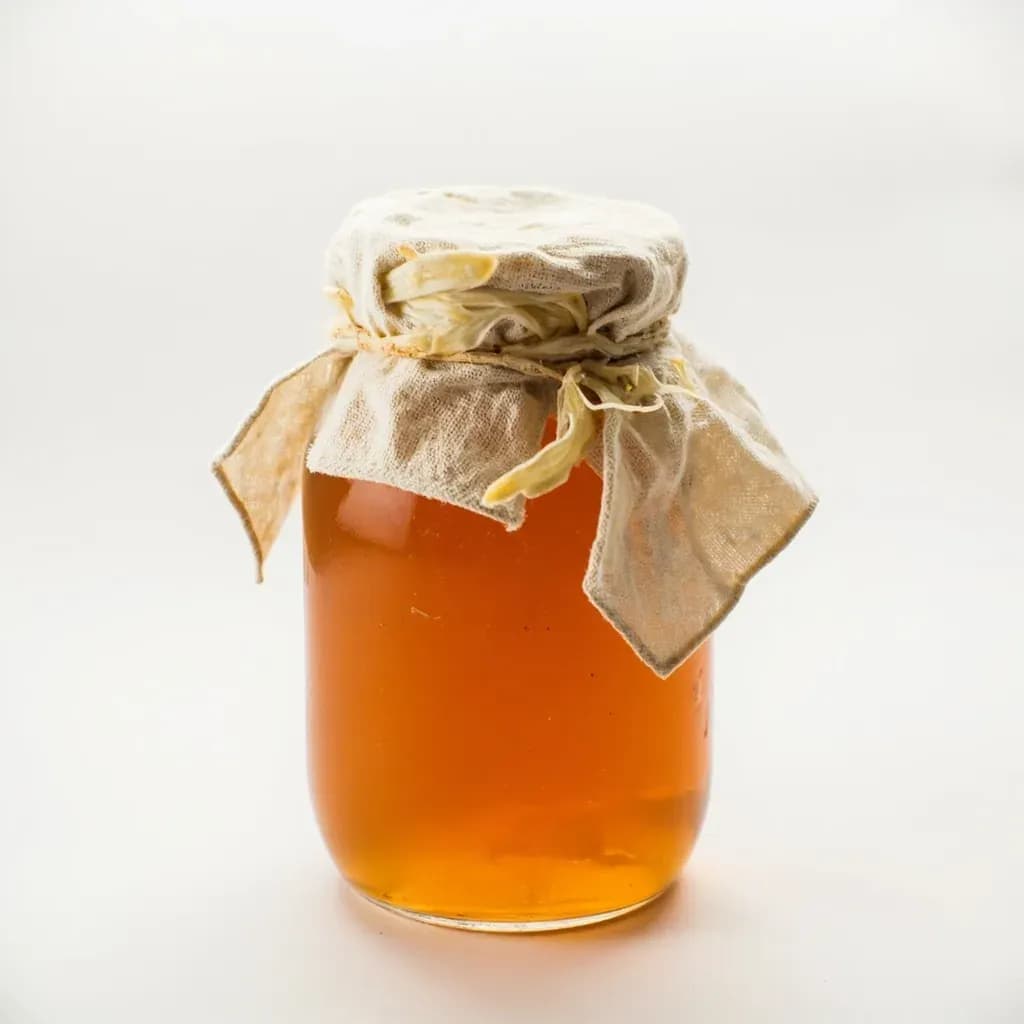
Secure a breathable cloth (cotton flour-sack towel, paper towel, or coffee filter) over the mouth of the jar with a rubber band. Place the jar in a draft-free spot out of direct sunlight, ideally 68–85°F (20–29°C).
- 7
Ferment 7–14 days
Leave undisturbed. Begin tasting from day 7 with a clean straw: pull when the brew is pleasantly tart with just enough residual sweetness for your palate. Test pH with strips and aim for 2.5–3.5.
- 8
Harvest and reserve starter
Remove the SCOBY and reserve it, plus 1–2 cups of finished 1F tea, in a separate jar in the fridge (or straight into the next batch). This is your insurance and the seed for the next fermentation.
- 9
Move to second fermentation or chill
Bottle the remaining 1F kombucha for a second fermentation with fruit or juice, or refrigerate it directly for a still-to-lightly-fizzy finished drink.
Reading the brew: when to pull a batch
A 1F is "done" when the balance of sweetness and acidity matches your goal, not when the calendar says so. Three signals tell you where you are:
- Taste from day 7 onward using a clean straw slipped down the inside of the jar. Pull when the brew tilts from sweet-sour to pleasantly tart with just enough residual sweetness for your palate — it will not get sweeter with more time, only sharper.
- Test pH with strips if you have them. Aim for 2.5–3.5 for a finished 1F; below 2.5 you are heading into vinegar territory.
- Look at the SCOBY. A healthy new pellicle forming at the surface, sinking brown strands (yeast), and a few visible bubbles are all normal. A dry, fuzzy, often colored growth sitting on top is mold — discard the batch if you see it.
How 1F sets up 2F
Whatever you do at 1F shapes what second fermentation can do. A few principles worth internalizing:
- Shorter 1F = more residual sugar = more food for the yeast to carbonate 2F. If you want fizzy, fruit-forward kombucha, pull 1F a little early.
- Longer 1F = drier, more acidic base. The brew is harder to carbonate in 2F because there is less sugar left, but it pairs well with strong flavors like ginger, lemon, or herbs that benefit from a sharp edge.
- Temperature swings between batches cause inconsistent carbonation in 2F. A stable 1F temperature is the single biggest lever for predictable bubbles later.
Common uses
Tips & pitfalls
- Use chlorine- and fluoride-free water; both inhibit SCOBY activity. Filtered or spring water is the safest default.
- Always cool sweet tea to below 80°F (27°C) before adding the SCOBY — heat above that can damage or kill the culture.
- Reserve at least 10–20% of finished 1F kombucha, plus the SCOBY, as starter for the next batch. Skip this step and you have nothing to brew with next time.
- Taste from day 7 onward and pull the batch when it crosses from sweet-tart to your preferred acidity — 1F will not get sweeter with more time, only sharper.
- Keep the vessel out of direct sunlight, which can overheat the brew and encourage mold growth.
- Cover only with breathable fabric; airtight lids can trap CO2 and risk pressure buildup.
- Distinguish true mold (dry, fuzzy, often blue, green, or black, sitting on top) from normal SCOBY growth (smooth, gelatinous, beige, attached to the mother culture) — discard the batch at the first sign of mold.
- Track temperature, day, and pH in a simple log; consistency across batches beats any single clever tweak.
Good to know
- Typical duration
- 7–14 days at room temperature
- Ideal temperature
- 68–85°F (20–29°C)
- Starting pH
- ~4.5 after acidification
- Target pH at completion
- 2.5–3.5
- Standard home batch
- 1 gallon (3.8 L)
- Tea-to-water ratio
- ~8 g loose tea or 8 bags per gallon
- Sugar-to-water ratio
- ~200 g (1 cup) cane sugar per gallon
- Starter tea required
- 10–20% of batch volume
- Sugar consumed by SCOBY
- Roughly one-third during 1F
- Container material
- Food-grade glass; never reactive metal
- Cover
- Breathable cloth, paper towel, or coffee filter secured with a rubber band
- Light conditions
- Out of direct sunlight; dim to moderate ambient light
- Yield
- ~85–90% of starting liquid
- Difficulty
- Beginner-friendly, but temperature-sensitive
Also called
1F · primary fermentation
Related

Confit
Cook slowly submerged in fat for silky tenderness and keeping

Cure
Draw out moisture with salt and time to preserve and concentrate

Pickle
Steep in acidic brine for bright, tangy, crunchy preservation

Ferment
Let friendly microbes transform food into tangy, complex flavor

Marinate
Soak in a seasoned mix to flavor and tenderize before cooking

Brine
Soak in salt water so meat stays juicy and seasoned throughout

Dehydrate
Slowly dry out moisture to concentrate flavor and extend shelf life

Cold-Smoke
Perfume cured food with smoke without cooking it through