Heat & Fire
Flash-Frying Seafood (a la Andaluza)
Andalusian method of dredging small seafood in flour and frying it briefly in very hot oil for a light crisp.
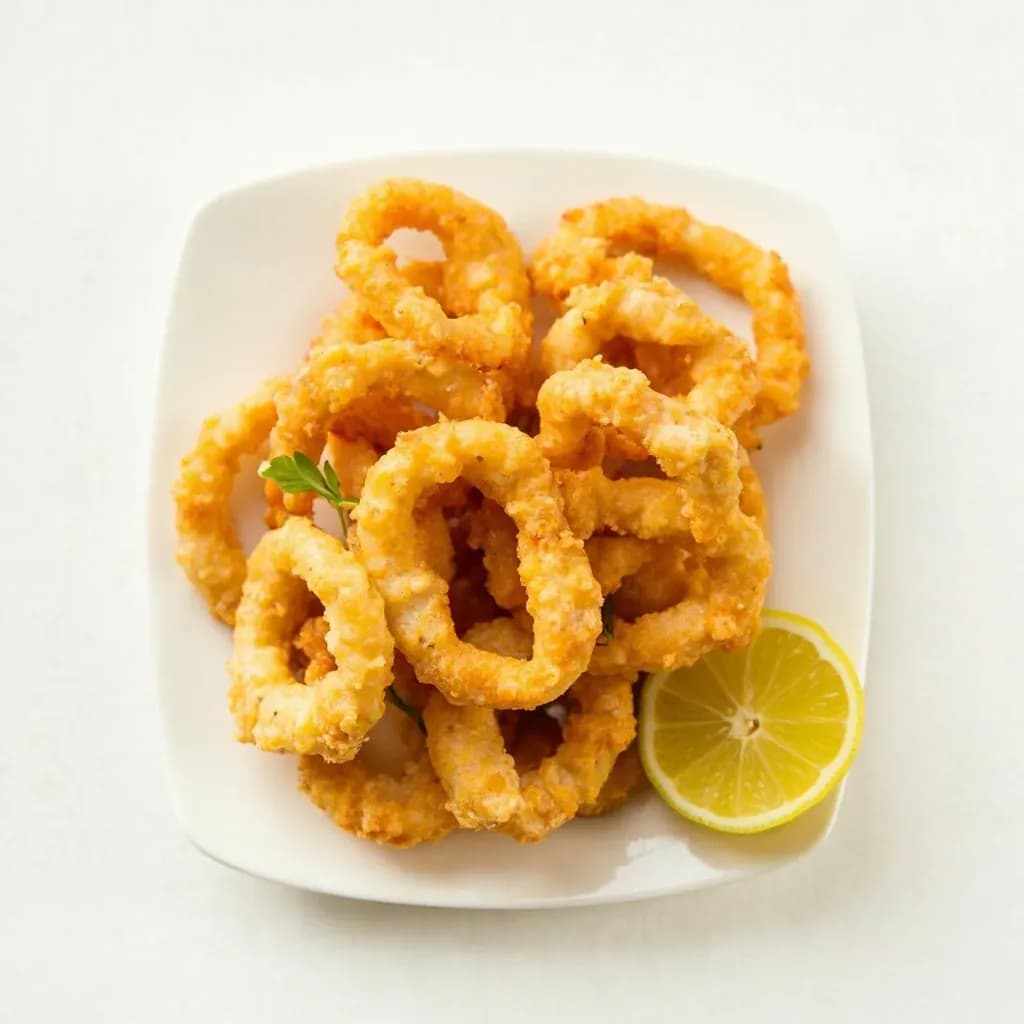
Flash-frying a la andaluza dusts small fish, squid or prawns in fine flour and plunges them into very hot oil for just a minute or two, giving a delicate, lacy crust without heaviness. Speed and high heat keep the seafood tender and prevent oil absorption. It is the technique behind classic pescaíto frito and fried calamari.
Andalusian flash-frying, known across southern Spain as pescaíto frito or fritura andaluza, is a high-heat, very-short-fry method for small, very fresh seafood. The pieces — often no bigger than a finger — are tossed in a thin coating of wheat flour and lowered into oil at roughly 180–190°C for anywhere from thirty seconds to two minutes. The aim is not a heavy, golden-brown crust but a pale, almost lacy shell that shatters when bitten and gives way to sweet, barely-cooked flesh inside. It is a technique that flatters the ingredient rather than transforms it, which is why freshness matters more than seasoning.
The mechanics are simple but unforgiving. The flour must be light and even — thick patches absorb oil and stay gummy, while bare spots allow the fish to fry unevenly. The oil must be genuinely hot before the first piece goes in, and the pan must hold enough heat that a small batch doesn't drop the temperature more than a few degrees. Work is done in small handfuls, lifted out with a wire skimmer the moment the crust turns pale gold, and salted while still sizzling. The whole cooking window is so short that a successful batch is over before the next one begins.
Eaten standing up at a chiringuito on the Cádiz coast, or as a ración in a Seville bar, the dish is usually dressed with nothing more than lemon, coarse salt, a cold glass of manzanilla sherry or a chilled beer, and sometimes a green salad alongside. The crust is at its best for only a few minutes after it leaves the oil, so the technique is essentially a service technique as well as a cooking one — a fact that defines every choice, from portion size to the size of the pan.
- Difficulty
- Medium
Types & varieties
Whole fresh anchovies, lightly floured and fried; an icon of the Málaga and Cádiz coast.
Squid rings (and sometimes tentacles) — the most internationally recognized Andalusian fry.
Tiny baby squid from the Cádiz and Sanlúcar coast, dredged and fried whole; prized for their tenderness.
Strips of cuttlefish, a Cádiz classic.
Small whole cuttlefish, often lightly scored to curl in the oil.
Dogfish (cazón) pieces marinated in paprika, vinegar, garlic, and oregano, then floured and fried; sits between an adobo and a plain flash-fry.
Mixed platter combining several small seafoods — squid, shrimp, small fish, sometimes shellfish.
Whole prawns, heads and shells on, flash-fried until just opaque.
Small wedge clams, opened in the hot oil.
Slices of fish roe, lightly floured.
How to do it
- 1
Select and prep the seafood
Choose very fresh, small seafood — squid rings, baby squid, fresh anchovies, small prawns, cuttlefish strips, small clams. Clean thoroughly, leaving small pieces whole or cutting into bite-sized pieces. Pat dry with a clean cloth; for a true Cádiz-style crust, leave the surface just slightly damp so the flour clings in thin, uneven patches.
- 2
Season the flour
Tip fine or medium wheat flour into a wide bowl and work in a light seasoning of fine sea salt — roughly 10 g salt per 100 g flour. Some cooks add a pinch of baking powder for extra lightness, though this is optional.
- 3
Heat the oil
Pour 4–6 cm of oil into a heavy pan, deep fryer, or cazuela de barro and heat to 180–190°C. The surface should shimmer and a pinch of flour should sizzle the instant it touches the oil.
- 4
Dredge the seafood
Toss a handful of seafood in the flour, shaking off the excess so just a thin, even coat remains. Avoid thick, clumpy patches — they absorb oil and stay raw inside. Use one hand for dry and one for wet to keep the flour bowl from clumping.
- 5
Flash-fry in small batches
Lower the floured pieces into the hot oil one at a time so they don't stick, and never crowd the pan. Fry for 30 seconds to about 2 minutes, until pale gold and crisp. Watch the colour closely — Andalusian fry is light, not deep brown.
- 6
Drain and salt
Lift the seafood out with a wire skimmer, let the oil drain briefly over the pan, then transfer to a tray lined with paper towels or set on a wire rack. Salt immediately while the crust is still sizzling.
- 7
Serve at once
Bring to the table on a warm platter with lemon wedges. Eat straight away — the crust loses its snap within minutes.
The Flour Question
Two schools of thought govern how the seafood meets the flour, and the difference is visible in the finished crust. The Cádiz-Sanlúcar school leaves the cleaned seafood just damp from rinsing, so the flour clings in irregular, almost translucent patches — the crust comes out delicate, shattery, and barely there. The Málaga and Huelva school pats the seafood dry and coats it more evenly, which gives a slightly more developed golden colour and a marginally sturdier bite. Both are correct; they are simply two valid expressions of the same idea. What neither school tolerates is a thick, pasty coating, which traps steam, absorbs oil, and prevents the flesh from cooking through in the brief window the fry allows.
Oil and Colour
Olive oil gives the most characterful result — fruity, slightly peppery, and traditional — but it also colours faster and has a lower smoke point, so the window between pale gold and too dark is narrow. Sunflower or a mild olive/sunflower blend buys more time and produces a paler, more neutral crust that lets delicate seafood speak. In every case the oil should be deep enough (4–6 cm in a heavy pan or cazuela) to float the pieces, and hot enough that a pinch of flour sizzles on contact. The target colour is light gold, not mahogany: Andalusian fry is judged on how quickly the crust yields, not on how dark it gets.
Regional Styles
Cádiz and Sanlúcar de Barrameda are the spiritual home of the technique, and their fritura is the benchmark: very light flouring, very hot oil, almost immediate service, often with nothing but lemon. Málaga tends toward slightly more developed colour, sometimes a touch more salt, and a strong tradition of boquerones fritos served in long wooden boats. Huelva, on the Atlantic coast, leans on the catch of the estuary — small cuttlefish, prawns, coquinas. Seville inland, away from the boats, often sources from the morning's mercado central and serves the fry in raciones rather than by the piece, but the technique is identical. Across the region, the unifying rule is that the dish should arrive at the table within a minute or two of leaving the oil.
Common uses
Tips & pitfalls
- Use the freshest possible seafood; the technique showcases freshness, it does not hide it.
- Bring the oil to a genuine 180°C+ before the first piece goes in — too-cool oil produces greasy, heavy results and is the most common mistake.
- Fry in small batches; overcrowding drops the oil temperature and ruins the crust before the fish even colours.
- Drain on a wire rack rather than paper towels if you can — the crust stays crisper because steam escapes from underneath.
- Salt immediately after frying, not before; salt on raw fish pulls moisture out and dampens the flour coating.
- Finish with a squeeze of lemon at the table, not in the pan — acid in the pan softens the crust on contact.
- Keep one hand for dry and one for wet; moisture-laden fingers clump the flour and produce bald, oily patches on the seafood.
- Do not reuse the same flour bowl for the second service — the first round's moisture and starch make a noticeably heavier crust the second time around.
Good to know
- Origin
- Andalusia, southern Spain — Atlantic and Mediterranean coasts (Cádiz, Málaga, Huelva, Seville)
- Also known as
- Pescaíto frito, fritura andaluza, fritura de pescado
- Core method
- Small, fresh seafood dredged in wheat flour and flash-fried in very hot oil
- Oil temperature
- Approximately 175–190°C (350–375°F)
- Traditional oil
- Olive oil historically; sunflower or a mild olive/sunflower blend common today
- Fry time
- 30 seconds to about 2 minutes per batch, depending on size and thickness
- Difficulty
- Easy to moderate — high heat, small batches, and fast draining are the keys
- Key equipment
- Heavy pan or deep fryer, wire skimmer (spider), slotted spoon, paper towels or wire rack for draining
- Best paired with
- Lemon wedges, coarse salt, cold beer, dry sherry (manzanilla or fino), or a simple green salad
- Cultural context
- Staple of Andalusian beach chiringuitos, seafood taverns, and tapas bars
Also called
pescaíto frito · frito andaluz
Related

Sear
Blast the surface hot for a deep-browned, savory crust

Sauté
Cook quickly in a little fat over lively heat, tossing as you go

Stir-Fry
Toss bite-sized pieces over roaring heat for fast, smoky cooking

Pan-Fry
Crisp food in a shallow layer of hot fat, turning once or twice

Deep-Fry
Submerge in hot oil for an all-over crackling crust

Roast
Cook uncovered in dry oven heat for browned edges and tender centers

Bake
Cook with steady, surrounding oven heat — the soul of bread and pastry

Broil
Hit food from directly above with fierce overhead heat