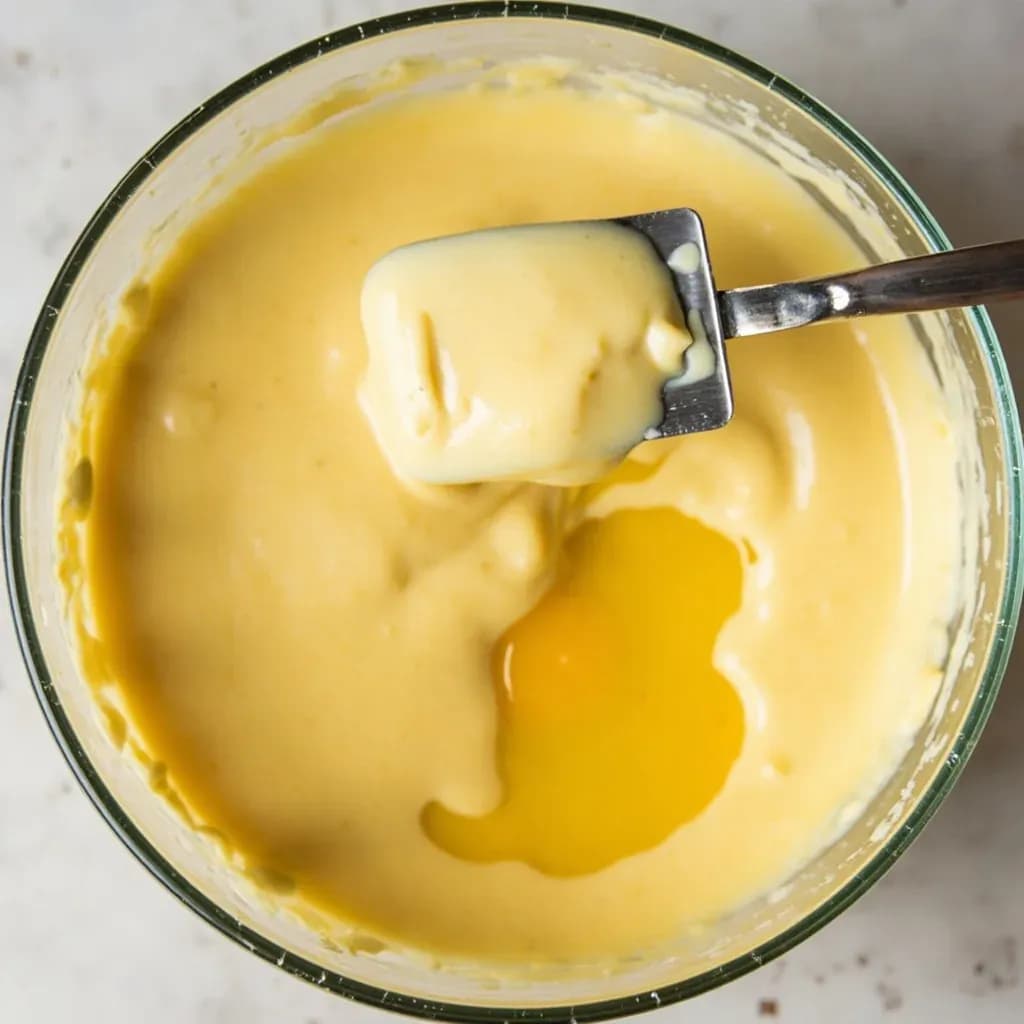
Prep & Assembly
Folding Batter (Unterheben)
Gently combining a light mixture into a heavier one to keep the air whipped into it.
Folding batter, Unterheben in German, gently incorporates a delicate aerated mixture such as whipped egg whites or cream into a heavier batter using a spatula in a cut-and-turn motion. The slow, careful action preserves the trapped air that gives soufflés, sponges, and mousses their lift. Overmixing here deflates the batter, so the goal is just enough strokes to blend without knocking out the air.
Folding is the controlled marriage of two mixtures of different densities — typically a stiff, aerated foam (beaten egg whites or whipped cream) and a denser base (batter, custard, purée) — without destroying the air trapped in the lighter one. The technique matters because the volume, lift, and tender crumb of cakes, soufflés, mousses, and chiffon batters depend entirely on the air bubbles that survive the mixing step. Every stroke trades a small amount of air for a smoother, more uniform batter, so the goal is always to combine with the minimum number of strokes, not the maximum.
The German term Unterheben (also unterziehen) and the French incorporer délicatement describe the same intent: combine without beating. Unlike stirring, which is circular and compressive, folding uses a vertical cut-and-fold motion that moves the heavier mixture up through the lighter one with the least possible pressure.
The behavior of a folded batter is governed by simple physics: a stiff foam holds air in a protein or fat network, and that network collapses under shear force. Once deflated, it cannot be rebuilt by re-whipping — the foam's structure is gone. This is why experienced bakers treat folding as a one-way operation: prepare everything, work quickly, and stop the moment the mixture looks uniform.
- Difficulty
- Medium
Types & varieties
Spatula cuts down the center, sweeps along the bowl bottom, and folds the mixture up and over the top; bowl is rotated a quarter turn between strokes.
Balloon whisk used with a gentle wrist-turning motion for very loose, foamy mixtures like génoise batter; carries higher deflation risk.
Sifted dry ingredients (flour, cocoa, sugar) folded in with the same cutting motion to avoid lumps without developing gluten.
Whipped cream folded into a custard, fruit purée, or chocolate base; requires extra-cold cream and an immediate, gentle hand to prevent weeping.
Used when the lighter mixture is far greater in volume than the heavier base — start by loosening a small scoop of the heavier base into the lighter first to equalize density.
How to do it
- 1
Prepare both mixtures
Have the heavier base and the lighter aerated component (whipped egg whites, whipped cream) ready at peak. They should be at similar temperatures and the right texture — whites to soft or medium peaks, cream to soft peaks that hold their shape.
- 2
Lighten the heavy base
Add about one-quarter to one-third of the lighter mixture to the heavy base. Fold just until the base loosens and becomes more fluid. This equalizes the densities so the remaining additions fold in without much force.
- 3
Add the remaining lighter mixture in stages
Add the rest in two more additions, folding gently to just combined between each. Pouring the lighter mixture down the side of the bowl rather than dropping it onto the top reduces air loss.
- 4
Use the cut-and-fold motion
Hold the spatula perpendicular to the bowl. Cut straight down through the center, sweep along the bottom, then turn the blade up the far side and fold the mixture over the top. Rotate the bowl a quarter turn and repeat.
- 5
Stop at uniform color and texture
The moment no streaks of white remain and the batter looks evenly blended, stop. A few faint streaks are acceptable. The batter should still look visibly airy and fall in a thick ribbon from the spatula.
- 6
Use immediately
Transfer to the prepared pan or mold right away. Delaying allows leavening gases to escape and the flour's gluten to relax into a denser crumb. Do not tap or bang the filled pan.
Why deflation cannot be undone
Whipped egg whites hold air in a network of denatured egg proteins stretched around tiny bubbles. When the spatula cuts through the foam, those bubbles compress; if the pressure is too great, the protein film pops and the bubble never reforms. Re-whipping an overfolded mixture does not restore volume — the foam's structural protein has already set. This is why experienced bakers treat folding as a single, irreversible step and adjust recipes beforehand (whipping whites slightly firmer, slightly underbeating the cream) rather than trying to rescue an under- or overfolded batter at the last minute.
- Air loss is cumulative — every stroke costs volume
- Flour begins hydrating and relaxing gluten the moment it contacts wet ingredients
- Cocoa-based mixtures stiffen as they cool, narrowing the working window
- If folding has visibly failed, change the recipe next time; do not try to fix the batter now
Historical note
Folding has no single inventor. It is a refinement of 19th-century French pâtisserie practice documented in the writings of Antonin Carême and later Auguste Escoffier, where the instruction 'mélanger sans casser les blancs' (mix without breaking the whites) appears in sponge and meringue preparations. The German term Unterheben entered wider Anglophone baking vocabulary through translated European manuals in the 20th century.
Common uses
Tips & pitfalls
- Always start with both mixtures at similar temperatures — cold whites into cold batter fold more cleanly than warm into cold.
- Add the lighter mixture in three additions: the first loosens the heavy base so the remaining additions fold in with less force.
- Hold the spatula vertically and use the full length of the blade, not the tip — you move more mass with less effort and fewer strokes.
- Rotate the bowl a quarter turn with your non-dominant hand as you fold; the bowl does the turning so the spatula can stay in constant motion.
- Stop the moment the mixture looks uniform — a few faint streaks are preferable to overmixing. Overfolded batter will not rise properly.
- Never tap or drop the bowl on the counter after folding; this knocks out trapped air. If bubbles must rise, let the batter rest briefly, untouched.
- Use a bowl that is at least twice the volume of the combined mixtures; a cramped bowl forces aggressive folding.
- Wipe the spatula blade against the bowl rim only when necessary — scraping aggressively at the bottom pulls air out.
- If folding fails and the batter visibly deflates, do not try to re-whip; the structure is lost. Adjust the recipe next time, not the batter now.
- For chocolate batters especially, work quickly — cocoa fat begins to firm the mixture as it cools, making gentle folding harder.
Good to know
- German term
- Unterheben (also unterziehen)
- French term
- Incorporer délicatement (sometimes plier)
- Purpose
- Combine mixtures while preserving incorporated air
- Primary tool
- Flexible rubber or silicone spatula
- Bowl type
- Large, wide bowl with at least twice the volume of the combined mixtures
- Key principle
- Deflation is the enemy; every stroke should preserve volume
- Ratio convention
- Add the lighter mixture into the heavier base in 2–3 additions, starting by loosening the base
- Doneness cue
- No visible streaks or pockets of white; uniform color, still visibly airy and ribbony
Also called
Unterheben · Folding In
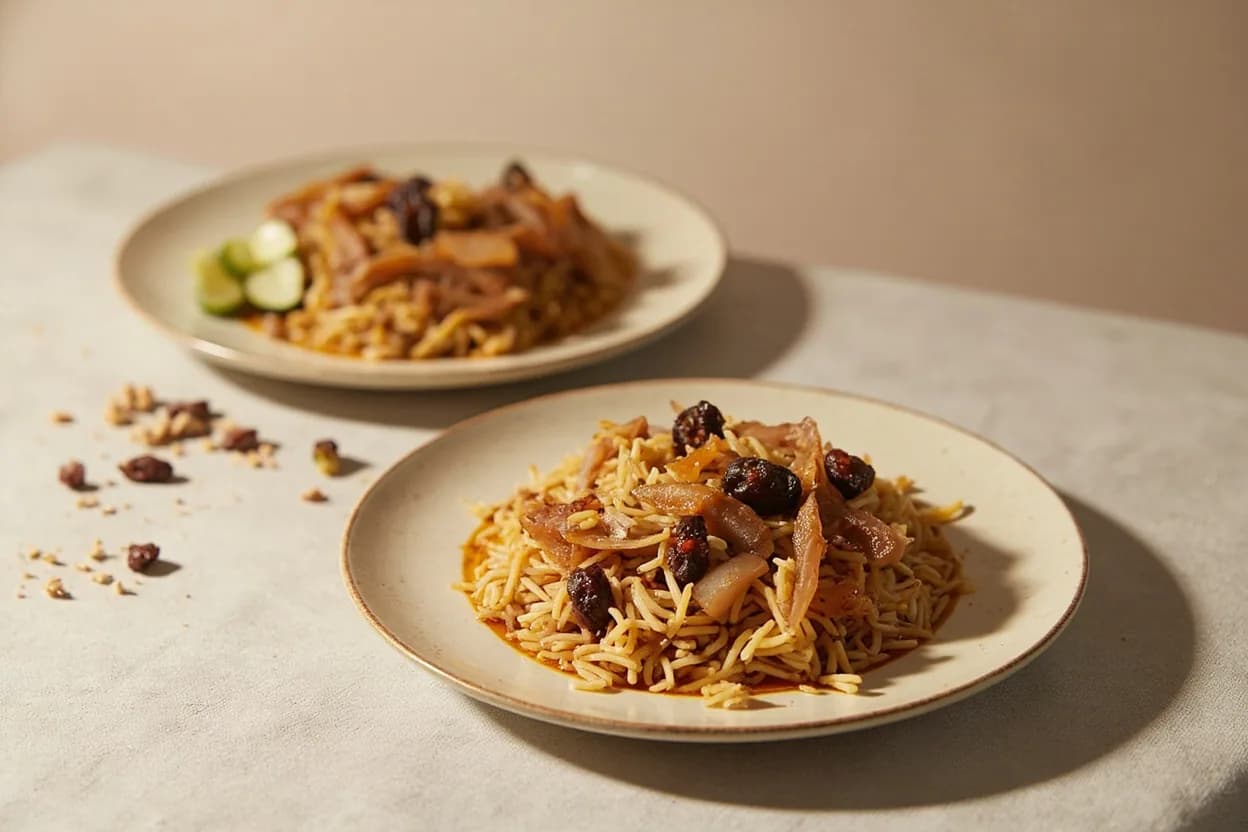
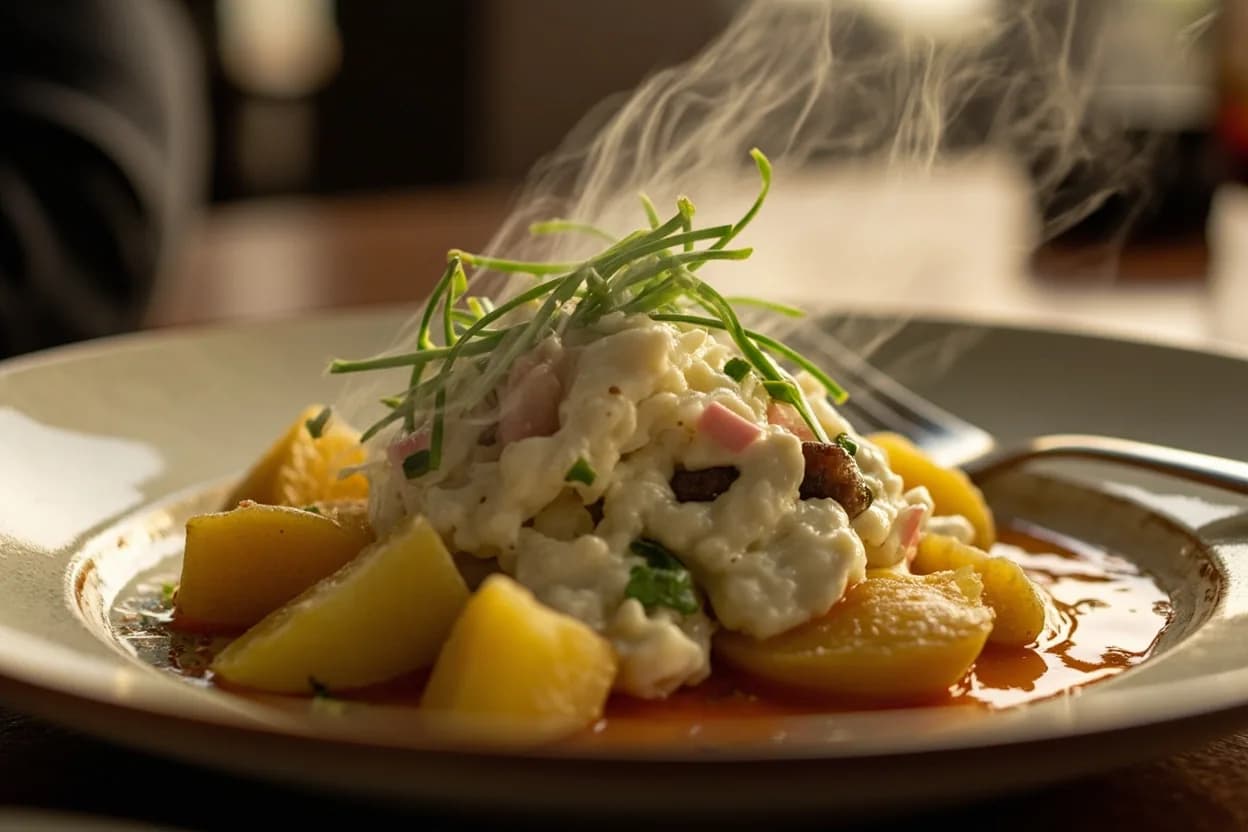
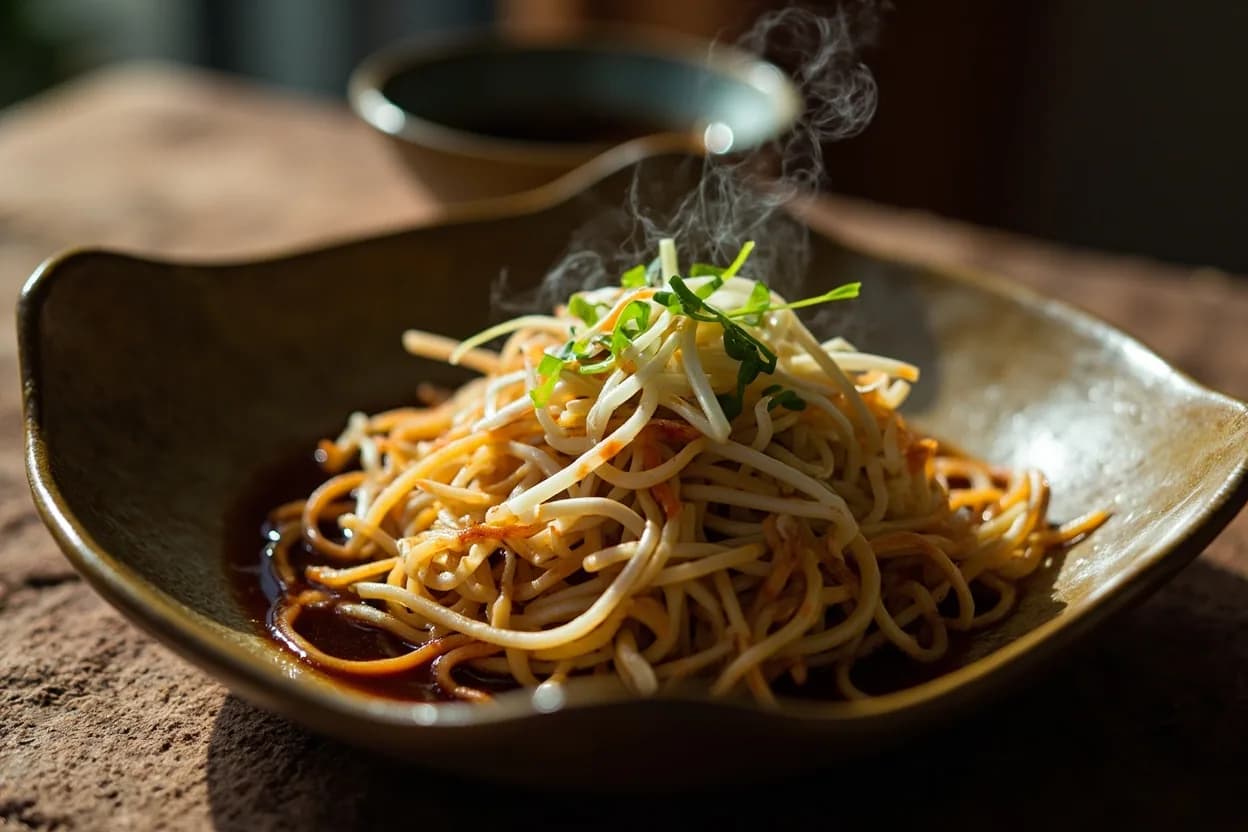
Dishes that rely on it

Related

Whisk
Beat ingredients smooth and aerated with a looping wire motion

Sift
Pass dry ingredients through mesh to aerate and remove lumps

Strain
Pour through mesh to separate solids from liquid for a smooth result

Filter
Pass liquid through fine material to clarify out the smallest particles

Rice
Press cooked potatoes through small holes for fluffy, lump-free texture

Mash
Crush soft cooked food into a rustic, creamy purée

Grind
Crush food into a coarse to fine texture, from spices to meat

Grate
Shred food into fine bits against a sharp-toothed surface