Prep & Assembly
Hand-Shredding
Pulling cooked meat or leaves apart by hand into rustic, irregular strands.
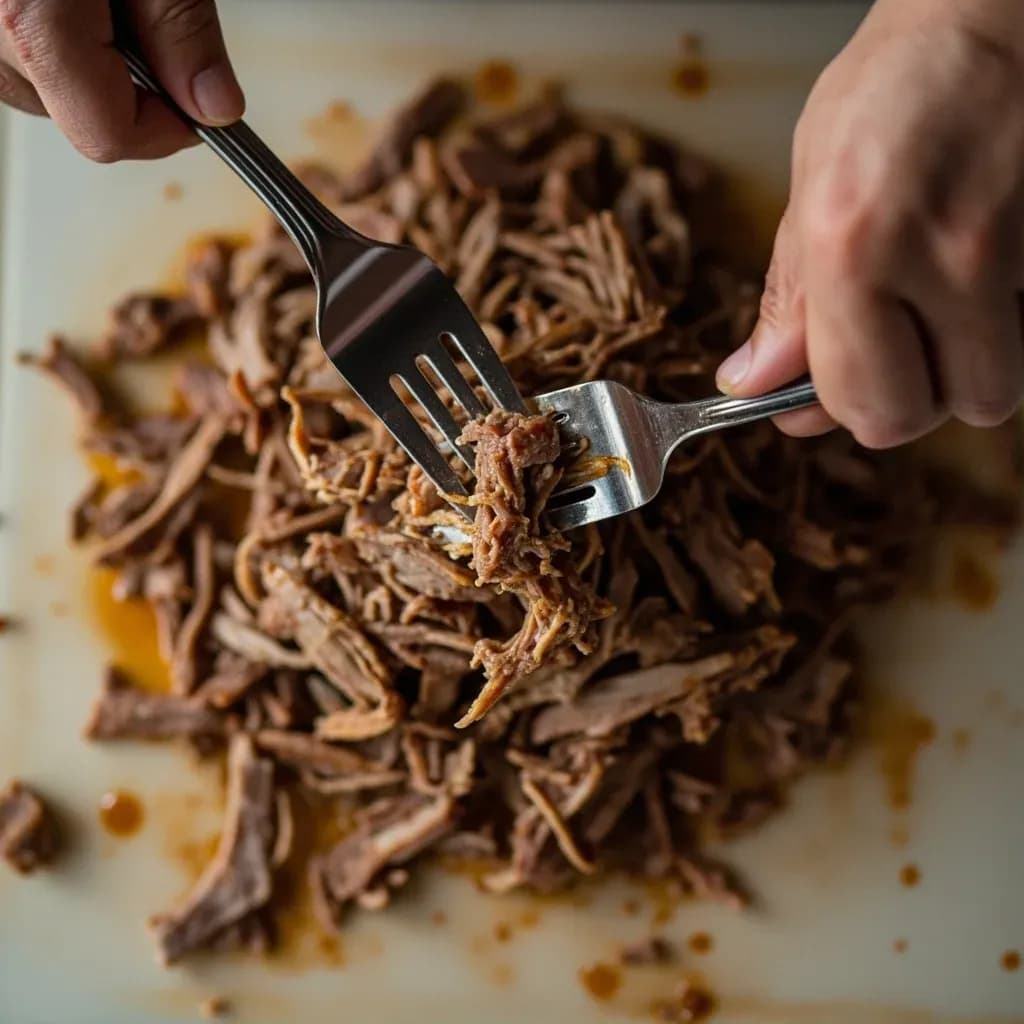
Hand-shredding tears cooked meat or leaves into loose strands by hand rather than cutting, following the natural grain for a tender, rustic texture that holds sauce well. It is the technique behind pulled meats like seswaa and many braised dishes, and it is also used to bruise and break up aromatic leaves. Working the meat while still warm makes it pull apart most easily.
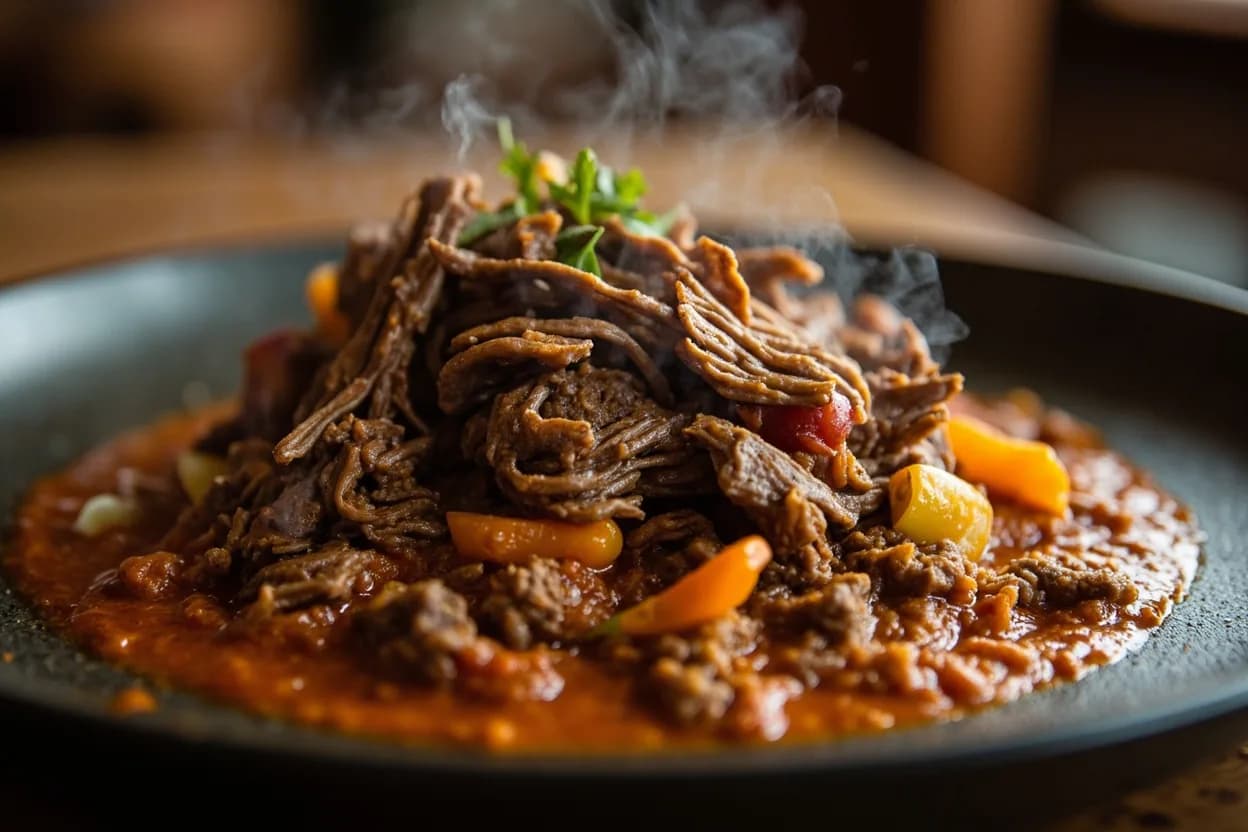
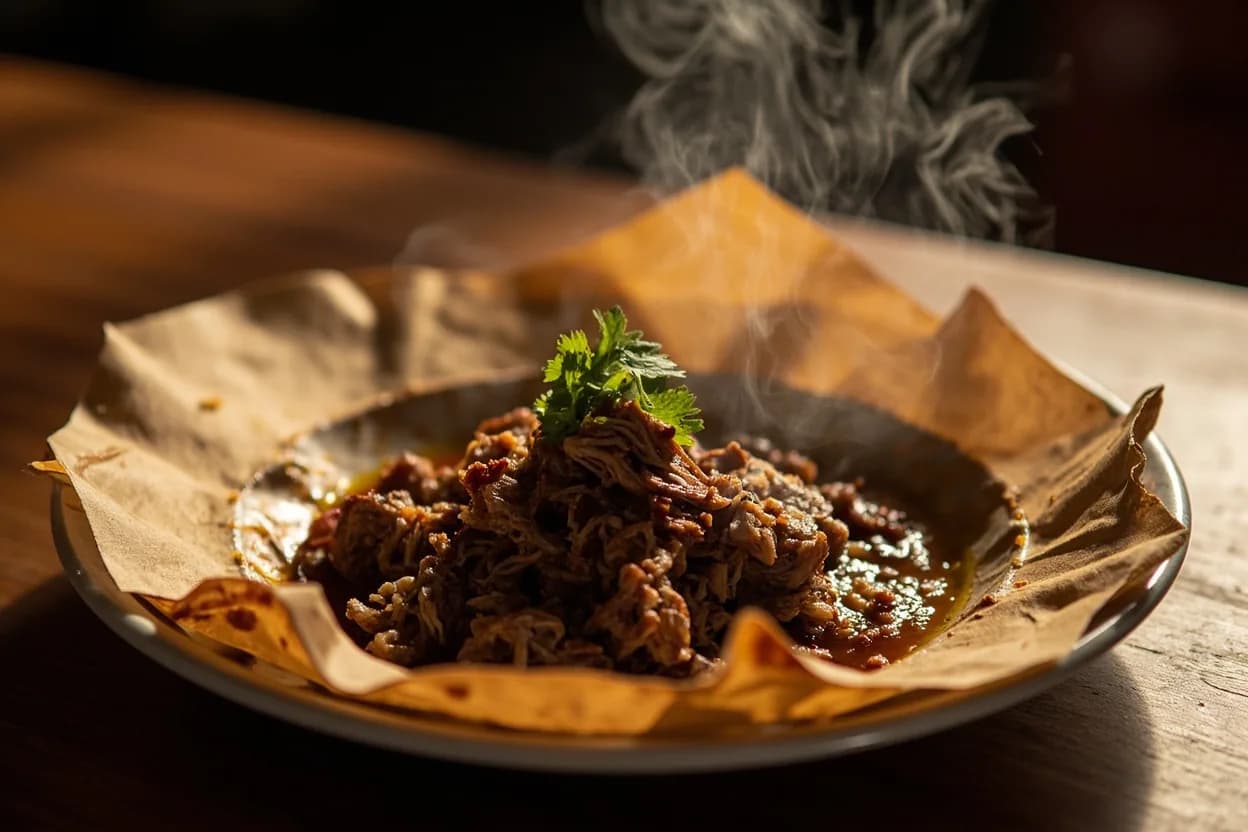
Hand-shredding is the act of pulling cooked, tender meat — or tearing sturdy leafy vegetables — into ragged, irregular strands by hand rather than by knife. It is the defining move of cuisines built around long, slow cooking: Carolina pulled pork, Mexican carnitas and barbacoa, poached chicken for tacos and tinga, Chinese 手撕 (shǒu sī) cabbage and tofu. The strands that result are not uniform: they vary in thickness, length, and shape, and that irregularity is the point. It creates surface area for sauce to cling, mouthfeel that reads as rustic rather than processed, and a visual signature that a chef's knife cannot replicate.
The technique works because well-cooked collagen-rich meat — pork shoulder, beef chuck, brisket, chicken thigh — has effectively come apart at the molecular level. When the muscle is held near 200°F long enough for collagen to convert to gelatin, the fibers separate along their natural seams with almost no force. Pulling while the meat is still hot, generally above 160°F, takes advantage of this; cold meat resists and smears. For vegetables, hand-tearing ruptures fewer cell walls than a knife edge, delaying oxidation and giving leaves rougher margins that hold dressing and oil-based sauces better than a clean cut.
Hand-shredding is also a triage step: it is the moment a cook pulls meat off bone, removes gristle and silver skin, and recombines the shreds with their own juices and a little rendered fat. The yield loss from this trim, typically 10 to 20 percent of cooked weight, is the price of clean, sauce-ready meat that will not turn chewy in a sandwich or taco.
- Difficulty
- Easy
Types & varieties
Smoked or roasted pork shoulder or butt pulled along the grain; one of the most iconic presentations of American barbecue
Pork simmered in its own fat or braised, then pulled and crisped in the rendered fat before serving
Poached, roasted, or rotisserie chicken pulled for tacos, enchiladas, chicken salad, and sandwiches; thighs shred better than breasts
Braised chuck, brisket point, or beef cheek pulled after long moist cooking; central to Mexican and Cuban cuisines
Cabbage, lettuce, and sometimes tofu torn by hand to expose ragged edges that grab sauce, as in 手撕包菜 (stir-fried hand-torn cabbage)
Kale, chard, and large lettuce leaves torn for salads and sautés; preferred over knife work to avoid bruising and oxidation
How to do it
- 1
Cook the protein to a shredding temperature
For pork shoulder, beef chuck, or brisket, cook low and slow (smoke, braise, or roast) to an internal temperature of roughly 195–205°F (90–96°C) so collagen has fully converted to gelatin. For chicken, 165°F (74°C) is sufficient, and thighs shred better than breasts because of their higher fat content and looser fiber structure.
- 2
Rest briefly
Transfer the cooked meat to a cutting board or sheet pan and rest 10–15 minutes. This lets the juices settle back into the muscle and brings the surface temperature down to a handleable but still-hot range, around 165–180°F.
- 3
Set up the station
Place the meat on a rimmed sheet pan or in a wide bowl to contain the juices that will run. Have food-safe nitrile gloves ready, plus a bench scraper or two forks as backup. Pull off and reserve bones, cartilage, and any thick fat cap before you begin.
- 4
Pull along the grain
Grip a chunk of meat in one hand. With the other hand, use your fingers (or fork tines) to tease the muscle apart, pulling in the direction of the grain to produce long, ragged strands. Rotate the chunk as you work so it shreds evenly from all sides.
- 5
Discard trim, retain juices
As you work, drop gristle, silver skin, and large pieces of fat onto a side plate. Pour any pooled juices and a little of the rendered fat from the resting pan over the pile of shreds, then toss gently with tongs or clean hands so every strand is moistened.
- 6
Season and use or store
Toss the shreds with sauce or seasoning now (BBQ sauce, salsa verde, adobo, or a simple salt-and-broth moistening) or season to taste and refrigerate or freeze. Pack shreds and their juices together in airtight containers; they keep 3–4 days cold or 3 months frozen.
- 7
For leafy vegetables (variant)
Wash and thoroughly dry the leaves. Stack a few leaves, then tear — do not cut — into bite-size pieces by hand, following the natural divisions of the leaf. Tearing ruptures fewer cells than a knife edge, delaying wilting and browning. Use immediately for salads, slaws, or stir-fries.
Hand-shredding versus the stand-mixer shortcut
For very large batches — a whole pork shoulder for a party, or the Sunday meal-prep of a week's shredded chicken — many cooks reach for a stand mixer fitted with the paddle attachment. Thirty to forty-five seconds on low is enough to break cooked meat into shreds without overworking it. The result is faster and more uniform, but it tends toward a slightly paste-like, even mince, and the strands lose the long ragged character that signals hand work. Use the paddle when speed matters more than presentation; reserve your hands for dishes where the rustic texture is the point — pulled pork for a sit-down dinner, carnitas you plan to crisp in a pan, or a salad of hand-torn greens.
- Stand-mixer paddle: 30–45 seconds on low; uniform but slightly paste-like
- Two forks: more control over strand length, slower
- Bench scraper: useful for chopping through thicker pieces before pulling
- Bare hands: the standard for traditional barbecue and carnitas; gives the longest, most irregular strands
Why the irregularity matters
A pulled-pork sandwich, a carnitas taco, or a plate of hand-torn cabbage is held together as much by texture as by flavor. The mix of long strands, short fragments, and ragged edges gives the bite variation: some pieces are tender, some chewy, some caramelized at the tips if the meat was crisped after pulling. That heterogeneity is also what lets sauce and rendered fat cling in pockets rather than coating every strand evenly. A knife-cut or machine-shredded product reads as processed; hand-shredding reads as cooked at home with care.
- Long strands give the visual signature of 'pulled' meat
- Mixed thickness creates textural contrast in the bite
- Ragged edges hold sauce in pockets rather than slick coating
- Hand-torn greens delay browning because fewer cells are ruptured
Common uses
Tips & pitfalls
- Pull while the meat is still hot, above roughly 160°F; cold meat resists and smears instead of shredding cleanly
- Identify the direction of the muscle grain before you start and pull parallel to it; pulling across the grain produces short fragments rather than the long strands people expect from 'pulled' meat
- Work over a rimmed sheet pan, not a flat board, to catch every drop of juice, then spoon those juices back over the shreds to keep them moist
- Reserve a little of the rendered fat and toss it through the shreds; it carries flavor and prevents the meat from drying out when sauced or reheated
- Wear nitrile gloves — they insulate against heat from meat that is still steaming and improve grip on fatty or slippery pieces
- Resist the urge to over-shred into a uniform mince; the varied thickness is the visual and textural signature of hand-shredding
- Tear leafy greens just before use; cut edges oxidize and turn brown within minutes once the leaf is damaged
Good to know
- Primary application
- Cooked, tender meats (pork shoulder, beef chuck, poached or roasted chicken) plus hearty leafy vegetables such as cabbage and kale
- Best meat temperature
- Hot but handleable, roughly 165–180°F (74–82°C); fibers separate cleanly without burning hands
- Texture produced
- Long, irregular, ragged strands of varying thickness; intentionally rustic rather than uniform
- Active time
- 3–8 minutes per kilogram of meat (the cooking that precedes it takes far longer)
- Yield loss
- Roughly 10–20% of cooked weight lost to discarded bone, gristle, and trimmed fat
- Equipment
- Bare hands or food-safe nitrile gloves, rimmed sheet pan or wide bowl, optional bench scraper or two forks
- Storage
- 3–4 days refrigerated in its juices, or up to 3 months frozen in vacuum-sealed portions
Also called
Hand-Shredding · Pulling · Crushing Leaves
Dishes that rely on it

Related

Whisk
Beat ingredients smooth and aerated with a looping wire motion

Sift
Pass dry ingredients through mesh to aerate and remove lumps

Strain
Pour through mesh to separate solids from liquid for a smooth result

Filter
Pass liquid through fine material to clarify out the smallest particles

Rice
Press cooked potatoes through small holes for fluffy, lump-free texture

Mash
Crush soft cooked food into a rustic, creamy purée

Grind
Crush food into a coarse to fine texture, from spices to meat

Grate
Shred food into fine bits against a sharp-toothed surface