Heat & Fire
Sizzling Hot-Oil Finish (Lin You)
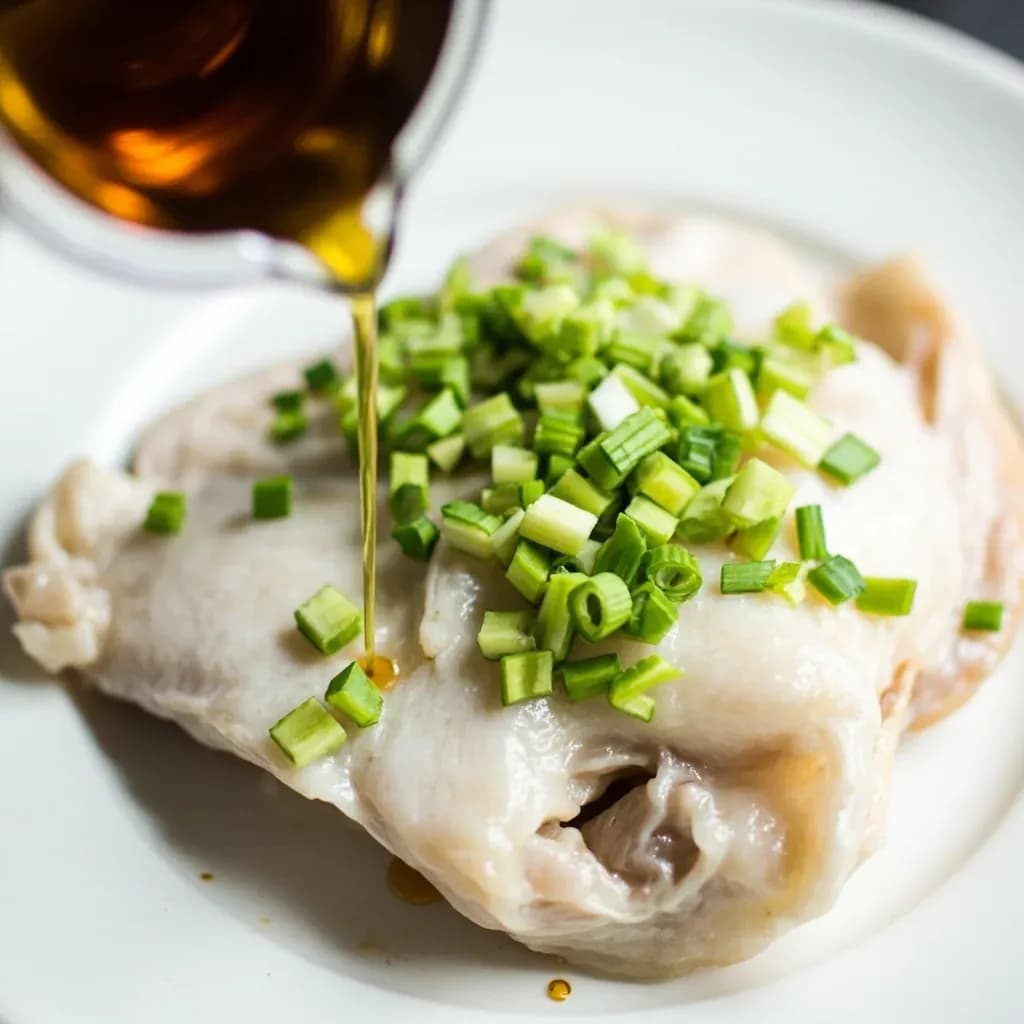
Pouring smoking-hot oil over aromatics or a finished dish to bloom flavor and add aroma in seconds.
Hot-oil finishing pours oil heated until it just smokes over scallions, garlic, chiles, or a plated dish, instantly blooming the aromatics and releasing a dramatic sizzle. The Chinese technique, called lin you, is used to crown steamed fish, noodles, and cold dishes, drawing out fragrance that gentle heat cannot. The oil must be hot enough to crackle on contact but not so hot it burns the aromatics black.
Lin you (淋油) is the Chinese technique of pouring smoking-hot oil over aromatics mounded on a finished dish, releasing a rush of aroma, a glossy sheen, and a deeply toasted flavor in a single second. The oil is heated to the edge of its smoke point — roughly 180–200°C (350–400°F) — and poured from a ladle directly onto ginger, scallion, garlic, chilies, or Sichuan peppercorns, instantly blooming their volatile oils and fat-soluble flavor compounds. The result is a contrast the Chinese kitchen prizes: a sizzling, fragrant top layer over a dish that is otherwise cool, room temperature, or just barely warm.
What makes the technique powerful is its specificity. The oil is not a cooking medium here; it is a delivery system for aroma. By the time it hits the aromatics, it is hot enough to rupture cell walls, drive off raw pungency, and set free the oils that carry scent, but it does not cook the underlying dish further. This is why lin you is the traditional finish for poached chicken, steamed fish, cold tofu, dressed noodles, and the whole family of Sichuan water-boiled and chili-oil appetizers — foods that are already done and need only a final, dramatic perfume.
The same family includes yóu pō (油泼), the oil-splash method most famous for Shaanxi-style hand-pulled noodles, in which the sizzling oil is the defining step of the dish rather than a finishing flourish. Whether you call it lin you or yóu pō, the mechanics are identical: dry aromatics, smoking oil, a confident pour, and an immediate serve.
- Difficulty
- Medium
Types & varieties
Classic Cantonese finish for steamed whole fish (清蒸鱼) and poached chicken; julienned ginger and thinly sliced scallion whites, neutral oil.
Dried red chilies, sometimes with star anise and cassia, bloomed in smoking oil over Sichuan dishes such as 口水鸡 or 水煮肉片.
Whole or lightly cracked peppercorns bloomed in oil for the numbing-mala finishing note on cold appetizers.
Minced garlic and cilantro common on steamed eggplant, silken tofu, and clams.
Not the same hot-bloom technique — a finishing touch of warm (not smoking) toasted sesame oil added after the neutral-oil pour.
Heavier regional variant where oil is poured over a thick bed of aromatics piled on top of the noodles; a defining step of the dish rather than a finishing flourish.
How to do it
- 1
Prep the dish and aromatics
Finish cooking the main component — steamed fish, poached chicken, blanched greens, dressed noodles, cold tofu — and plate it. Slice scallion whites and ginger into fine julienne, mince garlic, or arrange dried chilies and Sichuan peppercorns in a small mound directly on top of the food. Pat the aromatics thoroughly dry; any surface water will cause the smoking oil to spit violently and will dull the final flavor.
- 2
Choose the oil
Select a neutral oil with a high smoke point: peanut, canola, grapeseed, vegetable, or refined rice bran oil. Plan on 2 to 4 tablespoons per dish, enough to thoroughly coat the aromatic mound rather than just kissing it.
- 3
Heat the oil to smoking
Pour the oil into a small wok, saucepan, or oil-heating ladle and set it over high heat. Watch closely — the oil should reach 180–200°C (350–400°F) and just begin to release a thin, continuous wisp of smoke. Pull the pan off the heat the moment you see that first smoke; the residual heat in the metal will keep the temperature climbing for a few seconds, and you want to pour at peak.
- 4
Pour the oil over the aromatics
Dip a long-handled ladle into the hot oil and pour steadily from about 15–20 cm above the dish, working in a slow circular motion from the outer edge of the aromatic pile inward. The oil should sizzle loudly and instantly on contact; a muted hiss means the oil was not hot enough. Keep your free hand or a lid between you and the dish in case of splatter.
- 5
Finish and serve at once
Optional garnishes — fresh cilantro, scallion greens, a few drops of Chinkiang black vinegar, or a thin pour of light soy sauce — can be added after the sizzle. Bring the dish straight to the table. The bloom of aroma, the glossy sheen, and the contrast of sizzling oil against the cooler food beneath fade within a minute, and the entire point of the technique is to deliver them at peak.
How hot-oil finishing works
The science of lin you is short and worth knowing, because it explains why a small mistake ruins the dish. Most of the aromatics used — ginger, scallion, garlic, dried chili, Sichuan peppercorn — contain volatile compounds that are only released at high heat. Raw, they smell sharp, grassy, or merely pungent. Heated to 180°C and above, those same cells rupture, water inside flashes to steam, and the fat-soluble oils that carry the true flavor are driven out into the surrounding oil. The oil itself is too hot to stay on the food for long; it spreads, blooms the surface aromatics, and cools within seconds, leaving behind a glossy, perfumed film.
This is also why the oil must be neutral. Any oil with strong flavor of its own — unrefined sesame, extra-virgin olive, toasted nut oils — will not only burn at these temperatures but will impose its own aroma on top of the aromatics you are trying to release. Neutral, high-smoke-point oil is a clean solvent; flavor lives in what you pour it over, not in the oil itself.
- Volatile aromatic compounds in ginger, scallion, garlic, and chili are released above 150°C and peak in the 180–200°C range.
- A thin wisp of smoke signals the oil has crossed the threshold where aromatics will bloom in a single pour.
- Moisture is the enemy: a drop of water in smoking oil can spit sharply and dangerously, and wet aromatics will steam rather than sizzle.
- The audible sizzle is the cook's quality control — a quiet pour means the oil was not hot enough to do its job.
Lin you versus yóu pō
The two terms describe the same physical action, but they sit at different points in the cooking process. Lin you is a finish — the dish is already composed, and the oil is the last thing that touches it. Yóu pō is a construction step — the oil poured over a thick bed of aromatics piled on top of noodles or another base is the event that turns plain components into a named dish, the way the bloom of hot oil over chili flakes turns an ordinary bowl into 油泼面.
In practice, the line blurs. A Cantonese cook pouring oil over ginger and scallion on steamed fish is doing lin you; a Shaanxi cook pouring oil over a chili-and-garlic mound on hand-pulled noodles is doing yóu pō. The ladle, the oil temperature, and the pouring motion are the same. The difference is what the dish is called afterward.
Common uses
Tips & pitfalls
- Heat the oil only until it just begins to shimmer and a thin wisp of smoke rises — any cooler and the aromatics will not bloom; any hotter and they will scorch and turn bitter.
- Stack the aromatics in a small mound in the center of the dish so the sizzle is concentrated, then let the hot oil spread by itself rather than smearing the aromatics around.
- Dry the aromatics thoroughly before pouring; moisture causes violent splatter and a dull, steamed finish.
- Use a ladle rather than tipping the pan — it gives you distance, control, and a more even shower of oil across the whole pile.
- Pour in a circular motion from about 15–20 cm above the dish to distribute the oil evenly and avoid a single scorched spot.
- Keep a splatter screen or lid nearby and stand back slightly; smoking oil spits sharply when it hits even a trace of moisture.
- For Sichuan peppercorns, bloom them briefly in the hot oil in a separate pan first to extract the citrusy-numbing aroma, then pour the oil (and the peppercorns, if you want the texture) over the dish.
- Toast dried chilies in the dry pan for a few seconds before adding oil; this deepens their smoky character and reduces raw-hay bitterness.
- Do not substitute extra-virgin olive oil or unrefined sesame oil — their smoke points are too low and the flavor turns acrid and bitter at the temperatures needed.
- Serve immediately. The aromatic top notes fade within a minute or two as the heat dissipates, and the dish cannot be rescued by reheating.
Good to know
- Chinese name
- 淋油 (lín yóu); also called 炝油 (qiàng yóu) when used to bloom raw aromatics
- Related technique
- 油泼 (yóu pō), the oil-splashed method used for dishes like 油泼面
- Target oil temperature
- 180–200°C / 350–400°F (oil should just begin to smoke)
- Total time
- 30 seconds to 1 minute (including heating the oil)
- Difficulty
- Easy, but timing and safety matter
- Key equipment
- Small wok, saucepan, or oil-heating ladle; long-handled metal ladle or spoon for pouring
- Best oils
- High-smoke-point neutral oils: peanut, canola, grapeseed, vegetable, or refined rice bran oil
- Avoid
- Extra-virgin olive oil, unrefined sesame oil, butter — they scorch at the required temperature
- Common aromatics
- Scallion whites, julienned ginger, minced garlic, dried red chilies, Sichuan peppercorns, cilantro, white sesame
- Cuisine association
- Hallmark of Sichuan and Cantonese cooking; used across most regional Chinese cuisines
- Effect
- Instantly blooms raw aromatics, releases fat-soluble flavor compounds, adds gloss and a toasted aroma
- Storage relevance
- Always made to order — cannot be pre-prepared and reheated; aromatics lose their fresh burst if oiled in advance
Also called
butter-tempering · Lin You · Oil Drizzling
Dishes that rely on it
Related

Sear
Blast the surface hot for a deep-browned, savory crust

Sauté
Cook quickly in a little fat over lively heat, tossing as you go

Stir-Fry
Toss bite-sized pieces over roaring heat for fast, smoky cooking

Pan-Fry
Crisp food in a shallow layer of hot fat, turning once or twice

Deep-Fry
Submerge in hot oil for an all-over crackling crust

Roast
Cook uncovered in dry oven heat for browned edges and tender centers

Bake
Cook with steady, surrounding oven heat — the soul of bread and pastry

Broil
Hit food from directly above with fierce overhead heat