Transform & Preserve
Jerking
Jamaican method of marinating meat in fiery allspice-and-scotch-bonnet seasoning, then smoking over pimento wood.
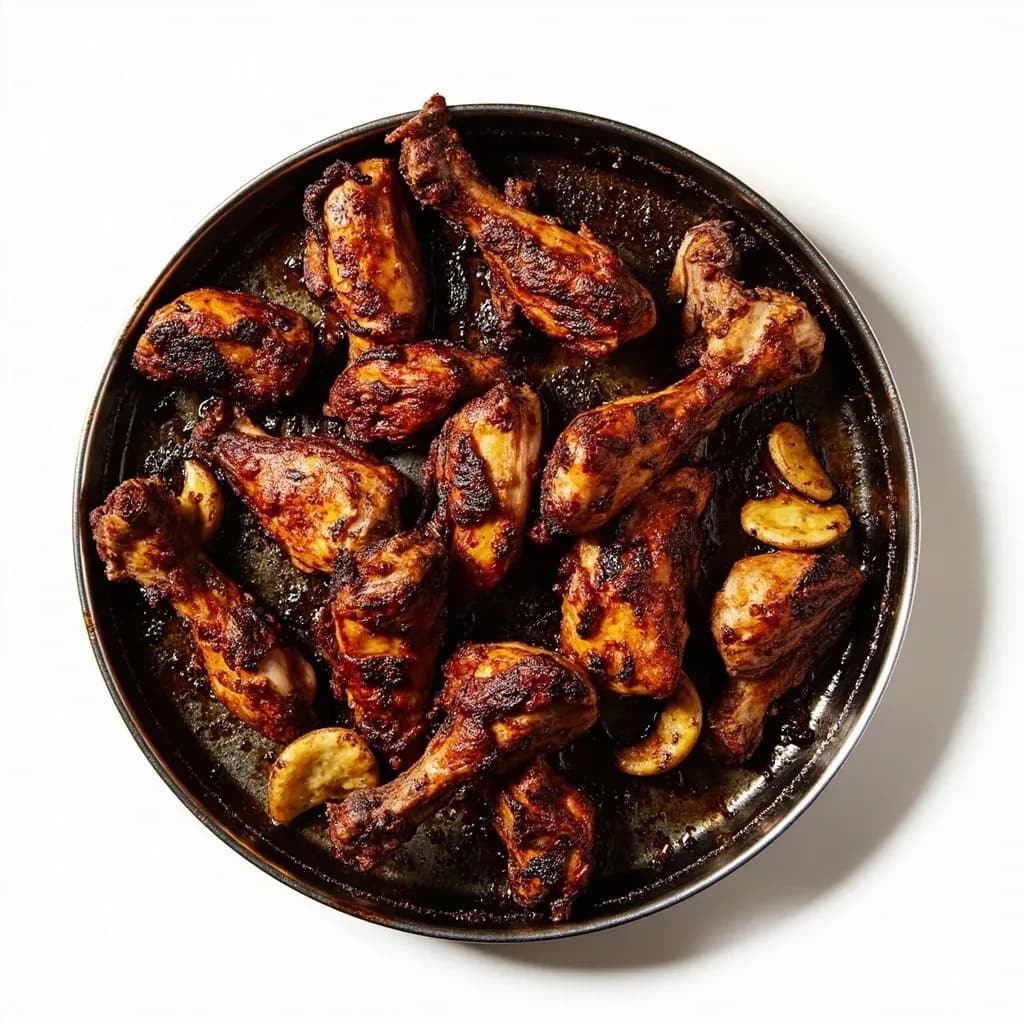
Jerking marinates meat — classically chicken or pork — in a pungent wet or dry seasoning of scotch bonnet peppers, allspice (pimento), thyme, scallion and spice, then slow-cooks it over smoky pimento wood or coals. The marinade both flavors and partly cures the meat, while the smoke adds the signature aroma. It is a defining technique of Jamaican cooking, balancing intense heat with aromatic spice.
Jerk is a Jamaican technique that combines a boldly spiced marinade with low, slow smoking over aromatic wood, producing meat that is at once deeply seasoned, smoky, and faintly sweet. The flavor backbone is Jamaican allspice (pimento) — used as both a ground berry in the rub and as the smoking wood — sharpened by Scotch bonnet chiles and lifted by thyme, scallion, garlic, and ginger. Although the heat of a Scotch bonnet is what most people remember, a properly built jerk seasoning should smell aromatic and complex before the fire ever reaches the meat; the chile is the exclamation point, not the sentence.
The technique grew out of the Maroon communities of the Blue Mountains in the 17th and 18th centuries, who fused African meat-curing traditions with indigenous Taíno methods of smoking over allspice wood. That heritage is why jerk is best understood as a complete seasoning-and-cooking system rather than a mere rub: the long marinade, the jabbed-and-scored surface, and the slow smoke over pimento each play a role. Done well, jerk yields a mahogany crust over moist meat perfumed with allspice and smoke — the kind of flavor that defines Jamaican cookery.
- Difficulty
- Medium
Types & varieties
Seasonings blended into a wet paste with citrus, soy, and oil — the classic street-stall and backyard style
Spice mix applied without liquid, producing a more concentrated crust and bark
Traditionally the dominant version, especially bone-in shoulder or pork neck
Common casual and restaurant preparation, often a half-bird or leg quarters
Coastal preparation using snapper or kingfish; shorter smoke, sometimes finished in foil
Hearty rural preparation with long marinade and slower smoke to break down the meat
Ground meat and jerk seasoning stuffed into casings and smoked
Boston (Portland, Jamaica) style is milder with more smoke; Blue Mountain 'authentic' style is spicier and more aromatic
How to do it
- 1
Build the jerk seasoning
Toast whole allspice berries in a dry pan until fragrant, then grind them fresh. Combine with minced Scotch bonnets (seeds in for full heat, out for less), chopped thyme, scallions, garlic, ginger, brown sugar, black pepper, and salt. For a wet paste, blend with soy sauce, lime juice, and a glug of oil; for a dry rub, leave it as a coarse spice mix.
- 2
Prepare the meat
Pat the meat dry. For pork shoulder, chicken halves, or goat, score the surface in a crosshatch and pierce deeply with the tip of a sharp knife — this is the traditional 'jerking' motion that lets the seasoning reach the interior. For whole fish, cut deep diagonal slashes through the skin into the flesh.
- 3
Marinate
Work the seasoning thoroughly into the scores and piercings, then coat the entire surface. Cover and refrigerate for at least 12 hours, ideally 24; goat and large pork shoulder cuts benefit from up to 48 hours. The long rest is what carries flavor through the long smoke.
- 4
Prepare the smoker or pit
Light pimento wood (or a substitute hardwood) and let it burn down to glowing embers — no flames. Aim for a steady 250–300°F (120–150°C). In a traditional jerk pit, lay green pimento branches directly over the coals; in a covered grill or smoker, add wood chunks for smoke.
- 5
Smoke low and slow
Set the meat on a grate above the embers (or directly on the pimento branches in a pit) and cover to trap smoke. Cook undisturbed for most of the time, turning only once or twice. Chicken is done at 165°F (74°C) internal; pork shoulder until tender and at least 195°F (90°C) internal; fish until the flesh flakes and turns opaque.
- 6
Rest and serve
Transfer to a board, tent loosely with foil, and rest 10–15 minutes so the juices redistribute. Slice pork across the grain; halve or quarter chicken. Serve with traditional sides such as hard dough bread, festival, bammy, and a fresh Scotch bonnet sauce.
The flavor architecture
A well-built jerk seasoning has a clear hierarchy. Allspice is the dominant note — earthy, warm, and almost peppery — and it should announce itself before anything else. Scotch bonnet contributes fruity heat that builds rather than burns; thyme and scallion give the aromatic green backbone; garlic, ginger, and a little brown sugar round out the edges. If the seasoning tastes only of chile, the allspice was under-dosed or pre-ground and stale.
- Allspice (pimento) — the defining spice; toast and grind whole berries for the best aroma
- Scotch bonnet — fruity heat; remove seeds to tame, leave them in for full intensity
- Thyme and scallion — the aromatic green notes that freshen the rub
- Garlic, ginger, black pepper — supporting sharpness
- Brown sugar — caramelizes into the bark; balances the heat
- Soy sauce, citrus, and a splash of oil — only if making a wet paste
Why the wood matters
Pimento wood comes from the same tree that produces allspice berries, so smoking over it layers the allspice flavor into the meat from two directions: the rub and the smoke. When green pimento branches are laid directly over the embers, their oils vaporize and perfume the cooking chamber. Substituting mild fruitwoods like apple or cherry changes the profile but still works; stronger woods such as mesquite or hickory tend to overwhelm the delicate allspice character.
Common uses
Tips & pitfalls
- Use real Scotch bonnets (or at least a Scotch bonnet–habanero cross); plain habaneros lack the fruity sweetness that defines the heat
- Toast and grind whole allspice berries yourself — pre-ground allspice loses its aromatic oils quickly
- Don't shorten the marinade; the seasoning must penetrate deeply or the long smoke will strip it back out
- Score thicker cuts and jab them deeply — seasoning sitting only on the surface will burn before the inside cooks
- Keep the temperature low; rushing jerk over high heat dries the meat and scorches the sugar in the rub
- Use pimento wood if you can source it; apple or cherry are acceptable substitutes, but stronger woods like mesquite or hickory will overwhelm the allspice
- Let the meat rest for at least 10–15 minutes after smoking so juices redistribute
- Save any unused wet jerk paste (that hasn't touched raw meat) to baste the meat in the last 30 minutes or to thin into a serving sauce with vinegar
- Avoid bottled 'jerk sauce' as a shortcut for serious applications — fresh-grated aromatics are the point
Good to know
- Origin
- Jamaica, developed by Maroon communities of the Blue Mountains in the 17th–18th centuries
- Primary cooking method
- Slow smoking over smoldering pimento (allspice) wood, traditionally in an earthen pit
- Signature seasoning
- Allspice berries and Scotch bonnet chiles, balanced with thyme, scallion, garlic, ginger, and brown sugar
- Signature wood
- Pimento (allspice) wood, often laid green over the meat to release aromatic oils
- Marination time
- 12–24 hours typically, up to 48 hours for goat or large pork cuts
- Smoking temperature
- Low and slow, roughly 250–300°F (120–150°C)
- Typical cook time
- 2–4 hours depending on size and protein; pork shoulder may go longer
- Heat source
- Charcoal or wood embers, not direct flame
- Spice intensity
- Very high from Scotch bonnets, balanced by brown sugar sweetness and the aromatics of thyme and allspice
- Etymology
- Often traced to Spanish 'charqui' (dried/cured meat); an alternate theory links it to the jabbing motion used to work seasoning into the meat
- Most common proteins
- Pork shoulder or neck, chicken, goat, and fish such as snapper or kingfish
- Traditional accompaniment
- Hard dough bread, festival (fried dumplings), bammy (cassava flatbread), and fresh scotch bonnet-based sauces
Also called
Jerk · jerk cooking · jerk seasoning
Related

Confit
Cook slowly submerged in fat for silky tenderness and keeping

Cure
Draw out moisture with salt and time to preserve and concentrate

Pickle
Steep in acidic brine for bright, tangy, crunchy preservation

Ferment
Let friendly microbes transform food into tangy, complex flavor

Marinate
Soak in a seasoned mix to flavor and tenderize before cooking

Brine
Soak in salt water so meat stays juicy and seasoned throughout

Dehydrate
Slowly dry out moisture to concentrate flavor and extend shelf life

Cold-Smoke
Perfume cured food with smoke without cooking it through