Heat & Fire
Low-and-Slow Smoking
Smoking tough cuts for hours at low temperature so collagen melts and smoke flavor penetrates deeply.
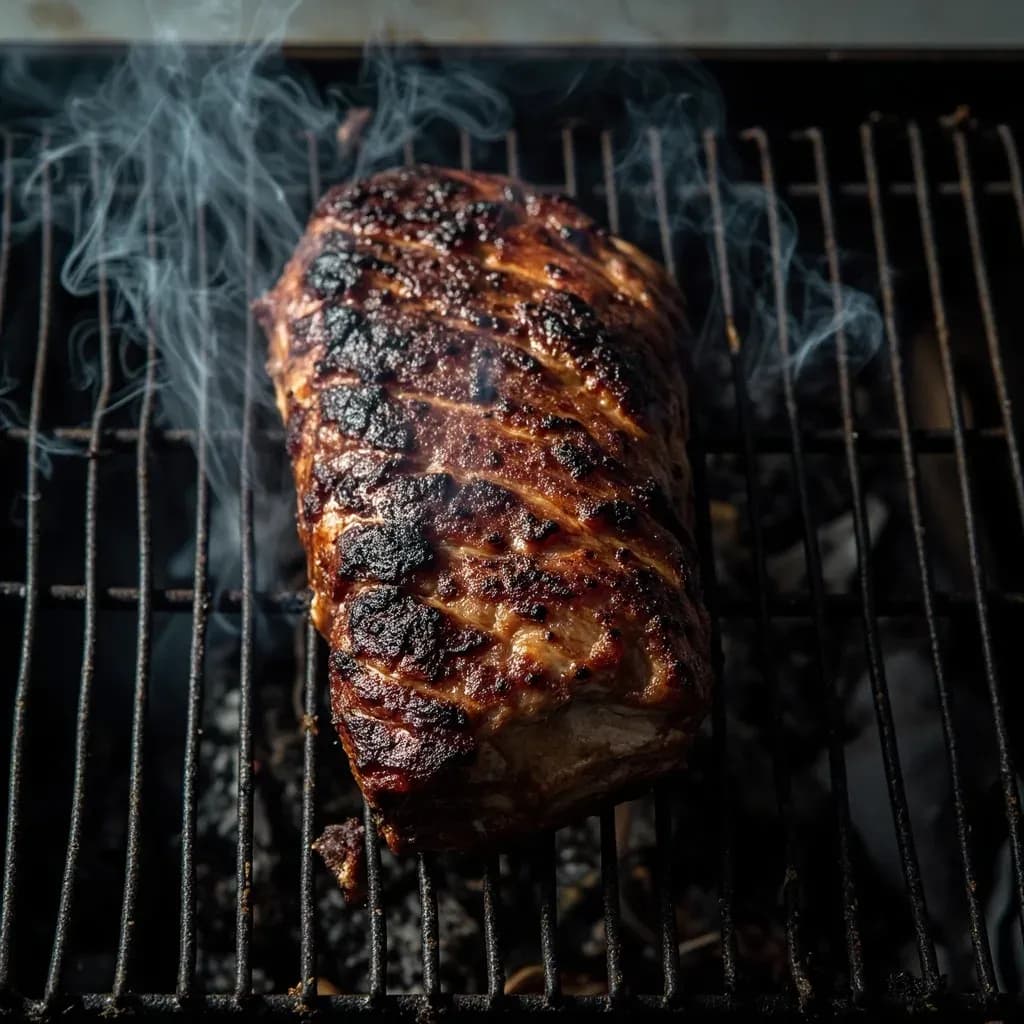
Low-and-slow smoking cooks large, collagen-rich cuts like brisket and pork shoulder at low temperatures, typically 95 to 135 degrees Celsius, for many hours. The gentle heat slowly renders fat and breaks down tough connective tissue into gelatin while wood smoke builds flavor and bark. Patience is essential, as pushing the heat to rush the process leaves the meat tough rather than tender.
Low-and-slow smoking is the barbecue method of holding tough, collagen-heavy cuts at a steady 225–275 °F for many hours over a clean hardwood fire. The magic is twofold: long, gentle heat gives connective tissue time to dissolve into gelatin, transforming brisket and pork shoulder from chewy to silky, while thin blue smoke deposits flavor compounds that work their way past the surface bark. The cook is judged by feel and tenderness rather than time on the clock, which is why this method demands patience and a willingness to read the meat.
The signature products of a good low-and-slow cook are three: a deep pink smoke ring just under the bark, a peppery or spice-crusted exterior that crackles, and an interior that holds together when sliced yet gives way to a fork. Most pitmasters chase clean, almost sweet smoke rather than the thick, acrid billows that come from green wood or smoldering fuel — heavy white smoke leaves bitter creosote and a black, sooty crust. Regional traditions diverge on wood choice, rub, and sauce, but they all share the same underlying physics: stable low heat, good airflow, and enough time to let the meat do its work.
Practically, low-and-slow is a hands-off cook once the fire is dialed in. The cook's job is mostly observation and restraint: holding pit temperature, adding a fistful of wood every 45–60 minutes, and resisting the urge to peek. The reward is barbecue that turns a cheap cut into the centerpiece of a meal, with leftovers that reheat beautifully for days.
- Difficulty
- Hard
Types & varieties
Post-oak smoke, beef brisket and beef ribs, simple salt-and-pepper rub, no sauce traditionally.
Hotter pits, hickory, whole brisket served chopped on white bread with sauce on the side.
Pork ribs, both dry-rubbed and wet (sauced), often served with a tangy tomato-vinegar-mustard sauce.
Whole-hog or pork shoulder with a thin vinegar-and-red-pepper sauce.
Pork shoulder with a ketchup-and-vinegar sauce that bridges Eastern and Kansas City traditions.
Low-and-slow across many meats, thick sweet tomato-molasses sauce, strong smoke-ring emphasis.
Polished bark, defined smoke ring, balanced sweet and savory, often wrapped and sauced to a tight turn-in box.
California outlier: red oak over open pits, tri-tip with salt, pepper, and garlic salt; shorter cook but the same low-flame philosophy.
How to do it
- 1
Choose the right cut
Pick a well-marbled, collagen-rich cut: a packer beef brisket (10–14 lb), a pork shoulder or Boston butt (6–10 lb), St. Louis-cut or baby back ribs, or beef plate ribs. Look for a thick, even fat cap and consistent thickness across the roast.
- 2
Trim and season
Trim hard excess fat and silver skin, leaving roughly a 1/4-inch fat cap on brisket. Season generously with kosher salt and coarse black pepper, or a rub of salt, pepper, garlic powder, and paprika. Apply 12–24 hours ahead, uncovered on a sheet pan in the fridge, so the salt draws out moisture, dissolves, and is reabsorbed, drying the surface for better bark.
- 3
Stabilize the pit at 225–250 °F
Light the smoker well in advance. Use a quality hardwood (post oak, hickory, pecan, or fruitwood), build a small clean fire, and let the pit settle for 20–30 minutes before loading meat. Aim for thin blue smoke, not white billows.
- 4
Place the meat and log the start
Put the meat on the cool side of an offset, or centered on the grate in a kamado, pellet, or drum cooker. Fat side up or down is debated; lean toward fat-up so the rendered fat self-bastes the meat. Note the start time and the pit temperature.
- 5
Hold temperature and resist opening
Adjust vents, fuel, or damper every 30–60 minutes rather than every 15. Add a small fistful of wood every 45–60 minutes, one or two small splits, not a log pile. If using a water pan, keep it topped up.
- 6
Spritz and build bark
After 90 minutes to 2 hours, once the surface has set, spritz every 30–45 minutes with apple juice, cider vinegar, or a 50/50 mix. Stop spritzing once you have the color and crust you want, usually by 165 °F internal.
- 7
Decide on the wrap (the crutch)
Around 160–170 °F, choose: leave unwrapped for maximum bark and a longer cook; wrap in pink butcher paper for a faster finish while keeping bark texture; or wrap in foil for the fastest push but a softer crust. Most competition and home briskets are wrapped in butcher paper.
- 8
Push through the stall
Expect the temperature to plateau for 1–3 hours around 150–170 °F. Do nothing dramatic. Hold the pit steady and let physics finish: unwrapped meat will climb again on its own, wrapped meat will sail through.
- 9
Probe for finish, not a number
Begin checking at roughly 195 °F in the thickest part. Slide a probe or skewer in like a hot knife into room-temperature butter — no resistance, and the meat feels jiggly rather than tight. For brisket and pork shoulder this is usually 200–205 °F, but feel matters more than the reading.
- 10
Rest in a faux cambro
Pull the meat, leave it wrapped (open butcher-paper ends slightly), and place in an empty dry cooler lined with old towels. Close the lid and rest 1–2 hours for brisket and shoulder, 20–30 minutes for ribs. Internal temperature will climb a few degrees and the juices will redistribute.
- 11
Slice and serve
Identify the grain. Slice brisket in pencil-width slices roughly 1/4 inch thick across the grain, reorienting the cut where the grain changes. Pull pork shoulder into fist-sized chunks or chop. Serve plain so the smoke and bark read, with sauce on the side.
Reading the meat: how to know it's done
Time and temperature tell you roughly where you are, but they do not tell you to pull. The most reliable finish test is the probe or skewer test: when you slide a thermometer probe, wooden skewer, or even a chopstick into the thickest part of a brisket or pork shoulder, it should glide in with almost no resistance, the way a warm knife slides through room-temperature butter. The meat will feel loose and jiggly rather than tight and bouncy. Probe in three or four spots — a flat brisket can have a thick point and a thin flat that finish at very different times.
For ribs, two visual cues do most of the work. First, look at the ends of the bones: they should peek out and retract about a half inch, exposing clean white bone. Second, pick up the rack with tongs at the center and gently bounce it: properly done ribs will bend slightly and the bark on the surface will crack but not split open. A temperature of about 195–203 °F is a useful checkpoint, not a finish line.
- Probe for tenderness in the thickest part of the cut, not the edge or the point.
- When the probe slides like a warm knife into butter, the meat is done regardless of the reading.
- Bone retraction on ribs (a half inch of clean white bone showing) is a more reliable signal than internal temperature.
Wood, smoke, and fire management
The difference between memorable barbecue and a creosote-soaked disappointment almost always comes down to the fire. You want thin blue smoke, almost transparent, that smells faintly sweet or woodsy. Thick white billows, especially the lazy white smoke that hangs around the pit, mean the fire is starved of oxygen or the wood is too wet or too green. That heavy smoke carries unburned compounds that deposit on the meat as bitter black soot and acrid flavor.
Add wood in small, regular doses — a fistful of splits every 45–60 minutes is the classic rhythm. One or two small pieces of wood at a time is plenty; a pile of fresh logs will smother the fire and flood the pit with white smoke. Keep a water pan in the cooker if your design allows it: it stabilizes pit temperature, adds humidity that helps smoke adhere to the meat, and catches drippings that would otherwise flare.
- Aim for thin, transparent blue smoke rather than thick white billows.
- Add wood in small splits every 45–60 minutes, not all at once.
- Keep a water pan in the pit to stabilize temperature, add humidity, and catch drippings.
- Use a leave-in probe thermometer at grate level for an accurate read; lid-mounted thermometers often run hot and can mislead the cook.
The wrap, the stall, and bark
Around 150–170 °F internal, the meat will appear to stop cooking. The surface is wet, evaporative cooling is pulling heat away as fast as the pit can supply it, and the temperature hangs in place for one to three hours. This is the stall, and it is normal. Unwrapped meat will eventually climb out of the stall on its own as the surface dries and the bark sets.
Wrapping is a way to push through the stall faster and lock in moisture. Pink butcher paper (unwaxed) is the modern choice for brisket because it lets some steam escape and preserves bark texture. Foil is faster but softens the crust. Most competition cooks and many home pitmasters wrap around 160–170 °F in butcher paper; purists leave the meat unwrapped the entire cook for maximum bark and a longer timeline. None of these choices is wrong; they are different tools for different goals.
- The stall at 150–170 °F is evaporative cooling, not a failure — hold steady and it will pass.
- Wrapping in butcher paper around 160–170 °F speeds the cook and keeps bark texture.
- Wrapping in foil is the fastest option but softens the crust.
- Bark is built by dry surface, rub, and steady low heat; opening the lid repeatedly is the surest way to lose it.
Common uses
Tips & pitfalls
- Cook to tenderness, not to a number. Probe the meat in multiple spots; it should slide in like warm butter with almost no resistance.
- Open the lid as little as possible. Every peek costs heat, smoke, and minutes off the timeline.
- Use a clean-burning fire with thin blue smoke, not thick white billows. Heavy white smoke deposits bitter creosote on the meat.
- Manage the stall by waiting it out, or wrap in pink butcher paper around 160–170 °F to push through while preserving bark. Foil speeds things up but softens the crust.
- Rest large cuts in an empty cooler lined with towels for 1–2 hours; the carryover heat keeps them above the safe zone and lets juices redistribute.
- Slice brisket and pork shoulder across the grain, and reorient your cuts where the grain changes direction along the roast.
- Season 12–24 hours ahead so the salt draws out moisture, dissolves, and is reabsorbed for a drier surface and better bark.
- Keep a water pan in the smoker to stabilize pit temperature, add humidity, and catch drippings.
- Trust a leave-in grate probe thermometer over the lid thermometer, which often runs hot and misleads the cook.
Good to know
- Temperature range
- 225–275 °F (107–135 °C); 225 °F is the classic pit temp in most U.S. barbecue traditions.
- Cook time
- Typically 1–2 hours per pound; pork shoulder and brisket commonly run 10–18 hours, ribs 4–7 hours.
- Internal target
- Finished by feel and probe tenderness, not a number. Brisket and pork shoulder often probe tender around 203 °F, ribs around 195–203 °F.
- Origin
- Rooted in Southern U.S. barbecue, tied to outdoor pit cooking in Texas, the Carolinas, Memphis, and Kansas City from the 19th and 20th centuries.
- Best cuts
- Tough, collagen-rich, well-marbled cuts: beef brisket, pork shoulder (Boston butt), beef and pork ribs, whole hog, lamb shoulder, beef chuck.
- The stall
- A plateau around 150–170 °F internal where evaporative cooling halts the climb; can last 1–3 hours and is normal.
- Wood pairing
- Hickory, oak (especially post oak), pecan, mesquite, fruitwoods (apple, cherry), maple, and alder are the classic smoking woods.
- Difficulty
- Moderate to high; demands fire management, patience, and reading the meat by feel rather than clock.
- Rest
- Large cuts need 1–2 hours in a warm cooler (a faux cambro) before slicing; cutting too early drives out the juices.
Also called
low-and-slow · Barbecue Smoking
Dishes that rely on it
Related

Sear
Blast the surface hot for a deep-browned, savory crust

Sauté
Cook quickly in a little fat over lively heat, tossing as you go

Stir-Fry
Toss bite-sized pieces over roaring heat for fast, smoky cooking

Pan-Fry
Crisp food in a shallow layer of hot fat, turning once or twice

Deep-Fry
Submerge in hot oil for an all-over crackling crust

Roast
Cook uncovered in dry oven heat for browned edges and tender centers

Bake
Cook with steady, surrounding oven heat — the soul of bread and pastry

Broil
Hit food from directly above with fierce overhead heat