Transform & Preserve
Lye Dipping
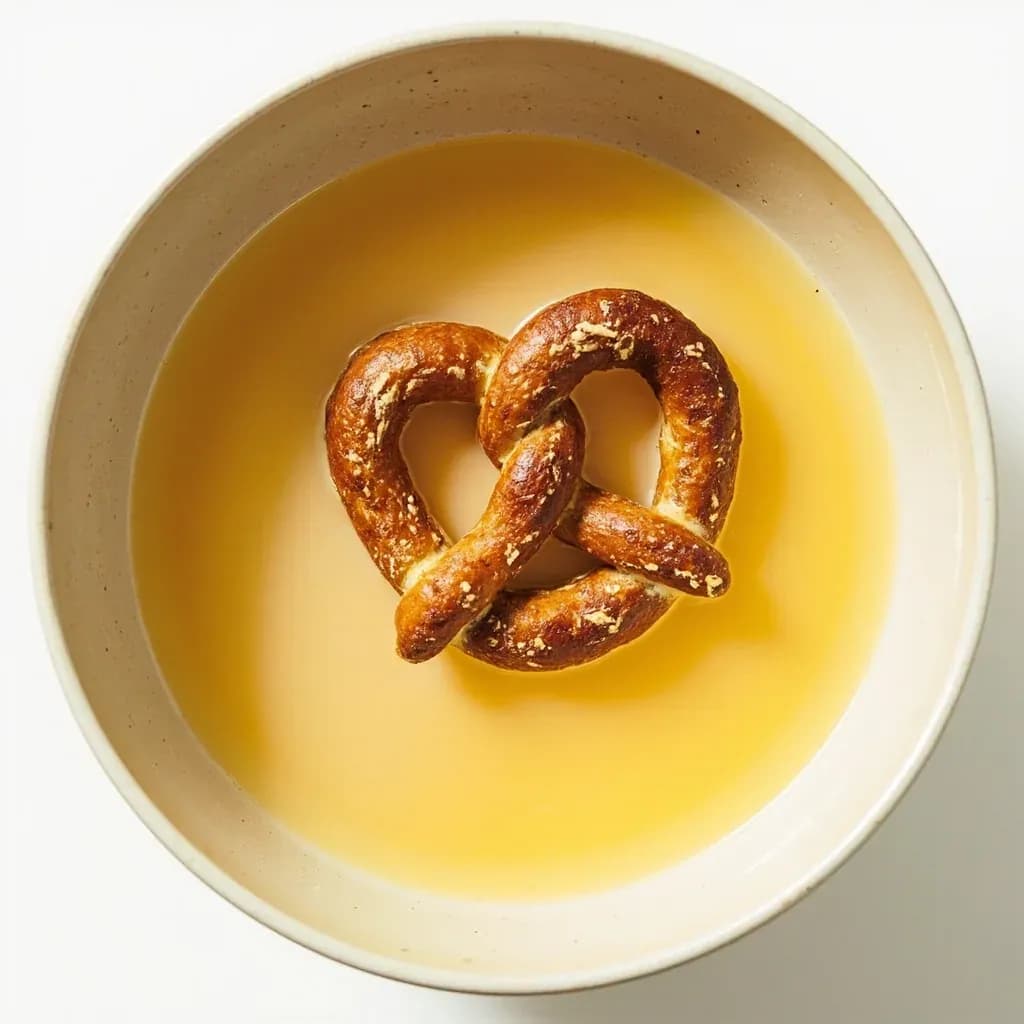
Briefly dipping dough in alkaline lye for a pretzel's deep brown, chewy crust.
Lye dipping submerges shaped pretzel or laugengebäck dough in a dilute food-grade lye solution before baking, which alkalizes the surface for the signature mahogany color, glossy skin, and distinctive flavor. The high pH accelerates Maillard browning in the oven. Lye is caustic, so it is handled with gloves and eye protection, and a baking-soda bath is a milder home substitute.
Lye dipping is the defining step behind an authentic Bavarian Brezel: shaped dough is briefly submerged in a dilute solution of food-grade sodium hydroxide (NaOH) before baking. The bath is strongly alkaline — roughly pH 13–14 — and that high surface pH is what makes the technique work. Amino acids and reducing sugars on the dough's exterior react far more readily once the pH climbs, so the Maillard browning that would normally take many minutes happens fast and deep in the oven, while surface starches gelatinize into a thin, glossy, almost lacquered skin. The result is the dark mahogany crust, the chewy snap when you bite in, and the faintly mineral, slightly alkaline tang that no soda-bath version quite replicates.
In practice only the outermost layer of the dough is affected. The crumb of a properly dipped pretzel is soft, pale, and bready — an enriched white-flour interior beneath a thin alkaline shell. The dip is short (typically 10–30 seconds), the bath is cool, and the dough goes straight from solution to sheet to oven. This is what separates a true Brezel from what bakers loosely call a "pretzel-shaped bread": the look, the chew, and that particular sharp finish all begin in the lye bath.
The tradition runs deep in German and Austrian baking, with roots in monastic kitchens and Bavarian village ovens, but the chemistry is identical to other historic alkaline treatments: nixtamalization of corn for tortillas and hominy, the curing of certain olives, and Scandinavian lutefisk. Food-grade NaOH is a legitimate kitchen ingredient in those contexts, and handling it at baking concentrations is straightforward once a few non-negotiable safety rules are followed.
- Difficulty
- Hard
Types & varieties
Food-grade NaOH at 3–4% in cold water; the standard for Bavarian Brezeln.
Commercial drain-cleaner lye labeled 100% NaOH, diluted to baking strength; widely used where food-grade NaOH is hard to source.
Cold bath gives milder flavor and cleaner color; a slightly warm bath deepens browning but gives off more fumes.
About 1/4 cup baking soda per liter of water; the common home substitute, but yields paler color and a softer, less chewy crust.
Baking soda baked at 120–150 °C for about an hour to convert it to sodium carbonate; noticeably better browning than plain baking soda, but still milder than true lye.
Ready-made sodium carbonate; sits between baking soda and true lye in alkalinity and effect.
How to do it
- 1
Prepare the lye bath
Fill a glass, food-grade stainless-steel, or heavy plastic container with 1 liter of cold water. Wearing gloves and eye protection, slowly stir in 30–40 g food-grade sodium hydroxide until fully dissolved. Always add lye to the water, never the reverse — dissolution is strongly exothermic and can splatter. Keep the bath cool and work near an open window or under a vent.
- 2
Shape the dough
Portion cold-proofed pretzel dough into pieces (about 80–120 g for classic Brezeln). Roll each into an even rope and form the traditional pretzel shape, or shape into rolls, sticks, or buns. Press any seeds (sesame, poppy, pumpkin) into the dough surface at this stage so they embed in the crust during the dip.
- 3
Rest the shaped pieces
Place shaped dough on a parchment-lined sheet, cover lightly, and rest 15–30 minutes at room temperature so the pieces hold their shape in the bath. Slightly puffy, cold-fermented pieces take the dip most evenly and resist distorting.
- 4
Dip the pretzels
Lower each piece fully into the lye bath for 10–30 seconds — about 20 seconds is typical. Lift out with a slotted stainless spoon or tongs and let the excess drip back into the bath for 2–3 seconds. Do not let pieces overlap, float, or sit longer; over-dipping produces a soapy flavor and a slack, mushy surface.
- 5
Top and stage for baking
Transfer dipped pieces to a parchment- or silicone-mat-lined sheet. While the surface is still wet and tacky, sprinkle generously with coarse pretzel salt so it bonds to the crust. Work quickly so pieces do not dry out before they reach the oven.
- 6
Bake at high heat
Bake at 220–250 °C / 425–480 °F for 12–18 minutes until the crust turns a deep, glossy mahogany brown. For extra depth, switch off the oven and let the pretzels sit 1–2 minutes in residual heat — watch closely, as they can scorch fast at the end.
- 7
Cool and store
Cool on a rack for at least 10 minutes so the crust sets and the interior finishes cooking. Best eaten the same day; leftovers keep a day or two in a paper bag, which preserves the chew. Re-crisp in a hot oven for 3–4 minutes before serving.
- 8
Clean up safely
Rinse the bath container, tools, and countertop with plenty of water, then wipe with a cloth dampened in white vinegar to neutralize any residue. Discard used lye by diluting heavily with water and flushing down the drain with running water. Never combine leftover lye with aluminum or with acidic cleaners.
The Chemistry in Plain Terms
A normal bread crust browns slowly because the surface pH is close to neutral. Lye dipping pushes that surface pH into the strongly alkaline range, which speeds up the reactions between amino acids and reducing sugars (Maillard) and promotes the formation of dark melanoidin pigments. At the same time the alkaline bath dissolves a thin layer of surface starch and partially gelatinizes it; once baked, that layer sets into the glossy, chewy skin that snaps when you tear the pretzel. Because the dip is so brief, only the outer millimeter or so is changed — the interior crumb is unaffected and bakes as an ordinary enriched dough.
- High pH accelerates Maillard browning far faster than the oven alone can.
- Surface starch gelatinizes into a thin, glossy, lacquered skin.
- Only the outer layer is alkaline; the crumb stays soft, pale, and bready.
- The faint mineral tang is a direct result of residual alkaline salts on the crust.
Substitutes and Trade-offs
Home bakers who don't want to source or handle NaOH often reach for baking soda. The trade-off is real: baking soda (sodium bicarbonate) is a much weaker alkali than NaOH, so the browning is paler, the crust softer, and the characteristic tang largely missing. Baking the baking soda in a low oven for an hour drives off CO₂ and converts some of it to sodium carbonate, which gives a noticeably better result but still falls short of true lye. Ready-made washing soda (soda ash) sits between the two. None of these substitutes match the depth and chew of an authentic NaOH dip — they are approximations, not equivalents.
- Baking soda bath: easiest to try, palest crust, softest chew, weakest tang.
- Baked baking soda (→ sodium carbonate): one step closer to lye in color and flavor.
- Washing soda (soda ash): stronger than baking soda, milder than lye.
- True lye: deepest color, firmest chew, most pronounced alkaline finish.
Common uses
Tips & pitfalls
- Use only food-grade sodium hydroxide; in Germany it is sold in pharmacies as Ätznatron, and elsewhere from specialty baking suppliers.
- Always add lye crystals to the cold water slowly while stirring — pouring water onto dry lye can splash concentrated solution.
- Work in a ventilated area and avoid breathing the vapors, especially if the bath is warm.
- Wear nitrile or rubber gloves and safety glasses; rinse any skin splash immediately and neutralize with vinegar.
- Dip for roughly 10–30 seconds only — longer dips leave a soapy, bitter taste and a mushy surface.
- Keep dough pieces moving and separated in the bath so every part of the surface makes even contact.
- Sprinkle coarse salt on the wet dipped surface so it adheres properly — salt added after baking will not stick.
- Press seeds into the shaped dough before dipping so they embed in the crust rather than falling off.
- Never use aluminum vessels, utensils, or sinks; lye reacts violently with aluminum and damages the metal.
- Re-use the bath while it stays clear; once it clouds or foams, discard it by diluting heavily with water before flushing down the drain.
Good to know
- Active agent
- Food-grade sodium hydroxide (NaOH), also called caustic soda or lye
- Typical concentration
- 3–4% w/v — about 30–40 g food-grade NaOH per liter of cold water
- Dip time
- 10–30 seconds per piece; about 20 seconds is typical
- Solution pH
- Highly alkaline, roughly 13–14
- Function
- Raises surface pH to accelerate Maillard browning and gelatinize surface starches, producing a deep mahogany, glossy, chewy crust with a faint alkaline tang
- Bake after dip
- 220–250 °C / 425–480 °F for 12–18 minutes
- Container material
- Glass, food-grade stainless steel, or heavy plastic — never aluminum (reacts violently) and never wood (absorbs and retains lye)
- Mixing rule
- Always add lye to water, never water to lye — dissolution is strongly exothermic
Also called
Lye Bath · Pretzel Dipping
Dishes that rely on it
Related

Confit
Cook slowly submerged in fat for silky tenderness and keeping

Cure
Draw out moisture with salt and time to preserve and concentrate

Pickle
Steep in acidic brine for bright, tangy, crunchy preservation

Ferment
Let friendly microbes transform food into tangy, complex flavor

Marinate
Soak in a seasoned mix to flavor and tenderize before cooking

Brine
Soak in salt water so meat stays juicy and seasoned throughout

Dehydrate
Slowly dry out moisture to concentrate flavor and extend shelf life

Cold-Smoke
Perfume cured food with smoke without cooking it through