Prep & Assembly
Masa Kneading
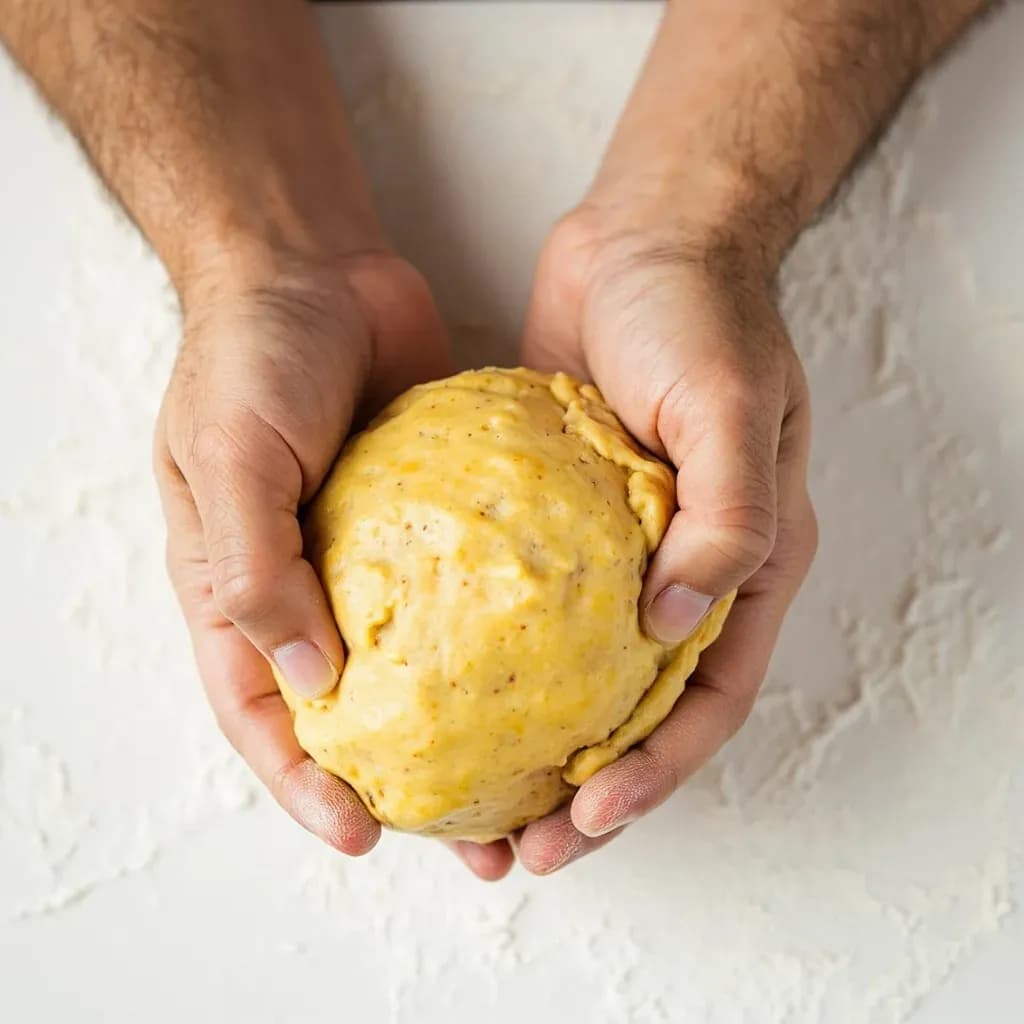
Working nixtamal dough and adjusting water to a smooth, pliable masa.
Masa kneading works ground nixtamalized corn dough by hand, adding water as needed until it is smooth, cohesive, and pliable enough to press without cracking. The right hydration gives tortillas, tamales, and sopes that puff and stay tender rather than dry out. Cooks test it by pressing a small ball and watching the edges for cracks.
Masa kneading is the brief, gentle working of nixtamalized corn dough to bring it to a smooth, pliable consistency with the right hydration for whatever shape it will become. Unlike wheat dough, masa has no gluten to develop, so kneading is not about building structure — it is about evenly distributing water through the flour and confirming the dough will behave under a press, in a steamer, or in the palm of the hand. Most masa is kneaded for two to five minutes total, often less, and most masa failures (cracked tortillas, sticky pupusas, dense tamales) trace back to a hydration that is off by a tablespoon or two, not to insufficient mixing.
The reason masa tolerates so little work lies in what nixtamalization does to the kernel. Cooking the corn in alkaline water loosens the pericarp and gelatinizes the outer starches, and grinding releases a fraction of those starches as damaged granules that absorb water readily and bind the dough. Once that hydration has happened, further kneading simply tears more starch loose and turns the masa gummy and rubbery. Treat it more like shaping cold butter than developing bread: bring it together, confirm the texture, and stop.
Different masa applications demand different hydration and aeration, which is why tamal masa is whipped with lard and broth into something almost like cake batter while tortilla masa stays firmer and drier. In every case the working rule is the same: cover the dough at every rest stage with a damp cloth or plastic wrap, hydrate gradually, and trust the press test — a small flattened ball with smooth, uncracked edges — over the clock.
- Difficulty
- Medium
Types & varieties
Firmer, drier dough that holds a pressed shape without spreading; used for corn tortillas and quesadillas.
Slightly stiffer than tortilla masa; often rested longer so it presses without sticking to the palm.
Whipped with fat and broth to a lighter, airy, cake-batter-like consistency before being spread on husks.
Medium hydration; formed into thick pucks with pinched rims after partial cooking.
Thin, pourable slurry that shares the nixtamalized base but is never kneaded.
How to do it
- 1
Break up and measure the masa
If using fresh masa from a tortillería or molino, crumble it into a bowl with your fingers to remove any clumps. If using masa harina, weigh or measure it and sift out any lumps so the dry flour will hydrate evenly.
- 2
Add water gradually
Pour in about two-thirds of the expected water (roughly 1¼ cups per 2 cups masa harina) and mix with your hand or a wooden spoon until a shaggy dough forms. Hold back the rest of the water until you have tested the texture.
- 3
Knead briefly
Press the dough with the heel of your hand, fold it over, turn a quarter turn, and repeat for 2–3 minutes. Stop as soon as the dough is uniform; masa should never be worked like bread dough.
- 4
Run the press test
Pinch off a small ball and flatten it between your palms. If the edges fracture, the masa is too dry — knead in water a teaspoon at a time. If it sticks heavily to your hands, work in more masa harina.
- 5
Adjust and rest
Add water or masa harina in small increments until the press test gives a clean disc with smooth edges. Cover the bowl with a damp towel or plastic wrap and let it rest 15–30 minutes so the flour fully hydrates.
- 6
Final knead before forming
After resting, give the masa a brief 30-second knead to redistribute moisture. Pinch off portions, roll into balls, and press or spread as your recipe directs, keeping the remaining masa covered the entire time.
Reading the dough
Hydration in masa is read by hand, not by ratio alone, because humidity, grind, and the age of the flour all shift how much water the dough will accept. The press test is the cook's truer instrument than any measuring cup. A correctly hydrated disc releases cleanly from the palms, holds a clean round edge, and flexes slightly when nudged. Trouble at the edges or the press almost always points to one of three causes, and learning to recognize them saves more tortillas than any recipe.
- Cracked, fractured edges after pressing: the masa is too dry. Knead in water a teaspoon at a time and rest a few minutes before retesting.
- Sticks heavily to the hands or the press plastic: the masa is too wet. Work in masa harina (or a little extra fresh masa) by the tablespoon until it releases.
- Rubbery, springy, or tough feel under the hand: the dough has been overworked. Let it rest covered for 20–30 minutes; the texture usually relaxes somewhat, though severely overworked masa may not fully recover.
- Gritty or sandy texture in the raw masa or cooked tortilla: often under-hydrated or insufficiently rested. Give it an extra 10–15 minutes covered, then a brief second knead.
- Smooth ball with faint surface sheen, like soft modeling clay: the dough is ready for pressing, shaping, or whipping, depending on the recipe.
Common uses
Tips & pitfalls
- Under-kneading shows up as cracking at the edges when you press a tortilla; the cure is usually a teaspoon of water, not more mixing.
- Over-kneading makes masa tough and rubbery — stop as soon as the dough comes together smoothly and the press test passes.
- Cover masa with a damp cloth or plastic wrap at every rest stage; a dry skin on the surface ruins the press and splits under the comal.
- Use cool or room-temperature water for tortillas; warm water swells the starch further and can make the masa gummy.
- For tamales, the masa must be whipped with fat until a small spoonful floats in cold water — that is the doneness test, not a clock.
- If fresh masa feels gritty, give it an extra 10–15 minutes of resting and a brief second knead before judging the hydration.
- Wet your hands lightly rather than the dough when forming balls, so the surface moisture stays balanced and the masa does not stick.
- Let rested masa sit at room temperature briefly before pressing if it has been refrigerated — cold masa cracks under pressure.
Good to know
- Base ingredient
- Nixtamalized corn dough (masa), either freshly ground from hominy or rehydrated from masa harina
- Origin
- Mesoamerica; nixtamalization dates back at least to roughly 1500 BCE, practiced by the Maya and other early Mesoamerican cultures
- Key physical property
- Gluten-free; structure comes from hydrated starch and damaged starch granules, not a protein network
- Typical masa harina hydration (tortillas)
- About 1¼–1½ cups water per 2 cups masa harina, adjusted to feel
- Target texture
- Smooth, pliable, soft Play-Doh-like ball that holds together without sticking or cracking
- Resting time
- 15–30 minutes covered, after hydration, to let the flour fully absorb water
- Time to knead
- Roughly 2–5 minutes of gentle folding and pressing — far less than wheat dough
- Press test
- Pinch off a golf-ball piece and flatten between palms; edges should be smooth, not cracked, and release cleanly
Also called
Masa Hydration Adjustment · Kneading Masa
Related

Whisk
Beat ingredients smooth and aerated with a looping wire motion

Sift
Pass dry ingredients through mesh to aerate and remove lumps

Strain
Pour through mesh to separate solids from liquid for a smooth result

Filter
Pass liquid through fine material to clarify out the smallest particles

Rice
Press cooked potatoes through small holes for fluffy, lump-free texture

Mash
Crush soft cooked food into a rustic, creamy purée

Grind
Crush food into a coarse to fine texture, from spices to meat

Grate
Shred food into fine bits against a sharp-toothed surface