Heat & Fire
Bread-Frying (Migas)
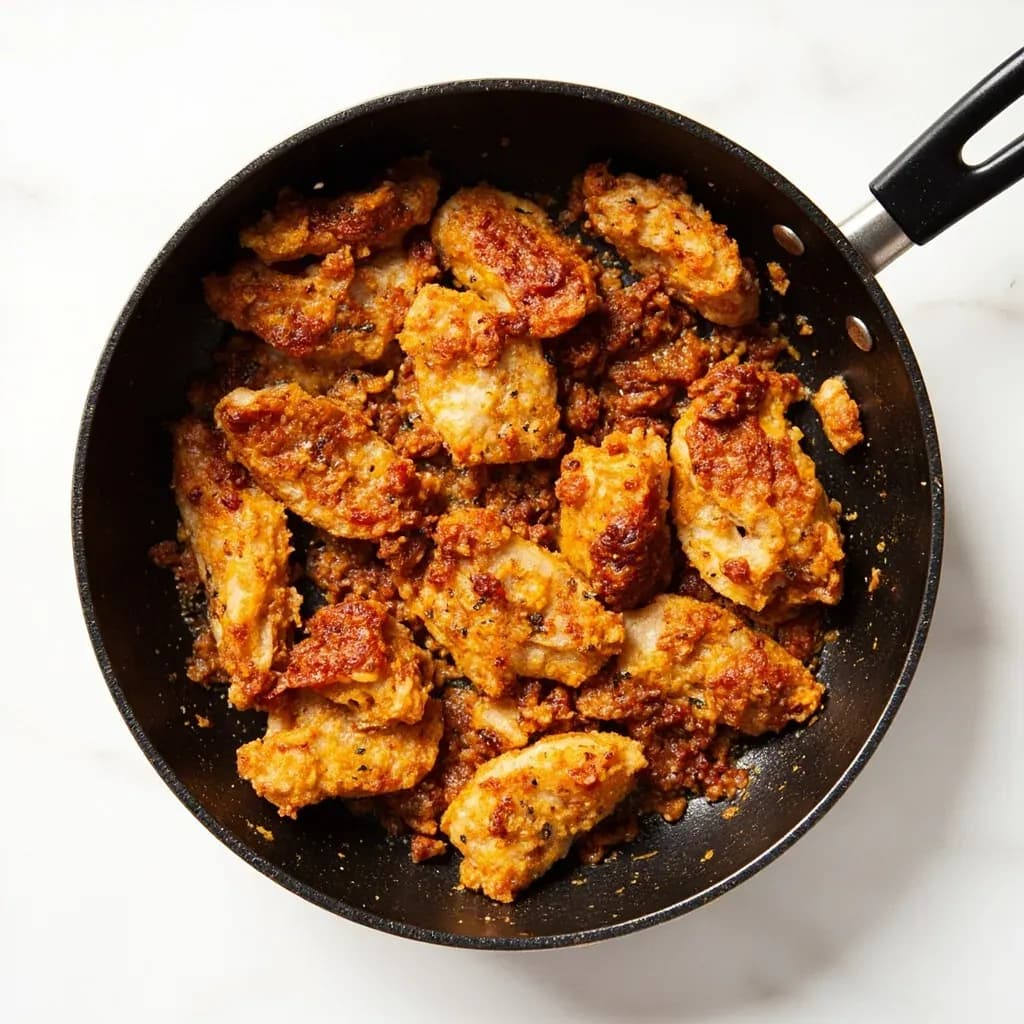
Frying torn day-old bread in oil with garlic and aromatics until crisp for Spanish migas.
Bread-frying for migas fries pieces of moistened stale bread in olive oil with garlic, paprika, and often chorizo or peppers until the crumbs turn golden and crisp at the edges yet tender inside. It is a rustic Spanish way to revive day-old bread into a hearty dish. The bread is usually dampened and rested beforehand so it crisps outside while staying soft within.
Migas bread-frying is the slow, patient technique at the heart of one of Spain's most beloved peasant dishes: tearing stale country bread into rough crumbs, moistening them just enough to be pliable, then crisping them in olive oil (often fortified with rendered pork fat) along with garlic, pimentón, and aromatics until the pieces turn a deep, even gold — crisp on the edges and still faintly chewy in the center. The method matters because it transforms bread that has outlived its sandwich-making usefulness into something deliberately indulgent, soaking up seasoned fat while losing its raw-dough softness, and it does so with nothing more than a wide pan, a wooden spoon, and steady medium heat.
The behavior of the bread in the pan is the whole story. Fresh bread turns gummy and absorbs oil until greasy; properly stale bread, lightly dampened and squeezed dry, gives up its interior moisture slowly enough to crisp in the fat without saturating, producing the loose, golden crumbs that define a good migas. The technique is forgiving in equipment — a sartén, a cazuela de barro, or any heavy wide pan works — but unforgiving in heat control: too hot scorches the outside before the inside dries; too low stews the crumbs in oil. Working in thin layers, tossing often, and seasoning at the end are what separate a satisfying plate of migas from a greasy pan of fried dough.
- Difficulty
- Easy
Types & varieties
La Mancha's signature version; bread fried in olive oil with panceta, chorizo, and sometimes garlic and pimentón; traditionally served with grapes or melon
Extremadura's variant; similar base, often includes pimientos fritos (fried peppers) and torreznos (fried pork belly)
Murcian style that features longaniza or morcilla and frequently accompanies grapes, melon, or pomegranate
Aragonese take with grapes and pork; sometimes enriched with sausage and chestnuts in colder months
Andalusian preparation, often crowned with fried green peppers, garlic, and a splash of sherry
Portuguese version; can accompany grilled sardines or pork, sometimes bound with turnip greens (migas com grelos); migas de batata is a separate potato-and-bread dish, particularly of the Alentejo
Canary Islands variant uses gofio (toasted cornmeal) rather than wheat bread
Mexican breakfast preparation made by frying torn corn tortillas with onions, chiles, tomatoes, and eggs — a parallel dish with a different starch base
How to do it
- 1
Prepare the bread
Take a rustic country loaf that is at least a day old (two to seven days is better). Cut off the crust only if it is very hard, then tear the loaf by hand into rough 1–2 cm pieces. If the bread is bone-dry, sprinkle it with a few tablespoons of water, let it rest 10–15 minutes until slightly pliable, then squeeze each handful firmly to remove excess moisture. The crumbs should feel dry to the touch but not shatter into dust.
- 2
Build the flavored oil
Heat a wide, heavy skillet or cazuela over medium heat. Add a generous slick of olive oil (about 80–120 ml for a kilogram of bread). If using panceta, chorizo, or tocino, fry those first to render their fat, then add peeled and lightly smashed garlic cloves and, optionally, a bay leaf or a teaspoon of pimentón. Cook the garlic just until pale gold, then fish it out if you want a milder flavor.
- 3
Fry the bread in stages
Add the bread crumbs in a thin layer and stir to coat every piece in the seasoned oil. Fry over medium heat, stirring and tossing frequently with a wooden spoon or espumadera, for 20–30 minutes. The crumbs should turn a deep, even gold, lose their raw-dough softness, and feel crisp on the edges while still slightly chewy in the middle. If the pan gets crowded, work in two batches rather than steam the bread.
- 4
Finish and adjust
When the crumbs are evenly golden and aromatic, taste and adjust salt. Return the reserved garlic to the pan if you removed it, scatter in chopped parsley or a grating of lemon zest, and toss once more. Serve immediately from the pan.
Why stale bread, and why tear it
The technique only works on bread that has lost enough moisture to behave like a sponge that has been wrung out and is starting to dry again. Fresh crumb is full of free water; when it hits hot oil it releases steam, gummy-starches, and absorbs fat until heavy. A 2-to-7-day-old loaf, lightly sprinkled with water and squeezed by hand, tears into irregular pieces that have just enough internal moisture to soften at the center while the outside crisps. Hand-tearing matters as much as staling: a knife produces uniform cubes with too much surface area, which over-crisp and then go brittle, while ragged hand-torn crumbs of mixed sizes crisp unevenly in the right way — some shards shatter, some stay tender, and the finished pan has the varied texture that defines good migas.
- If the bread is only a day old, slice and leave it uncovered overnight in a cool kitchen.
- If the bread is bone-dry, splash it lightly with water and let it rest 10–15 minutes until pliable, then squeeze each handful firmly before tearing.
- Remove only the gnarliest heel crust; the rest adds flavor and irregularity.
The migas family: same name, different starch
Calling something 'migas' is less a recipe than a method applied to whatever stale starch the cook has on hand. In inland Spain the starch is wheat bread; in the Canary Islands it is gofio (toasted grain flour rehydrated and pan-fried); in Portugal it can be bread, or turnip greens bound with bread (migas com grelos), and there is also a separate dish, migas de batata, built around potatoes and bread crumbs, especially in the Alentejo; in Mexico the starch is corn tortillas fried with onions, chiles, and eggs. The shared thread is the logic: take a dry, leftover starch, rehydrate it just enough, then crisp it in seasoned fat. Treat 'migas' as a family of dishes united by technique rather than a single recipe, and you have the freedom to apply the same bread-frying method to whatever you have.
Common uses
Tips & pitfalls
- Use truly stale bread — fresh bread turns to a paste no matter how carefully you fry it; two to seven days old is ideal.
- If the bread is bone-dry, splash it lightly with water and let it rest 10–15 minutes before tearing, then squeeze out excess water by the handful.
- Tear the bread by hand rather than slicing — irregular crumbs crisp better and absorb the seasoned oil unevenly in the right way.
- Render the panceta or chorizo first, then use that fat (topped up with olive oil) as the frying medium — it carries flavor into every crumb.
- Fry the garlic gently and remove it once golden if you want a milder dish; leave it in if you want assertive garlic flavor through every bite.
- Work in batches if needed; crowding the pan steams the crumbs instead of crisping them.
- Keep the heat at medium — too hot and the crumbs scorch before the inside dries out; too low and they absorb oil and go greasy.
- Salt at the end only; panceta, chorizo, and aged bread already carry salt.
- Finish with a squeeze of lemon or a scatter of parsley just before serving to lift the richness.
Good to know
- Origin
- Iberian Peninsula (Spain and Portugal), with deep roots in pastoral and shepherd cooking
- Etymology
- 'Migas' is Spanish and Portuguese for 'crumbs' or 'crumbs of bread'
- Preferred bread
- Rustic country-style white or wheat bread, ideally 2–7 days old, with a sturdy crumb
- Fat
- Olive oil (often extra virgin), frequently combined with rendered pork fat from panceta or chorizo
- Texture goal
- Loose golden crumbs that are crisp at the edges but still slightly chewy inside
- Pre-treatment
- Bread is lightly moistened with water and squeezed by hand so it tears into rough crumbs rather than slicing cleanly
- Active time
- Roughly 25–40 minutes of frying and tossing, depending on batch size and pan width
- Difficulty
- Moderate — the technique is simple, but oil temperature, batch size, and timing determine the final texture
Also called
bread-frying-migas · Migas
Related

Sear
Blast the surface hot for a deep-browned, savory crust

Sauté
Cook quickly in a little fat over lively heat, tossing as you go

Stir-Fry
Toss bite-sized pieces over roaring heat for fast, smoky cooking

Pan-Fry
Crisp food in a shallow layer of hot fat, turning once or twice

Deep-Fry
Submerge in hot oil for an all-over crackling crust

Roast
Cook uncovered in dry oven heat for browned edges and tender centers

Bake
Cook with steady, surrounding oven heat — the soul of bread and pastry

Broil
Hit food from directly above with fierce overhead heat