Heat & Fire
Crisping on the Plancha
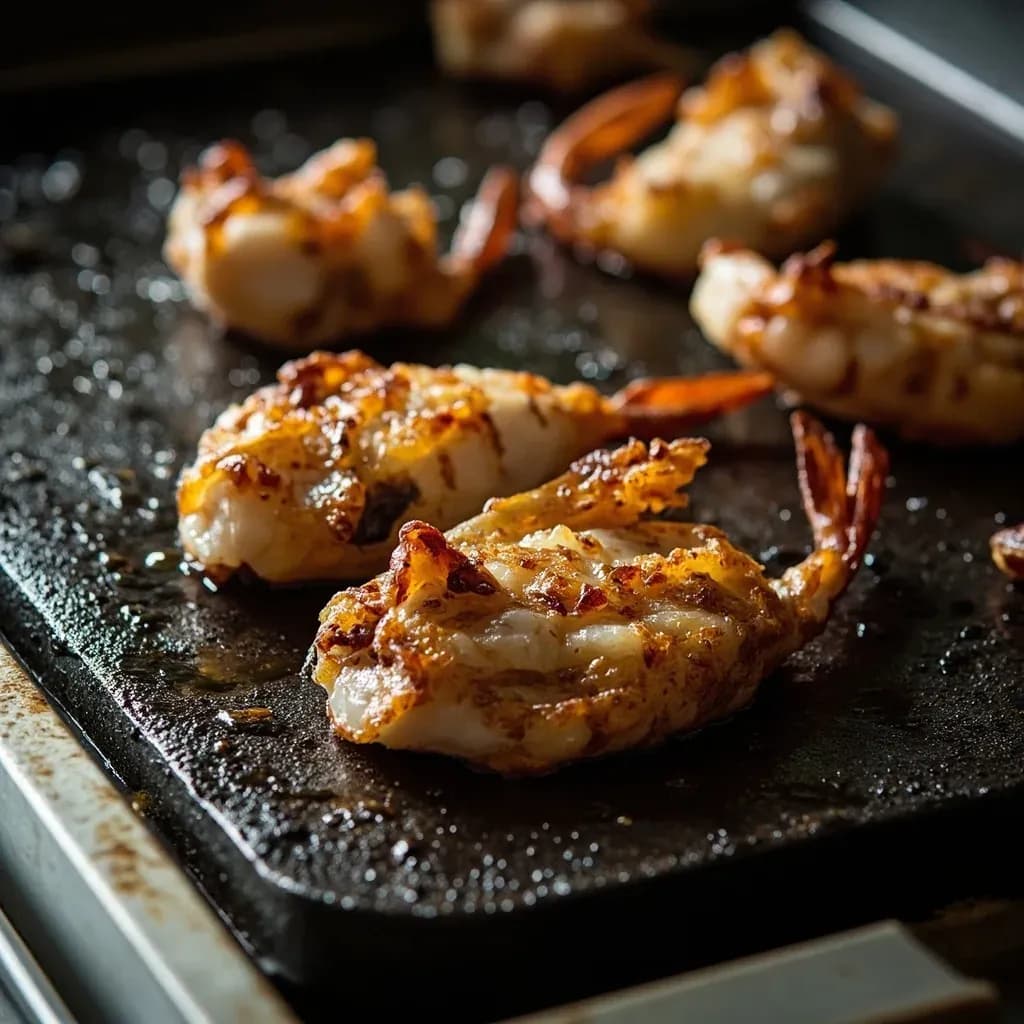
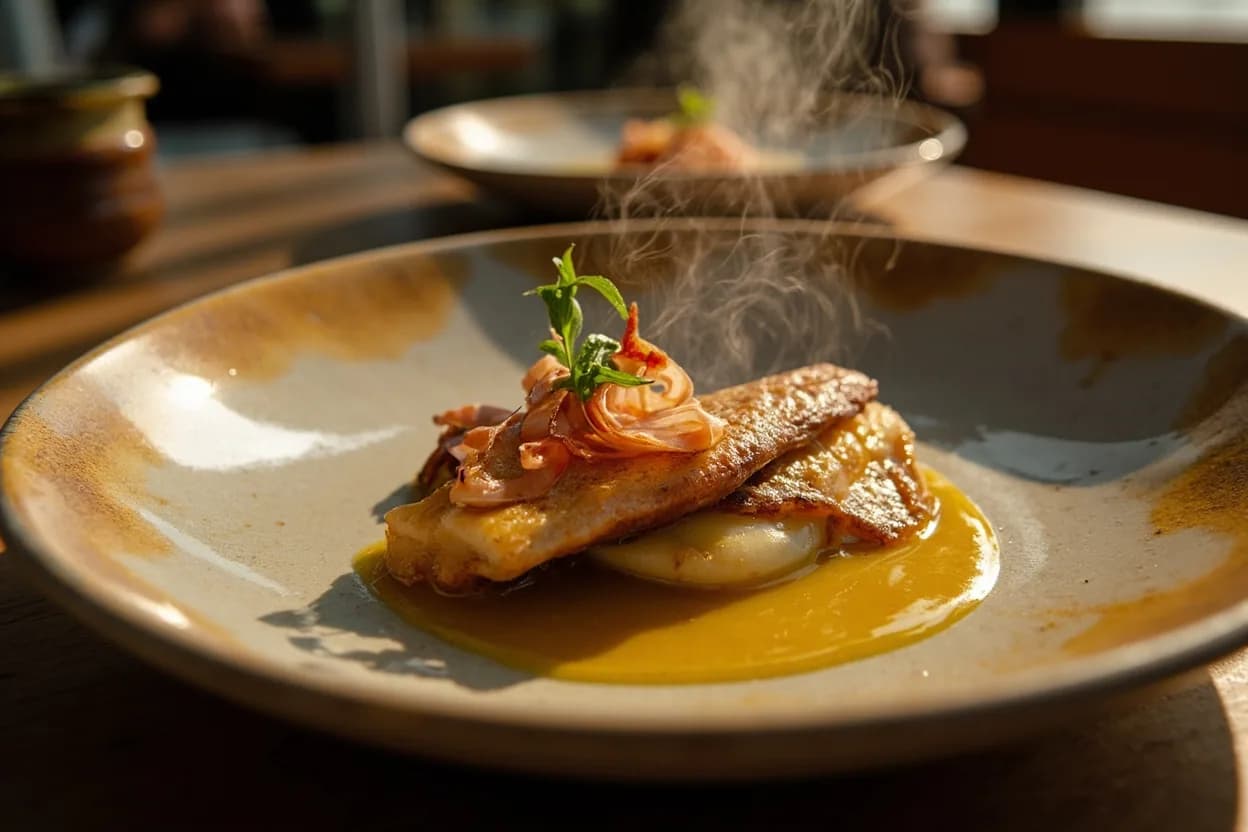
Searing food on a flat-top plancha to develop a crisp, golden surface with even browning.
Crisping on the plancha cooks food on a hot, flat metal griddle that delivers steady, even contact heat. It is used to develop a crisp, browned surface on seafood, vegetables, and proteins without the flare-ups of an open grill. The broad, uniform surface lets cooks sear many items at once while controlling fat and moisture.
Crisping on the plancha is the Spanish technique of searing food directly on a thick, smooth metal plate heated to a fierce, even temperature. The word plancha means "plate" or "iron," and the surface — typically carbon steel or cast iron, roughly 1–2 cm thick — stores enough thermal mass to stay hot through batch after batch of food. Unlike a grill grate, which only touches food at the bars, the plancha makes full, flat contact, so browning happens uniformly across the entire face of the food rather than in stripes.
What makes the technique special is not raw heat alone but heat delivered steadily and evenly. Surface temperatures of 400–500°F (200–260°C) — and well over 550°F (290°C+) on professional units — drive the Maillard reaction and partial caramelization fast enough to set a deep, golden crust before the interior overcooks. Because fat renders onto a flat plate rather than into open flame, there are no flare-ups and no acrid smoke, which is why the plancha is the preferred tool for delicate fish, octopus, and quick vegetables that scorch on a conventional grill.
The practical rule is simple: hot plate, dry food, no movement. When those conditions are met, the crust forms in 2–4 minutes and releases on its own — the metal essentially tells you when the piece is ready to flip. Used well, the plancha delivers a crackling, evenly browned exterior with a tender, just-cooked interior, the kind of crispness that is hard to replicate on a thin pan or a ridged grate.
- Difficulty
- Easy
Types & varieties
Traditional thick steel plate used in tapas bars and asadores across Spain; the reference standard.
Heavier, slower to preheat but holds heat exceptionally steady through long services.
Faster heat response, the workhorse of professional kitchens; must be seasoned like a carbon-steel pan.
Low-stick professional surface common in French bistros; finished in hard chrome and needs no seasoning.
Related but distinct: a Japanese iron griddle, often built into the table, used for teppanyaki.
Flat or domed Korean griddle used for samgyeopsal and dak galbi; shares the dry-heat, even-browning approach.
How to do it
- 1
Heat the plancha properly
Place the seasoned plancha over high heat and preheat for at least 8–10 minutes. Test readiness by flicking a few drops of water on the surface — they should bead and vanish in 1–2 seconds. Uneven or insufficient preheat is the most common cause of pale, steamed, or stuck food.
- 2
Dry and oil the food
Pat proteins or vegetables thoroughly dry with a clean kitchen towel. Lightly brush or toss the food itself with a high-smoke-point oil — olive oil for Spanish work, grapeseed or sunflower for very high-heat service. Do not oil the hot plate if it is well seasoned.
- 3
Lay the food in a single layer
Place each piece down in one motion, leaving at least 1 cm of space between items so the surface temperature stays high. Press gently for the first second to ensure full, even contact with the metal.
- 4
Leave it undisturbed
Do not move, press, or flip the food. Allow 2–4 minutes (depending on thickness) for the Maillard crust to form. The piece will release on its own once the crust is set — if it sticks when you try to lift it, it needs another 30–60 seconds.
- 5
Flip once and finish
Turn the food with a thin metal spatula and cook the second side for roughly the same time. For vegetables, a single flip is enough; for thick fish or octopus, you may need 60–90% of the first-side time on the second.
- 6
Rest and serve immediately
Slide the food off the heat onto a warm plate and let it rest for 1–2 minutes. The residual heat finishes the interior while the crust stays crisp. Season with flaky salt, a squeeze of lemon, or a drizzle of olive oil just before serving.
- 7
Maintain the surface between batches
Wipe loose fond with a metal spatula or a handful of coarse salt on a folded towel. For heavy char buildup, deglaze briefly with water, scrape clean, and re-oil lightly before the next batch.
Choosing what to crisp on the plancha
The plancha rewards food that is flat, fairly dry, and quick-cooking. Whole fish fillets — hake, sea bass, turbot, salmon — are the textbook case: a single even layer of browning, no flare-ups, no sticking. Cephalopods (octopus, squid, cuttlefish) caramelize beautifully because their surface proteins and sugars respond fast to direct metal heat, which is why pulpo a la plancha is the iconic use. Quick vegetables — padrón peppers, asparagus, spring onions, sliced zucchini — blister and char lightly without going limp. Thin slices of already-cooked meat, like presa ibérica or pork secreto, take on a fresh Maillard crust in under a minute per side, and par-boiled baby potatoes can be smashed flat and crisped like a stovetop hash. What the plancha handles less well is anything that weeps a lot of liquid: thick whole mushrooms, dense root vegetables straight from boiling, or sugary marinated items that scorch before the food cooks through. Dry the surface, salt and drain watery vegetables, or sear first and finish in the oven.
Common uses
Tips & pitfalls
- Preheat the plancha until a drop of water skitters and evaporates within 1–2 seconds — that is the actual 'ready' signal, not the dial reading.
- Pat food bone-dry with a towel before laying it down; surface moisture is the number-one enemy of crispness.
- Oil the food, not the plancha, once it is seasoned; this gives better browning and prevents a sticky patina.
- Do not move the food once it has made contact — let the crust release naturally before flipping, or you will tear the surface.
- Cook in batches and leave at least 1 cm of space between pieces; crowding drops surface temperature and steams the food instead of searing it.
- Resist the urge to keep flipping; one flip is usually enough for proteins and vegetables alike, and extra movement prevents a clean crust from forming.
- After service, scrape with a metal spatula and wipe with a lightly oiled cloth — do not soak, and avoid harsh soap on seasoned steel or cast iron.
- Re-season a carbon-steel plancha with a thin coat of neutral oil and heat until it just smokes whenever food starts to stick or the surface looks gray rather than dark satin.
Good to know
- Origin
- Spanish; 'plancha' means 'plate' or 'iron,' referring to the thick metal cooking surface.
- Surface
- Flat, smooth metal plate with no grates or ridges, typically carbon steel or cast iron.
- Plate thickness
- Roughly 1–2 cm (0.4–0.8 in), which stores and radiates heat evenly across the surface.
- Cooking temperature
- 400–500°F (200–260°C); professional units climb to 550°F+ (290°C+) for true crisping.
- Browning mechanism
- Maillard reaction and partial caramelization from direct, even contact with hot metal.
- Difference from grill
- Flat top = full-surface contact, no flare-ups, no grill marks, gentler on delicate fish.
- Seasoning required
- Yes for steel and cast iron; treat like a carbon-steel pan or cast-iron skillet.
- Iconic dish
- Pulpo a la plancha — Galician-style grilled octopus.
Also called
crisping · Plancha Searing
Dishes that rely on it
Related

Sear
Blast the surface hot for a deep-browned, savory crust

Sauté
Cook quickly in a little fat over lively heat, tossing as you go

Stir-Fry
Toss bite-sized pieces over roaring heat for fast, smoky cooking

Pan-Fry
Crisp food in a shallow layer of hot fat, turning once or twice

Deep-Fry
Submerge in hot oil for an all-over crackling crust

Roast
Cook uncovered in dry oven heat for browned edges and tender centers

Bake
Cook with steady, surrounding oven heat — the soul of bread and pastry

Broil
Hit food from directly above with fierce overhead heat