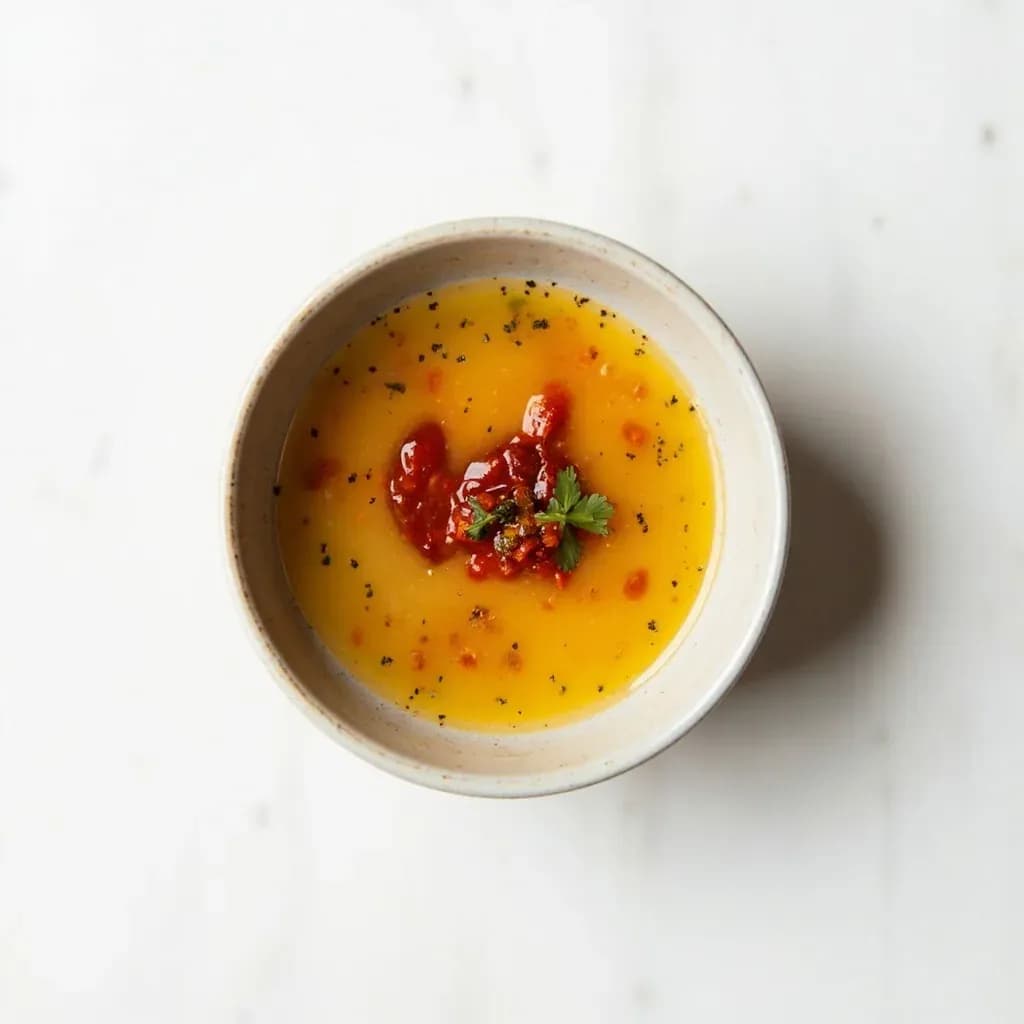
Prep & Assembly
Mixing Dipping Sauce
Balancing salty, sour, sweet, and spicy elements into a table sauce for dipping.
Mixing a dipping sauce blends liquids and aromatics fish sauce, lime, sugar, chili, garlic, herbs into a balanced condiment served alongside a dish. Across Southeast Asia and beyond it takes countless forms, from Vietnamese nuoc cham and Cambodian teuk trei to Lao jeow and Mauritian satini. The skill is tasting and adjusting until the salty, sour, sweet, and spicy notes are in harmony for the food it accompanies.
Mixing a dipping sauce is the act of building a small-volume condiment in real time, balancing salty, sour, sweet, spicy, and aromatic elements into a sauce that will sit beside a finished dish rather than cook with it. Unlike a pan sauce or a braise, a dipping sauce is never reduced or emulsified through heat; balance is achieved entirely by ratio and timing, which makes the cook's palate the most important tool. The technique is universal — every cuisine with a tradition of communal or composed plates has at least one — and the regional versions look superficially different but share a common structural skeleton.
What separates a good dipping sauce from a flat one is restraint and order of assembly. Sugar must dissolve before it can sweeten evenly; acid added last will taste sharp; raw garlic and shallot need a brief rest to lose their raw bite; fresh herbs and toasted elements go in at the very end so their volatile oils don't cook off. A sauce that tastes balanced in the first minute often becomes monotone, which is why most dipping sauces improve after 15–30 minutes of rest. The cook's job is to build, rest, taste again, and adjust in small increments — usually with single drops of acid or a teaspoon of water, not splashes.
- Difficulty
- Easy
Types & varieties
Vietnamese; fish sauce, lime juice, sugar, water, garlic, chili. Light and balanced, served with spring rolls and grilled meats.
Thai family of dipping sauces — nam jim seafood (fish sauce, lime, chili, garlic) and nam jim jaew (toasted-rice based, northeastern Thai).
Japanese; soy sauce, citrus (yuzu, sudachi, or lemon), mirin, bonito and kombu dashi. Served with sashimi, hot pot, and grilled fish.
Chinese; light soy, Chinkiang black vinegar, sugar, ginger, scallion, sometimes chili oil. Classic with dumplings.
Hoisin thinned with vinegar, garlic, and chili; standard with mu shu pork, Peking duck, and Vietnamese bánh tráng rolls.
Thai; sugar, vinegar, garlic, chili, fish sauce, sometimes grated carrot for body. The standard dip for fried chicken and spring rolls.
Korean; soy, vinegar, gochugaru, garlic, sesame oil, scallion, sesame seeds. Served with bossam and dumplings.
Indian/Pakistani; yogurt, grated cucumber or onion, cumin, mint, cilantro. A cooling counterpoint to biryani and kebabs.
Levantine/Middle Eastern; tahini, lemon juice, garlic, water, salt. Served with falafel, shawarma, and grilled vegetables.
Argentinian; parsley, oregano, garlic, vinegar, olive oil, chili flakes. The traditional sauce for grilled steak (asado).
Catalan; roasted red pepper, tomato, almonds, hazelnuts, garlic, vinegar, olive oil, ñora pepper. Dip for grilled vegetables and bread.
Piedmontese warm dip; anchovy, garlic, butter, and olive oil, served with raw vegetables.
How to do it
- 1
Identify the base and flavor profile
Decide which cuisine and dish the sauce will accompany. Pick a primary base — fish sauce for Southeast Asian, soy sauce for East Asian, vinegar for Chinese dumpling style, citrus for Japanese ponzu, yogurt for Indian or Middle Eastern, olive oil for Mediterranean. Outline the four pillars you want present and roughly how dominant each should be.
- 2
Measure and dissolve the dry and granular components
Combine sugar, salt, or any powdered spice with a small amount of the liquid base in a non-reactive bowl. Stir until fully dissolved. Skipping this step leaves undissolved crystals that hit the palate in concentrated bursts and give a gritty texture.
- 3
Add the liquid pillars
Pour in the salty base (soy, fish sauce, miso thinned with water), then the sour element (lime, rice vinegar, lemon, tamarind), then the dissolved sweet. Whisk to combine and taste.
- 4
Adjust the balance
Taste with a clean spoon. If flat, add salt or a few drops of fish sauce. If harsh, add sweet. If dull, add acid. If it bites at the back of the throat, the salt-to-acid ratio is off — add a touch more sweet or water. Make corrections in small increments; acid is the easiest component to overdo.
- 5
Prepare and add the aromatics
Mince, grate, or pound garlic, ginger, shallot, or chili. Toast ground spices dry in a small pan if using. Stir aromatics into the sauce; raw garlic and shallot benefit from a 10–15 minute rest to lose their raw bite.
- 6
Add finishing elements
Stir in fresh herbs, toasted nuts or seeds, a drizzle of sesame oil or chili oil, or a splash of toasted-rice powder. These are added last so their volatile aromatic compounds don't evaporate.
- 7
Rest the sauce
Cover and let sit 15–30 minutes at room temperature, or refrigerate briefly. This is when the flavors integrate; a freshly mixed sauce almost always benefits from this step.
- 8
Final taste and adjust
Taste again. The resting period often shifts the balance — acid softens, salt can taste stronger, chili heat blooms. Make final small corrections with single drops of acid, pinches of salt, or a teaspoon of water to thin.
- 9
Serve in the right vessel
Transfer to a small bowl or saucer with enough depth to dip without flooding. Pair with the main dish at the right temperature — most Asian dipping sauces are room temperature, bagna cauda is served warm, tahini sauce is cool.
The four-pillar framework
Many dipping sauces, regardless of cuisine, are variations on a shared structural skeleton: salty, sour, sweet, and spicy, supported by umami and aromatic notes. Not every sauce hits all four pillars equally — bagna cauda has no acid, tahini sauce typically lacks sweet and spicy, romesco leans savory and fatty — but each one has a clear dominant element and a recognisable balance problem to solve. Learning to think in pillars is more useful than memorizing any single recipe, because the same logic scales from a 60 ml Vietnamese nuoc cham to a 500 ml Catalan romesco. Once you can identify which pillar is missing or dominant in a sauce, the correction is usually obvious.
- Salty pillar: soy sauce, fish sauce, miso thinned with water, salted fish, anchovy, cured meats, hard cheese.
- Sour pillar: lime, lemon, rice vinegar, distilled white vinegar, Chinkiang black vinegar, tamarind, unripe mango, pickled brine.
- Sweet pillar: sugar, palm sugar, honey, maple syrup, fruit purée, hoisin. Always dissolve fully before adding aromatics.
- Spicy pillar: fresh chili, dried chili, chili oil, chili flakes, gochugaru, fresh horseradish, wasabi, black pepper. Build to taste — heat blooms with time.
- Umami and aromatic pillars: garlic, shallot, ginger, scallion, lemongrass, galangal, herbs, toasted spices, nuts, toasted-rice powder. These provide the depth the four primary pillars alone can't deliver.
Common uses
Tips & pitfalls
- Build in the order salty → sour → sweet → spicy, tasting after each addition so no single element overwhelms the rest.
- Dissolve sugar fully in the liquid base before adding aromatics; undissolved crystals give uneven sweetness and gritty texture.
- For fish-sauce or soy-based sauces, let the mix rest at least 15 minutes so the flavors marry; a sauce that tastes balanced at minute one often turns flat.
- Use a non-reactive bowl — glass, ceramic, or stainless. Vinegar and citrus will pick up metallic off-notes from aluminum or copper.
- Adjust with single drops of acid at the end, not big splashes; acid is the easiest component to overdo and the hardest to undo.
- Toast spices and grind fresh chilies when you want a sauce with depth rather than just heat; pre-ground chili and spice blends lose their aromatics fast.
- For chunky dips, mince or pound aromatics in a mortar for a more cohesive texture than knife-chopping; the bruise releases juices that bind the sauce.
- If the sauce is too intense at the end, lengthen it with water, broth, or citrus — not more sugar, which throws off balance.
- Fresh herbs — cilantro, Thai basil, mint, dill — go in last so their volatile oils stay bright and green.
- Serve at room temperature unless the recipe specifically calls for warm; cold dulls aromatics, especially garlic and chili.
Good to know
- Difficulty
- Easy
- Active time
- 5–10 minutes
- Resting time
- 15–30 minutes for flavors to meld
- Core flavor pillars
- Salty, sour, sweet, spicy — plus umami and aromatic
- Typical base liquids
- Soy sauce, fish sauce, vinegar, citrus juice, or a combination
- Starting ratio (Asian-style)
- Roughly 2 parts salty : 2 parts sour : 1 part sweet : small amount of chili and aromatics
- Yield
- Scales linearly; 60–120 ml (1/4–1/2 cup) serves 2–4 as a dip
- Storage
- 1–2 weeks refrigerated in a sealed jar for most vinegar- or soy-based versions; fresh-herb versions best within 24 hours
Also called
Mixing Dipping Sauce (Teuk Trei) · Making Jeow (Dipping Sauce) · Mixing Dipping Sauce (Pha Nước Chấm) · Making Chili Paste (Pate Piment) · Making Chutney (Satini)
Related

Whisk
Beat ingredients smooth and aerated with a looping wire motion

Sift
Pass dry ingredients through mesh to aerate and remove lumps

Strain
Pour through mesh to separate solids from liquid for a smooth result

Filter
Pass liquid through fine material to clarify out the smallest particles

Rice
Press cooked potatoes through small holes for fluffy, lump-free texture

Mash
Crush soft cooked food into a rustic, creamy purée

Grind
Crush food into a coarse to fine texture, from spices to meat

Grate
Shred food into fine bits against a sharp-toothed surface