Transform & Preserve
Vinegar Mother Propagation
Keeping and feeding a vinegar mother or SCOBY so fermentation can continue batch to batch.
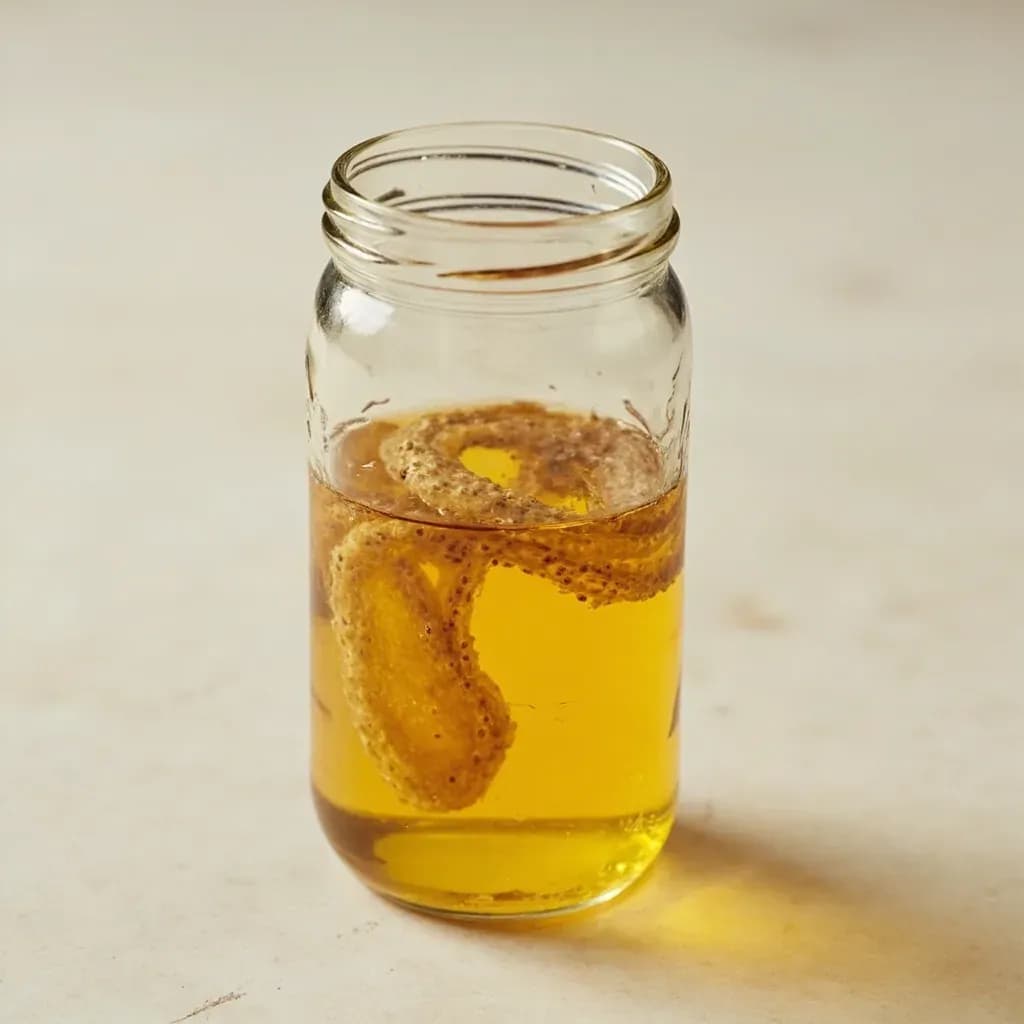
Vinegar mother propagation maintains the living culture of bacteria (and, for kombucha, yeast) that converts alcohol or sweet tea into vinegar. The cellulose mat is transferred into fresh substrate and kept warm and exposed to air so it can keep acetifying. Healthy propagation means feeding regularly, avoiding contamination, and splitting the culture as it grows.
A vinegar mother is the living engine of acetic fermentation: a leathery, cellulose mat produced primarily by Acetobacter bacteria (most often A. aceti or A. pasteurianus) working alongside residual yeasts. In the presence of oxygen, these bacteria convert ethanol into acetic acid, slowly transforming wine, cider, or beer into vinegar. Propagation simply means keeping that culture alive between batches — feeding it, storing it properly, and splitting it as it grows — so you can produce vinegar on demand rather than starting from scratch every time. Done well, a single mother can outlive the cook who started it; some reported cultures have been kept active for decades.
Propagation matters because the mother is the only thing standing between raw fermented alcohol and finished vinegar. Without an established, healthy culture, fermentation stalls, turns vinegary in patches, or yields a thin, off-flavored product. A robust mother also acts as a kind of immune system for the batch: it dominates the surface, suppresses competing molds, and drives a clean, complete conversion. For cooks, this means control — over acidity, flavor base, timing, and the particular character of a finished vinegar (apple, wine, balsamic-style, rice) that you simply cannot buy in a bottle.
The behavior is straightforward once you internalize it. Acetobacter is aerobic and slow: it needs a wide-mouth vessel, a breathable cover, warmth (60–80°F / 15–27°C), and a base of 4–8% ABV. Too much alcohol inhibits the bacteria; too little starves them; too much heat damages them; chlorine in tap water can wipe a culture out overnight. With those conditions met, the mother thickens, the liquid clears, and a sharp acetic aroma gradually replaces the boozy smell of the feed. The work is patient, but the actual hands-on time is measured in minutes per week.
- Difficulty
- Medium
Types & varieties
The most forgiving starter; warm and fruity, easy to source from raw, unpasteurized apple cider vinegar with visible mother.
Classic for Orléans-style wine vinegars; deeper color and tannin-driven complexity.
Lighter, more delicate; the traditional base for French white-wine vinegars.
Refined, high-acid vinegar prized in fine cooking; harder to keep healthy because the base is nutrient-poor.
Thick, dark, and slow-working; suited to long aging in successive wooden casks, as in aceto balsamico tradizionale.
Asian tradition; suited to sake or rice-wine fermentations and used to make rice vinegar.
Britain's working vinegar; robust and tolerant of cool cellar temperatures.
Philippine sukang Iloco style; thrives on sugarcane wine and produces dark, complex vinegar.
How to do it
- 1
Source or revive a mother
Obtain a healthy vinegar mother from a previous batch, a fellow fermenter, or by purchasing raw, unfiltered, unpasteurized vinegar that contains visible mother (apple cider is the easiest to source). Inspect it: the surface should be smooth, tan to brown, and smell cleanly acidic. Discard any with fuzzy, pink, green, or black mold.
- 2
Prepare the feed liquid
Choose a base with 4–8% alcohol: dry hard cider, light red or white wine, finished beer, or mead. If the alcohol is higher, dilute with non-chlorinated water. For cider especially, dissolving 1–2 tablespoons of sugar per liter helps support any residual yeast and speeds bacterial colonization.
- 3
Select and prepare the vessel
Use a wide-mouth glass jar, ceramic crock, or Orléans-style wooden barrel. Wash with hot water only — never soap, whose residue kills the culture. Fill no more than two-thirds full to leave headspace for the working mother and gas exchange.
- 4
Introduce the mother
Gently lower the mother into the liquid so it floats on the surface. If it sinks, don't panic — it is usually still viable and will refloat within a few days as fermentation produces CO2. Reserve at least 20–25% of your mother in a backup jar of finished vinegar, just in case.
- 5
Cover and place
Drape a double layer of cheesecloth or a coffee filter over the mouth and secure with a rubber band. Store in a dark, draft-free spot at 60–80°F (15–27°C). Avoid direct sunlight, which can overheat the vessel and damage the culture.
- 6
Monitor and wait
A new pellicle (thin mother film) should form within 1–3 weeks. Signs of healthy progress: bubbles, a sharpening vinegary smell, and a gradual clearing of the liquid. Test acidity with pH strips or a titration kit; fermentation is complete when the liquid tastes sharply acidic and pH is below about 3.0 — typically 1–3 months depending on volume and temperature.
- 7
Harvest the vinegar
Strain the finished vinegar through a fine sieve or coffee filter to remove sediment and any suspended bits of mother. Bottle in clean glass with non-corrosive caps (plastic-lined lids or glass stoppers — never bare metal). Reserve the mother and any new pellicle for the next batch.
- 8
Store and maintain the mother
Place the reserved mother in a small jar, cover it completely with finished vinegar, seal, and refrigerate (or keep in a cool, dark cupboard). Feed it every 2–3 months by pouring off the storage vinegar and replacing it with a small amount of fresh alcoholic feed, or simply start a new batch when you're ready.
- 9
Troubleshoot common issues
No activity after 3 weeks: the vessel is probably too cold, the alcohol is too high, or there's chlorine in the water — warm it 5–10°F, dilute higher-proof wine, and switch to filtered water. Fuzzy mold (white, pink, green, or black): discard the entire batch and mother and sterilize the vessel. Kahm yeast (a thin white film): skim it off; it is harmless but signals low acidity, so add a splash of finished vinegar to drop the pH faster. Cloudy, foul-smelling liquid: contamination — discard.
Orléans method vs. casual home propagation
The Orléans method and the everyday 'mother method' are not really different processes — both rely on an established Acetobacter culture converting ethanol to acetic acid at the surface. What distinguishes Orléans is the apparatus and the rhythm. A traditional Orléans setup uses a wooden barrel filled only partway, so a large surface area of liquid meets the air inside. Finished vinegar is drawn off through a spigot and replaced with fresh wine every few weeks, never emptying the barrel and never disturbing the mother clinging to the upper walls and surface. The wood itself contributes microflora and gentle porosity, which is why fine Orléans vinegars taste softer and more integrated than glass-jar equivalents.
Home propagation, by contrast, almost always means a wide-mouth glass or ceramic jar, a breathable cloth cover, and full batches that are started, finished, harvested, and restarted. Both approaches keep a mother alive indefinitely; Orléans simply does it with less intervention per batch, at the cost of owning a barrel and committing to a single base wine. The tips and steps in this entry work for both. If you graduate to a barrel, the same rules apply — breathable cover (a loose bung or cloth), 60–80°F, 4–8% feed — but the mother will be larger, the cycle longer, and the finished vinegar noticeably more refined.
- A sunk mother is usually still viable; it often refloats within days as fermentation produces gas.
- A healthy mother smells clean and sharply acidic; yeasty, cheesy, or putrid odors signal contamination.
- Vinegar mothers are sometimes confused with kombucha SCOBYs — they look similar but are different cultures optimized for different feeds.
Common uses
Tips & pitfalls
- Always start with a healthy, smooth, tan-to-brown mother; discard any with fuzzy, pink, green, or black mold, which means contamination, not just age.
- Use only non-chlorinated water; chlorine kills Acetobacter and can stall a batch invisibly. Filtered or spring water is a safe default.
- Cover vessels with breathable cloth — cheesecloth or a coffee filter — not airtight lids. Acetobacter is aerobic and will suffocate without oxygen.
- Keep the mother submerged under at least 1–2 cm of liquid so it doesn't dry out and die at the surface.
- Resist stirring once the mother has formed. Disturbing the surface film disrupts the bacteria's organized work and slows conversion.
- Never add raw honey, fresh garlic, or fresh herbs to the fermenting vessel. Introduce flavorings only after straining the finished vinegar.
- If a batch stops bubbling, check temperature, alcohol level, and chlorine before assuming the mother is dead. Warming the vessel 5–10°F often restarts activity within days.
- Rinse the mother only with finished vinegar or cool non-chlorinated water; never soap, which can ruin the culture.
- Label every vessel with the date, base liquid, and approximate ABV. Batches accumulate quickly and are easy to lose track of.
- Trust your nose: a clean, sharp acetic smell is good; a yeasty, cheesy, or putrid smell signals contamination.
Good to know
- Type of culture
- A SCOBY (symbiotic culture of bacteria and yeast) dominated by Acetobacter species — most often A. aceti or A. pasteurianus — that produces a cellulose pellicle at the air/liquid interface.
- Traditional method
- The Orléans method: slow surface fermentation in wooden barrels, the benchmark for fine French wine vinegars.
- Ideal alcohol level of feed
- Roughly 4–8% ABV. Hard cider, light wines, and finished beer all work; above ~12% the bacteria are inhibited.
- Optimal temperature
- 60–80°F (15–27°C). Cooler temperatures slow or stall fermentation; above ~86°F (30°C) the culture can be damaged.
- Typical batch time
- 1–3 months for full conversion, depending on volume, temperature, and alcohol level.
- Acidity of finished vinegar
- Typically 4–8% acetic acid; commercial vinegar is standardized to 5%.
- Container material
- Glass, food-grade ceramic, or untreated wood. Avoid copper, brass, raw iron, and aluminum — the acid leaches them.
- Yield
- Approximately 1 L of 6% wine yields roughly 1 L of 6% vinegar, since alcohol is replaced volumetrically by acetic acid and water.
- Mother lifespan
- Indefinite if regularly fed and stored properly; some reported mothers have been kept alive for decades.
- Storage between batches
- Submerged in finished vinegar in a sealed glass jar, refrigerated or kept in a cool, dark cupboard.
- Historical reference
- Vinegar fermentation predates recorded history; Louis Pasteur identified Acetobacter as the converting organism in 1864.
- Difficulty
- Beginner-friendly for apple cider or basic wine vinegar; demands more care for fine wine, balsamic-style, or rice vinegar.
Also called
SCOBY Cultivation · Mother of Vinegar
Related

Confit
Cook slowly submerged in fat for silky tenderness and keeping

Cure
Draw out moisture with salt and time to preserve and concentrate

Pickle
Steep in acidic brine for bright, tangy, crunchy preservation

Ferment
Let friendly microbes transform food into tangy, complex flavor

Marinate
Soak in a seasoned mix to flavor and tenderize before cooking

Brine
Soak in salt water so meat stays juicy and seasoned throughout

Dehydrate
Slowly dry out moisture to concentrate flavor and extend shelf life

Cold-Smoke
Perfume cured food with smoke without cooking it through