Transform & Preserve
Palm Oil Bleaching
Heating red palm oil until it loses its color and strong flavor for clearer West African cooking.
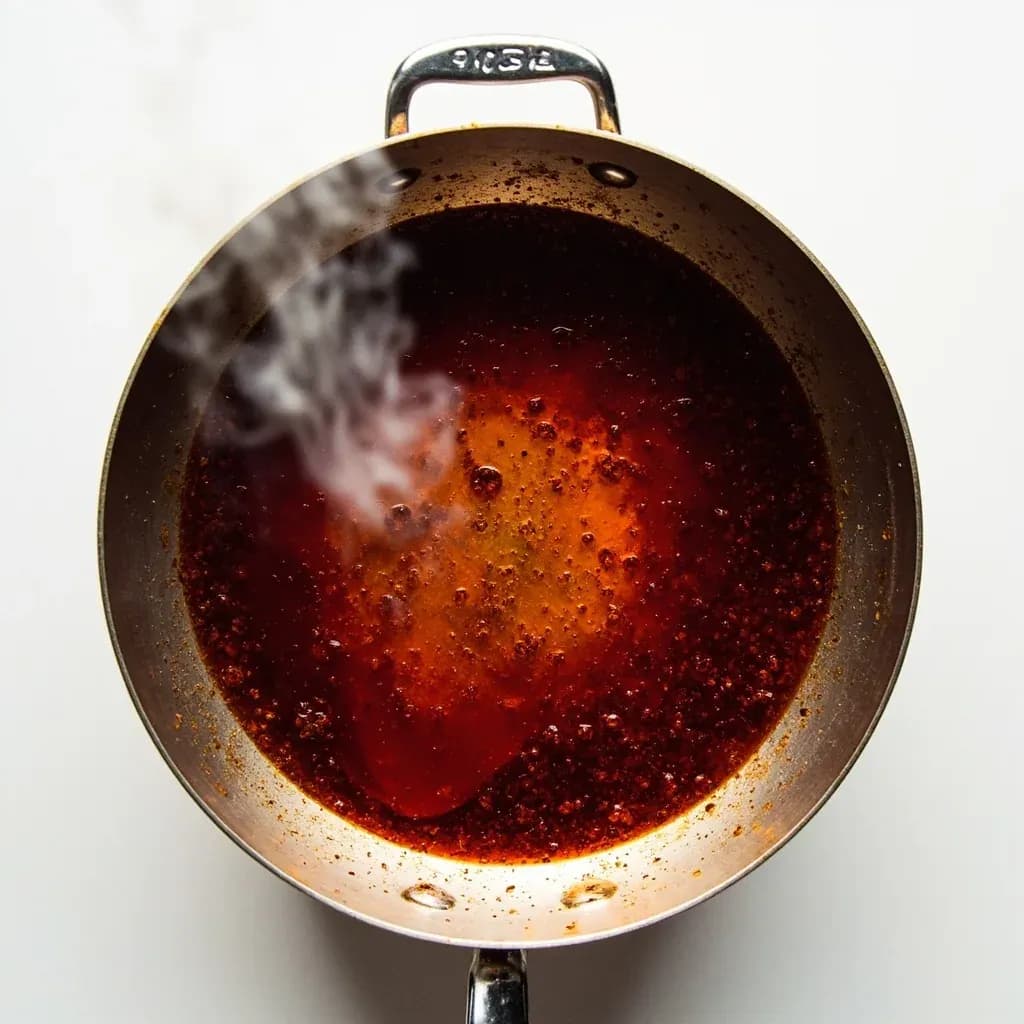
Palm oil bleaching heats crude red palm oil in a pan until it darkens, smokes and loses its bright red color and pungent aroma, producing a clearer, milder cooking fat. The technique is used in West African kitchens for dishes that call for a less assertive palm flavor, such as certain stews and fried snacks. It must be done in a well-ventilated space because the heating produces heavy smoke and the very hot oil can ignite.
Palm oil bleaching is a home technique, rooted in West African kitchens, in which unrefined red palm oil is heated gently in a heavy pot until its vivid red-orange color and assertive, sometimes bitter flavor soften into a translucent amber or pale gold fat. What is happening on the stove is part moisture evaporation, part pigment destruction: dissolved water boils off as the oil climbs past 150 °C, foaming carries dissolved saponins out of the liquid, and the alpha- and beta-carotene that give red palm oil its signature hue (500–700 ppm in fresh oil) are broken down by sustained heat. The result is a cooking fat that behaves like a neutral vegetable oil in color-sensitive dishes but keeps palm oil's high smoke point and crisp-frying character. It is not, despite the name, a chemical whitening. Industrial refiners achieve a similar end with bleaching earth, phosphoric acid, and steam deodorization at 200–260 °C; the kitchen method is a controlled, partial degradation, not a purification, and a meaningful share of the oil's carotenoids and tocotrienols are lost in the process. Cooks reach for it whenever a recipe calls for palm oil's texture and frying behavior without its color or loud flavor, and as a way to stretch a seasonal batch of fresh oil into a longer-keeping everyday fat.
- Difficulty
- Medium
Types & varieties
Heated only until the bitter edge softens; keeps a warm orange tint. Best for stews where some palm character is still wanted.
Held at heat until the oil clears to amber or pale gold and the red flavor is nearly gone. Used when a neutral fat with palm oil's frying behavior is needed.
Onion, garlic, ginger, or a small piece of dried fish is added in the last 2–3 minutes of heating, then strained. A common shortcut for a pre-seasoned base.
Heated in a wide pan so suspended pulp and water settle and can be poured off, giving a cleaner oil with less foam than the standard method.
How to do it
- 1
Inspect and measure the oil
Pour unrefined red palm oil into a clean, dry heavy-bottomed pot. Work in small batches of 1–2 litres for better control, and never fill the pot more than halfway — the oil will foam and climb the sides during the first minutes.
- 2
Heat gently to drive off moisture
Place over medium heat. Within 2–4 minutes the oil will sizzle and produce fine bubbles as the residual water boils off. Stir occasionally with a dry slotted spoon, scraping the bottom so suspended pulp does not scorch.
- 3
Pass through the foaming stage
Bubbles will thicken into a tan foam that climbs the sides of the pot. Keep the heat steady and resist the urge to raise it to rush the stage — the foam is carrying saponins and water out of the oil, and forcing it only scorches the dregs at the bottom.
- 4
Watch for the color change
As the foam subsides, the oil clears and shifts from brick red to orange to amber. The final drop from deep amber to pale gold can happen in under a minute, so stay at the stove with a clean jar ready and the heat off or lowered.
- 5
Optional: add aromatics
If making a seasoned base, drop in sliced onion, garlic, or a small piece of dried fish in the last 2–3 minutes while the oil is still hot. They will fry quickly and infuse the oil without driving the temperature higher.
- 6
Remove from heat and settle
Pull the pot off the burner as soon as the oil reaches the shade you want — amber for general cooking, pale gold for baking. Let it stand 5–10 minutes so the dark sediment drops to the bottom.
- 7
Strain and cool
Pour the clarified oil through cheesecloth or a fine-mesh strainer into a clean glass or metal container, leaving the dark dregs behind. Cool to room temperature with the lid off so no stray steam condenses back into the fat.
- 8
Store
Seal in a clean jar and keep at room temperature away from sunlight. Properly bleached oil keeps for several months; discard it if it develops off smells, mould, or re-darkens from trapped moisture.
What is actually happening in the pot
Three things change at once as the oil heats, and they happen in a recognizable sequence. First, residual water (fresh palm oil can hold 1–3% moisture) boils off and the oil foams with fine bubbles. Second, dissolved saponins and other water-soluble impurities ride up into that foam and are carried out of the fat. Third, the heat-sensitive carotenoids that color the oil begin to break apart, and the liquid shifts from brick red to orange to amber over the course of several minutes. The final color drop, from deep amber to pale gold, can happen in under a minute, which is why the cook needs to be ready to pull the pot the moment the target shade appears.
- Foam = water and saponins leaving the oil. Do not skim it; let it climb and subside on its own.
- Color change is your main visual cue. Tilt the pot and look at a thin film against a white wall or the stainless rim.
- A burnt-rubber or plastic smell means the oil has gone past bleaching into oxidative degradation. Discard it.
Bleached versus unrefined: when to choose which
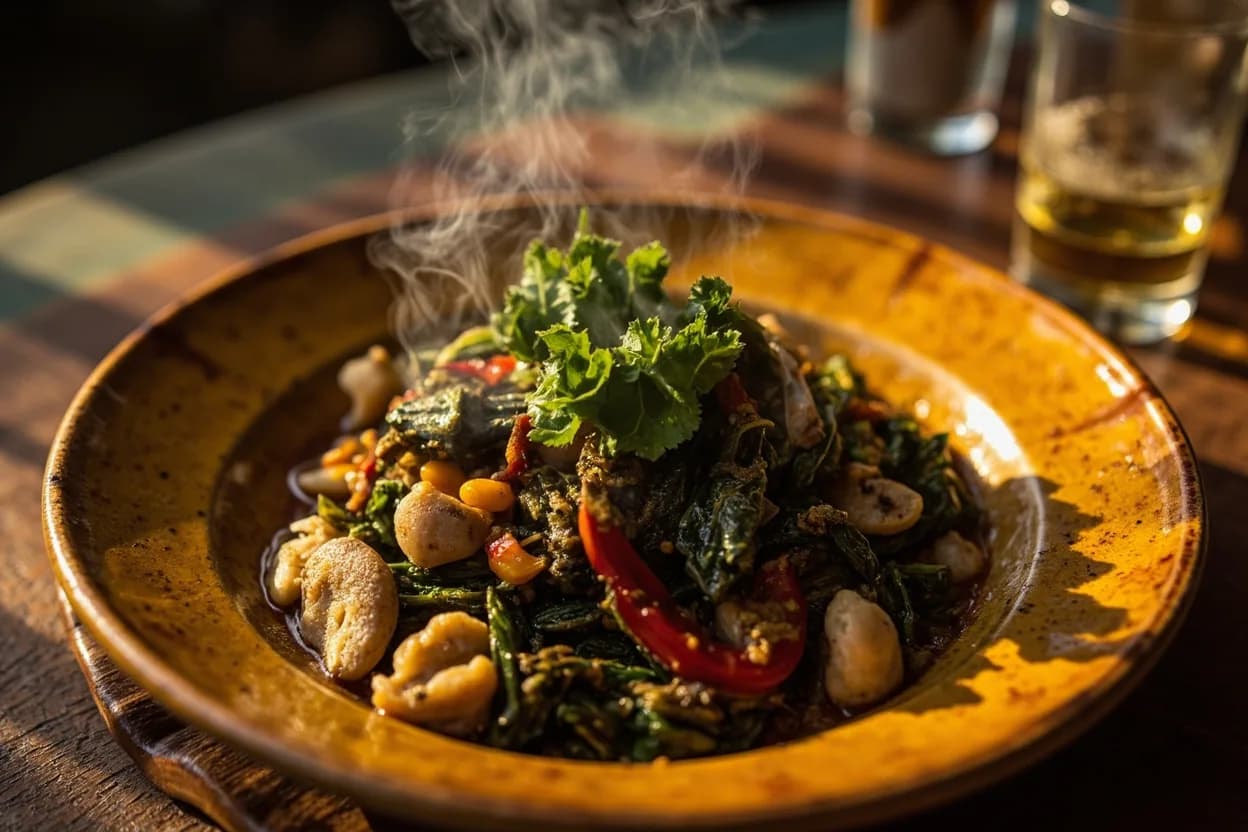
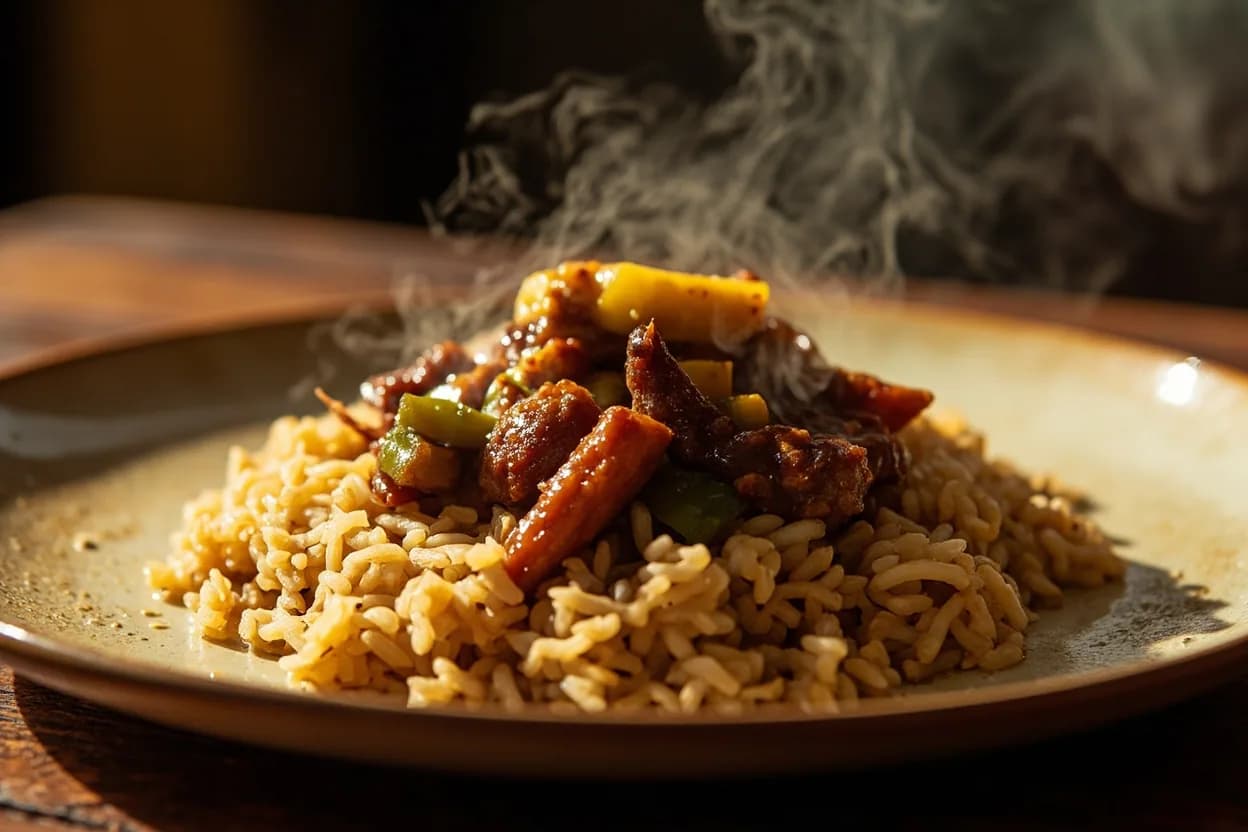
Unrefined red palm oil is the right choice whenever its color and flavor are part of the dish — egusi, ofada stew, banga soup, and most dishes where the cook wants a deep red oil slick on top of the finished pot. Bleached palm oil takes over when that color would dominate, when the dish is supposed to be pale (jollof rice, fried rice, light okra soup, certain pastries), or when the cook wants palm oil's frying performance without its strong, sometimes bitter taste. Many West African kitchens keep both on the shelf and switch between them by dish.
Common uses
Tips & pitfalls
- Use a heavy, wide pot: more surface area drives off moisture faster and shortens the time the oil sits at high heat.
- Start on medium heat. If the oil smokes before it turns amber, the flame is too high and the oil is degrading rather than bleaching.
- Expect three stages — gentle bubbling (moisture leaving), heavy foaming (saponins releasing), then sudden clearing and color drop. The final color shift is fast; have the pot off the burner before it happens.
- Do not add water, salt, or vegetables at the start. Add aromatics, if at all, only in the final 2–3 minutes.
- Ventilate the kitchen. The fumes are acrid and will set off smoke detectors; open windows and run the hood.
- Strain through fine cheesecloth or a coffee filter to remove the dark sediment that settles during heating.
- Cool completely before sealing the jar; warm oil sealed in a container condenses moisture on the lid and spoils faster.
- If the oil smells like burnt rubber or plastic, it has gone past bleaching into degradation. Discard it — do not try to salvage it with fresh oil.
Good to know
- Origin
- West Africa (Nigeria, Ghana, Cameroon, Sierra Leone)
- Also called
- "Seasoning" palm oil; bleached oil is sometimes called zomi (Hausa) or epo pupa funfun
- Starting material
- Unrefined red palm oil (epo pupa in Yoruba, mmanu anu in Igbo)
- End color
- Translucent amber to pale gold, depending on how long it is held at heat
- Temperature range
- 150–180 °C (300–355 °F) — below the smoke point, well above the moisture stage
- Time
- 10–25 minutes per batch, depending on volume and target color
- Yield
- Roughly 90–95% by volume; loss is moisture and trace sediment
- Effect on nutrients
- Partial destruction of carotenoids and tocotrienols; smoke point rises; flavor flattens
- Shelf life after bleaching
- Several months at room temperature in a sealed container — longer than unbleached red oil
- Skill level
- Beginner to intermediate; main risk is overheating
- Distinguish from
- Industrial refining, which uses bleaching earth, phosphoric acid, and steam deodorization
Also called
bleaching palm oil · burning palm oil
Dishes that rely on it
Related

Confit
Cook slowly submerged in fat for silky tenderness and keeping

Cure
Draw out moisture with salt and time to preserve and concentrate

Pickle
Steep in acidic brine for bright, tangy, crunchy preservation

Ferment
Let friendly microbes transform food into tangy, complex flavor

Marinate
Soak in a seasoned mix to flavor and tenderize before cooking

Brine
Soak in salt water so meat stays juicy and seasoned throughout

Dehydrate
Slowly dry out moisture to concentrate flavor and extend shelf life

Cold-Smoke
Perfume cured food with smoke without cooking it through