Transform & Preserve
Praline Paste Making
Caramelizing nuts in sugar, then grinding the brittle into a smooth oily paste.
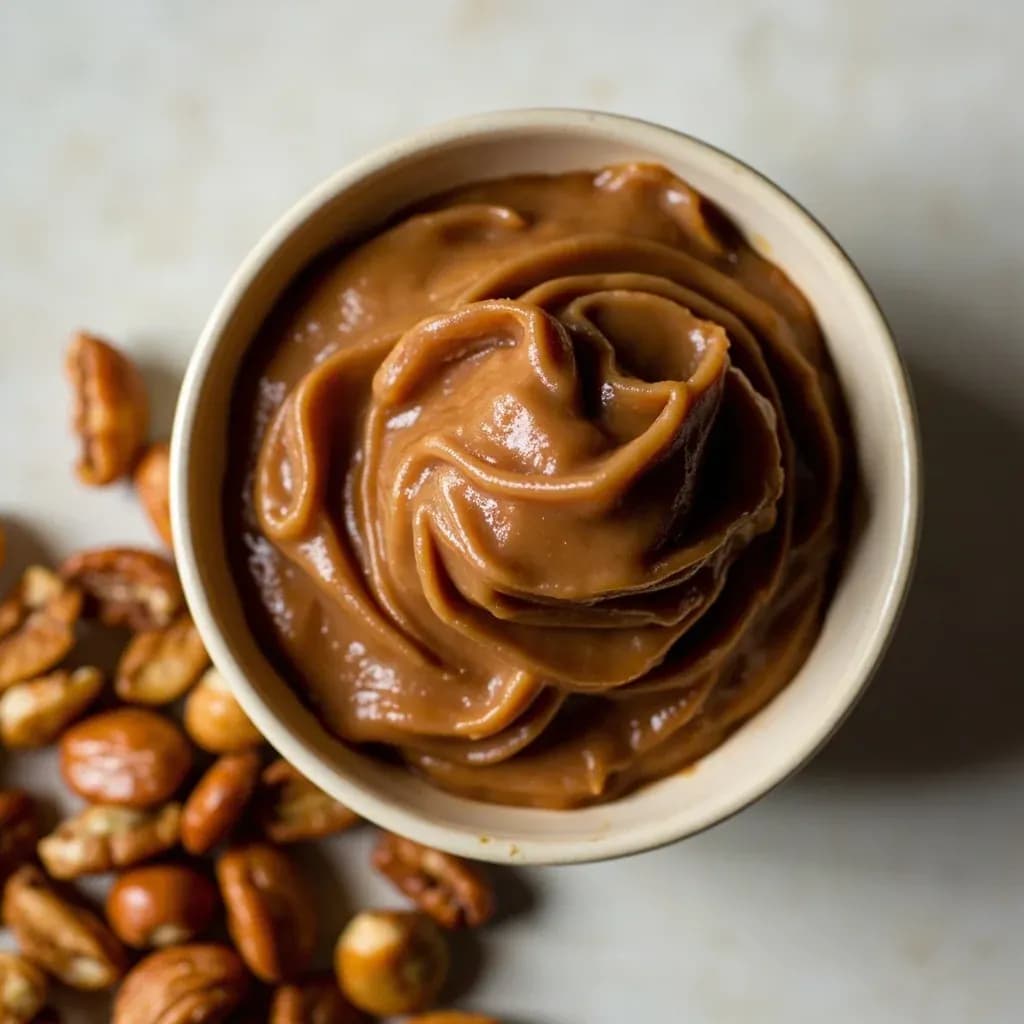
Praline paste making caramelizes hazelnuts or almonds in cooked sugar to form a brittle, which is then ground until the nut oils release and it turns into a glossy, deeply roasted paste. This paste is a foundational pastry ingredient, flavoring creams, mousses, and the iconic gianduja, and the depth of color set during caramelization dictates its final flavor. Grinding must continue past the powder stage until the mixture liquefies into a smooth paste.
Praline paste (pâte de pralin) is the smooth, oily spread that French pastry chefs stir into ganache, pipe into Paris-Brest, and fold into ice cream bases. It is made by cooking nuts in caramelized sugar, cooling the brittle into a glassy slab, then grinding it long enough for the nut's own oils to liberate and turn the sandy mass into a fluid, glossy paste. The transformation from brittle to butter is largely mechanical: patience and a machine strong enough to keep the friction going will do most of the work, though a teaspoon of neutral oil can rescue a paste that stalls before its oils release.
The technique matters because it concentrates two flavors at once — Maillard-roasted nuttiness and deep amber caramel — into a single ingredient that behaves like a nut butter with built-in sweetness. A finished paste should ribbon off a spatula, melt on the tongue, and disperse easily when whisked into cream or chocolate. Once you understand how the grind progresses (meal → clumpy paste → sudden fluidity), you can dial in texture and flavor for any application, from a soft filling to a firm bonbon center.
- Difficulty
- Hard
Types & varieties
100% almond; pale gold, mildly sweet, classic base for frangipane-adjacent fillings.
100% hazelnut; deep amber, intensely aromatic — the variety used in Paris-Brest.
French pastry-shop standard; balanced, broad-flavored, easiest to find commercially.
Pistachio-based, often blended with a little almond to round out the oil; greener and more delicate.
Toasted sesame seeds; tahini-like, used in modern Asian-influenced desserts.
American-leaning; buttery, less tannic than hazelnut, pairs well with brown butter.
Praline paste folded with thin crispy crepe flakes for textural crunch in bonbons and entremets.
How to do it
- 1
Toast the nuts
Spread the nuts on a sheet pan and toast at 150 °C / 300 °F for 10–15 minutes, until fragrant and lightly colored. Cool 2–3 minutes. For hazelnuts, rub in a clean towel to remove loose skins if you want a paler paste.
- 2
Prep your station
Line a sheet pan with a silicone mat or lightly oiled parchment. Measure the nuts into a bowl. Have a powerful food processor fitted and ready. Caramel waits for nothing, so set everything up before the sugar goes on the heat.
- 3
Melt the sugar dry
Put the sugar in a heavy-bottomed pan over medium heat. Do not stir; instead, swirl the pan as the edges melt. Break up any clumps with a whisk so the sugar melts evenly. Aim for a deep amber caramel, about 175–180 °C / 345–355 °F.
- 4
Add the nuts
Off the heat, add all the warm nuts at once and stir vigorously with a wooden spoon or silicone spatula until every nut is coated and the sugar begins to crystallize back into a sandy crust around them.
- 5
Return to heat briefly
Place the pan back on low heat for 30–60 seconds, stirring, just to re-melt the sugar into a glossy shell around the nuts. Do not linger or the caramel will scorch.
- 6
Pour and cool thin
Tip the mixture onto the prepared pan and spread quickly into a thin, even layer under 1 cm. A thick slab holds heat and will keep cooking, turning the paste acrid. Cool 5–10 minutes until hard and brittle.
- 7
Break into shards
Snap the cooled praline into rough 2–3 cm pieces. Pick out and discard any burnt fragments — they will make the entire batch bitter.
- 8
Grind to a powder
Working in small batches, pulse the shards in a powerful food processor (or melanger) until a fine, sandy powder forms. Scrape the sides regularly so nothing stalls against the bowl wall.
- 9
Keep grinding until oily
Continue processing. After 5–10 minutes the natural nut oils will begin to release; the paste will clump, then suddenly loosen into a thick, glossy mass. Keep going until it flows in a slow ribbon when the blade stops — typically 8–15 minutes past the powder stage.
- 10
Adjust and store
If the paste stays stiff after extended grinding, add 1 teaspoon of neutral oil (grapeseed or sunflower) at a time. Cool completely, then pack into an airtight jar. Refrigerate up to 6 weeks or freeze 3–6 months. Bring to room temperature before using so it emulsifies smoothly into ganaches.
Why toasting comes first
The single biggest flavor upgrade in homemade praline paste is toasting the nuts before they meet the sugar. Roasting at 150 °C / 300 °F for 10–15 minutes drives off residual moisture and pushes the Maillard reaction forward, generating the roasted, almost cocoa-like depth that defines good pralin. Raw-nut praline tastes sweet and one-dimensional by comparison. Hazelnuts benefit from an extra step: while still hot, rub them in a clean kitchen towel to slough off the papery skins, which contribute bitterness and a dull, grey cast to the finished paste.
- Toast at 150 °C / 300 °F, 10–15 min, until fragrant and one shade darker.
- Cool nuts slightly before adding to caramel so they don't seize the sugar.
- Rub hazelnuts in a towel while warm to remove loose skins for a paler, cleaner paste.
Reading the grind
Grinding praline is less about equipment and more about reading the stages. The first few minutes produce a sandy meal; the next several minutes see the mixture clump into a stiff dough as sugars start to soften and nut cell walls break down; somewhere around the 8–15 minute mark, the natural oils finally flood out and the mass suddenly loosens into a thick, glossy liquid that clings to and slowly slides off the blade. Stopping before this release leaves a gritty paste that no amount of added oil will rescue — extra fat dilutes flavor. Patience in the processor is the whole technique.
Common uses
Tips & pitfalls
- Use a heavy-bottomed pan and dry sugar (no water); a wet caramel seizes unevenly on the nuts and produces a streaky brittle.
- Stop the caramel at deep amber, around 175–180 °C; paler caramel tastes sweet and bland, darker turns bitter.
- Spread the caramelized nuts thinly on the mat — thick slabs hold residual heat and overcook from the inside out.
- Work in small batches when grinding so the motor doesn't overheat; let the machine rest a minute between loads.
- Resist adding oil early. The difference between gritty and silky paste is grinding time, not added fat — extra oil dilutes flavor.
- Cool the paste fully before sealing the jar, or condensation will form and invite mold.
- Common mistake: walking away from dry caramel. It can jump from pale to burnt in under 30 seconds once it colors.
- Common mistake: skipping the toast. Raw-nut praline tastes flat no matter how long you grind it.
Good to know
- Origin
- French confectionery; the name comes from Marshal du Plessis-Praslin (c. 17th century), whose cook glazed almonds in sugar.
- Classic ratio
- 1:1 sugar to nuts by weight; 50/50 almond-hazelnut is the pastry-shop baseline.
- Nut options
- Almonds, hazelnuts, pistachios, pecans, walnuts, sesame; often blended for balance.
- Yield
- Roughly the weight of the nuts used — sugar contributes negligible volume once ground in.
- Active time
- About 20–30 minutes for the caramel, plus 10–20 minutes of grinding.
- Caramel method
- Dry caramel (no water) is preferred so the sugar coats the nuts in an even crust.
- Equipment
- A powerful food processor, robot-coupe, or stone melanger; small processors stall and overheat.
- Storage
- Airtight jar, refrigerated up to 6 weeks or frozen 3–6 months.
Also called
Praline Making · Nut Praline Paste
Related

Confit
Cook slowly submerged in fat for silky tenderness and keeping

Cure
Draw out moisture with salt and time to preserve and concentrate

Pickle
Steep in acidic brine for bright, tangy, crunchy preservation

Ferment
Let friendly microbes transform food into tangy, complex flavor

Marinate
Soak in a seasoned mix to flavor and tenderize before cooking

Brine
Soak in salt water so meat stays juicy and seasoned throughout

Dehydrate
Slowly dry out moisture to concentrate flavor and extend shelf life

Cold-Smoke
Perfume cured food with smoke without cooking it through