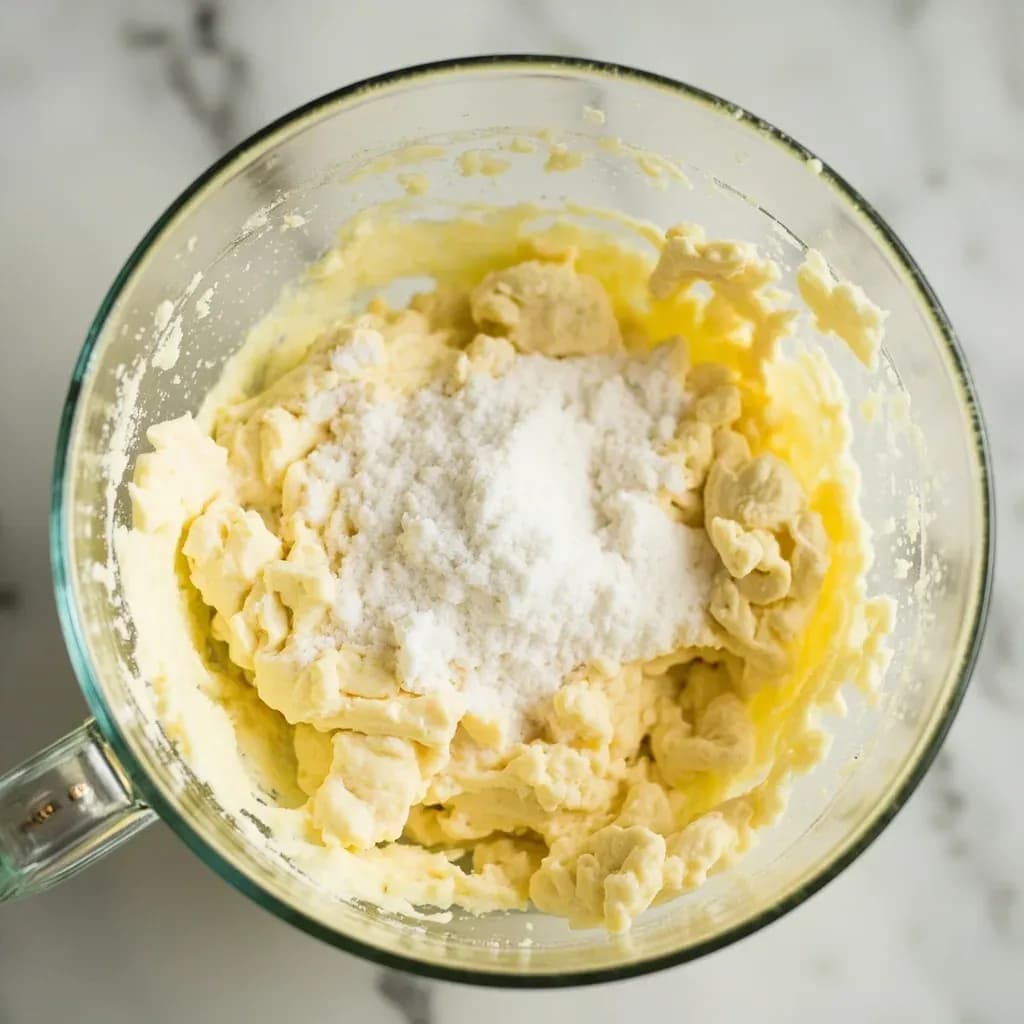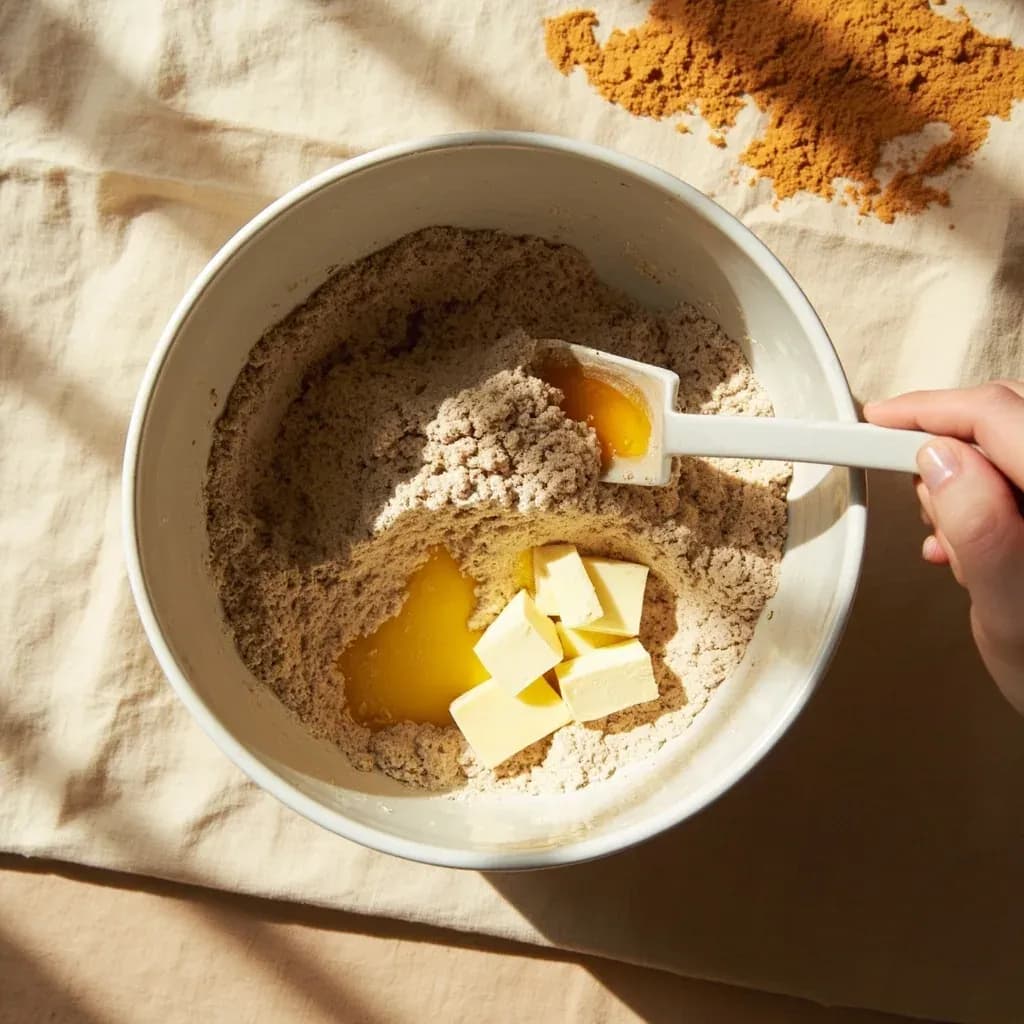
Prep & Assembly
Reverse Creaming Method
Coating flour with butter before adding liquids to limit gluten, yielding a fine, tender, velvety cake crumb with a flat, even top.
The reverse creaming method flips the conventional order of cake mixing: instead of creaming butter and sugar first, the butter is beaten into the dry ingredients — flour, sugar, leaveners, and salt — before any liquid enters the bowl. This coats each flour protein with a thin film of fat, physically blocking water from reaching the proteins and preventing them from linking into long, elastic gluten strands. The result is a cake with a finer, more tender, and more velvety crumb than the traditional creaming method reliably produces, plus a flat, level top that needs little or no trimming before frosting.
Why it works comes down to gluten chemistry. Flour proteins (glutenin and gliadin) form elastic networks only when hydrated and agitated. By surrounding them with fat first, the method short-circuits that process from the start. The technique was introduced to home bakers by Rose Levy Beranbaum in The Cake Bible (1988) and has since become a default in serious baking books — particularly for butter cakes, white cakes, and any formula where a plush, even crumb matters more than a tall, airy rise.
A few behaviors define the method in practice. The batter contains relatively little incorporated air, so the cake rises almost entirely from chemical leaveners and oven spring. It is more forgiving of overmixing than the creaming method (though you should still stop promptly once the batter is smooth) and yields cakes that hold moisture unusually well. The trade-off is a denser, less lofty cake than a well-creamed butter cake — which is exactly the point for tender birthday, wedding, and layer cakes.
- Difficulty
- Moderate
Types & varieties
Dry ingredients and butter beaten first, then eggs and liquids added in stages — the home-baking version from The Cake Bible.
Commercial bakery cousin used in high-ratio cakes (more sugar than flour by weight); same principle of fat-into-drys first.
All wet ingredients (eggs, milk, flavorings) added at once rather than in stages; a common shortcut in modern recipes.
BakeWise author advocates a short initial blend of butter into drys, then hot milk, to maximize tenderness and leavening lift.
How to do it
- 1
Combine and sift the dry ingredients
Whisk together the flour, sugar, baking powder, baking soda (if using), and salt in a large mixing bowl. Sifting aerates the mixture and distributes the leaveners evenly; a few quick pulses in a food processor achieve the same effect.
- 2
Add the butter and blend
Cut cool, pliable butter (60–65°F) into tablespoon-sized pieces and add to the dry mixture. Beat on low to medium speed for 2–3 minutes, scraping the bowl once, until the mixture resembles coarse damp sand and no visible streaks of flour remain.
- 3
Add eggs and any liquid flavorings
Add eggs one at a time, mixing on medium just until each is incorporated before adding the next. Beat in vanilla extract or other liquid flavorings at this stage. The whole step should take only about 30 seconds.
- 4
Add the combined liquids
Pour in the milk, buttermilk, or water (often combined with the eggs in the single-stage version) in two or three additions, scraping between each. Mix on low speed only until the batter is smooth and homogeneous — usually under 1 minute total.
- 5
Bake immediately
Transfer the batter to prepared pans and place them in a fully preheated oven right away. Reverse-creamed batters begin losing leavening power if they sit, and they have less trapped air than creamed cakes, so prompt baking matters.
Reverse creaming vs. other cake methods
The method is defined by what happens to the flour before it ever meets liquid. Comparing it to the other main cake-mixing approaches makes its logic clearer.
- Traditional creaming method: butter and sugar are whipped first to trap air, then eggs and alternating drys and liquids are added. Produces a lighter, more open crumb and a domed top, but is sensitive to butter temperature and easy to overmix.
- Reverse creaming: butter coats flour before hydration, inhibiting gluten. Produces a finer, denser, more tender crumb and a flat top. Leavens primarily from chemical agents rather than trapped air.
- Muffin method: wet and dry are mixed with minimal agitation — gentler still, used for quick breads and muffins where tenderness and a coarse, moist crumb are desired.
- Foam methods (sponge, angel food, chiffon): rely entirely on whipped-egg foam for structure, with little or no fat. Reverse creaming is not a substitute for these.
Ingredient notes
A few ingredient choices amplify what the method is designed to do.
- Cake flour (7–9% protein) is the natural partner — less gluten to begin with means the fat-coating has even less work to do.
- Cool, pliable butter is non-negotiable. Soft or melted butter slides off the flour particles and leaves the batter greasy and dense; rock-hard butter won't distribute evenly.
- High-ratio formulas (sugar weighing more than flour) are where the method shines most — they tend to collapse under traditional creaming but hold beautifully here.
- Because so little air is incorporated, the recipe's leavening must be fresh and accurately measured. Test baking powder if it has been open more than a few months.
Common uses
Tips & pitfalls
- Keep the butter cool — about 60–65°F. Butter that is too soft or partially melted produces a greasy, dense batter; butter that is too cold will not coat the flour evenly.
- Mix the dry stage long enough (2–3 minutes) for the butter to fully coat every flour particle. Under-mixing here leaves streaks of dry flour and an uneven texture.
- Measure flour by weight (roughly 120 g per cup) — over-measuring flour is the single most common reason for dry, tough reverse-creamed cakes.
- Stop mixing as soon as the batter is smooth after liquids go in. Further beating develops gluten and undoes the very tenderness the method is designed to deliver.
- Use cake flour when a recipe calls for it. Its lower protein (7–9%) maximizes the velvety crumb this method is built for; all-purpose flour gives a slightly heavier result.
- Have the oven fully preheated before the batter is mixed. Reverse-creamed batters rely on oven spring from chemical leaveners, not trapped air, so a hot oven is essential.
- Avoid opening the oven door in the first two-thirds of baking. The gentle, level rise has less structural air cushion than a creamed cake and can sink if jostled.
- This method is not suitable for angel food, sponge, or chiffon cakes, which depend on whipped-egg foam for structure. Use a foam method there.
Good to know
- Also known as
- Paste method; two-stage method (in commercial baking)
- Developed / popularized by
- Rose Levy Beranbaum, introduced in The Cake Bible (1988)
- Core principle
- Fat is blended into the dry ingredients before any liquid is added, coating flour proteins to inhibit gluten formation
- Butter temperature
- 60–65°F (15–18°C) — cool and pliable, not softened to room temperature
- Mixing time for the dry stage
- 2–3 minutes on low-medium speed, until the mixture looks like coarse damp sand
- Effect on crumb
- Finer, more tender, and velvety than standard creaming; often described as 'sandlike' or 'cottony'
- Effect on top
- Flat, even, level crown with little to no doming — ideal for stacking and frosting
- Best flour choice
- Cake flour (7–9% protein) for finest crumb; all-purpose works but yields a slightly denser result
- Leavening reliance
- Depends more on baking powder/soda than on incorporated air, since little air is beaten in at the start
- Difficulty
- Beginner-friendly and forgiving — much less prone to overmixing than the creaming method
Also called
reverse cream · paste method · flour-batter method