Transform & Preserve
Rind Washing
Bathing aging cheese in brine or alcohol to grow a pungent, flavorful rind.
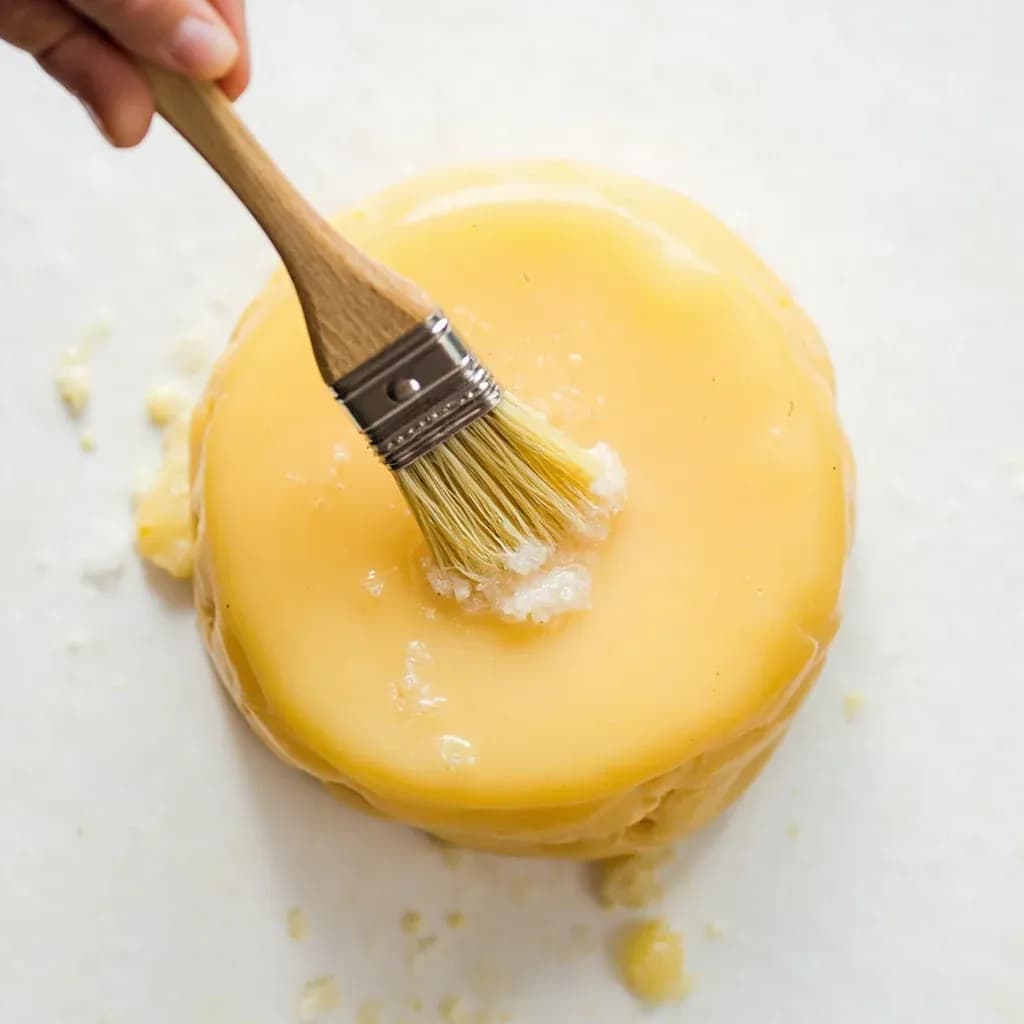
Rind washing regularly wipes or dips a cheese in brine, wine, beer, or spirits during aging, encouraging beneficial bacteria (notably Brevibacterium linens) that create the sticky orange rind and bold aroma of washed-rind cheeses. The moisture and salt steer which microbes thrive on the surface. Consistent washing builds the signature funk and complexity.
Rind washing is the affinage practice of periodically wiping or brushing an aging cheese wheel with a salted liquid—most often a brine of 8–12% salt, sometimes spiked with wine, beer, cider, marc, or kirsch—to cultivate a specific community of surface-ripening bacteria. The most important of these is Brevibacterium linens, a coryneform bacterium that thrives in salty, humid conditions and, once established, digests proteins and short-chain fatty acids on the cheese's surface. The result is a rind that turns from pale to salmon-orange to brick-red, develops a sticky, tacky texture, and emits the savory, ammoniacal, almost meaty aroma that defines the washed-rind family.
- Difficulty
- Hard
Types & varieties
Washed with marc de Bourgogne; protected AOP, one of the most pungent examples in existence
Washed with brine, sometimes spiked with kirsch; Alsatian and Lorraine specialty
Brine-washed square cheese from northern France; intensely ammoniated when ripe
Norman cheese washed in brine; banded with rush strips to hold its soft paste
Norman washed-rind square; brine wash produces a more moderate pungency
Belgian/German classic; famously pungent with a dense B. linens culture
Italian washed-rind, scrubbed with seawater or brine weekly
Washed with brine during its brief affinage under spruce bark
Belgian abbey cheeses traditionally washed with the monastery's own beer
How to do it
- 1
Make and form the cheese
Drain, mold, and press the curds into the desired wheel or block shape using a washed-rind recipe (typically semi-soft to semi-firm). Press long enough that the surface is closed and the pH has dropped below roughly 5.2 so the rind has structure to build on.
- 2
Initial salting
Dry-salt the surface or float the wheel in saturated brine for the time dictated by the recipe. Salting draws out moisture, sets the rind, and creates the saline environment that B. linens needs to outcompete spoilage organisms.
- 3
Air-dry the rind
Transfer the salted wheel to a cool, humid aging space (about 55°F / 13°C, 90–95% RH) and let the surface dry until a thin, leathery skin forms—usually 5 to 14 days. Resist the urge to wash during this phase; a fresh, wet surface invites mold, not the bacteria you want.
- 4
Prepare the wash solution
Make a brine of 8–12% salt, then add the regional flavoring: beer, red wine, marc, kirsch, cider, or a mix. A typical home ratio is roughly 1 part flavorful liquid to 1–2 parts brine. Always bring the wash to cellar temperature before using it—cold liquid shocks the rind and slows colonization.
- 5
First wash
Using a soft natural-bristle brush or a clean cloth, gently wipe every surface of the wheel with the wash solution. Apply a thin, even film—never soak the cheese. The aim is to feed the rind, not flood the paste.
- 6
Repeat on a schedule
Wash every 2 to 7 days, turning the wheel and re-racking it on its mat or board so no face stays wet. Early washes may show white Geotrichum; within two to three cycles, B. linens should take over, turning the rind pink, then orange-red, then tacky.
- 7
Maintain cave conditions
Hold 50–60°F (10–16°C) and 90–95% relative humidity with gentle, intermittent airflow. Strong drafts dry the rind; still air traps ammonia too aggressively and risks black, anaerobic spots. Re-cover washed wheels loosely—sealed plastic suffocates the rind by trapping CO₂.
- 8
Age to target pungency
Continue washing and turning for 4 weeks to 3 months. Sample a wedge when the rind is uniformly orange-red, the paste near the rind is glossy and softened, and the aroma is savory and distinctly ammoniated—then move the wheel to a cooler holding temperature to slow further ripening.
The science behind the smell
Rind washing is fundamentally a bacterial culturing technique, not a flavoring trick. The wash's job is to feed Brevibacterium linens and related coryneforms; the orange color, sticky texture, and pungent aroma are all metabolic by-products of those microbes breaking down proteins and short-chain fatty acids on the surface. A plain salt brine therefore produces results nearly identical to an expensive marc wash once the culture is well established, because B. linens is doing the work either way. The regional liquid does contribute subtle esters and aromatics, but its deeper function is to raise moisture and pH at the surface, retarding molds that would otherwise dominate and creating ideal conditions for the bacteria to take over.
- B. linens prefers salty, alkaline, humid surfaces—hence the need for a high-humidity cave and an 8–12% brine.
- The orange-red pigment is bacterial, not added: a wheel washed only with white wine will still turn orange-red once the culture takes hold.
- Early on, white Geotrichum candidum is normal; the wash suppresses it as B. linens colonizes over two to three cycles.
- Ammonia is a byproduct of amino acid breakdown and intensifies with age, rind thickness, and restricted airflow.
Common uses
Tips & pitfalls
- Wait until the rind has dried and 'set' before the first wash; washing a fresh, wet surface invites mold, not B. linens.
- Keep the wash solution at cellar temperature; cold liquid shocks the rind and stalls bacterial colonization.
- Aim for a thin, even film of moisture—dripping-wet washes can slough off the developing rind and pool against the mat.
- Use a dedicated soft brush per cheese family; cross-contamination between pungent wheels is hard to reverse.
- Expect ammonia, and resist over-ventilating the cave in an attempt to control the smell—B. linens thrives in still, humid air.
- If the rind stays white and fuzzy, the wash is too weak or the cave is too cool and dry; increase salt or humidity.
- If the rind turns black or smells putrid, ventilation is too low or humidity is excessive—open the airflow and inspect daily.
- Salt concentration matters: too little allows spoilage organisms; too much stalls the bacteria and toughens the rind.
Good to know
- Purpose
- To cultivate surface-ripening bacteria (notably Brevibacterium linens) that produce pungent aromas and the characteristic orange-red, sticky rind
- Washing liquids
- Salt brine (8–12%) is the base; commonly fortified with beer, wine, cider, marc, eau-de-vie, kirsch, or grape must
- Aging environment
- Typically 50–60°F (10–16°C) with 90–95% relative humidity
- Wash frequency
- Every 2–7 days, starting once the rind has set (roughly 5–14 days into affinage)
- Rind color
- Orange to brick-red, produced by bacterial pigments (not the wash liquid itself)
- Aroma
- Ammoniacal, savory, meaty, sometimes barnyard or sulfurous
- Origin
- Associated with Trappist and Benedictine monasteries in eastern France and Alsace, with Munster-style cheeses among the oldest documented examples
- Affinage time
- Typically 4 weeks to 3 months from first wash to finished cheese
Also called
Washing Rind
Related

Confit
Cook slowly submerged in fat for silky tenderness and keeping

Cure
Draw out moisture with salt and time to preserve and concentrate

Pickle
Steep in acidic brine for bright, tangy, crunchy preservation

Ferment
Let friendly microbes transform food into tangy, complex flavor

Marinate
Soak in a seasoned mix to flavor and tenderize before cooking

Brine
Soak in salt water so meat stays juicy and seasoned throughout

Dehydrate
Slowly dry out moisture to concentrate flavor and extend shelf life

Cold-Smoke
Perfume cured food with smoke without cooking it through