Transform & Preserve
Affinage (Aging/Maturing)
Aging cheese in controlled conditions, washing or turning it, to develop rind, flavor, and texture.
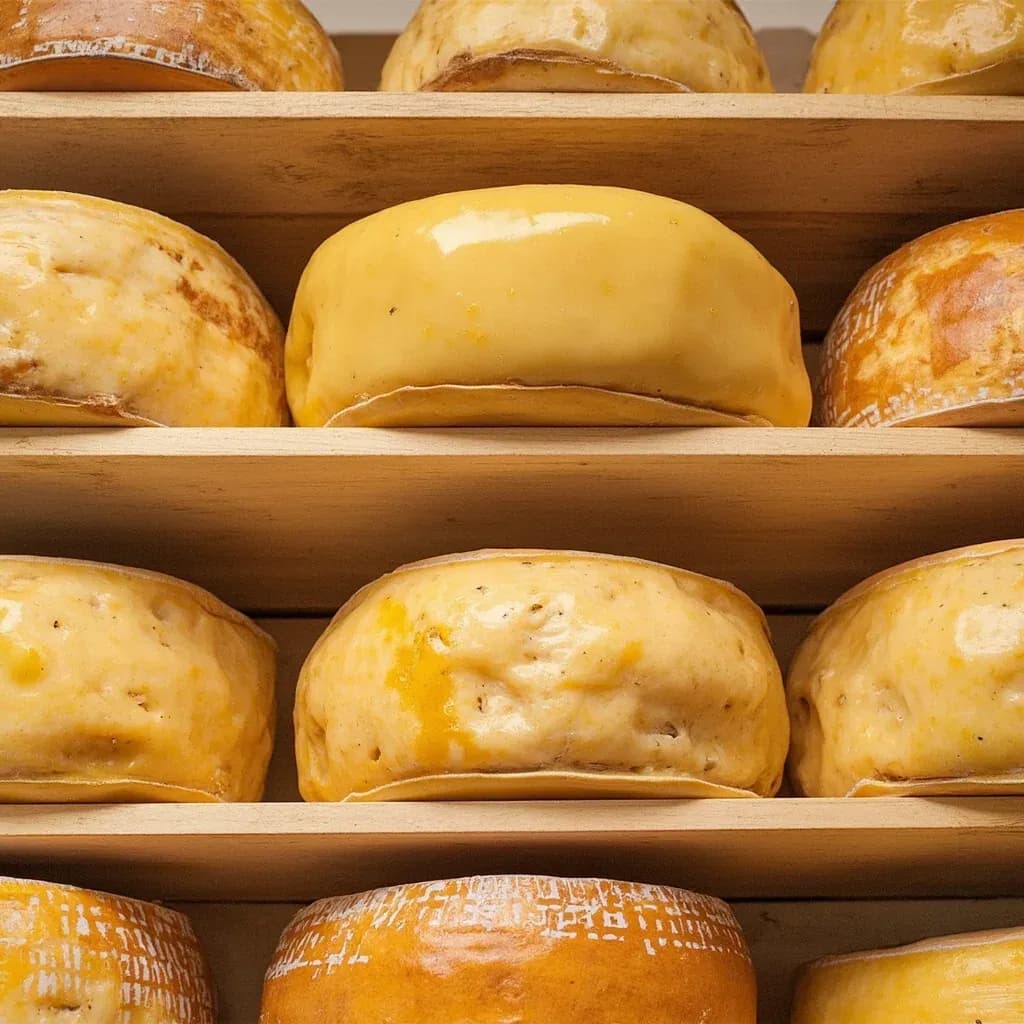
Affinage is the careful aging of cheese in a cellar or cave at controlled temperature and humidity to bring it to peak ripeness. The affineur turns, brushes, washes, or rubs the wheels to manage the rind, encourage desirable molds, and steer flavor development. Time and microclimate transform a young curd into a complex, mature cheese.
Affinage is the controlled, often lengthy period between a cheese leaving the press or mold and reaching the cheese counter — the moment when curds become wheels and wheels become finished food. In practice it is a small act of husbandry repeated over weeks or years: a stable, cool, humid cave, regular turning, and style-specific care (washing, brushing, or piercing) that lets bacteria and molds do their slow work on the rind while enzymes inside the paste break proteins and fats into the savory, nutty, brothy, or pungent notes we associate with ripened cheese.
The transformation is driven by three overlapping processes. Moisture leaves the wheel, concentrating flavor. Proteolysis breaks casein into peptides and free amino acids (the source of brothy, umami depth). Lipolysis frees fatty acids that read as buttery, peppery, or goaty. Meanwhile, the rind's own microbiome — Penicillium candidum on bloomy cheeses, Brevibacterium linens on washed rinds, P. roqueforti along pierced channels in blue cheese — paints the outside and modulates the air the paste breathes. A fromager-affineur manages all of this; the title belongs to a few hundred specialists worldwide who buy young wheels and resell them at peak.
The same idea — slow, controlled ripening in a tuned environment — extends well beyond cheese to dry-aged beef, prosciutto and jamón, barrel-aged wines, and solera-style vinegars. For the home cook, the practical version is cave care in a converted refrigerator or wine cabinet, with humidity held by a pan of damp salt. The mechanics are identical at any scale: stable temperature, controlled humidity, regular turning, and handling that matches the style.
- Difficulty
- Hard
Types & varieties
Aged without washing; surface dries into a natural crust, turned daily or every other day. Examples: Tomme de Savoie, aged Comté, Cantal.
Rubbed with brine, beer, wine, marc, or eau-de-vie to feed Brevibacterium linens, producing an orange, sticky, pungent rind. Examples: Époisses, Munster, Taleggio, Limburger.
Coated with Penicillium candidum (sometimes with Geotrichum) that grows into a white, fluffy rind and ripens the paste from the outside in. Examples: Brie, Camembert, Chaources.
Pierced with needles so oxygen reaches Penicillium roqueforti or P. glaucum, which veins along the channels. Examples: Roquefort, Stilton, Gorgonzola, Cabrales.
Inoculated with a mixed smear culture (often including B. linens and yeasts) and washed periodically. Examples: Pont-l'Évêque, Reblochon, some alpine styles.
Low-moisture wheels brushed or rubbed on spruce boards for 18 months or more, often on alpine dairies. Examples: Comté 24-month, Gruyère Réserve, Parmigiano-Reggiano, Mimolette.
How to do it
- 1
Select and receive young wheels
Source fresh wheels of the intended make — bloomy and washed styles are usually taken at 1–7 days old; hard alpine wheels at fresh-out-of-press (24–48 h). Inspect each wheel for even rind, correct weight, and no cracks; reject any acid-shocked or split wheel.
- 2
Prepare the cave environment
Confirm the space holds a stable 10–15 °C and 85–95% RH (cooler for blue, drier late for hard cheeses). Sanitize racks and walls with food-safe quaternary ammonium sanitizer or steam, and isolate incompatible styles — washed-rind cultures, especially, will colonize anything nearby.
- 3
Apply initial salting or brining
Dry-salt by rubbing the rind evenly for hard cheeses, or fully submerge washed and bloomy wheels in saturated brine at roughly 20–23 °Baumé for the time specified by the recipe. Weigh before and after to track salt uptake; most wheels absorb 1.5–3% of their weight in salt.
- 4
Drain, dry, and set the rind
Place wheels on draining boards in a slightly drier, well-ventilated zone (50–70% RH) for 12–72 hours until the surface is matte and dry to the touch. This step is non-negotiable — a tacky wheel placed directly into humid cave air invites slime and uneven mold.
- 5
Move to the ripening cave
Transfer to aging racks, ideally on spruce or larch boards (traditional for alpine styles, which absorb and slowly release moisture). Space wheels for airflow. Stand natural-rind wheels rind-down on the board; rest bloomy and washed wheels on edge or face.
- 6
Turn and inspect on schedule
Turn cheeses at intervals dictated by style: bloomy rinds every 1–2 days early, washed rinds 2–3 times per week, hard alpine cheeses 2–3 times weekly once the rind has set. At each turn, brush off unwanted surface slime and note any cracks, soft spots, or unusual odor.
- 7
Wash, brush, or pierce as required
For washed rinds, brush the surface with brine, beer, wine, or marc every few days to feed B. linens. For bloomy rinds, leave the surface alone once the white felt is established. For blue styles, pierce with stainless needles (typically 3–4 mm, in a regular grid) only after the paste has acidified and firmed — usually 2–6 weeks for cow's milk, longer for sheep.
- 8
Manage microclimate and pests
Adjust ventilation, humidity, and temperature to the cheese's stage: higher humidity early for bloomy styles, drier late for hard wheels. Watch for cheese mites (fine dust on the rind) and flies; isolate affected wheels immediately and treat the rack to prevent spread.
- 9
Track weight loss and refine
Weigh wheels weekly and record. Alpine hard cheeses typically lose 10–20% over a long affinage; soft cheeses 20–30%. Abnormal loss means air is too dry; weight stagnation means too damp. Adjust ventilation accordingly rather than chasing the thermometer alone.
- 10
Grade, taste, and select for release
At the planned age, sample: plug for hard wheels with a cheese trier, cut a small wedge for soft formats. Reserve wheels with the desired paste texture, aroma, and flavor for service; reroute over-aged or flawed wheels to cooked applications such as sauces, gratins, fondue, or gougères.
Home Cook Affinage: Cave Care in a Wine Fridge
A professional cave is a room; a home cave is usually a converted refrigerator or a small wine cabinet set to 10–13 °C. The principles are the same, just on a smaller scale. Buy wheels a little young — a bloomy Brie at 5–10 days old, a Tomme at 2–4 weeks, a small wheel of Comté at 6 months — and finish them yourself.
- Use a dedicated fridge with a digital thermostat; a standard fridge at 4 °C is too cold and too dry for most styles, though it works for blue cheese if humidity is raised.
- Hold humidity at 85–95% RH with a small humidifier, a pan of damp salt, or a wet sponge in a tray — refresh daily.
- Place a hygrometer inside the cave, not the room. Microclimates on a rack can read 10% RH lower than ambient.
- Stand bloomy wheels on edge on parchment so the underside does not sweat; rest natural-rind wheels rind-down on a wooden board.
- Expect bloomy cheeses to ripen fully in 5–14 days at home; natural-rind wheels to improve over 2–8 weeks; hard alpine styles to change meaningfully over months, not days.
Reading the Wheel
Affinage is judged by feel, smell, and weight. Three quick checks tell you whether a wheel is on track at any age.
- Rind: matte and even means healthy; glossy and weeping means too humid or under-salted; cracked means swings in humidity or under-ripe placement in the cave.
- Aroma: clean lactic notes and the style's signature (mushroom on bloomy, ammonia-tinged beef broth on washed, mineral on alpine) is healthy; fecal, butyric, or barnyard extremes usually point to a smear outbreak or contaminated air.
- Weight loss: alpine wheels should lose 2–4% in the first month and 10–20% over a long affinage; soft cheeses 20–30% total. Weight stagnation means too-damp air; weight crash means too-dry.
Common uses
Tips & pitfalls
- Stabilize the cave first: get temperature swings under ±1 °C and humidity under ±5% before introducing any cheese. Daily swings cause rind cracks and uneven aging more reliably than any other mistake.
- Separate strong washed-rind cheeses from mild bloomy and blue cheeses. They share air, and the smears will colonize neighbors within days.
- Wash with saturated brine at roughly 18–23 °Baumé and never pool liquid on the surface — use a brush, not a soak. Standing brine invites unwanted molds.
- Pierce blue cheeses only after the paste has acidified and firmed, typically 2–6 weeks for cow's milk and longer for sheep. Piercing too early causes weeping and collapse.
- Document every wheel: date in, rind condition, weight, and tasting dates. Affinage is judged in months, and memory is unreliable past the third wheel.
- Common mistake: aging too cold. Below 8 °C, most enzymatic activity stalls and the cheese simply dries out instead of maturing — the rind will look fine but the paste stays chalky.
Good to know
- French term
- Affinage — literally 'refinement' or 'finishing'; in English, aging, maturing, or ripening.
- Primary application
- Cheese: the controlled post-make period in which curds become finished wheels with developed rind, paste, and flavor.
- Also applied to
- Dry-aged beef, cured meats (prosciutto, jamón ibérico, culatello), barrel-aged wines, balsamic and sherry-style vinegars, and aged condiments like soy sauce.
- Specialist title
- Fromager-affineur (cheese refiner); a few hundred professionals worldwide age cheese as their sole craft.
- Typical cave temperature
- 10–15 °C (50–59 °F) for most styles; 4–7 °C (39–45 °F) for blue cheeses; 11–15 °C for hard alpine wheels.
- Typical relative humidity
- 85–95% for most cheeses; 90–95% for bloomy rinds; drier, 70–80%, for hard grating cheeses late in life.
- Duration
- From a few days (fresh bloomy) to several years; Comté, Parmigiano-Reggiano, and Mimolette commonly age 18–36+ months; some Mimolette exceeds 50 months.
- Typical equipment
- Cave or cellar, ripening racks, hygrometer, thermometer, spruce or larch boards, brine and brushes for washing, stainless larding needles for blue cheese.
Also called
Aging · Maturing · Cheese Aging · Ripening
Dishes that rely on it




Related

Confit
Cook slowly submerged in fat for silky tenderness and keeping

Cure
Draw out moisture with salt and time to preserve and concentrate

Pickle
Steep in acidic brine for bright, tangy, crunchy preservation

Ferment
Let friendly microbes transform food into tangy, complex flavor

Marinate
Soak in a seasoned mix to flavor and tenderize before cooking

Brine
Soak in salt water so meat stays juicy and seasoned throughout

Dehydrate
Slowly dry out moisture to concentrate flavor and extend shelf life

Cold-Smoke
Perfume cured food with smoke without cooking it through