Heat & Fire
Roasting Grated Coconut (Varutharacha)
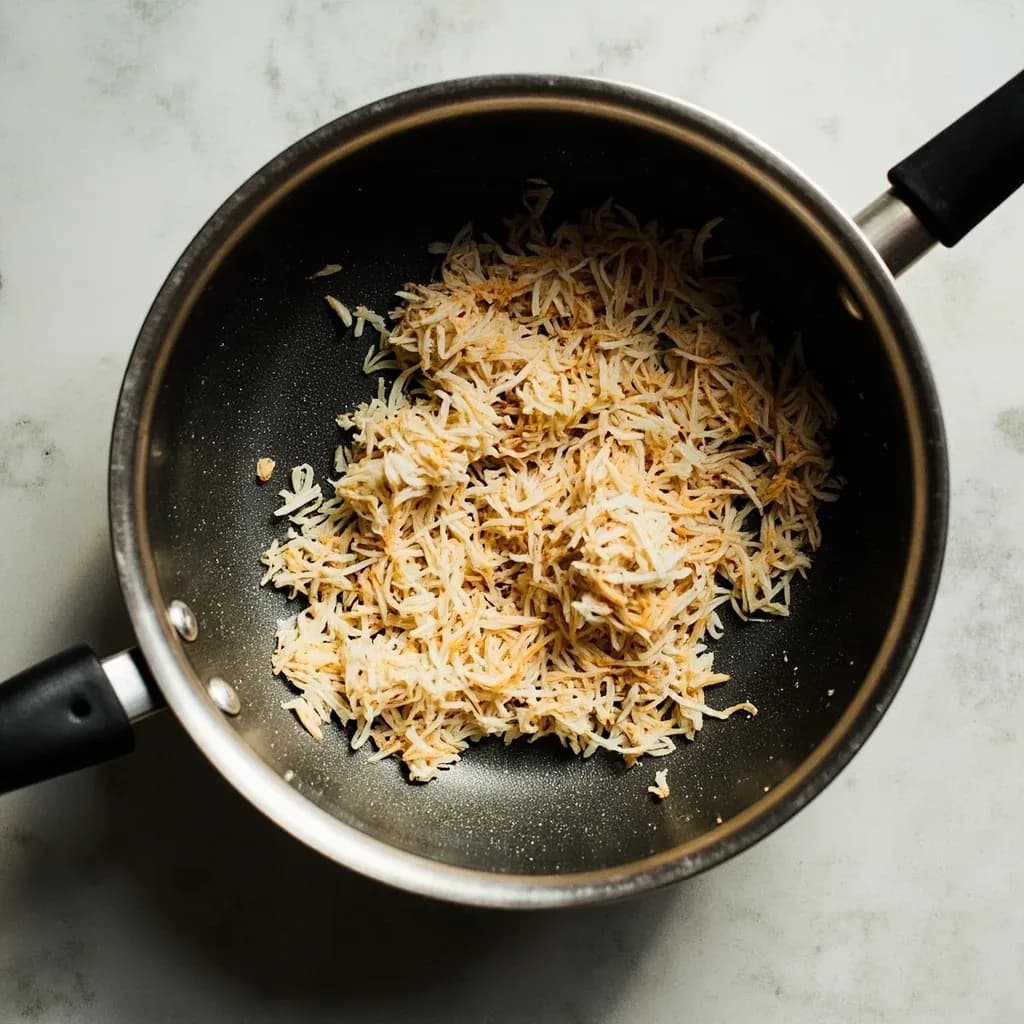
Dry-roasting grated coconut until deep brown, then grinding it into a dark aromatic curry base.
Varutharacha is the South Indian technique of slow dry-roasting grated coconut, often with spices, until it turns deep golden-brown and intensely nutty. The roasted coconut is then ground into a smooth, dark paste that forms the rich base of Kerala-style curries. The roasting is what gives these curries their characteristic deep brown color and toasty, almost smoky depth compared to fresh coconut gravies.
Varutharacha — literally "roasted and ground" in Malayalam — is the dry-roasting technique that gives the dark, smoky gravies of Kerala their depth. Freshly grated coconut is toasted in a heavy pan over medium-low heat until it passes well past golden into a deep mahogany brown, then ground with dry spices, shallots and garlic into a thick, fragrant paste. The color change is the whole point: as coconut's natural sugars and proteins break down, the shreds develop roasted-coffee and toasted-nut aromas, with a faint bitter edge that anchors the curry against the sweetness of coconut oil and the brightness of curry leaves.
This is the defining backbone of Syrian Christian (Nasrani) and Mappila cooking, and it shows up in everything from Kozhi Varutharacha (chicken) and Meen Varutharacha (fish) to the spicier beef and mutton versions of Christian household feasts. A pale, sweet coconut paste makes a curry taste like a thin dessert; cooks chase color and smell, not the clock. The same paste, used more sparingly, can be a finishing sprinkle for rice or a flavor boost in vada batter — the technique is one method, several ends.
- Difficulty
- Medium
Types & varieties
Roasted coconut ground with dried red chilies, coriander, black pepper, fenugreek, cumin, shallots and garlic — the classic base for Kerala chicken, fish and meat curries.
Made with chopped (not grated) coconut pieces, roasted very dark for a coarser, smokier masala used in rustic fish curries.
Roasted coconut tossed with vegetables (beans, cabbage, raw plantain) and turmeric for a dry side dish rather than a gravy.
Roasted coconut tempered with mustard seeds and curry leaves, sprinkled over rice and snacks as a finishing condiment.
How to do it
- 1
Prep the coconut and pan
Grate 1.5–2 cups of fresh mature coconut, or measure unsweetened desiccated. Heat a heavy cast-iron kadai or thick-bottomed skillet over medium-low heat with no oil. The pan should sizzle a stray shred of coconut within 2–3 seconds.
- 2
Begin the dry roast
Spread the grated coconut in a thin, even layer. Stir with a flat wooden spatula every 30–40 seconds for the first 5 minutes so it dries out without coloring.
- 3
Add the hardier spices
When the coconut turns pale gold, add 6–8 broken dried red chilies and 1.5 tsp coriander seeds. Keep stirring constantly so nothing rests against the hot pan.
- 4
Add the delicate spices
In the final 2 minutes of roasting, add 1 tsp black peppercorns, ½ tsp fenugreek seeds and 1 tsp cumin seeds. These scorch fast, so they go in late.
- 5
Roast to deep brown
Continue stirring. Over 8–12 minutes the coconut will move from golden to amber to chestnut. Stop at a uniform deep mahogany brown — the color of dark cocoa — when the kitchen smells of roasted coffee and toasted nuts. Pick out any black flecks; they will make the paste bitter.
- 6
Rest off the heat
Tip the coconut and spices onto a wide plate and spread in a thin layer. Cool fully, 5–10 minutes. Hot coconut turns gummy in the grinder.
- 7
Grind to a thick paste
Transfer to a mixie or stone ammikallu with 2–3 tbsp chopped shallots, 3–4 garlic cloves and cold water added 1 tbsp at a time. Pulse, then run continuously, scraping the sides, until you have a coarse, dark, very fragrant paste that holds its shape on a spoon.
- 8
Cook the masala into the dish
Sweat 1 sliced onion in coconut oil until translucent, add curry leaves and the paste, and fry 4–6 minutes until the paste darkens another shade and the oil begins to leave the sides of the pan. Then add your protein or vegetables and measured water to build the curry.
Why the deep brown matters
Most home cooks stop roasting coconut at golden, the color it reaches in a thoran or a quick tempering. Varutharacha goes further, and the difference is chemical. Past golden, the coconut's residual sugars begin to caramelize while Maillard reactions between proteins and sugars produce the roasted-coffee, dark-chocolate and toasted-nut aromas that define the dish. A touch of bitterness is welcome — it balances the sweetness of coconut oil and cuts through rich meat. Stop too early and the paste tastes of cake; push to black and it turns acrid and ashy. The window is narrow, which is why the technique rewards patient stirring and a nose trained on the smell rather than the clock.
- Golden coconut = sweet, dessert-like, thin flavor in a savory curry
- Mahogany coconut = smoky, nutty, faintly bitter; full-bodied gravy
- Black flecks = burnt sugars; pick them out or the whole paste turns acrid
The Keralite spice profile
Varutharacha spice mixes lean on dried red chilies, coriander and black pepper, with fenugreek and cumin in small, late-added amounts. There is little to no turmeric in the masala itself — color comes from the coconut, not from the spice box. This is what distinguishes the base from Tamil Nadu's kuzhambu pastes or a generic South Indian masala. The hardier seeds (coriander, broken dried chilies) can take the full roast alongside the coconut; fenugreek, pepper and cumin scorch quickly and should join the pan only in the last two or three minutes.
Common uses
Tips & pitfalls
- Use the lowest heat you can sustain; coconut sugars scorch long before the color deepens, and burnt black coconut makes the curry acrid.
- Stir almost continuously after the first 5 minutes — grated coconut clumps and toasts unevenly once it starts to color.
- Add hard spices (coriander, dried red chilies) to the pan midway through the coconut roast; add delicate spices (fenugreek, black pepper, cumin) only in the last 2–3 minutes so they don't burn.
- A drop of coconut oil stirred in at the very end of roasting deepens the aroma without changing the dry-roast character.
- Cool the roasted coconut fully before grinding — hot coconut turns gummy and pasty in a mixie and is hard on the motor.
- Grind with just enough cold water to move the blades; the paste should be thick enough to hold a shape on a spoon, or the curry will be thin and flat.
- Trust smell over the clock: properly roasted coconut smells of roasted coffee and toasted nuts with no acrid edge.
- If using desiccated coconut, rehydrate it with a tablespoon of warm water for 5 minutes before roasting to mimic fresh grated texture.
Good to know
- Technique
- Dry-roast of grated coconut (no oil) to deep brown, ground with dry spices into a curry base
- Cuisine
- Kerala, South India — Syrian Christian (Nasrani) and Mappila traditions
- Malayalam name
- Varutharacha (വറുത്തരച്ച), meaning "roasted and ground"
- Target color
- Uniform deep mahogany / dark cocoa brown — never golden or tan
- Roasting time
- 15–25 minutes for ~2 cups grated coconut over medium-low heat
- Equipment
- Heavy cast-iron or cast-iron-style kadai / cheena chatti; mixie or traditional stone ammikallu
- Best coconut
- Freshly grated mature (brown-shelled) coconut; unsweetened desiccated works in a pinch
- Yield
- Roughly 1 cup packed roasted coconut from 2 cups raw grated; ground paste thickens further in the gravy
- Paste shelf life
- 3–4 days refrigerated in an airtight container; freezes well for 1–2 months
Also called
varutharacha · roasted coconut paste
Related

Sear
Blast the surface hot for a deep-browned, savory crust

Sauté
Cook quickly in a little fat over lively heat, tossing as you go

Stir-Fry
Toss bite-sized pieces over roaring heat for fast, smoky cooking

Pan-Fry
Crisp food in a shallow layer of hot fat, turning once or twice

Deep-Fry
Submerge in hot oil for an all-over crackling crust

Roast
Cook uncovered in dry oven heat for browned edges and tender centers

Bake
Cook with steady, surrounding oven heat — the soul of bread and pastry

Broil
Hit food from directly above with fierce overhead heat