Heat & Fire
Frying Tomato/Pepper Paste (Salça Kavurma)
Turkish step of frying tomato or pepper paste in oil to caramelize it and build a deep base flavor.
Salça kavurma fries Turkish tomato or red-pepper paste (salça) in hot oil or butter, often with onions, until it darkens and loses its raw, acidic edge. This blooms the paste's sugars and concentrates flavor, forming the savory foundation of countless Turkish stews, pilafs and sautés. Stirring constantly prevents scorching as the paste deepens in color.
Salça kavurma is the Turkish move of frying concentrated tomato or pepper paste in fat until it stops tasting raw and starts tasting like the foundation of the dish. A spoonful of domates salçası or biber salçası stirred into a pot at the end of cooking is a seasoning; the same paste, given five to ten minutes in a hot pan with oil or clarified butter, becomes something else entirely — darker, sweeter, rounder, and unmistakably savory in the way that reminds you why Turkish home cooking tastes the way it does. It is not a recipe so much as a flavor-building step, the Anatolian answer to fond in a French pan, to blooming harissa in North Africa, or to browning tomato paste into a soffritto in Italy.
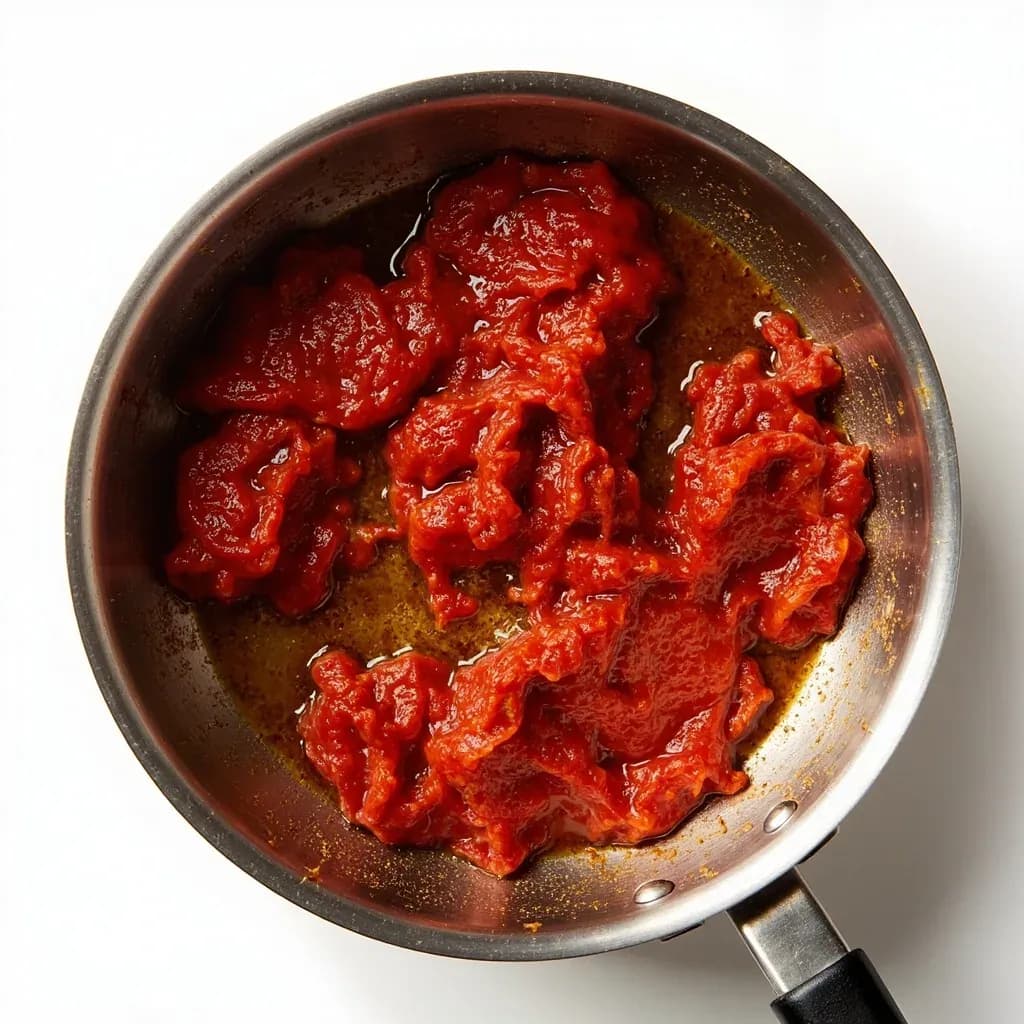
What actually happens in the pan is straightforward cooking chemistry made visible. The paste is mostly water by weight, and that water has to leave before the sugars can do anything interesting. As it evaporates over medium heat, the temperature of the paste climbs, and the concentrated sugars and amino acids begin to caramelize and undergo Maillard browning. The sharp, tinny acidity of raw paste softens into something almost cocoa-like; the color shifts from a bright tomato red to a deep brick or burgundy; and the oil, no longer emulsified into the paste, separates and beads at the edges. That oil-break is the cook's signal that the salça is ready to carry the rest of the dish.
- Difficulty
- Easy
Types & varieties
Frying tomato paste; the most common form, giving a deep sweet-savory backbone to soups, pilafs, and stews.
Frying sweet pepper paste; richer, faintly smoky, classic in southeastern dishes and in çılbır.
Frying hot pepper paste; adds heat along with depth, common in Adana and Şanlıurfa cooking.
A mix of tomato and pepper paste fried together; frequent in pilafs and stuffed-vegetable fillings.
Fried only in oil; the lighter everyday version used in most soups and vegetable dishes.
Fried in butter or clarified butter, sometimes with a touch of tail fat (kuyruk yağı); rounder, slightly nutty finish.
How to do it
- 1
Measure the fat and paste
Plan on roughly 2 tablespoons of oil, clarified butter, or a mix for every 1–2 tablespoons of salça. Clarified butter (sade yağ) gives the most traditional, nutty result; olive oil is common in western Turkish cooking; sunflower oil is neutral and lets the paste flavor lead.
- 2
Heat the fat
Warm the fat in a wide, heavy-bottomed skillet over medium heat until it shimmers and is just hot — not smoking. If using whole butter, let the milk solids foam and settle before going on; if they start to brown, the pan is too hot.
- 3
Add the salça
Spoon the paste into the pan and spread it into an even layer with a wooden spoon or spatula. It will hiss and sputter as it hits the fat — that is the water in the paste starting to leave.
- 4
Fry, stirring almost constantly
Drop the heat to medium-low and stir and fold the paste continuously, scraping the bottom so nothing catches. The paste will bubble, darken, and gradually release its water as steam. A wide pan is better than a deep one: you want moisture to escape, not pool.
- 5
Watch for the three cues
Cook for 5–10 minutes, until (1) the color deepens from bright red-orange to a brick or burgundy brown, (2) the sharp, acidic smell softens into something sweet, roasted, and almost cocoa-like, and (3) the oil visibly separates and beads at the edges of the paste. Trust the aroma more than the clock.
- 6
Adjust if the pan runs away
If the paste darkens faster than it cooks through, or starts to stick and smell acrid, splash in a teaspoon of water and stir vigorously. The water cools the surface, lifts the fond, and gives you another minute to bring the rest of the dish together.
- 7
Build the dish immediately
From here, sweat aromatics, add grains or legumes, pour in stock, or stir in yogurt — whatever the recipe calls for. Fried salça is at its peak right out of the pan and loses its edge if left to sit, so plan to use it within minutes.
The same move in other kitchens
Salça kavurma is one expression of a technique that shows up wherever cooks work with concentrated pastes. The principle — drive off the water, caramelize the sugars, and let the fat carry the flavor — is universal, even when the names and ingredients are not.
- In Italy, a tablespoon of double-concentrated tomato paste is fried in olive oil with soffritto until brick-red before any liquid touches the pan; the dish builds from there.
- In North Africa, harissa is bloomed in oil at the start of tagines and stews to mellow its raw heat and round out its flavor.
- In Korea, gochujang is bloomed briefly in oil at the start of stews like kimchi jjigae or fried into the base for tteokbokki so its sugars caramelize and its sweetness deepens.
- In Lebanon and Syria, tomato paste is browned in olive oil as the base for mujadara and many bean dishes.
- In Spain, ñora or dried-chili paste is fried in oil to extract color and sweetness before joining a sofrito or a fish stew.
Choosing the fat
The fat is not a neutral carrier here; it is half the flavor. Turkish cooks reach for different fats depending on the dish and the region.
- Clarified butter (sade yağ) is the most traditional choice for southeastern cooking and gives a faintly nutty, dairy-rich finish.
- Olive oil is common in western Turkey and Aegean dishes, where it complements tomato paste without competing with it.
- Sunflower or other neutral vegetable oils let the paste flavor lead and are the everyday choice in many home kitchens.
- A small amount of tail fat (kuyruk yağı) is sometimes melted into the butter for a richer, more assertive base, especially in shepherd-style stews.
- Whole butter works, but watch the milk solids — they brown fast and can pass from toasted to burnt before the paste is ready.
Common uses
Tips & pitfalls
- Keep the heat at medium or medium-low. A screaming-hot pan scorches the sugars in seconds and turns the paste bitter before the water has cooked out.
- Stir almost constantly with a wooden spoon; paste is thick and likes to catch on the bottom of the pan, and caught paste burns fast.
- Use a wide pan rather than a deep one so moisture escapes quickly and the paste fries instead of steaming in its own water.
- Trust the aroma over the timer: raw salça smells sharp, acidic, and slightly tinny; properly fried salça smells sweet, roasted, and almost chocolatey. Burnt salça smells acrid and one-dimensional — start over if you cross that line.
- When the oil separates and beads around the edges of the paste, it is ready — that visible break is the most reliable sign that the water is gone and the sugars have concentrated.
- Fry the salça on its own first; do not crowd the pan with onions, garlic, or spices at the start. Aromatics belong after the paste has broken, and dry spices go in for the last 30 seconds so they toast in the oil without burning.
- If the paste is unusually sharp or acidic, a small pinch of sugar helps it caramelize, though most good Turkish salça is already balanced.
- Use the fried salça right away. As a held 'fried paste' it dulls quickly; the point of the technique is to land it straight into the dish while the flavors are loud.
Good to know
- Turkish name
- Salça kavurma (also written salça kavurmak); literally 'roasting the paste'.
- Core pastes
- Domates salçası (tomato paste) and biber salçası (pepper paste, sweet or hot), used alone or together.
- Fats used
- Olive oil, sunflower oil, clarified butter (sade yağ), or butter; clarified butter is the most traditional.
- Typical ratio
- About 1–2 tablespoons of salça per 2 tablespoons of fat, adjusted to the dish.
- Time and heat
- 5–10 minutes over medium to medium-low heat; high heat scorches the sugars in seconds.
- Doneness cues
- Color deepens to brick/burgundy, aroma turns sweet and roasted (not sharp or burnt), and oil visibly separates and pools at the edges.
- Equipment
- Wide, heavy-bottomed skillet (tava) and a wooden spoon; no lid needed — you want steam to escape, not collect.
- Chemistry
- Maillard browning and caramelization of concentrated sugars as water evaporates and acidity mellows.
Also called
sauce-paste-frying · salça kavurma · frying salça
Related

Sear
Blast the surface hot for a deep-browned, savory crust

Sauté
Cook quickly in a little fat over lively heat, tossing as you go

Stir-Fry
Toss bite-sized pieces over roaring heat for fast, smoky cooking

Pan-Fry
Crisp food in a shallow layer of hot fat, turning once or twice

Deep-Fry
Submerge in hot oil for an all-over crackling crust

Roast
Cook uncovered in dry oven heat for browned edges and tender centers

Bake
Cook with steady, surrounding oven heat — the soul of bread and pastry

Broil
Hit food from directly above with fierce overhead heat