Water & Steam
Seafood Boiling
Boiling shellfish and aromatics together in a heavily seasoned pot for a communal seafood feast.
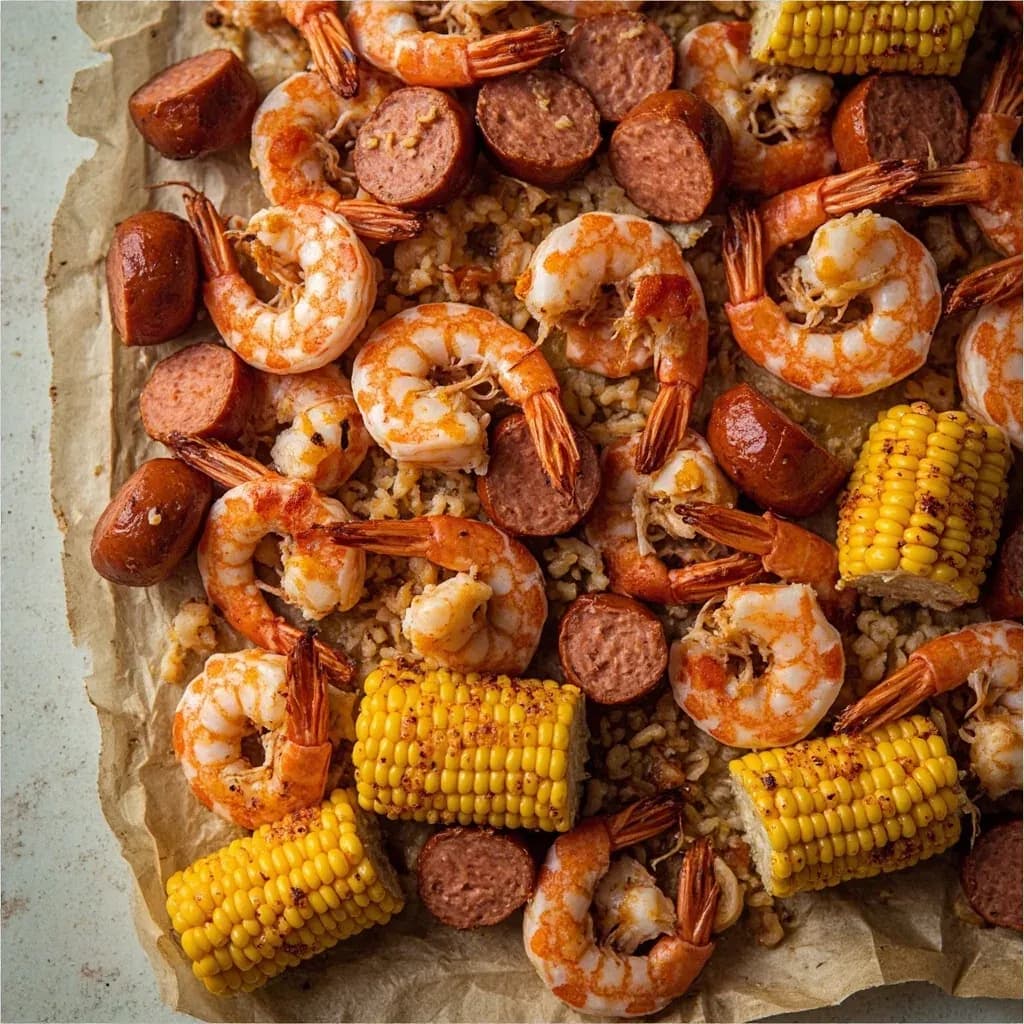
A seafood boil simmers shrimp, crab, crawfish, corn, potatoes, and sausage together in a big pot of heavily spiced water, often staged so denser ingredients go in first. The shellfish absorb the seasoning while their shells flavor the broth, and everything is drained and tipped out for a hands-on communal meal. Cajun and Low Country versions lean on cayenne, bay, and crab boil spice blends to build the punch.
Seafood boiling is less a single recipe than a regional family of one-pot techniques sharing the same logic: heavily seasoned boiling water, carefully layered cook times, and a communal dump-and-eat presentation with shellfish as the centerpiece. The food contacts the cooking liquid only briefly, so the liquid must be aggressively seasoned — roughly the salinity of sea water, with a spice blend that includes cayenne, paprika, mustard, allspice, bay, and garlic — because there is no time for gradual infusion. Sturdier ingredients (potatoes, smoked sausage) go in first; quick-cooking shellfish (shrimp, crawfish) go in last, so everything reaches the table hot and properly cooked within minutes of each other.
The format is as important as the food. The cooked pot is drained and tipped straight onto a butcher-paper-covered table, and the meal is eaten with hands from a shared pile. This is what separates a seafood boil from a seafood stew (such as a bouillabaisse, which is broth-forward and plated) and from pit-steamed traditions like the New England clam bake, which uses seaweed and rocks rather than a pot of seasoned water. Done well, a boil is the most efficient way to feed a crowd of 20 or more a deeply flavored, seasonal meal with very little active work.
Across regions, the core technique holds while the ingredients shift: crawfish in Louisiana, shrimp and smoked sausage in the South Carolina Lowcountry, blue crab and beer in Maryland. Modern Asian-influenced seafood-boil restaurants have adapted the format by finishing pre-cooked shellfish in buttery, spiced sauces at the table — a related but distinct offshoot worth knowing about even if it lives outside the traditional pot.
- Difficulty
- Easy
Types & varieties
South Carolina one-pot boil of shrimp, smoked sausage, red potatoes, corn, and onions, traditionally with Old Bay or a local crab-boil blend. The name is said to come either from the sea-island community of Frogmore on St. Helena Island or from the claim that the pot contained items 'from Frogmore.'
Louisiana boil built around live purged crawfish, corn, potatoes, mushrooms, and garlic, with a post-cook soak that lets the spice blend penetrate the shells.
Chesapeake-style boil of blue crab or crab clusters with Old Bay, beer, and often onion and potato; the beer-spiked, Old Bay–forward broth is the defining feature.
Head-on shrimp boiled with potatoes, corn, smoked sausage, lemon, and a heavy cayenne-forward Cajun seasoning blend, often Zatarain's.
Virginia/Hampton Roads variant featuring blue crab, shrimp, smoked sausage, corn, and potatoes in a spiced, often beer-enriched broth.
Italian coastal cousin: a tomato- or wine-based boil of mixed shellfish served with crusty bread; broth-forward rather than drained and dumped.
Modern commercial offshoot popular in the 2010s: pre-cooked shellfish and sausage finished at the table in buttery, heavily spiced sauces (chili crab, garlic butter, mala).
How to do it
- 1
Set up outdoors and fill the pot
Place a propane burner outdoors on a stable, non-combustible surface. Set a 16–30 qt stockpot (40–60+ qt for crawfish) fitted with a perforated basket insert on the burner and fill about two-thirds with cold water. Cook outdoors only — the liquid volume and BTU demand are real safety issues for an indoor stove.
- 2
Build the seasoned liquid
Bring the water to a rolling boil. Add crab-boil seasoning, whole bay leaves, halved lemons, smashed heads of garlic, and a generous pour of salt. The water should taste like sea water — bolder than you think it should. Add a stick of butter or a quart of beer now if using.
- 3
Cook the potatoes first
Add small whole red potatoes (or halved larger ones) and simmer 10–12 minutes, until a knife slides in with just a little resistance. They will finish softening as the sausage, corn, and shellfish cook in the same pot.
- 4
Add the smoked sausage
Add sliced andouille or other smoked sausage and simmer 5–7 minutes so it renders a little fat and picks up seasoning from the liquid.
- 5
Add corn and aromatics
Add halved ears of shucked corn, halved onions, and any whole small mushrooms; simmer 4–5 minutes.
- 6
Add the shellfish in order of cook time
Drop in crab clusters or whole blue crabs (5–7 min), then lobster halves (8–12 min), then head-on shrimp (2–3 min), then purged crawfish if using (3–5 min once the pot returns to a boil). Pull the basket the moment each batch is done; overcooking shrimp turns them from a loose C to a tight O and leaves them rubbery.
- 7
Optional soak (crawfish only)
For a crawfish-forward boil, turn off the heat as soon as the crawfish return to a boil and have cooked 3–5 minutes, re-cover, and soak 20–30 minutes in the seasoned liquid so the spice mix penetrates the shells before draining.
- 8
Drain and dump
Lift the basket, let it drain briefly over the pot, then tip everything out onto a table covered in butcher paper or several layers of newspaper. Spread it into a single layer so the food steams off, not in, its own heat.
- 9
Serve with the fixings
Set out small bowls of melted garlic butter, cocktail sauce, rémoulade, hot sauce, lemon wedges, and extra dry seasoning for sprinkling. Hand out wet wipes and a shell-disposal bowl. Eat with hands, communal-style.
The layering logic
The single most important idea behind any seafood boil is that every ingredient finishes in roughly the same window, even though their individual cook times vary wildly. The cook manages this by adding ingredients in sequence — longest-cooking first, shortest-cooking last — so that the whole basket can be lifted at once. This is why timing matters more than recipe precision, and why a perforated basket insert is practically mandatory.
- Potatoes (and whole onions, if large) go in first; they need 10–12 minutes to become tender.
- Smoked sausage goes in next; it renders a little fat and takes 5–7 minutes.
- Corn, small mushrooms, and aromatics go in third; 4–5 minutes is enough.
- Shellfish go in last in order of cook time: blue crab 5–7 min, lobster halves 8–12 min, head-on shrimp 2–3 min, purged crawfish 3–5 min once the pot returns to a rolling boil.
Choosing and buying shellfish
A boil is only as good as the seafood going in. Buy live shellfish the same day you cook, keep them cold and covered with damp towels, and never cook a crustacean that was dead on arrival — it will spoil quickly and unevenly. Clams and mussels should be alive and should close tightly when tapped; discard any that stay open. For crawfish, source from a purveyor that has purged them, or plan to purge them yourself in salted water before the boil.
- Crawfish peaks February through June.
- White shrimp peaks May through October.
- Blue crab peaks April through September.
- Head-on shrimp deliver noticeably more flavor than head-off, because the heads release flavor into the liquid.
Seasoning the pot
The pot is not a subtle cooking medium; it is a flavor delivery system. The liquid should taste too salty and too spicy to drink, because the food will only spend a few minutes in it. Commercial blends like Zatarain's, Louisiana Crawfish Boil, and Old Bay are reliable baselines, but a homemade mix of salt, cayenne, paprika, mustard seed, coriander, allspice, bay, garlic, and lemon is worth building if you boil often.
- Target the salinity of sea water — roughly 1 tablespoon of salt per quart as a starting point, adjusted for any salty sausage or seafood liquid.
- For richer flavor, replace a quart or two of the water with lager or pilsner.
- A stick of butter in the pot adds body and helps spices cling to the shells.
Common uses
Tips & pitfalls
- Layer by cook time — potatoes and sausage first, corn and aromatics next, shellfish last — so everything finishes within minutes of each other.
- Salt the water aggressively; it should taste like sea water because the food only contacts the liquid briefly.
- Purge live crawfish in cold salted water for 20–30 minutes, then rinse, before they hit the pot — this clears the digestive tract and grit.
- For crawfish only: after the water returns to a boil and the crawfish cook 3–5 minutes, kill the heat, cover, and soak 20–30 minutes so the seasoning penetrates the shells.
- Pull the basket the instant shrimp are pink and curled into a loose C; an O-shape means they are overcooked and rubbery — this is the most common mistake in a shrimp boil.
- Cook outdoors on a propane burner only; never on an indoor stove — the liquid volume and BTU demand are real safety issues.
- Buy live shellfish and cook them the same day; discard any that are dead on arrival or that do not close when tapped.
- Save a cup or two of the strained cooking liquid to steam rice or reheat leftovers the next day — it carries most of the pot's flavor.
Good to know
- Also called
- Lowcountry Boil, Frogmore Stew, Beaufort Stew, Tidewater Boil, Crab Boil, Crawfish Boil, Shrimp Boil
- Origin
- American South — Cajun Louisiana, the South Carolina Lowcountry, the Gulf Coast, and the Chesapeake region
- Cousin techniques
- New England clam bake (pit-steamed, not boiled), Italian zuppa di pesce, French bouillabaisse (stew rather than boil)
- Key equipment
- Large stockpot (16–30 qt for shrimp/crab, 40–60+ qt for crawfish), perforated basket insert, outdoor propane burner, long-handle paddle
- Seasoning philosophy
- Liquid should taste like sea water — bold enough to flavor food on brief contact
- Yield
- A 30-qt pot feeds 8–12; a 60-qt crawfish pot feeds 20–30
- Difficulty
- Easy to moderate; timing is the only real skill
- Serving style
- Drained and dumped directly onto butcher-paper-covered table; eaten with hands
Also called
seafood boil · crawfish boil · low country boil
Related

Boil
Cook in vigorously bubbling liquid at full rolling heat

Simmer
Hold liquid at a gentle shimmer for tender, unhurried cooking

Poach
Cook gently in barely-trembling liquid for silky, tender results

Steam
Cook in rising vapor to keep color, nutrients, and shape intact

Blanch
Plunge briefly in boiling water, then shock cold to lock color

Braise
Sear, then cook slow in a little liquid until fall-apart tender

Stew
Simmer bite-sized pieces fully submerged into a rich, unified pot

Sous-Vide
Seal and cook in precise warm water for edge-to-edge doneness