Prep & Assembly
Shaping Gnocchi
Rolling potato dough into ropes, cutting pillows, and ridging them for sauce to cling.
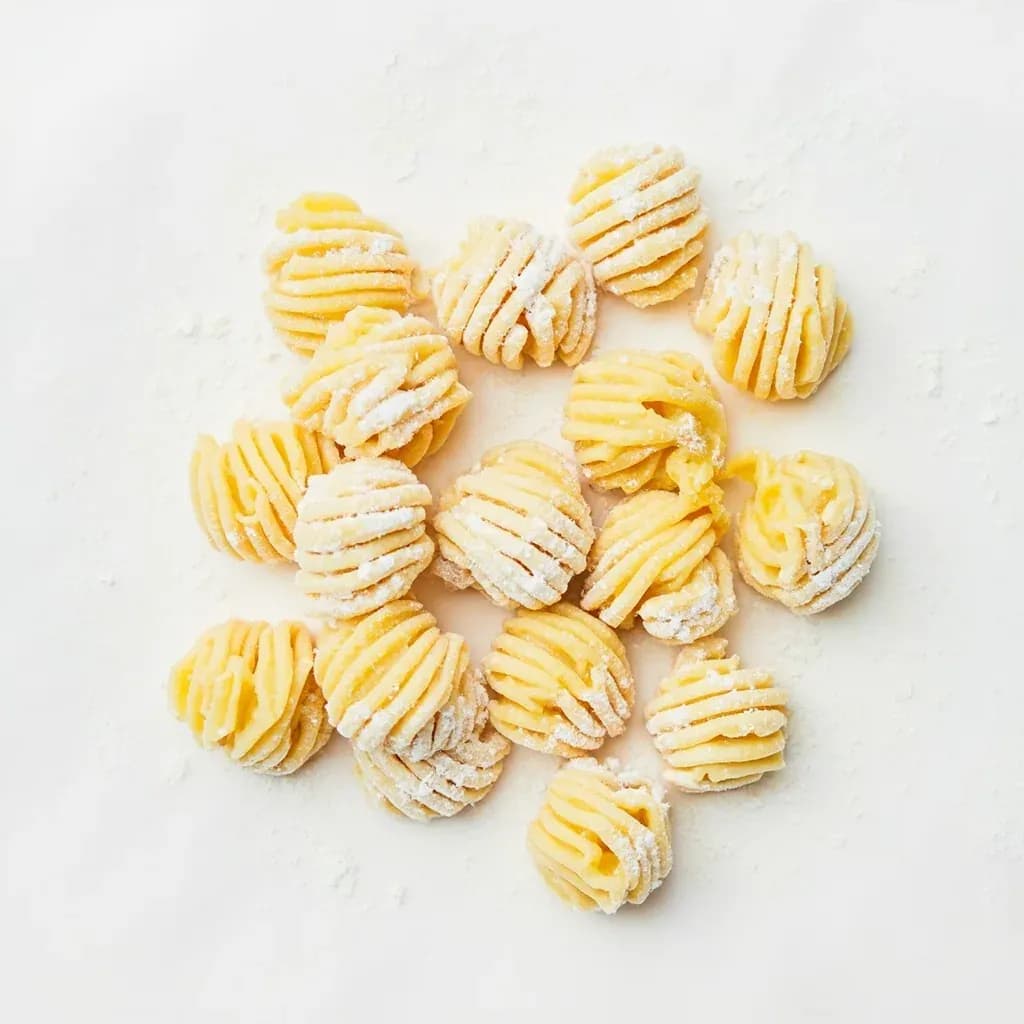
Shaping gnocchi means rolling soft potato-and-flour dough into long ropes, cutting them into bite-sized pillows, and pressing each over a fork or gnocchi board to create ridges and a thumb dimple. The grooves hold sauce while the dimple helps them cook evenly. A light touch is key: overworking the dough makes the dumplings dense and gummy rather than fluffy.
Shaping gnocchi is the final physical transformation of a soft potato dough into the small, ridged pillows that define the dish. The process has three distinct jobs: rolling the dough into a uniform rope, cutting it into bite-size pieces, and pressing each piece against a ridged surface so it carries grooves that will hold sauce. None of these steps are difficult, but each rewards a light hand — the dough for potato gnocchi is famously soft and slightly tacky, and cooks who try to make it feel like bread dough are almost always over-flouring or overworking.
The ridges are not decorative. They increase surface area for browning if you pan-fry, and they create channels and pockets that catch butter, oil, herbs, and grated cheese. A smooth dumpling will still taste good; a ridged one will taste like it was designed for its sauce. The same rope-cut-ridge method is used for most potato, pumpkin, and spinach gnocchi, and is adapted (by piping or pressing) for softer doughs like ricotta or chestnut.
Shaping is also the last chance to control the final texture. Flour added during shaping is the single biggest variable: too much and the gnocchi turn bouncy and bread-like, too little and they collapse in the water. A well-shaped rope is smooth, the cut edges are clean, and the finished pillow reads with clear ridges on one face and a shallow thumbprint on the other.
- Difficulty
- Medium
Types & varieties
The classic northern-Italian style: riced potato with a little flour, sometimes yolk, shaped on a board or fork
Semolina-based and enriched with butter and cheese; poured onto a tray, cooled, then cut into discs with a glass — no ropes, no ridges, no thumbprint
Pumpkin gnocchi; the orange dough is softer, often needs a touch more flour, shaped the same way as potato gnocchi
Spinach (or other green) folded into the potato dough; same rope-and-ridge shaping
Ricotta-based dough; lighter and more delicate, often piped and cut rather than rolled, with very shallow ridges
Bread-based; a softer dough that is usually spooned or piped rather than rolled into ropes
Chestnut-flour dough common in mountain regions; same rope-and-ridge method, with a sweeter, nuttier result
Sardinian semolina gnocchetti; small and hand-curled against a straw basket or ridged board to leave a concave, ridged shell
A broader family of small Sardinian gnocchi, often ridged on a ciuliri (a woven basket)
How to do it
- 1
Prepare the dough base
Bake or boil floury potatoes until just tender, peel while hot, and pass them through a potato ricer onto an unfloured board. Spread the mash out so steam escapes; cold potato absorbs more flour and yields heavier gnocchi. Season with salt and, if using, a yolk per kilogram of potato.
- 2
Bring the dough together with minimal flour
Sprinkle flour over the mash a small handful at a time and fold with a bench scraper, then gently knead. Stop the moment the mass holds together and feels soft, slightly tacky but not sticky — for 1 kg of potato this is usually 100–150 g of flour. Overworking or over-flouring is the most common reason gnocchi turn out tough or gummy; a food processor will do this in seconds and should be avoided.
- 3
Portion and roll into ropes
Cut the dough into 4–6 pieces with a bench scraper. With lightly floured hands, roll each piece on an unfloured surface into an even rope about 2 cm (¾ in) thick. Keep the rope uniform by starting from the middle and rolling outward, then rocking your hands to even it. If it sticks, flour your palms rather than the dough.
- 4
Cut the pillows
Slide a floured bench scraper or knife under the rope in 2–2.5 cm (1 in) segments. A quick flick-roll motion gives the cleanest cut. Toss the cut pieces gently in a tray of semolina or light flour as you go to prevent sticking, then shake off the excess before ridging.
- 5
Ridge each pillow
Hold a gnocchi board (or the back of a fork) at a slight angle on the board, ridges facing up. Set one pillow on the lower third, press with a thumb or two fingers to flatten slightly, and roll it down and away in a single smooth motion so the dough catches the grooves and curls slightly. The finished pillow should have ridges on one side, a shallow thumbprint, and a soft curl. Brush any flour out of the grooves of the board as you go.
- 6
Hold before cooking
Arrange shaped gnocchi in a single layer on a lightly floured tray or a clean tea towel. They can sit for up to an hour at room temperature. For longer storage, freeze on the tray until solid, then transfer to a bag; cook from frozen, adding about a minute to the floating time.
- 7
Cook in salted boiling water
Bring a wide pot of well-salted water (about 10 g per litre, roughly like sea water) to a rolling boil. Drop the gnocchi in batches so the pot doesn't go cold and the pieces don't collide. Stir once gently to keep them from sticking to the base. They will sink, then float in 1–3 minutes; let them cook 30–60 seconds more, until the pillows feel tender when nudged with a slotted spoon.
- 8
Finish and sauce
Lift the gnocchi out with a spider or slotted spoon directly into a pan of warm sauce, or onto a warm platter. Toss gently so the sauce fills the ridges. For pan-frying, let them dry on a tray for a few minutes first, then sauté in butter or olive oil over medium-high heat until the ridges are golden.
Ridging tools and what each one does
The tool you press against shapes the finished pillow as much as the dough does. A wooden gnocchi board (rigagnocchi) has deep, rounded grooves cut into its face and produces the most pronounced ridges — the classic look. The back of a standard dinner fork has narrower, shallower tines, so the ridges are finer and the pillow stays plumper. A spazzola (gnocchi paddle) is a small ridged paddle that rolls the dough off the edge, giving a curl and a clean underside. For very soft doughs (ricotta, chestnut, high-moisture pumpkin), pipe the dough in short lengths directly onto the board and cut, rather than trying to roll ropes — the pipe holds its shape long enough for the ridges to read.
- Wooden board (rigagnocchi): deepest ridges, the traditional choice.
- Back of a fork: shallower ridges, holds the dough plumper; press with a lighter touch than you would on a board.
- Gnocchi paddle (spazzola): a ridged paddle that rolls the dough off the edge, producing a curl and a clean back.
- Ciuliri (Sardinian woven basket): for malloreddus, gives fine, dense ridges on a concave shell.
- For soft doughs: pipe 2–3 cm lengths onto the board, then press; rolling ropes is almost impossible with ricotta-heavy mixes.
Why flour control matters here
Most shaping problems are really flour problems. A potato dough that sticks to your hands usually means the potatoes held too much surface moisture or steam hasn't escaped; flouring your palms is a better fix than kneading in more flour. A rope that tears as you roll it means the dough is under-floured; a rope that is smooth and springs back is a sign of overworking, not over-flouring. The pillow that falls apart in the water almost always needed a touch more flour; the pillow that bounces between the teeth almost always had too much. A single test piece, cooked before you commit to the rest of the batch, will tell you which side of that line you are on.
Common uses
Tips & pitfalls
- Bake potatoes in their skins rather than boiling — less water absorbed means less flour needed and a lighter result.
- Rice the potatoes while they are still hot; warm potato takes up less flour than cold.
- Spread the riced potato on the board and let steam escape for a minute before adding flour; surface moisture is the enemy of a tight dough.
- Knead only until the dough just comes together — overworking develops gluten and makes the gnocchi tough and chewy.
- Brush excess flour out of the grooves of the board as you work; flour packed into the ridges keeps sauce from clinging.
- Cut the rope with a floured bench scraper rather than a knife for cleaner edges and less sticking.
- Press the pillow with thumb or two fingers and roll it down the board in one motion; pressing straight down flattens it but skips the ridges.
- Make one test piece and cook it before shaping the rest — if it falls apart, add a touch more flour; if it feels bouncy, ease back next time.
- Keep shaped gnocchi on a lightly floured tray in a single layer, not piled, or they stick and deform.
- Don't dry them out — potato gnocchi are at their best cooked the same day; an hour on the counter is fine, hours uncovered is too long.
- Once they float, give them 30–60 seconds, then lift and toss immediately with the sauce — the residual surface water helps the sauce emulsify.
Good to know
- Origin
- Italy; gnocchi-type preparations appear in Roman-era sources, and the word likely derives from 'nocchio' (a knot in wood) or 'nocca' (knuckle)
- Primary dough
- Riced floury potatoes worked with a small amount of flour, sometimes yolk and salt
- Flour ratio
- Roughly 100–150 g of flour per kg of potato — the minimum needed to bring the dough together
- Rope and pillow size
- Rope about 2 cm (¾ in) thick, cut into 2–2.5 cm (1 in) pieces; some regional styles go up to 3 cm
- Ridging tool
- Wooden gnocchi board (rigagnocchi), the back of a fork, or a gnocchi paddle (spazzola); press with thumb or two fingers and roll away from you
- Cook check
- Drop into salted boiling water; gnocchi sink, then float in 1–3 minutes; cook 30–60 seconds after floating
- Yield
- 1 kg of raw potatoes yields roughly 600–700 g of shaped gnocchi, or about 4 generous portions
- Best potato
- Floury/starchy varieties such as Russet, Maris Piper, or King Edward; avoid waxy salad potatoes
- Holding and freezing
- Best cooked the same day they are shaped; can be frozen on a tray until firm, then bagged, and cooked from frozen (add ~1 minute to cook time)
- Difficulty
- Beginner-friendly; the main skill is restraint with flour and handling
- Active time
- 10–15 minutes of shaping for 1 kg of dough, after the dough is mixed
Also called
Forming Gnocchi · Ridging Gnocchi
Related

Whisk
Beat ingredients smooth and aerated with a looping wire motion

Sift
Pass dry ingredients through mesh to aerate and remove lumps

Strain
Pour through mesh to separate solids from liquid for a smooth result

Filter
Pass liquid through fine material to clarify out the smallest particles

Rice
Press cooked potatoes through small holes for fluffy, lump-free texture

Mash
Crush soft cooked food into a rustic, creamy purée

Grind
Crush food into a coarse to fine texture, from spices to meat

Grate
Shred food into fine bits against a sharp-toothed surface