Water & Steam
Slow-Simmered Soup
Hours-long gentle simmering for deeply nourishing, clear Cantonese soups.
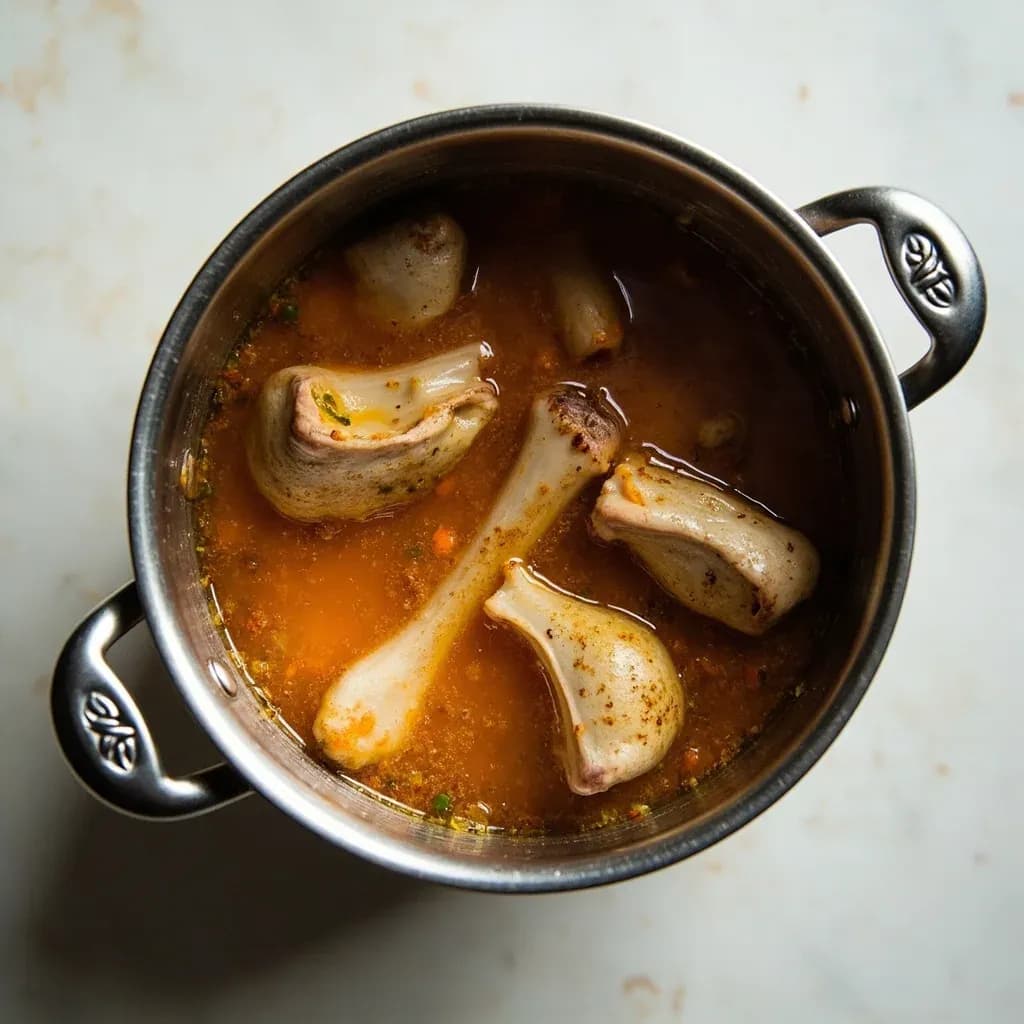
Slow-simmered soup gently cooks meat, bones, and tonic ingredients in water for several hours to extract deep flavor and nutrients, a cornerstone of Cantonese home cooking known as lou fo tong. A related double-boiled style steams the sealed soup pot over water for an even gentler, clearer result. The long, low heat draws out collagen and minerals without clouding or boiling away the liquid.
Slow-simmered soup, known in Cantonese as lo fo tong (老火湯) — literally "old-fire soup" — is the long, low-temperature simmer used in Guangdong and Hong Kong home kitchens to turn bones, roots, dried seafood, and tonic herbs into a clear, deeply savory broth. The defining discipline is restraint: the pot is brought to a true boil, skimmed clean, then dropped to a bare simmer of roughly 85–95 °C (185–203 °F) and held there for two to four hours, sometimes longer. The surface should show only occasional small bubbles; any rolling boil is treated as a failure, because violent convection emulsifies fat into the liquid and turns the soup milky and greasy rather than the prized clear, golden, lightly oily style that defines the genre.
Beyond flavor, the technique is built around extraction without clouding. A patient simmer coaxes collagen, minerals, and amino acids out of bones and dried ingredients while keeping proteins and suspended fat in check, producing what Cantonese cooks call the "umami water" of a meal — a drinkable broth that accompanies rice and stir-fries rather than competing with them. The same logic travels well: the method will produce excellent French pot-au-feu broth, Italian brodo, and Japanese katsu-jiru, but the Cantonese canon distinguishes itself by pairing the long simmer with tonic ingredients (cured pork, codonopsis root, lotus root, American ginseng, fish maw) selected to suit weather, recovery, or postpartum needs.
- Difficulty
- Easy
Types & varieties
Long simmer of blanched pork ribs with fresh lotus root and red dates; yields a slightly starchy, sweet-clear broth
Whole young coconut water and flesh with skinless chicken and a little dried longan; toward the short end of the simmer range, about 2 hours
Bitter-peppery watercress added late, with cured pork kidney for umami depth and apricot kernels for sweetness
Luxury version with soaked dried fish maw and dried sea conch simmered with pork and chicken; prized for a collagen-rich, slightly viscous body
Fresh kudzu (pueraria) root simmered with dace fillets, pork, and red dates; a classic household soup said to ease neck and shoulder heaviness
Black-bone chicken with American ginseng slices, wolfberries, and red dates; warming but not overly heaty
Sweet-leaning variation simmered to a gelatinous, dessert-style soup served warm or chilled
How to do it
- 1
Choose and size the pot
Use a clay (earthenware) pot for the most even, gentle heat. Size for at least double the measured water so the boil cannot crest the rim.
- 2
Blanch the proteins and bones
Cover pork ribs, chicken pieces, or bones with cold water, bring to a hard boil for 5–10 minutes, drain, and rinse under running water until the wash water runs clear. This removes blood and loose protein that would otherwise cloud the soup.
- 3
Combine with cold water and hardy ingredients
Return the blanched solids to the cleaned pot with hardy aromatics (red dates, dried longan, codonopsis root, ginger). Pour in cold water to cover by about 3–4 cm — roughly 8–10 parts water to 1 part main solids by volume.
- 4
Bring up to a boil and skim
Heat over medium-high until the water reaches a full boil. Skim grey foam and surface fat with a fine-mesh skimmer for the first 10–15 minutes. Patience here sets the clarity of the finished broth.
- 5
Drop to the bare simmer
Reduce heat to the lowest setting that holds the pot at 85–95 °C. Small bubbles should break intermittently in the center of the pot; if a foamy skin covers the whole surface, the fire is still too high. Set the lid ajar with a chopstick or wooden spoon.
- 6
Run the long simmer
Maintain the gentle simmer for 2–4 hours for most soups, up to 6 hours for very bony or herbal recipes. Top up with boiling water if the level drops below the ingredients. Do not stir aggressively.
- 7
Add late-stage ingredients
In the final 30–45 minutes, add delicate items: watercress, fresh tomato, goji berries, codonopsis leaf, or thin ginger. Simmer just until wilted and fragrant.
- 8
Rest, season, and serve
Turn off the heat and let the pot sit covered for 10 minutes. Taste and adjust with a small pinch of salt or a few drops of light soy at the table; traditionally the broth is served unseasoned so each diner seasons their own bowl.
Reading the simmer
The single most useful skill in this technique is learning to read a pot by ear and eye. A bare simmer sounds like a low, irregular murmur with a bubble breaking every second or two in the center of the surface; it should never sound like a steady hiss, and the surface should never be covered by a foamy, rolling skin. If you set the lid ajar with a chopstick and find condensation dripping back hard into the pot, the fire is still too high. If the pot has gone silent and the surface is glassy, you are below the simmer and can nudge the heat up slightly. Because clay pots retain heat, the temperature will keep climbing for several minutes after you turn the flame down — set the heat, then wait, then adjust.
- Small, intermittent bubbles in the center = correct bare simmer
- Foamy skin across the whole surface = too hot; reduce and skim again
- Glass-still surface with no bubbles = below simmer; nudge heat up
- Heavy condensation dripping from the lid = too much trapped steam; crack the lid further
Ingredient timing
Cantonese soup cookery follows a strict division between ingredients that go in at the start of the simmer and those that go in near the end. Hard roots, dried seafood, cured meats, and bones need the full simmer to release their flavor and body; delicate greens, fresh herbs, goji berries, and thin ginger slices lose color, freshness, and aroma if cooked for hours.
- In at the start: lotus root, kudzu, daikon, dried longan, red dates, codonopsis root, dried conch, soaked fish maw, blanched bones and meat
- In the final 30–45 minutes: watercress, fresh tomato, goji berries, chrysanthemum, codonopsis leaf, thin ginger
- Never added for the full simmer: anything that loses its character over hours of heat — most fresh leafy greens, milk or cream, and delicate seafood that would fall apart
From soup to second meal
Nothing in the lo fo tong pot is wasted. The broth is the first course, and the cooked solids become the foundation of a congee the next morning.
- Strain the broth and chill it; lift the solidified fat to use for frying rice or vegetables
- Strip meat from the bones, shred with chopsticks, and stir into plain rice porridge with a splash of the soup and a little ginger
- Reserve lotus root, kudzu, and root vegetables as a side dish dressed with soy and sesame oil
Common uses
Tips & pitfalls
- Start with cold water covering the ingredients; a cold start draws impurities out slowly and gives a clearer final broth.
- Blanch bones and meat separately in rolling water for 5–10 minutes, then rinse — this is the single biggest determinant of clarity, and skipping it is the most common home-cook mistake.
- Never let the pot boil once the long simmer has begun; if large bubbles break the surface you have lost the lo fo, and the soup will turn milky and greasy rather than clear and golden.
- Skim foam and floating fat during the first 30–60 minutes, then largely leave the pot alone; aggressive stirring resuspends fat and clouds the broth.
- Add hardy roots (lotus root, kudzu, daikon) at the start; add watercress, goji berries, and delicate herbs only in the final 30–45 minutes so they keep color and freshness.
- Top up with boiling water if levels drop — never add cold water, which drops the temperature and pulls more scum out of the proteins.
- Salt at the very end or serve salt on the side; salting early dulls extraction and can toughen proteins.
- Trust the cracked lid: fully covered the pot steams and over-reduces, fully uncovered it loses too much liquid and you lose concentration.
Good to know
- Cantonese name
- Lo fo tong (老火湯), meaning "old-fire soup"
- Origin
- Cantonese (Guangdong) home cooking; a daily feature of family dinners in Guangdong and Hong Kong
- Target temperature
- Bare simmer at 85–95 °C (185–203 °F); surface shows only small, occasional bubbles
- Typical duration
- 2–4 hours for most soups; 4–6 hours for bony or herbal versions; rarely longer than 6 hours at home
- Equipment
- Sand/earthenware clay pot (砂鍋 / 瓦煲) for even, gentle heat; heavy enameled cast iron is a workable substitute
- Water ratio
- About 8–10 parts cold water to 1 part main solids by volume; finished soup reduced by roughly one-third
- Lid position
- Cracked or ajar to limit evaporation without sealing the pot into a heavy steam
- Seasoning
- Salt or light soy added only at the end, if at all; the broth is meant to taste cleanly of its ingredients
Also called
slow-simmer-soup · double-boiling-soup · slow-soup-boiling · old-fire soup
Related

Boil
Cook in vigorously bubbling liquid at full rolling heat

Simmer
Hold liquid at a gentle shimmer for tender, unhurried cooking

Poach
Cook gently in barely-trembling liquid for silky, tender results

Steam
Cook in rising vapor to keep color, nutrients, and shape intact

Blanch
Plunge briefly in boiling water, then shock cold to lock color

Braise
Sear, then cook slow in a little liquid until fall-apart tender

Stew
Simmer bite-sized pieces fully submerged into a rich, unified pot

Sous-Vide
Seal and cook in precise warm water for edge-to-edge doneness