Prep & Assembly
Soaker / Scald
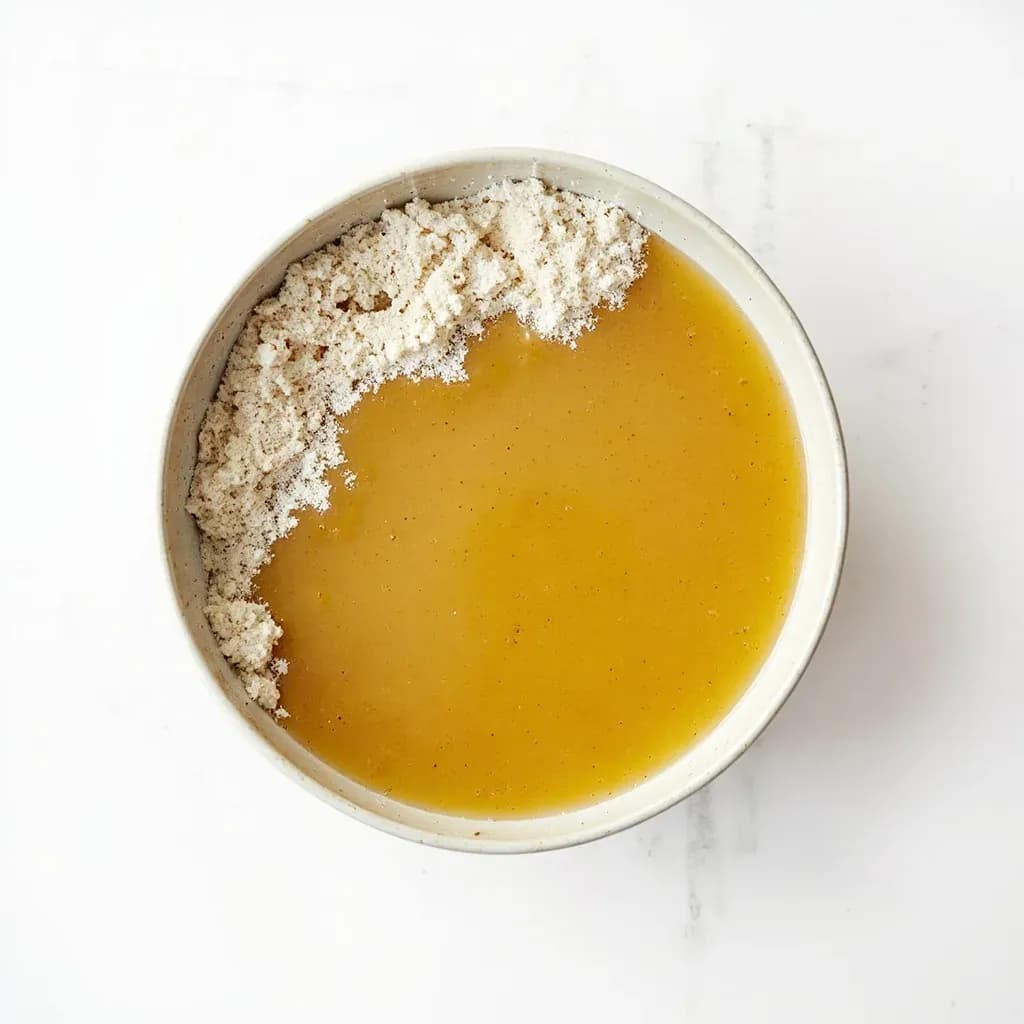
Pre-hydrating grains, nuts, or flour, including cooked tangzhong roux, to soften and boost moisture.
A soaker hydrates grains, seeds, or flour in liquid before mixing into a dough, softening tough particles and improving moisture and shelf life. A scald, such as the Asian tangzhong water roux, cooks flour with hot water to gelatinize starch, letting the dough hold more water for a soft, fluffy crumb. Soaking nuts similarly tenderizes them and can ease digestion or grinding.
Pre-hydration is one of the quietest upgrades a baker can make. A soaker — flour, cracked grain, bran, seeds, or nuts stirred into cold water and rested — does the slow work of softening the bran and giving starch granules a head start on swelling. By the time that mixture reaches the dough, the grains have already absorbed most of their water, so they are far less likely to steal moisture from the crumb during baking. The result is a loaf that stays tender for days longer than one made from dry add-ins.
The scald is the hot-water sibling. Heating milk to about 82 °C denatures the whey proteins that would otherwise interfere with gluten development in enriched doughs; cooling it back down before the yeast goes in leaves a softer, more tender crumb. The tangzhong (or yudane) is the most dramatic version: bread flour cooked with a few parts water to roughly 65 °C until it forms a pudding-like paste. That pre-gelatinized starch locks in extra moisture during baking and slows staling in the finished loaf, which is why milk breads, shokupan, and soft hamburger buns feel improbably pillowy days after they are baked.
Both approaches treat time and water as ingredients in their own right. A soaker is patient; a scald is precise. Most artisan formulas treat the soaker or scald as part of the total dough weight — not a free extra — and account for its water in the final hydration.
- Difficulty
- Easy
Types & varieties
Equal-weight water and cracked/whole grains, rolled oats, bran, or seeds; rested covered 8–24 hours to fully hydrate the starches and soften the bran.
Milk heated to ~82 °C to denature whey proteins that would otherwise weaken gluten in enriched doughs; cooled to lukewarm before adding to yeast.
Historical technique — boiling water or milk poured over flour, then cooled; used in old-fashioned pie crusts and certain muffin recipes for tenderness.
Bread flour cooked with water to ~65 °C until a pudding-like paste forms; popularized through Japanese yudane and adopted in Chinese-influenced soft-bread baking for an extra-soft, long-keeping crumb.
Japanese technique of pouring boiling water over bread flour and stirring to a shaggy paste; the residual heat of the water does most of the work, then it rests about 30 minutes.
Rolled oats or steel-cut grains simmered into a thick porridge before being folded into the dough — Tartine-style method for adding whole grains without grittiness.
Sunflower, flax, sesame, or poppy seeds soaked in 2–3× their weight of water; helps them toast more evenly, prevents scorching in the oven, and softens their bite in the final crumb.
How to do it
- 1
Decide the method
Pick a cold soaker for whole grains, bran, or seeds; pick a hot scald or tangzhong when the recipe needs a softer, longer-keeping crumb (enriched breads, milk loaves).
- 2
Weigh the dry ingredient and water
Use a scale. Cold soakers are typically 100% hydration (equal weights). Tangzhong is usually 1 part bread flour to 3–5 parts water. For seed soaks, 2–3 parts water to 1 part seed is enough.
- 3
Combine and cover
Stir the dry ingredient into the water (cold method) or pour boiling water over flour (yudane) until no dry pockets remain. Cover the bowl with a lid or plastic wrap.
- 4
Rest — cold method
Leave at cool room temperature 8–12 hours, or refrigerate up to 24–48 hours. The grains should be tender when bitten and the mixture should look like thick porridge or wet sand, depending on the ingredient.
- 5
Heat — hot scald or tangzhong
For a milk scald, warm milk in a heavy saucepan over medium heat to 82 °C, watching for small bubbles at the rim; remove from heat. For tangzhong, whisk bread flour and water in a saucepan and cook over medium-low, stirring constantly, until the mixture reaches 65 °C and a spoon leaves a clean trail.
- 6
Cool to lukewarm
Transfer the hot preparation to a clean bowl, press plastic wrap onto the surface to prevent a skin, and cool to under 40 °C before combining with yeast, or refrigerate overnight.
- 7
Fold into the dough
Add the soaker, scalded milk, or tangzhong at the autolyse or first mix stage, including all the liquid. Adjust final hydration if the dough feels tight, and proceed with the recipe's salt and yeast timing as written.
Reading the signs of a ready soaker
Because soakers and scalds are timed by feel as much as by the clock, it helps to know what 'done' looks like for each variant. Pull a small sample and check before folding the mixture into a dough.
- Cold soaker on whole grains: grains are tender when bitten but still hold their shape; the liquid is cloudy and slightly thickened.
- Bran or whole-wheat soaker: looks like damp sand; no dry streaks remain and a spoon leaves a brief furrow.
- Tangzhong: a spoon drawn through the paste leaves a trail that closes back in within a second or two — the texture of a thin pudding, not a thick roux.
- Milk scald: small bubbles form at the rim of the pan and steam rises freely; the surface just begins to shiver. It is not yet a simmer.
- Yudane: a shaggy, sticky paste with no pockets of dry flour; fully hydrated after roughly 30 minutes of rest.
Common uses
Tips & pitfalls
- Weigh both the dry ingredient and the water — volumetric cups are unreliable for hydration work.
- Always include the soak water in the dough's hydration calculation; it is part of the formula, not extra.
- Cover the soaking container to prevent a skin from forming and to keep dust and bugs out.
- Refrigerate soakers made with whole grains if resting longer than 12 hours to head off souring.
- Cool scalded milk or tangzhong to lukewarm (under 40 °C / 105 °F) before adding live yeast, or you will kill it.
- For tangzhong, use bread flour, not cake or whole-wheat — its higher protein gels cleanly.
- Stir tangzhong constantly as it thickens; it goes from silky to lumpy very quickly past 70 °C.
- Toast nuts and seeds dry before soaking if you want deep flavor; soak un-toasted ones if you want them to stay soft inside the bake.
- Label and date soakers — they look identical to plain wet flour and are easy to forget.
- Hold back a small amount of the soak water when you fold the soaker into the dough so you can adjust hydration incrementally during mixing.
Good to know
- Also called
- Cold soaker, milk scald, flour scald, water roux, tangzhong, yudane
- Purpose
- Pre-hydrate dry ingredients for tenderness, even moisture, longer shelf life, and better crumb
- Typical cold-soak ratio
- 100% hydration — equal weight water to grain, nut, or flour
- Typical tangzhong ratio
- 1 part bread flour to 3–5 parts water by weight
- Tangzhong target temp
- 65 °C / 150 °F, until the paste holds a line when a spoon is drawn through
- Milk-scald target temp
- 82 °C / 180 °F, just below a simmer; small bubbles at the edge of the pan
- Cold-soak time
- 8–24 hours at cool room temperature, or up to 48 hours refrigerated
- Shelf life after prep
- Refrigerated, 2–3 days in a covered container; tangzhong can be used warm or chilled
- Yield impact
- A soaker contributes both flour weight and water weight to the final dough; recalculate hydration accordingly
Also called
Tangzhong (Water Roux) · Soaking Nuts · Scald · Water Roux
Dishes that rely on it
Related

Whisk
Beat ingredients smooth and aerated with a looping wire motion

Sift
Pass dry ingredients through mesh to aerate and remove lumps

Strain
Pour through mesh to separate solids from liquid for a smooth result

Filter
Pass liquid through fine material to clarify out the smallest particles

Rice
Press cooked potatoes through small holes for fluffy, lump-free texture

Mash
Crush soft cooked food into a rustic, creamy purée

Grind
Crush food into a coarse to fine texture, from spices to meat

Grate
Shred food into fine bits against a sharp-toothed surface