Heat & Fire
Spritzing
Misting barbecue meat with liquid during a long smoke to keep the surface moist and improve bark.
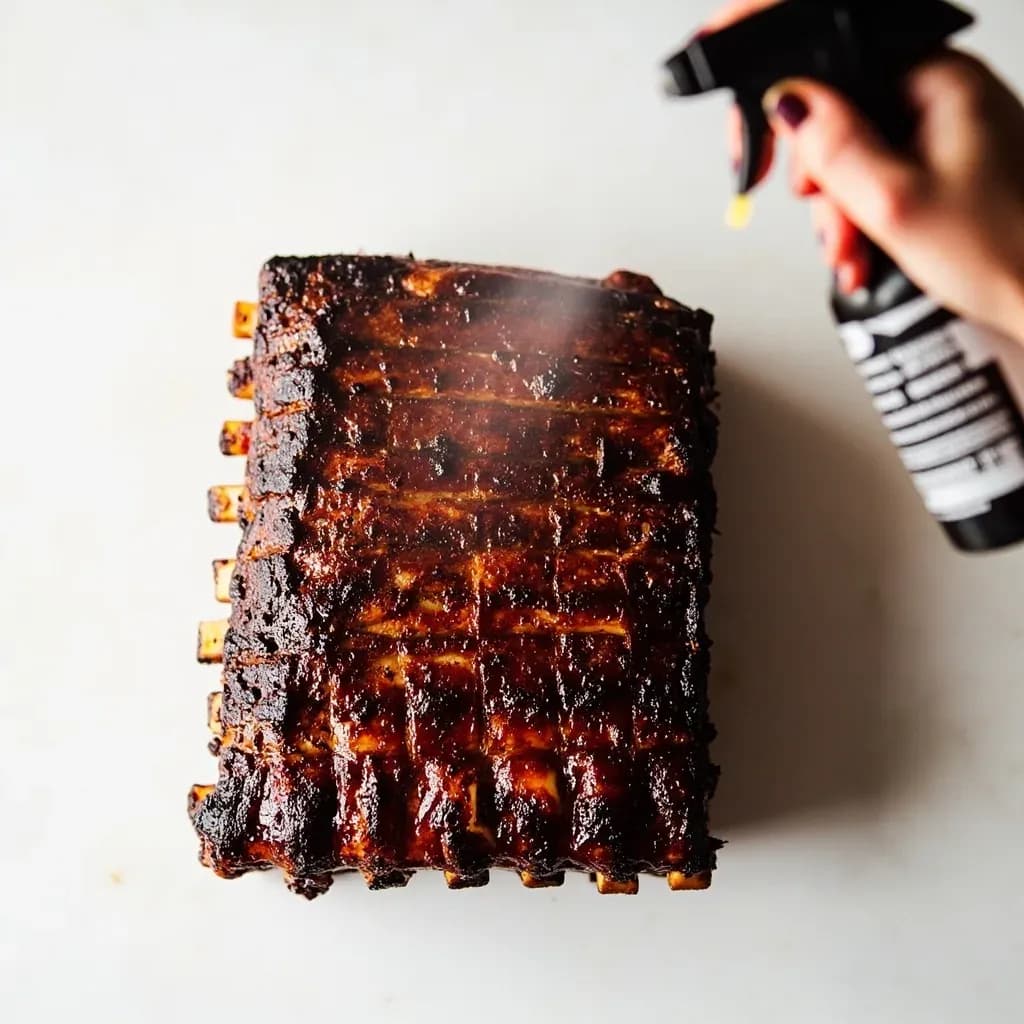
Spritzing sprays a fine mist of liquid such as apple juice, vinegar, or water onto meat at intervals during a long, low smoke. It cools and moistens the surface to slow drying, helps smoke adhere, and promotes a deep, even bark and color on cuts like brisket and ribs. It is used sparingly, since opening the smoker too often lets heat and smoke escape and stalls cooking.
Spritzing is the practice of atomizing a thin mist of liquid over barbecue meat partway through a long, low-and-slow smoke, usually every 30 to 60 minutes once the bark has begun to set. The goal is not to soak the meat — it is to keep the surface just moist enough that smoke particles can continue to deposit, the bark can form evenly, and the rub can meld into the crust without drying, cracking, or burning. Spritzing is almost always done from a clean trigger or pump spray bottle, never from a cloth; that cloth-on-a-stick variant is a separate technique called mopping, which lays down a heavier coat and behaves quite differently.
The technique matters most on long cooks — brisket, pork shoulder, ribs, beef ribs, whole turkey — where hours of dry heat would otherwise tighten the surface and stall bark development. A light mist cools the exterior just enough to slow hardening, carries a touch of tang or sweetness onto the meat, and helps the cook push through the plateau around 150–170°F internal. It is, however, genuinely optional. Top pitmasters including Aaron Franklin and Myron Mixon skip it entirely and still produce exemplary bark by leaning on a thick fat cap, careful rub ratios, and well-timed wrapping. Treat spritzing as a tool you can reach for when bark is going wrong, not a mandatory step.
Used carelessly, spritzing is one of the fastest ways to ruin a smoke: spritz too early and you wash the rub into the drip pan and end up with a pale, pasty crust; spritz too often and you extend cook time by an hour and starve the fire of oxygen every time the lid opens. Used with restraint — once the bark has set, on a steady schedule, with a fine mist — it is one of the simplest ways to nudge a backyard smoke toward competition-style results.
- Difficulty
- Easy
Types & varieties
Apple cider vinegar, distilled white vinegar, or a 50/50 mix with water. Tangy, classic Carolina-style; helps cut fat and keeps the surface taut.
Plain apple juice or apple juice blended with vinegar; the most common competition choice. Adds subtle sweetness and encourages Maillard browning.
Plain water or lightly salted water; the simplest approach, used mainly for moisture without altering flavor.
Light lagers or wheat beers; contributes malty depth and a small amount of residual sugar that helps bark darken.
Worcestershire diluted with water or vinegar, sometimes with hot sauce; common in Texas and competition brisket.
Brine from dill pickles or pickled jalapeños; adds salt and tang, popular for poultry and ribs.
Cherry, white grape, or pineapple juice — sometimes used for pork and ham to add sweet-tart notes.
How to do it
- 1
Prepare the spritz liquid
Mix your chosen liquid in a clean bowl or directly in the spray bottle. Classic ratios: 50/50 apple juice and apple cider vinegar, or two-thirds water with one-third distilled vinegar. Bring it to room temperature; cold liquid causes muscle fibers to contract and squeezes moisture back out of the meat.
- 2
Fill a food-grade spray bottle
Use a dedicated, clean trigger sprayer or pressurized pump mister — label it for barbecue only so it never sees household cleaners. Strain any solids so the nozzle does not clog partway through the cook.
- 3
Apply the rub and start the smoke
Season the meat generously, stabilize the smoker at 225–275°F, and put the meat on dry. Do not spritz during this first phase — the rub needs undisturbed heat and smoke to set.
- 4
Wait for the bark to set
After 45–90 minutes (longer for very large briskets), check the surface. It should look dull rather than glossy, feel tacky rather than wet or powdery, and have begun to take on color. If rub is still visibly wet, wait another 20–30 minutes.
- 5
First spritz
Hold the bottle 8–12 inches from the meat and apply a light, even mist. Aim for a fine coat that glistens, not a soak that runs. Close the lid immediately to preserve smoke and heat.
- 6
Re-spritz on a schedule
Repeat every 30–45 minutes for most cuts, every 20–30 minutes for ribs and poultry. During the stall — around 150–170°F internal on brisket and pork butt — spritzing can help the cook push through more evenly without overshooting the bark color.
- 7
Adjust based on bark progress
Watch the surface, not the clock. If the bark is going darker than you want, back off to every 45–60 minutes. If it is drying and beginning to crack, increase frequency or switch to a wetter blend.
- 8
Stop spritzing in the final stretch
In the last 30–45 minutes — or once the bark has reached the color and texture you want — do not spritz. Let the surface dry and tighten so it slices clean rather than gumming up the knife.
- 9
Rest before slicing
Pull the meat and rest it loosely tented with butcher paper or foil for at least 30 minutes (longer for whole brisket). The bark should crackle slightly when cut and hold together on the slice face.
Spritzing vs. mopping
These two techniques get conflated constantly, but they work on different principles and produce different results. A spritz is a fine atomized mist applied from a bottle; a mop is a heavier coat of liquid laid down by dragging a cloth mop or silicone brush across the meat. Mopping typically rewets the rub and slows bark formation more dramatically, which is why traditional Carolina whole-hog cooks mop heavily and competition brisket cooks mostly don't.
- Spritz = fine mist from a spray bottle, light coat, applied without touching the meat
- Mop = cloth or brush, heavier coat, physically contacts the surface
- Mopping is associated with whole hog and Eastern North Carolina pork; spritzing is associated with competition brisket and ribs
- Either technique, used too early, will wash rub off and produce a pale, pasty bark
When not to spritz
Spritzing is built for long, moist-heat cooks where bark has time to form and recover. It does not belong on short, hot cooks or on meats where you want a pure sear rather than a crust.
- Hot-and-fast steaks and chops — skip it; you want Maillard crust, not a softened surface
- The first 45–90 minutes of any long cook — the rub and bark need to set undisturbed
- Anything already wrapped in foil or butcher paper (Texas crutch) — the wrap does the moisture work
- The final 30–45 minutes of the cook — let the bark dry and tighten for clean slicing
Common uses
Tips & pitfalls
- Wait until the surface is tacky and dry to the touch before the first spritz — usually 45–90 minutes in. Spritzing a wet rub washes it off and produces a pasty, bitter bark.
- Mist lightly. A heavy soak cools the meat, extends cook time by 30–60 minutes on large cuts, and washes rub into the drip pan.
- Use a clean, food-safe spray bottle dedicated to barbecue only. Residue from household cleaners will ruin the meat and is a food-safety hazard.
- Stop spritzing 30–45 minutes before pulling the meat so the bark can dry and firm up for slicing.
- Avoid sugary liquids — honey, syrup, straight soda — until the final hour, or they will scorch and turn black on a hot smoker.
- Pour the spritz into a separate working bottle and discard what is left at the end of the cook; do not return unused liquid to the original container.
- A pressurized pump mister delivers a finer, more even cloud than a cheap trigger sprayer, which often spits coarse droplets that dent the bark.
- Remember that spritzing is optional. Aaron Franklin and other top pitmasters skip it entirely and rely on timing, fat cap, and wrap timing to build bark — reach for the bottle only when bark is going wrong, not by reflex.
Good to know
- Category
- Low-and-slow barbecue technique
- Also called
- Spraying, misting (distinct from mopping, which uses a cloth)
- Origin
- American barbecue tradition; popularized by competition pit crews in the 1980s–90s
- When applied
- After the first 45–90 minutes of cook, once the surface has set and bark begins forming
- Frequency
- Every 30–60 minutes, sometimes more often during the stall (150–170°F internal)
- Equipment
- Food-grade trigger spray bottle or pressurized pump mister; a silicone brush is a mop, not a spritz
- Typical liquids
- Apple juice, apple cider vinegar, water, beer, Worcestershire sauce, pickle juice, or blends
- Contested by
- Notable no-spritz pitmasters include Aaron Franklin (Franklin Barbecue) and Myron Mixon
Also called
Mopping · Misting
Dishes that rely on it
Related

Sear
Blast the surface hot for a deep-browned, savory crust

Sauté
Cook quickly in a little fat over lively heat, tossing as you go

Stir-Fry
Toss bite-sized pieces over roaring heat for fast, smoky cooking

Pan-Fry
Crisp food in a shallow layer of hot fat, turning once or twice

Deep-Fry
Submerge in hot oil for an all-over crackling crust

Roast
Cook uncovered in dry oven heat for browned edges and tender centers

Bake
Cook with steady, surrounding oven heat — the soul of bread and pastry

Broil
Hit food from directly above with fierce overhead heat