Prep & Assembly
Misting
Spraying a fine mist of water or liquid to hydrate, glaze, or steam food.
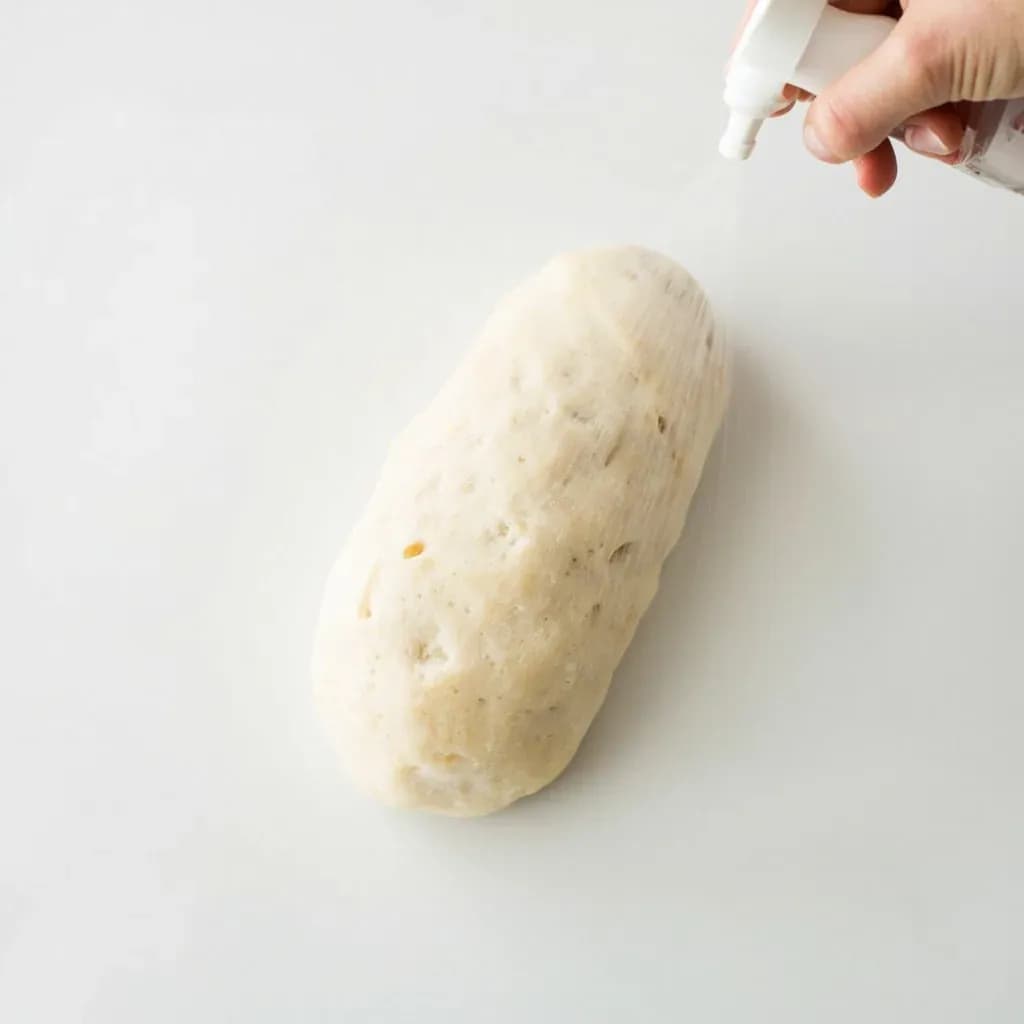
Misting applies a fine spray of water, oil, or other liquid to a surface, used to keep greens crisp, hydrate dough before baking for crust, or add humidity in an oven for oven spring. The fine droplets coat evenly without saturating. Bakers often mist a loaf and the oven walls at the start of the bake to delay crust set.
Misting is the controlled application of a liquid to food or a cooking surface as a fine aerosol of small droplets, almost always delivered through a hand-pump or trigger sprayer. The defining feature is droplet size: a good mister breaks the liquid into particles in the 50–200 micron range, light enough to deposit as an even film yet heavy enough to land where it is aimed. This puts misting between brushing (which lays down a heavier, controllable coat) and steam-injection (which floods an enclosed space with vapor), and that middle position is exactly what makes it useful in so many different jobs.
In practical cooking, misting solves a recurring problem: you want a little of something — water, oil, acid, egg — distributed very evenly, with no pools, no missed patches, and no over-application. A few pumps from a well-primed mister can glaze a tray of brioche, season a composed salad, or fill an oven with steam for crusty bread. The technique rewards a steady hand and a clean nozzle more than any particular skill, but the difference between a fine mist and a wet spatter is the difference between a perfect sheen and a soggy surface.
Misting also reaches into more specialized territory. In modernist and fine-dining kitchens, small rubber-bulb atomizers extend the same idea to the plate, where a single squeeze delivers a cloud of aromatic liquid over a finished dish. Whether the goal is hydration, lubrication, browning, or aroma, the principle is identical: a thin, even, controllable layer of liquid, applied in seconds.
- Difficulty
- Easy
Types & varieties
Used to introduce steam into ovens (especially hearth breads), keep greens and deli items hydrated, and prevent dough from drying during proofing or resting.
Applies a thin, even film of oil to pans, grills, salads, and doughs without pooling; common with olive oil, grapeseed, or avocado oil.
Fine spray of vinegar, citrus juice, or verjus used to season finished dishes without overdressing.
Atomized egg wash, butter, milk, or sugar-water applied to pastries and breads for controlled browning and sheen.
Modernist technique using aromatic liquids such as herbal infusions, smoked liquids, or tinctures delivered as a fine cloud over plated food.
Smoking-gun or atomizer-driven mists of flavored smoke or aqueous solutions used in contemporary plating.
How to do it
- 1
Choose the right mister
Match the bottle to the liquid. Use a glass pump mister for oil and a plastic trigger sprayer for water or dilute acid. Confirm the nozzle produces a true mist, not a jet, before you begin.
- 2
Fill and prime
Fill the bottle to roughly three-quarters full to leave air space for pressurization. Pump the cap (on pump-style misters) or squeeze the trigger several times until the spray feels consistent.
- 3
Test the pattern
Spray once onto a white paper towel or the back of a tray. The pattern should be a uniform, fine cone. If you see large droplets or a stream, the nozzle is partially clogged or the bottle is too full.
- 4
Position over the target
Hold the nozzle 15–30 cm (6–12 in) from the food or surface. Angle slightly to deposit mist on the working area rather than into the air.
- 5
Apply in light passes
Spray once or twice in a sweeping motion. Let the droplets settle for a second, then repeat if more coverage is needed. Avoid saturating any single spot.
- 6
For oven steaming (bread baking)
Preheat the oven with a Dutch oven, baking stone, or steam tray. Load the dough, then immediately mist the oven walls and floor 3–5 times to create a cloud of steam. Repeat at 30-second intervals for the first 10–15 minutes, then vent the oven and continue baking dry.
- 7
For oiling pans or grills
Mist a cold or warm surface, then wipe with a paper towel or brush to spread a micro-thin film. This uses far less oil than pouring and helps prevent pooling in low spots.
- 8
Clean and store
Empty leftover liquid, rinse with warm water, and pump clean water through until the spray runs clear. Store disassembled, with the nozzle loose, in a dry place to prevent mildew and clogging.
Misting for oven steam in bread baking
Of all the jobs a kitchen mister can do, generating oven steam for hearth breads is the one that most clearly changes the final product. A humid oven keeps the surface of the dough pliable for the first 10–15 minutes of baking, which allows the crumb to expand fully before the crust sets and gives the loaf its open, glossy, blistered crust. Home bakers without a combi oven or a steam-injection rig rely on a hand mister to replicate this environment.
The technique is straightforward but easy to overdo. Mist the walls and floor of the preheated oven, never the dough itself — direct spray on the loaf can deflate the skin and leave a pitted, gummy top. Work quickly when the door is open, then resume baking dry once the crust has formed so the bottom can crisp.
- Preheat with a baking stone, Dutch oven, or sheet pan on the floor to hold heat and moisture.
- Load the dough, then mist the walls and floor 3–5 times to fill the oven with steam.
- Repeat the misting at 30-second intervals for the first 10–15 minutes of baking.
- Vent the oven (crack the door or remove the steam tray) and continue baking dry to set the crust.
- If the loaf looks shiny and taut when you remove the lid or open the door, the steam has done its job.
Choosing and maintaining a mister
The right bottle depends on the liquid. Glass pump misters are the workhorse for oil because they resist staining and don't degrade with fatty acids; plastic trigger sprayers handle water and dilute acids well and are cheap to replace. A continuous-mist sprayer, which produces a fine cone with each squeeze of the trigger, is the best choice when even coverage on a large surface matters more than control.
- Use filtered or distilled water in glass misters to prevent mineral scale from clogging the nozzle.
- Reserve one bottle for oil and another for water or acid to avoid rancidity and flavor carry-over.
- Pump 5–10 times before first use to build pressure; do not shake a glass oil mister, which can damage the seal.
- Soak clogged nozzles in warm water and pump clean water through until the spray pattern returns to a fine cone.
Common uses
Tips & pitfalls
- For oven steaming, spray the walls and floor, not the bread directly — direct mist can deflate the dough surface and leave a gummy top.
- Use filtered or distilled water in glass misters to avoid mineral buildup that clogs nozzles and leaves spots on glassware and pastries.
- Reserve separate bottles for oils and for water or acid; oil residues turn rancid quickly and will flavor anything acidic you spray next.
- Hold the bottle at the proper distance: too close causes drips, too far wastes mist into the air and gives uneven coverage.
- Test the spray pattern on a paper towel before applying to food — the mist should look even and cone-shaped, never a stream.
- Never mist alcohol-based liquids over an open flame; aerosolized alcohol ignites easily and is one of the most common kitchen spray accidents.
- Clean nozzles regularly by soaking in warm water; a clogged nozzle produces heavy droplets rather than mist and will ruin a glaze or a salad in one pass.
- For oil misting, choose a sprayer rated for viscous liquids; a hairspray-style trigger bottle will clog almost immediately with anything thicker than water.
Good to know
- Definition
- Applying liquid to food or a cooking environment as a fine aerosol of droplets, typically using a hand-pump or trigger spray bottle.
- Common liquids
- Water, neutral oils, olive oil, vinegars, citrus juice, egg wash, broth, wine, flavored oils, and stock.
- Typical equipment
- Glass pump mister (about 250–500 ml), trigger spray bottle, continuous-mist sprayer, and pressurized oil mister.
- Drop size
- Fine misters produce droplets in the 50–200 micron range; coarser spray bottles run 300 microns and up.
- Spray distance
- Held roughly 15–30 cm (6–12 in) from the target for even coverage without runoff.
- Difficulty
- Low; requires a steady hand and the right bottle, no special training.
- Time
- Seconds per application; bottle setup under one minute.
- Care
- Empty, rinse, and air-dry sprayers between uses; oil misters must be cleaned to prevent rancidity and clogging.
Related

Whisk
Beat ingredients smooth and aerated with a looping wire motion

Sift
Pass dry ingredients through mesh to aerate and remove lumps

Strain
Pour through mesh to separate solids from liquid for a smooth result

Filter
Pass liquid through fine material to clarify out the smallest particles

Rice
Press cooked potatoes through small holes for fluffy, lump-free texture

Mash
Crush soft cooked food into a rustic, creamy purée

Grind
Crush food into a coarse to fine texture, from spices to meat

Grate
Shred food into fine bits against a sharp-toothed surface