Water & Steam
Cooking Stiff Pap / Porridge
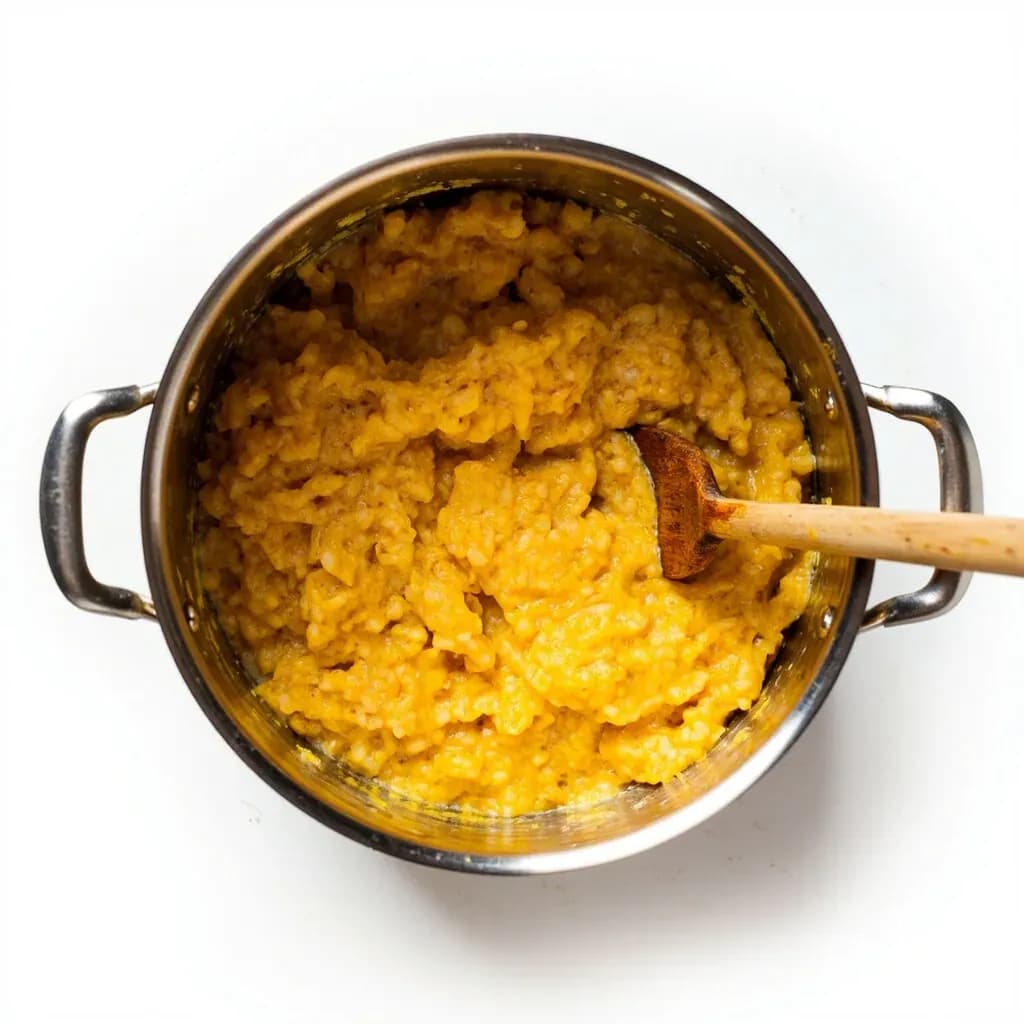
Stirring maize meal into boiling water to a thick, stiff porridge staple.
Cooking stiff pap gradually stirs maize meal into boiling water, beating out lumps as it thickens into a dense, smooth porridge eaten across southern Africa as nshima, sadza, or pap. Constant vigorous stirring is essential to avoid lumps and a scorched bottom as the starch swells. The finished porridge is firm enough to scoop by hand and serves as the base for stews and relishes.
Stiff pap is the everyday maize-meal porridge that anchors daily eating across much of sub-Saharan Africa, from Cape Town to Nairobi to Lusaka. At its core the technique is deceptively simple: maize meal is dispersed into boiling water and cooked until the starch granules swell and the amylose leaches out, binding the water into a dense, moldable mass thick enough to pull cleanly from the pot walls, hold a ball on a spoon, and be eaten from the hand. The difference between a stiff pap and a soft porridge is essentially the meal-to-water ratio and how long the mass is given to finish cooking under cover at the end.
What looks like a one-note starch is in fact a family of closely related techniques whose texture and shape change with the same variables. A thinner pour goes into a soft breakfast porridge eaten with milk and sugar; a stiffer cook becomes a smooth elastic ball pinched in the fingers and dipped into sauce; an even stiffer cook is crumbled into a granular mound to soak up a tomato-and-onion relish. The pot, the stirrer, and a quiet 10-to-20-minute covered rest at the end are what turn raw maize flour into a fully cooked, bland-tasting, slightly sweet staple that stretches a small amount of meat or vegetables into a full meal.
The dish matters because it is cheap, naturally gluten-free, filling, and forgiving of whatever is in the kitchen. A heavy pot and a flat-ended wooden stick are the traditional tools for good reason: thin pans scorch before the inside cooks, and a sturdy stirrer is the only way to work the stiffening mass without breaking your wrist. Once the technique is learned, cooks rarely measure anything again, judging stiffness by the way the pap pushes against the spoon and the sound it makes when struck against the pot side.
- Difficulty
- Medium
Types & varieties
Thinner, spoonable porridge; served at breakfast with milk and sugar or as a soft starch with stew.
Cooked firm then crumbled with a fork into a granular mound; eaten with relishes, morogo, or grilled meat.
Cooked very stiff, molded into a ball or mound, and eaten by tearing pieces with the fingers and dipping into sauce.
White maize meal cooked to a stiff, smooth ball; served with nyama, dovi (peanut stew), or vegetables.
Very stiff, almost dough-like; traditionally eaten with the right hand, dipped in ndiyo (relish).
Stiff maize-meal porridge served with morogo, seswaa (pounded meat), or bean dishes.
Cooked to a stiff, cuttable block; cut into wedges and used to scoop sukuma wiki, stew, or fish.
Stiff porridge molded into a flat disc; torn by hand to accompany beans, fish, or ndizi.
Related stiff maize porridge eaten with miyan kuka, miyan taushe, or okra soup.
How to do it
- 1
Bring water to a rolling boil
Pour measured water into a heavy-bottomed pot (about 2 to 2.5 cups per 1 cup of maize meal for a stiff result) and bring to a vigorous boil. Add only a small pinch of salt if the pap will be eaten unaccompanied; leave it unsalted if you plan to serve it with a salty relish or stew.
- 2
Make a lump-free slurry
In a separate cup, mix roughly one-third of the maize meal with a little cold water to a smooth, pourable paste. This pre-disperses the starch and is the single best defense against lumps forming the moment the meal hits the pot.
- 3
Pour the slurry into the boiling water
Reduce the heat slightly and pour the slurry into the boiling water in a slow, steady stream, stirring constantly with a wooden spoon or phara. Keep the water moving so the slurry disperses rather than sinking and setting on the base.
- 4
Stream in the rest of the meal
Once the slurry has thickened the water into a loose porridge, add the remaining maize meal a little at a time, stirring continuously. Let each addition thicken before adding the next so the pot never goes dry on top and soupy underneath.
- 5
Build stiffness gradually
As the porridge becomes hard to stir, switch from stirring to pressing and folding the meal in. Add more dry meal in small handfuls until the mass is so stiff the spoon stands up in it. The surface should look dry and matte, not glossy and wet.
- 6
Cover and finish cooking on low heat
Reduce the heat to the lowest setting, smooth the top of the pap, cover tightly, and let it steam for 10–20 minutes. This step cooks the maize through and removes the raw, gritty taste that under-cooked pap always carries.
- 7
Uncover and beat the pap
Remove the lid. The pap will be set and slightly steamed on top. Beat it vigorously with a wooden spoon or phara, folding it in on itself to expel trapped steam and tighten the texture. The pap should pull cleanly from the sides of the pot.
- 8
Test for doneness and shape
Wet a spoon and scoop a small portion. It should hold a ball shape with no wet starch oozing, and the center should taste fully cooked with no raw maize flavor. Mound into a serving dish, or shape into a smooth ball for ting-style serving.
- 9
For krummelpap, crumble while hot
If making the crumbled style, turn the stiff pap into a wide bowl and break it up with a fork while it is still steaming, working quickly so it crumbles into a coarse, even texture rather than setting into a solid lump as it cools.
- 10
Serve immediately with a relish
Serve hot with morogo, chakalaka, tomato-and-onion salsa, bean stew, grilled meat, or — for soft pap — milk and sugar. The stiff version is eaten by hand: tear off a piece, press a hollow into it with the thumb, and use it to scoop up the accompanying sauce.
Why the covered rest matters
The stirring phase is the obvious work, but the quiet covered cook at the end is what separates pap from raw-tasting maize paste. During stirring, the surface of the mass gelatinizes first while the center of the pot can still hold uncooked starch. Trapping steam on top for 10–20 minutes at the lowest heat drives moisture and heat into the core, completing gelatinization throughout and mellowing the chalky, slightly bitter note that under-cooked maize keeps. Skipping this step is the most common reason homemade pap tastes gritty and raw even when it has reached the right stiffness.
- A fully cooked pap tastes faintly sweet and earthy; under-cooked pap tastes of raw flour.
- Cover only after the pap has reached stiffness, never during the initial thickening, or trapped steam at the start makes the surface gummy and the inside raw.
- The pap is ready to beat when the lid lifts cleanly and the top surface looks set rather than wet.
Reading the pot: how to gauge stiffness
Because ratios vary with the grind of the meal and the wetness of the day, experienced cooks judge the pap by feel rather than measurement. Three signposts tell you the pap is on track: the spoon meets real resistance, the mass begins to pull away from the pot walls on its own, and the pap makes a dull slapping sound (not a sloshing one) when it is struck against the side. Once those signs appear, the covered rest finishes the work.
- Stiffness is built by adding dry meal in small handfuls toward the end, not by cooking water away.
- A wet hand or wet spoon should lift a small ball that holds its shape with no starch oozing.
- The surface should look matte and dry, not glossy; gloss means there is still free water in the mass.
Common uses
Tips & pitfalls
- Mix part of the maize meal with cold water first to make a slurry; it is the most reliable way to avoid lumps.
- Always add the meal to boiling water, never the other way around — cold water poured onto dry meal guarantees lumps.
- Stir with a consistent, steady rhythm so the porridge develops a smooth, even body.
- After reaching stiffness, cover and cook on the lowest heat for 10–20 minutes; under-cooked pap tastes raw and gritty even when the texture looks right.
- If the pap goes lumpy, work the lumps out by pressing them against the pot wall with the back of a wooden spoon — do not add water to try to 'fix' it, as this dilutes the starch and leaves the pap gummy.
- Use the wooden spoon or phara to beat the pap firmly against the pot wall; this drives off trapped steam and tightens the texture. A well-cooked pap should slap the pot, not slop.
- Use a heavy pot, ideally cast iron; thin pots scorch the base long before the inside cooks through.
- Wet your hands or spoon when shaping pap; dry hands pull starch and leave a gummy surface.
Good to know
- Origin
- Sub-Saharan Africa; a foundational starch technique across Southern, East, and parts of West Africa
- Primary ingredient
- Maize meal (fine or medium grind; mealie meal in South Africa)
- Category
- Wet-heat starch gelatinization
- Water-to-meal ratio (stiff)
- Roughly 2 to 2.5 parts water to 1 part maize meal by volume
- Yield
- 1 cup maize meal yields about 2 generous portions of stiff pap
- Active time
- About 15–20 minutes of stirring
- Total time
- 30–45 minutes, including the final covered rest
- Difficulty
- Beginner to intermediate; technique is simple but requires sustained stirring and a long enough final cook to drive off raw-maize flavor
- Cookware
- Heavy-bottomed pot (cast iron is ideal) and a flat-ended wooden stick (phara) or sturdy wooden spoon
- Final texture
- Thick enough to hold its shape, pull away from the pot, and be formed into a ball or crumbled with a fork
- Storage
- Best eaten fresh; leftovers keep 2–3 days refrigerated and are revived by breaking up and reheating with a splash of water
- Serving temperature
- Hot, straight from the pot
- Gluten status
- Naturally gluten-free when made with pure maize meal, but use dedicated utensils to avoid cross-contact
Also called
Porridge Stirring · Nshima Stirring · Sadza Stirring · Stiff-Porridge Stirring
Related

Boil
Cook in vigorously bubbling liquid at full rolling heat

Simmer
Hold liquid at a gentle shimmer for tender, unhurried cooking

Poach
Cook gently in barely-trembling liquid for silky, tender results

Steam
Cook in rising vapor to keep color, nutrients, and shape intact

Blanch
Plunge briefly in boiling water, then shock cold to lock color

Braise
Sear, then cook slow in a little liquid until fall-apart tender

Stew
Simmer bite-sized pieces fully submerged into a rich, unified pot

Sous-Vide
Seal and cook in precise warm water for edge-to-edge doneness