Heat & Fire
Three-Cup Method (San Bei)
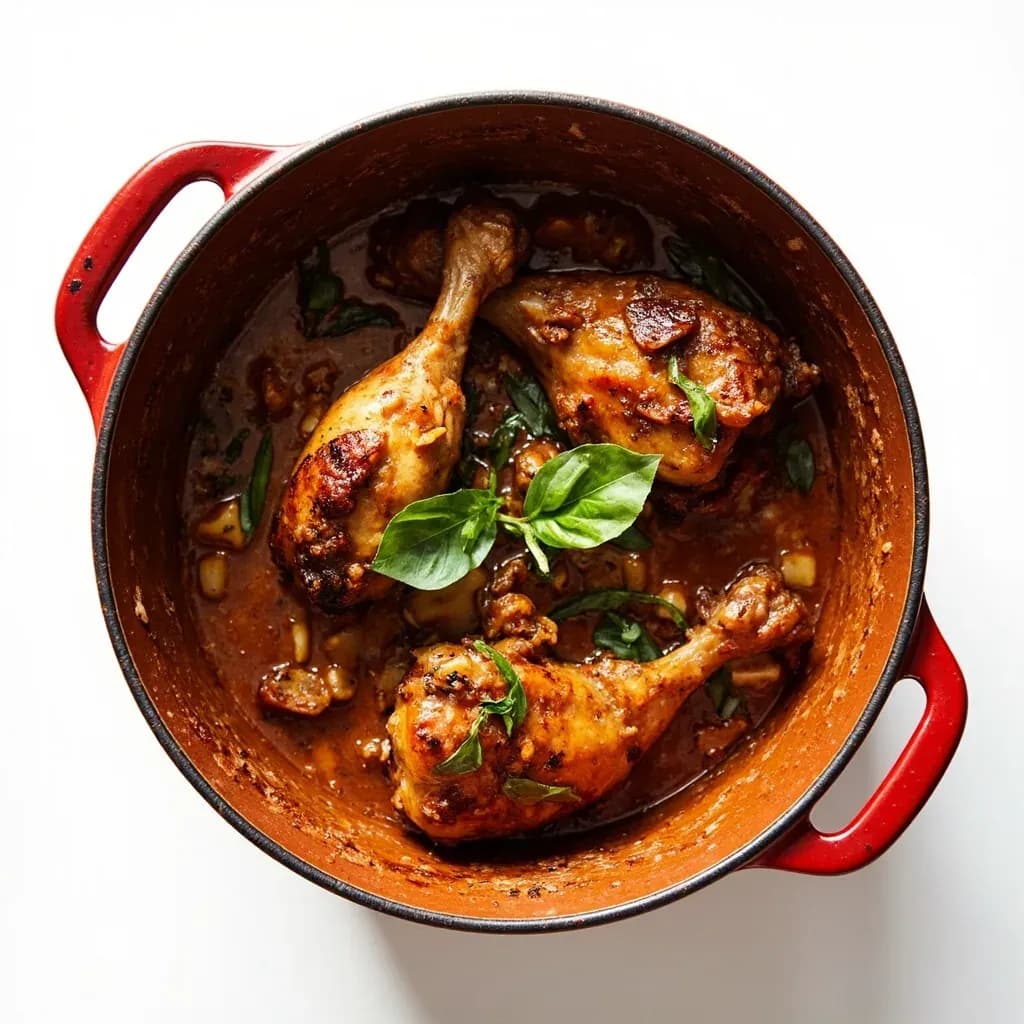
Braising chicken in equal parts sesame oil, soy sauce, and rice wine until glossy, with Thai basil.
The three-cup method, san bei, cooks chicken or other proteins in roughly equal measures of sesame oil, soy sauce, and rice wine in a hot clay pot until the liquid reduces to a thick, glossy glaze. Garlic, ginger, and a final flourish of Thai basil define this Taiwanese dish. The sauce is cooked down rather than served brothy, so the meat ends up deeply caramelized and aromatic.
The Three-Cup Method, or San Bei (三杯), is a Taiwanese braising technique built on a simple flavor triangle: sesame oil for nut-fat, soy sauce for salt, and rice wine for fragrance. Equal parts of these three are used to braise a quick-cooking protein—most famously bone-in chicken—then reduced, uncovered, until the sauce becomes a glossy, clinging coat rather than a thin broth. What sets San Bei apart from a typical stir-fry or stew is that the liquid IS the dish: no stock, no thickener, no aromatics boiled into the background. The whole technique rides on the contrast among the three 'cups' and a generous handful of raw basil tossed in at the end.
It is a forgiving, beginner-friendly method that rewards a few specific habits: patient browning of the protein, an uncovered reduction at the end, and the discipline to add the basil off the heat so it wilts rather than cooks. The dish has older roots in Jiangxi province, where the version runs sweeter and darker, but the iconic Taiwanese adaptation is savory and basil-forward. In Taiwan it is famously served in the clay pot it was cooked in, with the lacquered sauce and wilted basil doing all the work of presentation.
For the home cook, San Bei is useful as a one-pan weeknight braise and as a template that scales across proteins and sturdy vegetables—squid, eggplant, tofu, beef—without losing its character. The ratio is also instructive: once you understand that 'three cups' means equal to one another (not literally a U.S. cup each), you can halve the oil for everyday cooking and still taste the same dish.
- Difficulty
- Easy
Types & varieties
The defining version: bone-in chicken thighs, often skin-on for rendered flavor.
Older mainland version that runs sweeter, with more sugar and a darker, almost caramelized glaze; often a whole chicken chopped through the bone.
Crisp-fried firm tofu stands in for the chicken; the sauce clings especially well to the crisp exterior.
Brief cook only — the basil hits last to keep the squid tender and prevent rubberiness.
Asian eggplant absorbs the oil and soy; the reduction becomes lacquer-like and the flesh turns silky.
Lean cuts work; some cooks finish with a splash of black vinegar to cut the richness.
How to do it
- 1
Prep the aromatics and protein
Slice a generous knob of ginger into thin coins or matchsticks — more than you think you need, since ginger is the counterweight to the soy. Smash 6–10 garlic cloves with the side of a knife. Pick a generous handful of Taiwanese or Thai basil, separating tender stems from leaves. Cut bone-in chicken thighs into bite-sized pieces and pat them very dry.
- 2
Render and sear the aromatics
Heat the sesame oil in a clay pot or heavy pan over medium heat. Add the ginger and cook gently until the edges curl and turn pale gold, 1–2 minutes. Add the garlic and stir just until fragrant, about 30 seconds — do not let it brown hard.
- 3
Sear the chicken
Add the chicken, skin side down if applicable. Leave it undisturbed for 2–3 minutes so the fat renders and the skin bronzes; turn and brown the other side. The fond stuck to the pot is flavor — do not scrub it away.
- 4
Add the three cups
Pour in the soy sauce, rice wine, and a small piece of rock sugar if using, in roughly equal parts. The liquids should come about a third of the way up the chicken; add a splash of water only if the pot looks dry.
- 5
Braise, then reduce
Cover and simmer 8–10 minutes, until the chicken is just cooked through. Uncover and simmer steadily, tilting the pot to baste, until the sauce reduces to a glossy coat that clings to the meat, 3–5 minutes more. The sauce should look lacquered, not pooled.
- 6
Finish with basil
Kill the heat. Scatter the basil leaves and tender stems over the chicken and toss once. Cover for 30 seconds to wilt the basil in residual steam, then serve immediately, ideally in the cooking pot.
The Three-Cups Ratio, Explained
The name is a mnemonic, not a measurement. Historically a working cook would reach for the same cup — a teacup, a rice bowl, a tin — and fill it three times, once with each liquid. That is why the three are equal to one another, not why each one is a cup. Translated into modern U.S. quantities, a single dish of San Bei Ji for two to three eaters typically uses 3–4 tablespoons of each. The most common home mistake is to take the name literally and end up swimming in oil.
The sesame oil is the limiting factor: it is potent, calorie-dense, and darkens with heat, so most modern recipes cut it by half or more relative to the soy and wine. A useful starting point is 2 tablespoons sesame oil, 3 tablespoons soy sauce, and 3 tablespoons rice wine for roughly a pound of protein. From there, adjust by feel — more wine for fragrance, more soy for depth, more sugar if the glaze needs rounding. The shape of the sauce matters more than the exact numbers: it should reduce to a coat that clings, never a pool that slides.
- Equal parts is the rule; volume is flexible. A U.S. cup of each is historical, not standard.
- For a pound of protein, start at 2 T sesame oil, 3 T soy, 3 T rice wine, and adjust by taste.
- Sesame oil is the cap on volume: it is the most concentrated and the most heat-sensitive of the three.
- Rock sugar, in small pieces, rounds the salt and gives the glaze a darker, shinier finish.
Common uses
Tips & pitfalls
- Use pure (untoasted) sesame oil for the clean, bright flavor of the classic; toasted sesame oil darkens the sauce and overwhelms the basil. Choose one and stay consistent.
- Slice the ginger thin and use a generous amount — it is the counterweight to all the soy and wine, and it softens to a pleasant chew as it cooks.
- Sear the chicken skin-side down first, undisturbed, so the fat renders and the skin bronzes. Most of the dish's depth comes from this fond, not from the sauce.
- Add the rice wine cold and uncovered first so the alcohol burns off cleanly; covering the pot at this stage traps harshness and dulls the wine's fragrance.
- Reduce the sauce uncovered at the end until it looks lacquered, not pooled. A thin coat that clings is the signature; too much liquid and it slides off the meat.
- Stir the basil in off the heat, with the flame off, and only for the time it takes to wilt. Basil oxidizes fast and turns black if it is cooked directly over the burner.
- Most home cooks overshoot the oil. The historical one-cup-each ratio is a flavor benchmark, not a daily portion — modern recipes typically cut the oil by half to a third and still taste right.
- A pinch of rock sugar is optional but recommended. It tames the salt and gives the glaze a rounder, darker shine that soy alone cannot provide.
- Don't cover the pot for the whole cook; covered braise followed by uncovered reduction is what produces the sauce's character.
- Rest the dish 2–3 minutes before serving so the sauce sets and clings instead of running off into the bowl.
Good to know
- Name
- San Bei (三杯), literally 'Three Cups'
- Origin
- Taiwan; older roots in Jiangxi province, mainland China
- Traditional ratio
- Equal parts sesame oil, soy sauce, and rice wine — the parts are equal to one another, not literally a U.S. cup each
- Category
- Braising / sauce-reduction technique
- Signature protein
- Bone-in chicken thighs (San Bei Ji); also tofu, squid, eggplant, beef
- Key aromatics
- Ginger in generous quantity (sliced thin), smashed garlic, and Taiwanese basil (jiǔ céng tǎ / 九層塔, a type of Thai basil)
- Common sweetener
- A small piece of rock sugar, optional but recommended for a rounder glaze
- Typical cookware
- Clay pot (shāguō / 砂鍋) or heavy cast-iron skillet; in Taiwan, often served in the cooking pot
- Wine used
- Taiwanese mijiǔ (rice wine) or Shaoxing; dry Japanese sake is a good substitute
- Difficulty
- Beginner-friendly; hard to ruin once the ratio and aromatics are in place
Also called
San Bei · Three Cup Chicken
Related

Sear
Blast the surface hot for a deep-browned, savory crust

Sauté
Cook quickly in a little fat over lively heat, tossing as you go

Stir-Fry
Toss bite-sized pieces over roaring heat for fast, smoky cooking

Pan-Fry
Crisp food in a shallow layer of hot fat, turning once or twice

Deep-Fry
Submerge in hot oil for an all-over crackling crust

Roast
Cook uncovered in dry oven heat for browned edges and tender centers

Bake
Cook with steady, surrounding oven heat — the soul of bread and pastry

Broil
Hit food from directly above with fierce overhead heat