Heat & Fire
Toasting & Grinding Rice
Dry-toasting raw rice then grinding it into nutty toasted rice powder.
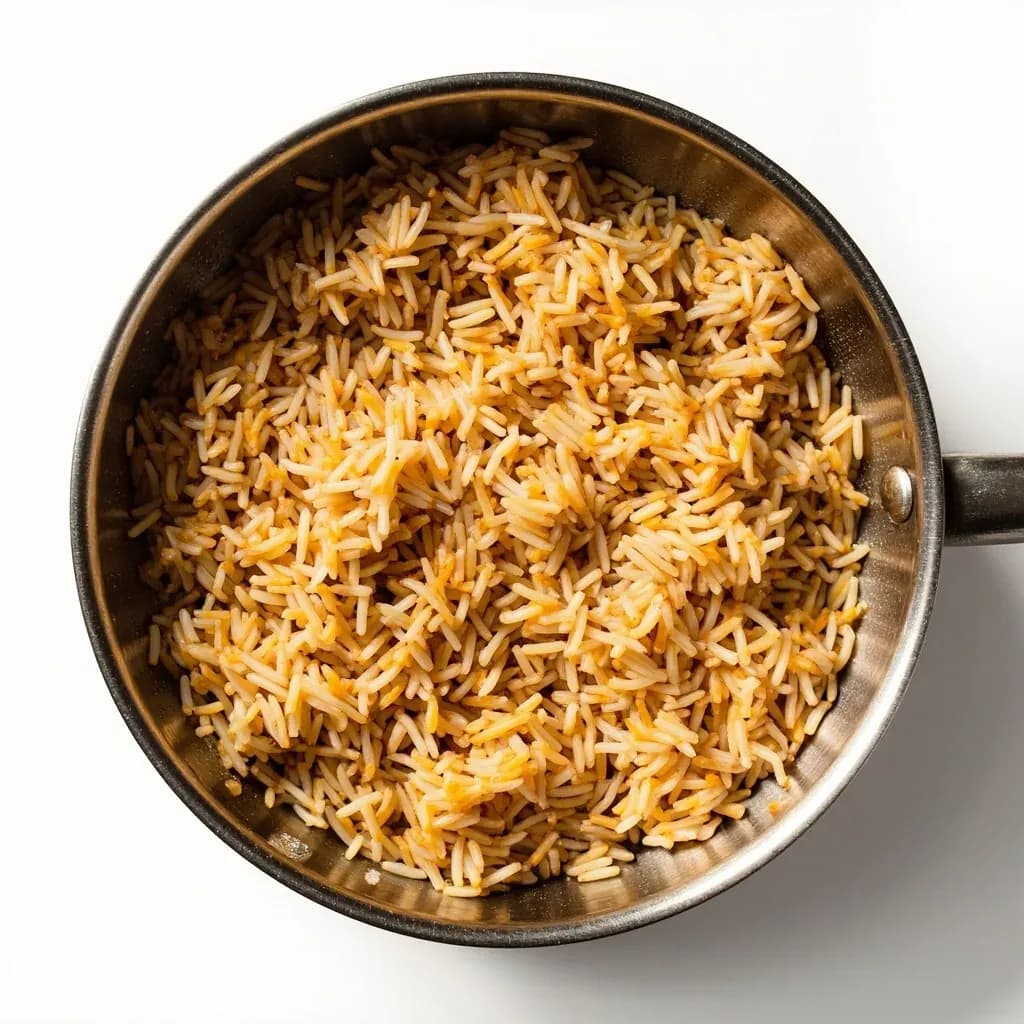
This technique dry-toasts raw glutinous rice in a pan until golden and fragrant, then grinds it into a coarse powder. The toasted rice powder, khao khua, adds nutty aroma and a thickening, textural crunch to Lao and Thai larb and dipping sauces. Toasting grains like tsampa barley similarly deepens flavor before they are ground for porridges and doughs.
Toasting and grinding rice is the Southeast Asian technique of dry-roasting raw rice grains until they turn a deep, even amber, then crushing them into a coarse sand or fine powder. The result — known in Thai as khao khua — is one of the most distinctive pantry ingredients in Isaan and Lao cooking, prized for its popcorn-like aroma and its quiet talent for absorbing liquid and giving body to meat salads, sausages, and dipping sauces. A few teaspoons scattered into a plate of larb, or a tablespoon folded into fermented pork sausage, is often the difference between a faithful rendition and a forgettable one.
The technique rests on straightforward dry-heat chemistry. Steady, moderate heat drives off surface moisture and triggers Maillard browning and sugar caramelization on each grain, building the deep, nutty, almost-burnt-sugar aroma. Once the rice is broken open in the mortar or grinder, that toasted starch is released into whatever it touches, where it does double duty: lending flavor and swelling slightly to thicken dressings and bind fillings without gumminess and without gluten. Because the rice is dry-toasted with no oil, the result is more aromatic than greasy, and it keeps for weeks in the jar.
In the kitchen, toasted rice powder works as a seasoning-and-binder hybrid, and is best dosed by the teaspoon rather than the spoonful. A teaspoon tossed with warm minced pork, a tablespoon stirred into a chili-lime dipping sauce, a fine dusting over grilled chicken — these are the doses at which khao khua has real impact. Too little and it disappears into the background; too much and it takes over the dish.
- Difficulty
- Easy
Types & varieties
The standard Thai version, almost always made with raw sticky rice; ground coarsely for larb and nam tok, more finely for sausages.
Very similar method; commonly paired with padaek in larb-style salads and Lao fermented sausages such as sai krok.
Sand-like texture with a slight bite; the traditional choice for sprinkling into larb and other meat salads.
Powdered almost to a flour; used as a binder in Isaan sausages and northern Thai sai oua, and to thicken dipping sauces.
Some cooks use raw jasmine rice instead of sticky rice for a lighter, more delicate aroma and a paler finished color.
How to do it
- 1
Choose and measure the rice
Start with raw, uncooked glutinous (sticky) rice for the most traditional flavor, or raw jasmine or other long-grain white rice for a lighter, more delicate result. Measure 1/4 to 1/2 cup for a small batch — enough for several servings of larb or a few sausages. Small batches toast more evenly and the powder keeps its aroma longer.
- 2
Heat the pan
Place a dry wok, cast-iron skillet, or heavy stainless pan over medium-low heat and let it warm for 1–2 minutes. Do not add oil. Dry heat, not fat, is what drives the browning that gives khao khua its character; oil would fry the grains instead.
- 3
Toast the rice
Add the rice in a single, even layer. Stir almost constantly with a wooden spatula, or toss the pan in a slow figure-eight. After 5–7 minutes the grains will turn opaque, then pale gold, then a deep, even amber. Total time is 10–20 minutes depending on quantity and rice type. Pull the pan off the heat the moment the color is right and the aroma turns nutty and popcorn-like; the residual heat will carry the grains another shade darker.
- 4
Cool completely
Tip the toasted rice onto a plate, sheet pan, or wide bowl and spread it in a thin layer. Let it cool to room temperature, 5–10 minutes. Warm rice will steam inside the grinder, clump, and coat the blades with gummy starch — the single most common reason home-ground khao khua turns pasty.
- 5
Grind to powder
Work in small batches. In a blade-type spice grinder or small food processor, pulse in 5–10 second bursts until you reach a sandy to flour-like texture, about 30–60 seconds total; let the motor rest a few seconds between pulses so the powder does not overheat. In a mortar and pestle, work in 2–3 tablespoon increments, crushing with a circular grinding motion and then pounding, until you reach an even grind.
- 6
Sift and adjust texture (optional)
For a fine powder, push the ground rice through a fine mesh sieve and regrind any coarse bits that remain. For the traditional coarse grind used in larb, skip the sifting or use a slightly coarser sieve so the sandy texture stays intact.
- 7
Use or store
Use the powder as soon as it is ground for the brightest aroma. Otherwise, transfer it to a clean, dry glass jar with a tight lid, label with the date, and store away from light and heat. It will keep for 2–3 weeks at room temperature, or 2–3 months refrigerated or frozen.
Choosing the rice
The single biggest decision before you start is which rice to toast. Raw glutinous (sticky) rice is the traditional choice and, in most cooks' view, the most rewarding: it toasts to a deeper, sweeter, more popcorn-like aroma and gives a slightly chewier grit. Raw jasmine rice, or another long-grain white, produces a lighter, more neutral powder with a cleaner, faintly floral background — useful when you want the toasted-rice effect without competing with other aromatics. In both cases, the rice must be raw and uncooked. Cooked, parboiled, or pre-roasted rice will not toast properly; the moisture will steam, the starch will gelatinize, and the result will be a gummy or sandy powder with none of the aroma you are after.
Coarse vs. fine: choosing your grind
The texture you finish with is a cooking decision, not an accident. A coarse, sandy grind is the traditional choice for larb and nam tok, where the powder is tossed with the warm meat and herbs and you actually want a little bite under the teeth. A finer, almost flour-like grind is right for sausages and dipping sauces, where the powder is meant to disappear into the mixture as a binder and thickener. The easiest way to control this is to pulse rather than run the grinder, and to sift the powder through a fine mesh sieve at the end, regrinding anything that does not pass through. A mortar and pestle naturally produces something closer to the coarse grind; a long run in a blade grinder pushes you toward the fine end.
Common uses
Tips & pitfalls
- Use raw, uncooked rice only — never cooked, parboiled, or pre-toasted. Cooked rice will steam and turn gummy; parboiled rice will not brown properly.
- Keep the heat at medium-low and stir almost constantly. High heat scorches the outside of the grain while leaving the inside raw, and a scorched pot will flavor the whole batch with bitterness.
- Trust color and smell over the clock. A deep, even amber with a popcorn-like, nutty aroma is done; an acrid or sharp-bitter smell means it has burned and you should start over.
- Cool the rice completely before grinding. Warm toasted rice will steam inside the grinder, clump, and coat the blades with starchy paste — the most common reason a home-ground batch turns pasty.
- Pulse the grinder in short bursts rather than running it continuously. This keeps the motor cool, prevents the powder from heating up, and gives you better control over the final texture.
- If you want a very fine powder, sift it through a fine mesh sieve and regrind the bits that remain. Skipping the sift is fine for the coarse, sandy grind traditional in larb.
- Make small batches. Toasted rice powder loses its bright aroma faster than the whole toasted grains do, and a fresh 1/2-cup batch will always taste better than a jar six weeks old.
- Do not substitute ground raw (untoasted) rice flour for khao khua. It will taste chalky and starchy, and will not deliver the toasted aroma or the same thickening behavior.
Good to know
- Origin
- Southeast Asia, especially northeastern Thailand (Isaan) and Laos
- Also known as
- khao khua (Thai: ข้าวคั่ว); also called toasted rice powder, roasted rice powder, or ground toasted rice
- Traditional rice
- Raw uncooked glutinous (sticky) rice; raw jasmine and other long-grain white rice are also used
- Toasting time
- 10–20 minutes over medium-low heat, depending on quantity and rice variety
- Toasting method
- Dry-toast in an ungreased wok or heavy skillet; no oil is added
- Target color
- Evenly golden to deep amber brown, with a nutty, popcorn-like aroma; never blackened or acrid
- Yield
- About 1 cup (~200 g) raw rice yields roughly 3/4 cup of toasted rice powder
- Shelf life
- 2–3 weeks at room temperature in an airtight jar; 2–3 months refrigerated or frozen
- Texture range
- Coarse sandy grind (traditional for larb) to fine flour-like powder (for sausages and as a thickener)
- Difficulty
- Easy, but requires attention to avoid scorching
Also called
Toast Rice for Soup · Roasting Grain (Tsampa) · Khao Khua
Dishes that rely on it
Related

Sear
Blast the surface hot for a deep-browned, savory crust

Sauté
Cook quickly in a little fat over lively heat, tossing as you go

Stir-Fry
Toss bite-sized pieces over roaring heat for fast, smoky cooking

Pan-Fry
Crisp food in a shallow layer of hot fat, turning once or twice

Deep-Fry
Submerge in hot oil for an all-over crackling crust

Roast
Cook uncovered in dry oven heat for browned edges and tender centers

Bake
Cook with steady, surrounding oven heat — the soul of bread and pastry

Broil
Hit food from directly above with fierce overhead heat