Pacific & Oceanic
Australian Indigenous (Bush Tucker)
Also: Aboriginal Australian cuisine, bush food, bush tucker, Torres Strait Islander food
The world's oldest continuous food culture — 60,000 years of sovereign foraging, hunting, and fire-cooking knowledge spread across every Australian biome.
Australian Indigenous cuisine encompasses the food traditions of over 250 Aboriginal nations and Torres Strait Islander peoples across deserts, rainforests, coastlines, and grasslands. Unified not by a single pantry but by a shared philosophy — deep ecological literacy, seasonal harvest, minimal processing, and fire as the primary cooking technology — this tradition is the longest continuously practised food culture on Earth. 'Bush tucker' is the popular umbrella term for native ingredients: kangaroo, emu, wallaby, crocodile, witchetty grubs, bush tomato (kutjera), quandong (native peach), wattleseed, finger lime, lemon myrtle, muntries, and hundreds of other plants and animals that vary by Country. Contemporary Aboriginal chefs and food sovereignty advocates are asserting this as a living, evolving cuisine, not a museum artefact.
The flavour base
Smoke and earth from open-fire and earth-oven (ground oven) cooking; the natural flavour of wild game; astringent, tannic, and bright-acid notes from native fruits and seeds
Pantry staples
Key ingredients
Signature techniques
Signature dishes
Australian Indigenous (Bush Tucker) on the table
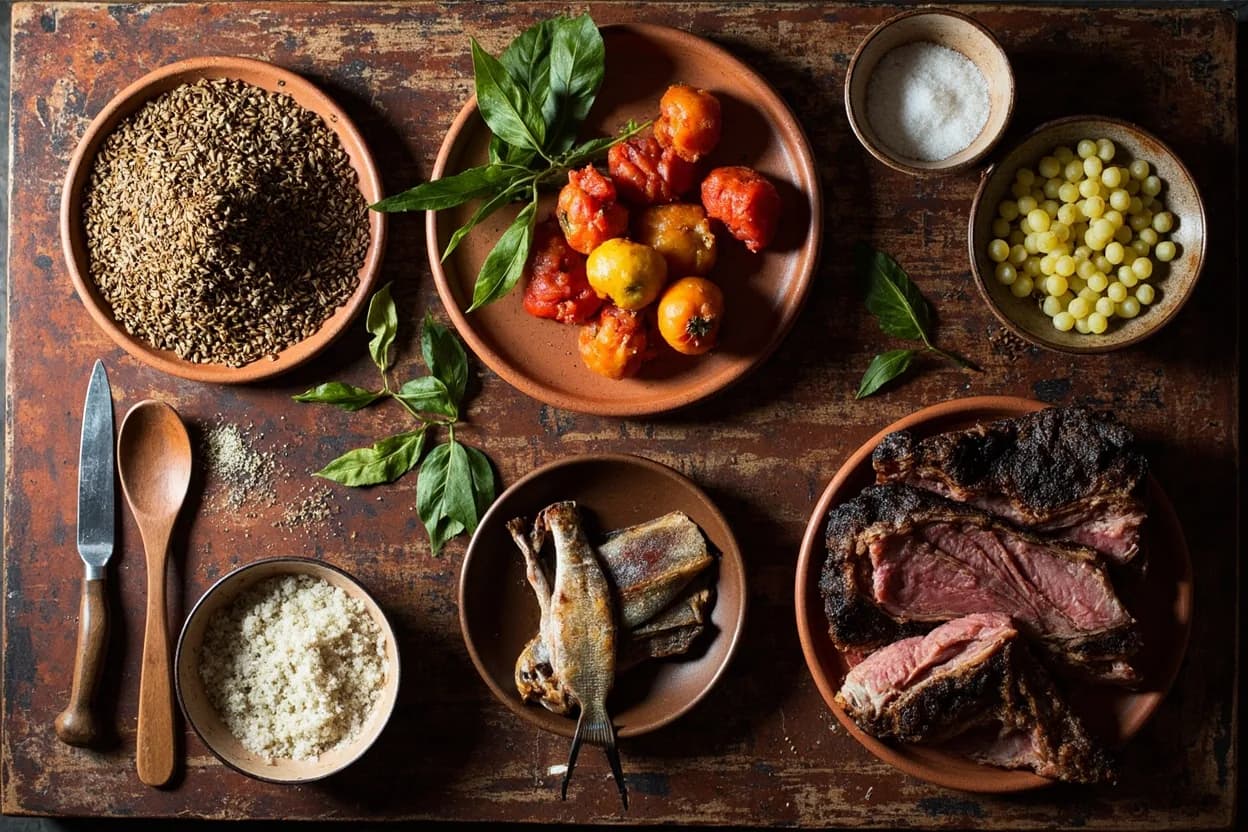
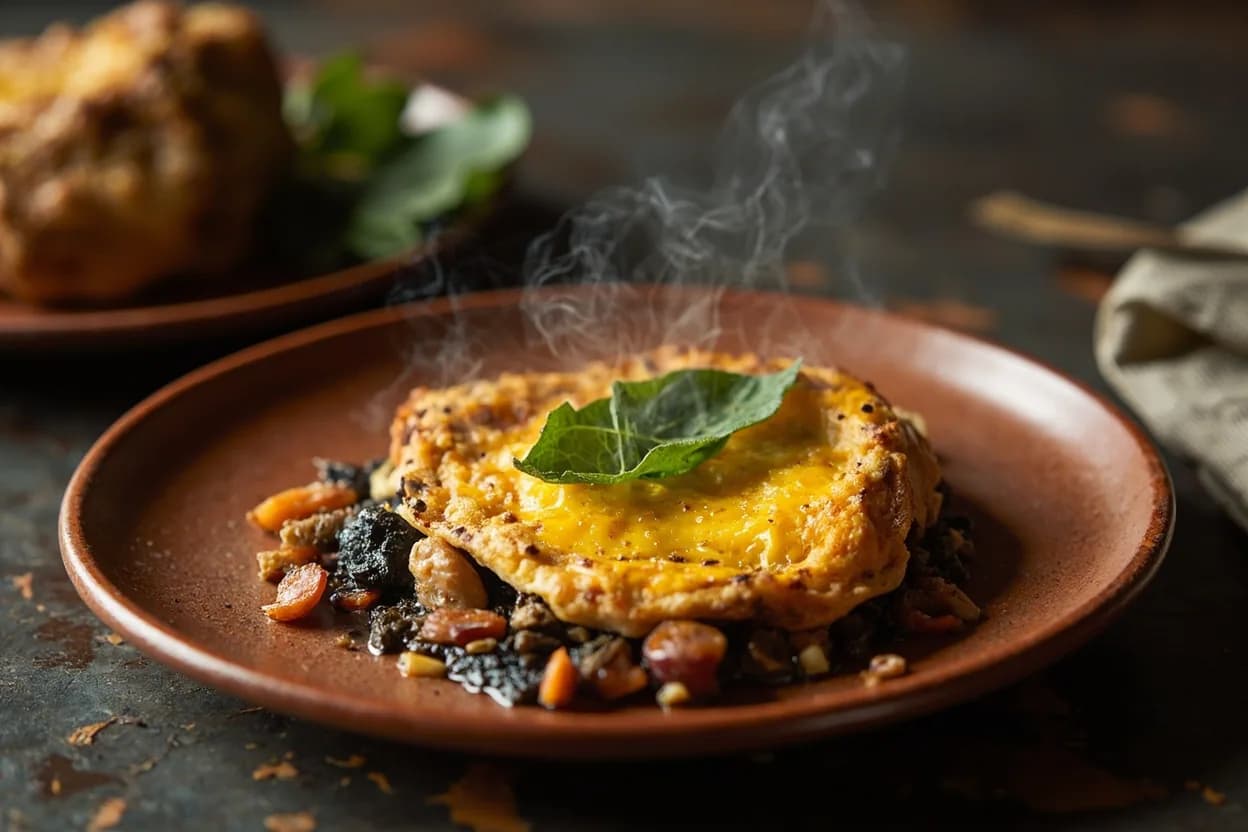

At the table
Food is harvested and cooked by gender-divided but complementary labour: women typically gather plants, tubers, grubs, and small animals; men hunt larger game. Food is shared communally with distribution governed by kinship obligations — specific cuts go to specific relatives. There is no fixed meal schedule; eating is opportunistic with the land and season. Ceremonial increase rituals and seasonal gatherings around abundant harvests (bunya nuts, bogong moths in the Snowy Mountains) created temporary feast occasions for otherwise dispersed groups.
History & context
Aboriginal peoples arrived in Australia at least 65,000 years ago, making this the world's oldest living food culture. Over millennia they developed intricate knowledge of when and where to harvest hundreds of species, and used fire-stick farming — systematic burning — to manage the landscape and maximise food production. This was sophisticated land management, not passive foraging. British colonisation from 1788 catastrophically disrupted Indigenous food systems: dispossession from Country severed access to hunting and gathering grounds; mission and station life imposed European rations (flour, sugar, tea, salt beef); and genocide reduced populations. Since the 1970s land rights movements have partially restored Country access, and since the 1990s a bush foods industry (Kakadu Plum, finger lime, lemon myrtle) has commercialised native ingredients. Contemporary Aboriginal chefs including Rayleen Brown, Mark Olive, and Nornie Bero have built serious culinary practices grounded in traditional knowledge.
Regional variations
- Arnhem Land (Northern Territory)
Sea Country with dugong (protected, ceremonial), turtle eggs, mangrove worms, and saltwater crocodile; magpie goose is a key game bird
- Central Desert (Western/Central Australia)
Arid-zone specialists: witchetty grubs, honey ants (Camponotus inflatus), bush tomato, kangaroo, perentie monitor lizard
- Torres Strait Islands
Melanesian culinary influence; dugong and turtle are ceremonially central; sago, taro, and reef fish distinguish the tradition from mainland Aboriginal
- Southeast (Victoria / NSW coastal)
Bogong moth harvest (seasonal high-altitude feast); murnong (yam daisy) was a staple before pastoralism destroyed its grasslands; saltwater fish and shellfish middens show intensive coastal use
- Southwest (WA / SA)
Quandong, bunya zone edge, marron (freshwater crayfish); Noongar seasonal calendar divides the year into six food seasons
Related cuisines
- Maori (New Zealand)
Related Austronesian-influenced Pacific traditions; hangi earth oven parallel to Aboriginal ground oven; both involve sophisticated land management through fire and aquaculture
- Aboriginal Canadian (First Nations)
Parallel hunter-gatherer food sovereignty traditions facing similar histories of colonial disruption and contemporary reclamation
- Contemporary Australian
Bush tucker ingredients are being adopted by mainstream Australian restaurants; native pepper, finger lime, wattleseed, and Davidson's plum appear in high-end menus
Canonical recipes
The dishes that define Australian Indigenous (Bush Tucker), documented in the Canon.
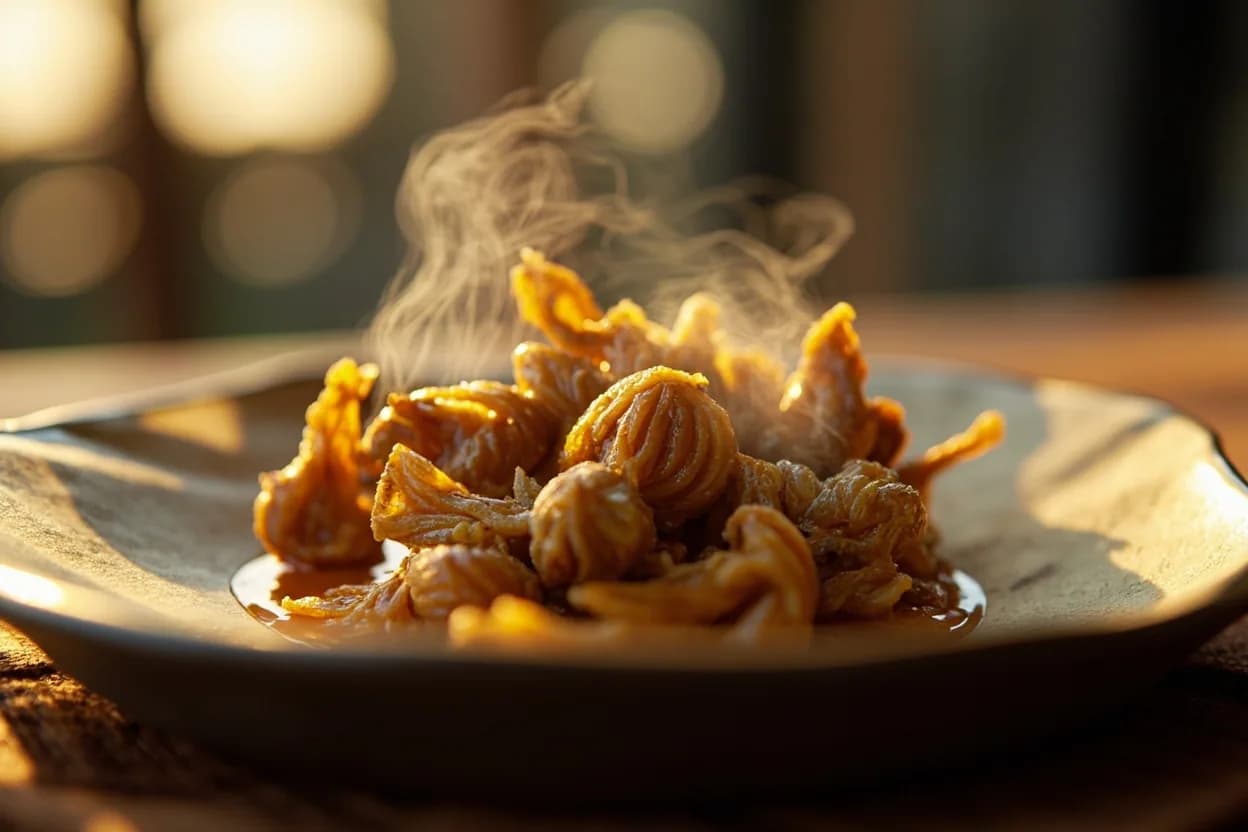
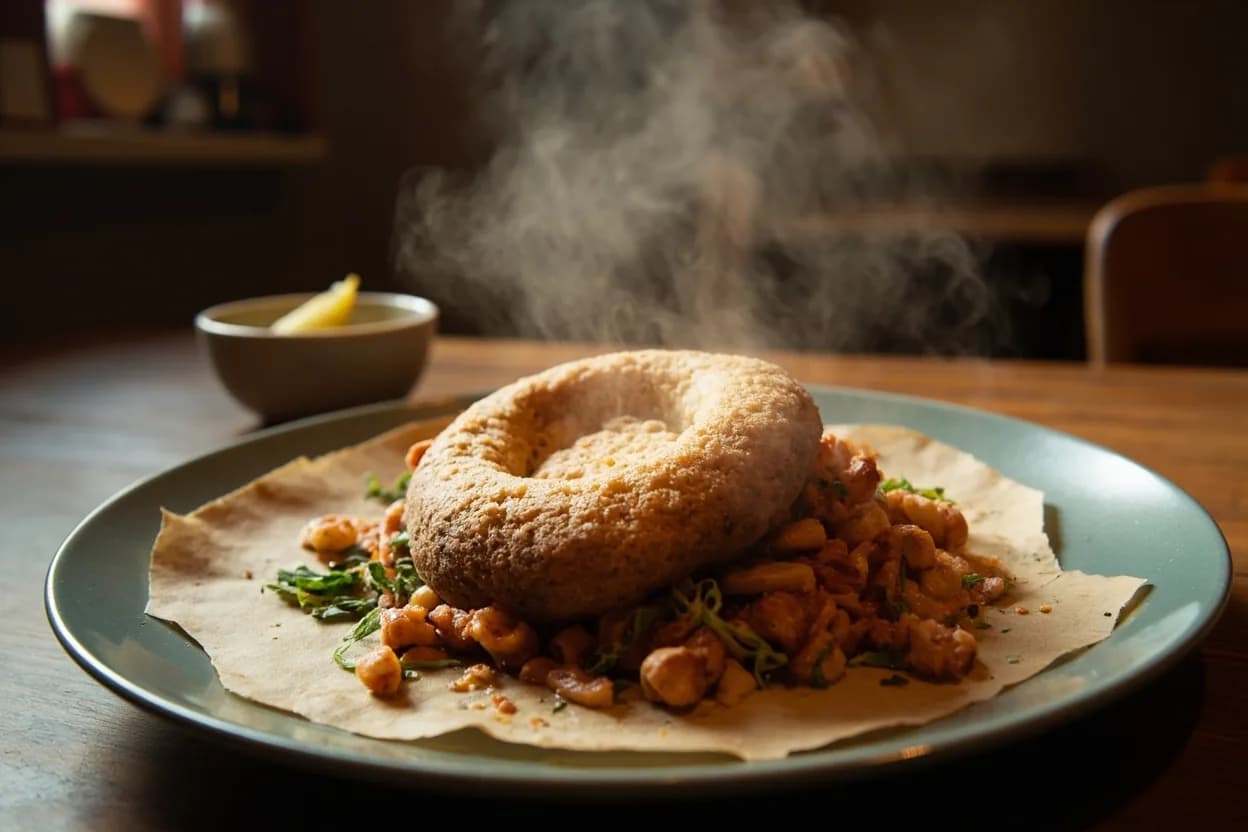
References
- 1.The Biggest Estate on Earth: How Aborigines Made Australia — Bill Gammage (2011)
- 2.Bush Tucker: Australia's Wild Food Harvest — Tim Low (1989)
- 3.The Oxford Companion to Food, 3rd ed. — Alan Davidson (2014)
- 4.Caring for Country: Aboriginal Traditional Knowledge — AIATSIS (Australian Institute of Aboriginal and Torres Strait Islander Studies) documentation
Confidence: high
Notes
Fire-stick farming
Aboriginal fire management ('cultural burning' or 'firestick farming') was not just a hunting technique — it was sophisticated land agriculture that created the mosaic grassland-scrub landscape Europeans later mistook for natural wilderness. Specific Country burns at specific times encouraged particular food plants to regenerate and concentrated game. The suppression of cultural burning during the colonial period contributed to both ecological degradation and the collapse of Aboriginal food systems.
Bush tucker sovereignty
The commercialisation of native ingredients has created complex sovereignty questions. Kakadu Plum (Terminalia ferdinandiana) is the world's highest natural source of Vitamin C and is now exported globally in skincare and food products. Aboriginal communities and advocates are pushing for benefit-sharing agreements that ensure profit from Country's plants flows to the peoples whose knowledge enabled their identification and use.