Southern Europe
Asturian
Also: Cocina Asturiana, Asturias cuisine
A rain-soaked Celtic Atlantic larder built on slow-cooked beans, smoked pork, wild-caught pixin, and the cidery tang of a thousand apple orchards.
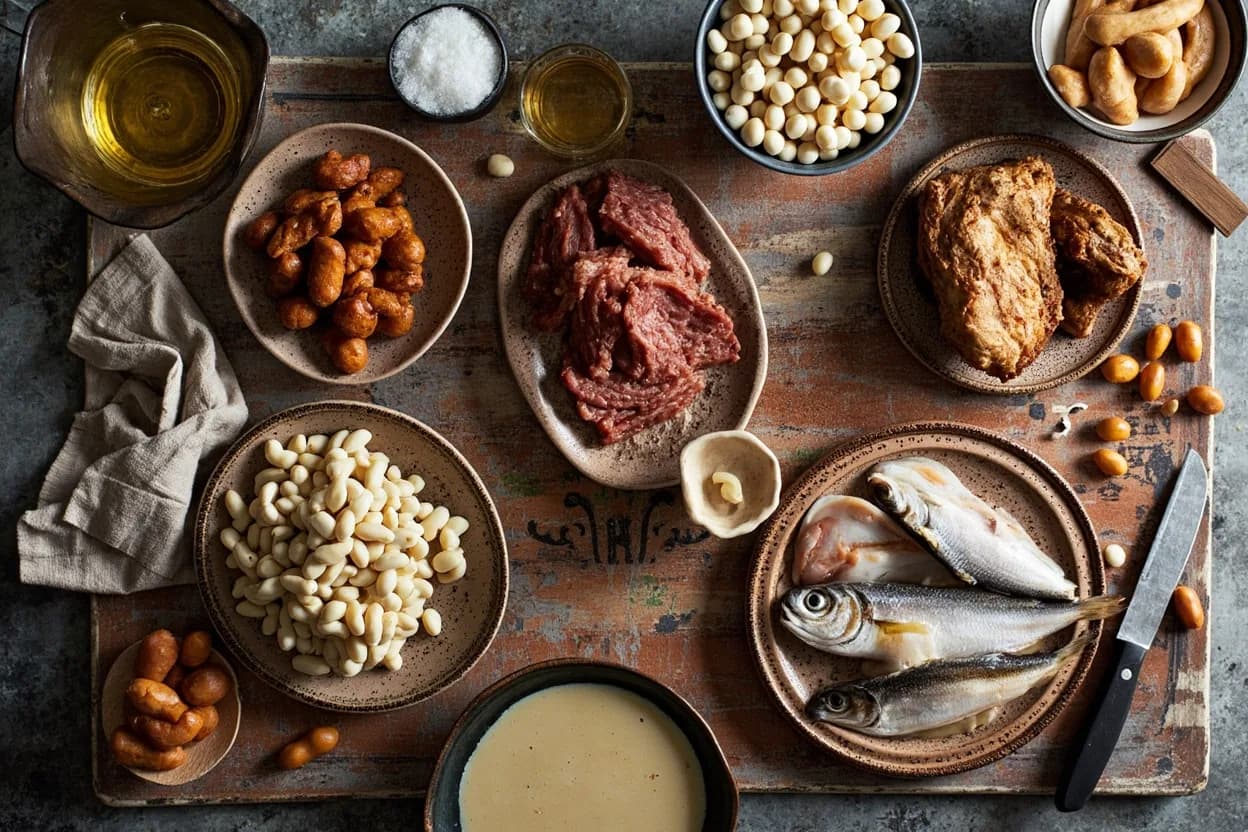
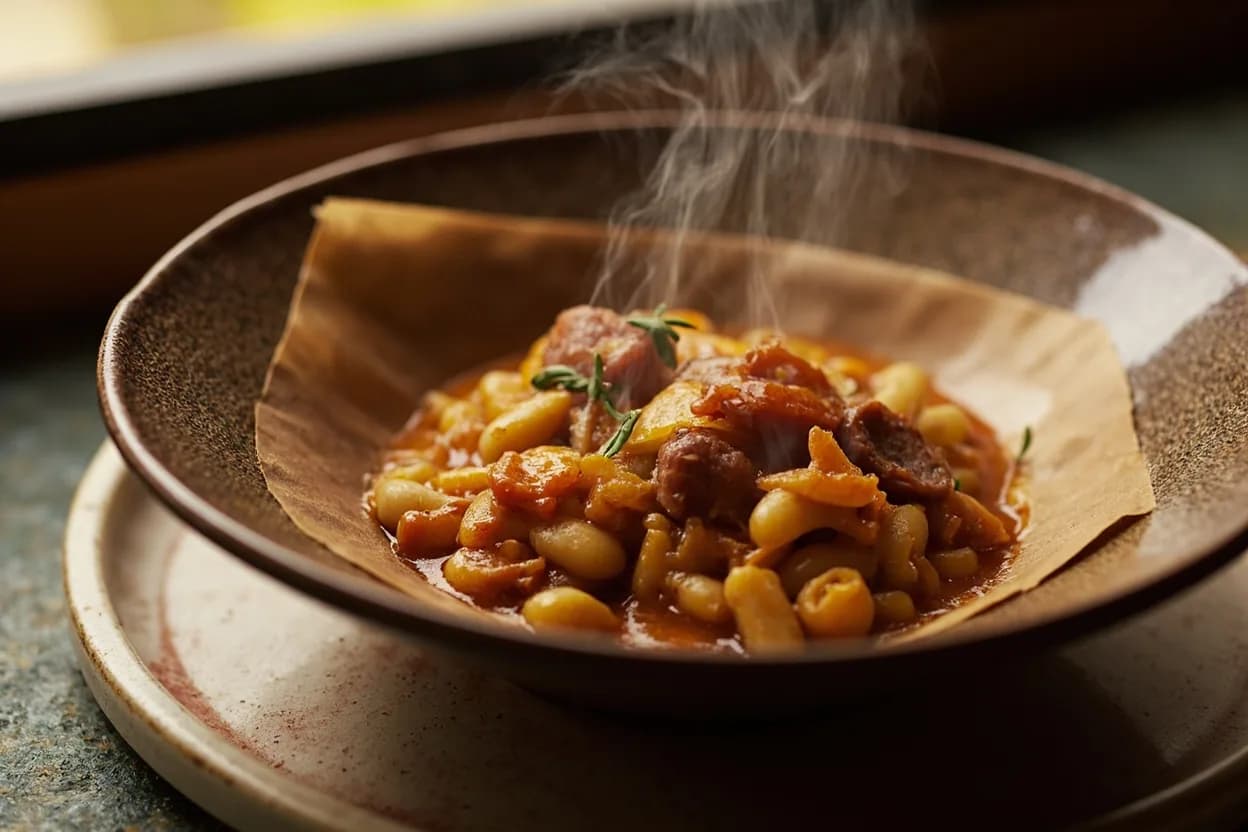
Asturian cuisine emerges from the convergence of a mountainous, perpetually green coastline, a cattle- and orchard-farming interior, and the Celtic-Atlantic cultural layer that predates Roman Hispania. Its logic is comfort through accumulation: slow braises where smoked chorizo, morcilla, lacón, and salt pork dissolve into fabes (large white butter beans) over hours; griddled corn-flour bread (borona) alongside aged Cabrales blue cheese; and the ocean yielding merluza, bonito del norte, and monkfish (pixin) to a kitchen that knows how to honour fat and smoke.
The flavour base
Smoked pork fat (lard, chorizo, morcilla, lacón) rendered with onion and garlic, enriched by paprika (pimentón) and saffron; finished with dry Asturian sidra (cider) or white wine.
Pantry staples
Key ingredients
Signature techniques
Signature dishes
Asturian on the table
At the table
Traditionally a heavy midday main meal (la comida) anchored by a single generous stew or roast, preceded by a charcuterie board and sidra. Supper is lighter — cheese, bread, leftovers. Sunday cocido-style meals are social and multi-hour. Cider houses (lllagares) serve communal poured sidra alongside emblematic dishes year-round.
History & context
Asturias was the only Iberian territory not conquered by the Moors; its mountains sheltered the Visigothic Christian kingdom that would seed the Reconquista. This isolation preserved pre-Roman Celtic food habits — bean-and-pork pot cooking, acorn-era cereal flours, communal fermentation. Roman-era viticulture never took deep root here; apple orchards did, and by the medieval period Asturian cider was exported across Northern Europe. The mining and industrial booms of the 19th–20th centuries reinforced the working-class prestige of fabada as a caloric, sustaining dish. Cabrales, aged in the Picos de Europa limestone caves, received DOP status in 1981.
Regional variations
- Costa Verde (coastal strip)
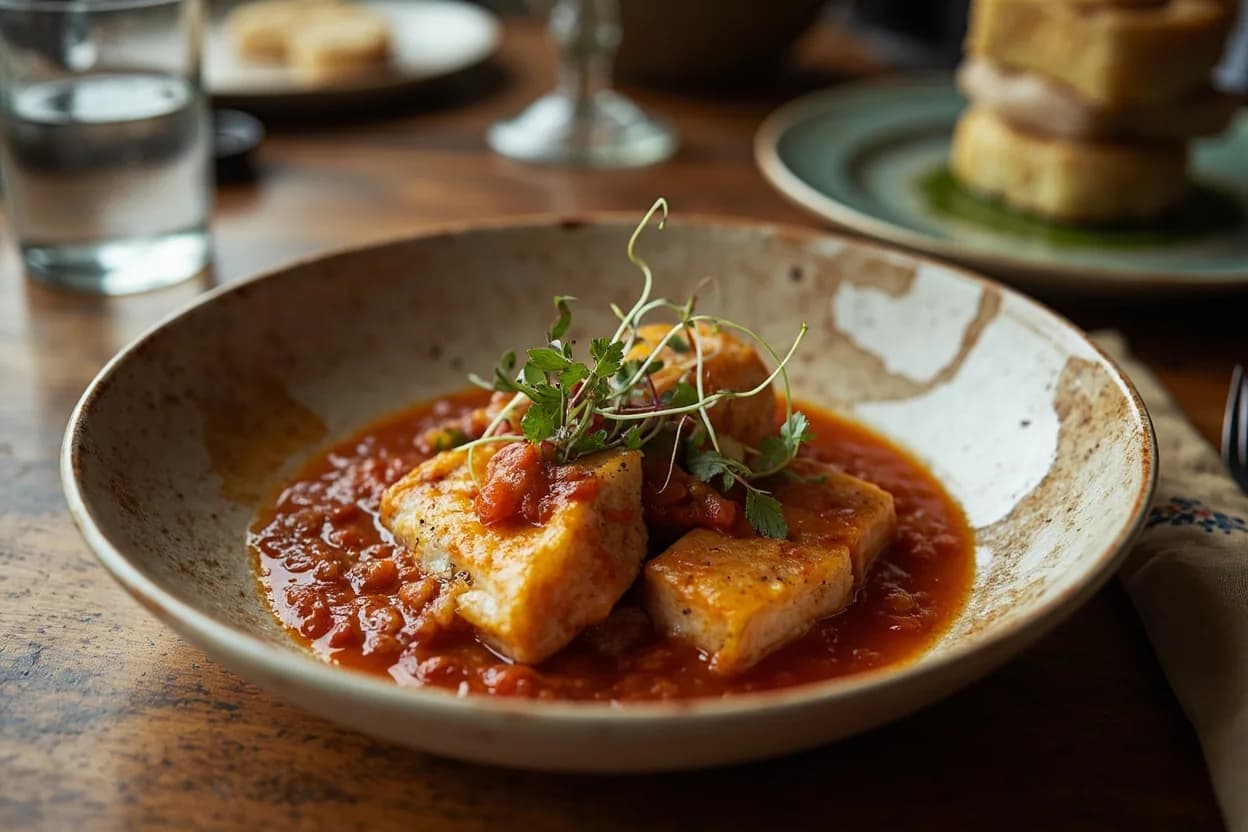
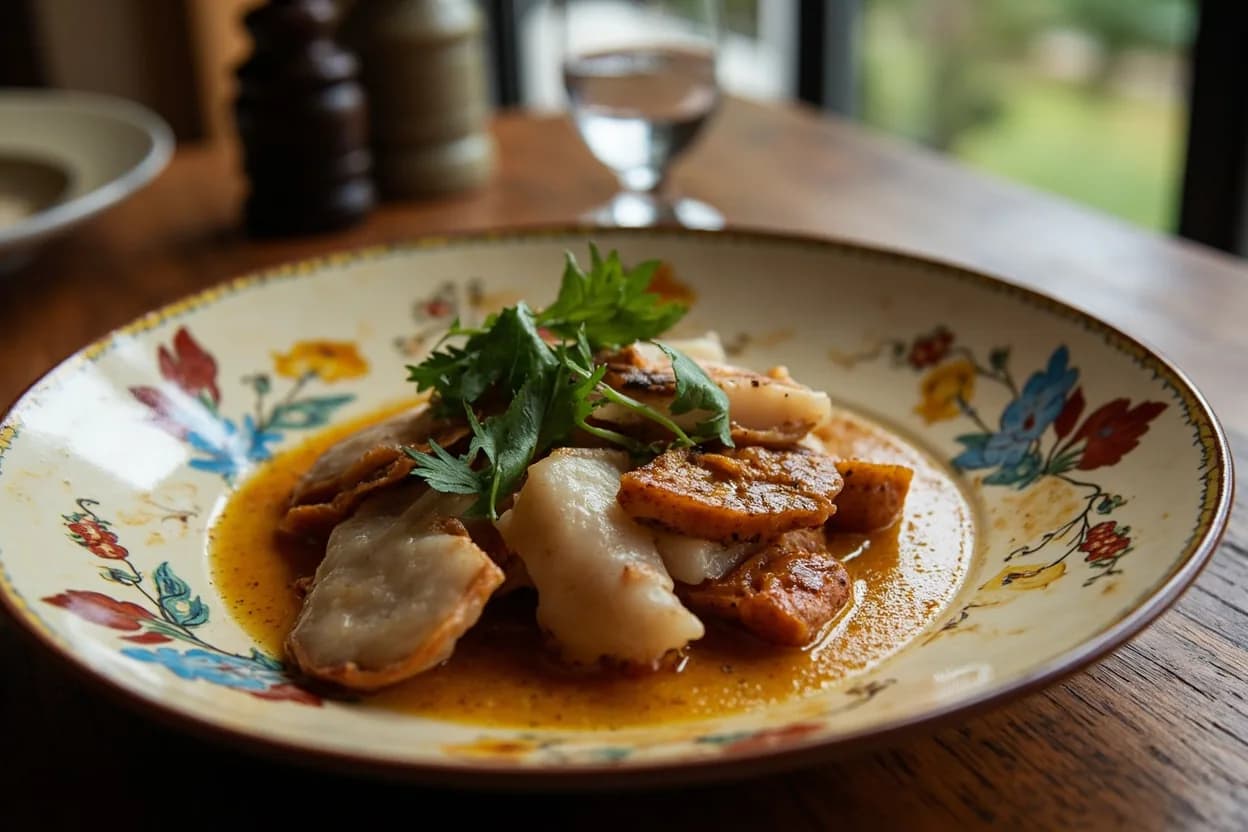
Heavier reliance on seafood — pixin, merluza a la sidra, bonito en escabeche; cider-braised fish dominates.
- Picos de Europa highlands
Stronger mountain pastoral tradition: smoked embutidos, aged goat cheeses (Gamoneu, Afuega'l Pitu), game (venison, wild boar).
- Nalón mining valleys
Robust miner's fabada with maximum pork enrichment; bollus preñaos (bread rolls stuffed with chorizo) are a valley staple.
Related cuisines
- Cantabrian
Neighbouring region sharing sidra culture, hake centrality, and Atlantic fishing traditions.
- Galician
Shares Celtic-Atlantic legume and pork-fat base; lacón con grelos is a Galician parallel to Asturian pork-bean cooking.
- Basque
Both elevate Atlantic seafood and maintain fierce regional culinary identity; differ sharply in technique and seasoning.
Canonical recipes
The dishes that define Asturian, documented in the Canon.
References
- 1.Anya von Bremzen, The New Spanish Table (2005)
- 2.Penelope Casas, The Foods and Wines of Spain (1982)
- 3.Gobierno del Principado de Asturias — Consejería de Agroganadería, DOP Cabrales official documentation
- 4.Consejo Regulador de la Fabada Asturiana, IGP technical file
Confidence: high
Notes
The bean question
Authentic fabada uses only Fabe de la Granja, a large, creamy-skinned butter bean grown in Asturian valleys and protected by IGP. Substituting cannellini or Great Northern beans produces a competent stew but loses the silky, yielding texture that makes fabada transcendent. The beans must never boil hard — the traditional technique is a sustained 'shudder' (temblor) just below the simmer.
Sidra culture
Asturian sidra natural is unfiltered, very low-alcohol, and deliberately flat until aerated by the escanciado pour (bottle held aloft, glass at the hip). It is consumed in rounds at lllagares (cider houses) and serves as both drink and cooking medium. The fizz dissipates almost immediately; it must be drunk in one motion (el culete). This is not the sweet, sparkling cider of other traditions.